Can I use alpha arbutin with niacinamide?
People ask: "Can I use α-arbutin with niacinamide?" This question comes up in chemical databases, beauty groups, and buying emails. Yes is the short answer. The longer answer is where things get really interesting for people who make cosmetics.
These two things don't just live together. In terms of biology, they work in different ways. They make up for each other's flaws. When put together, they make one of the brightest combos with the most evidence-based science behind it today.
This article goes into detail about how each ingredient works, why they work better together than separately, and what formulation scientists and B2B ingredient buyers need to know before buying a lot of them. Everything in this article is about raw makeup ingredients, not finished goods for people to buy.
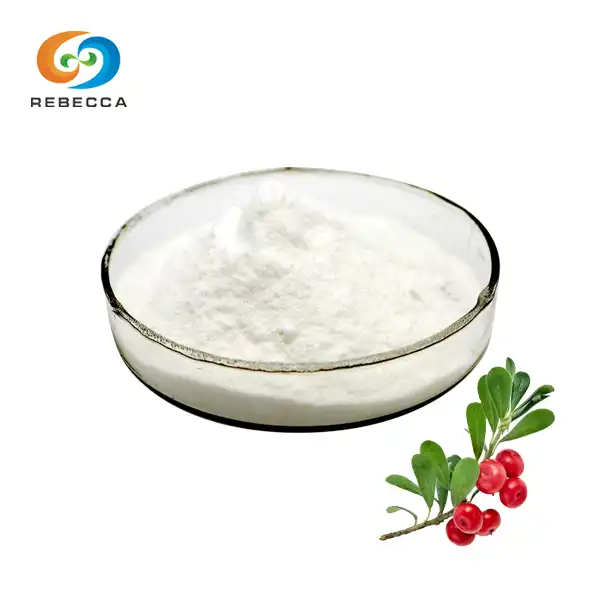
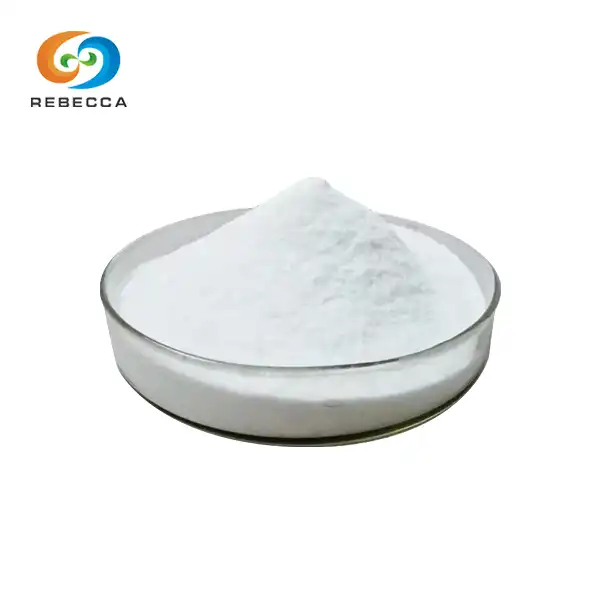
Alpha Arbutin Powder
Product Name:Alpha arbutin,α-arbutin, arbutin Power.Bearberry extract
CAS No.: 84380-01-8
Specification: Arbutin 99%, HPLC.
Test Method: HPLC
Latin Name: Arctostaphylos uva-ursi.
Alpha Arbutin Powder and Niacinamide
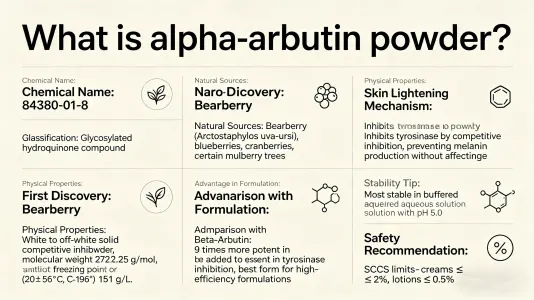
What Is alpha arbutin powder?
The chemical name for alpha arbutin is 84380-01-8, and it is a glycosylated hydroquinone product. Bearberry trees (Arctostaphylos uva-ursi), bilberries, cranberries, and some types of mulberry naturally have it. The glycosylated hydroquinone alpha-arbutin was first found in bearberries. It helps lighten colour by blocking tyrosinase, and its structure is similar to hydroquinone, which also blocks tyrosinase very well.
As a makeup ingredient, it looks like a solid powder that is white to off-white. It's a white to off-white powder with a molecular weight of 272.25 g/mol and a freezing point between 195°C and 196°C. At 20 ± 5°C, it dissolves in water at a rate of 151 g/L. Because it dissolves easily in water, it's a big plus for preparation because it means it doesn't need any extra work to be added to serum or emulsion bases.
Buyers of ingredients care a lot about the main difference between alpha and beta arbutin. The skin care element alpha-arbutin usually stops tyrosinase from working, which is one of the main enzymes that causes tans and age spots. Alpha-arbutin is nine times more effective than beta-arbutin at stopping tyrosinase. Due to this difference in strength, alpha arbutin powder is the best form for high-performance formulas.
Alpha-arbutin works as a skin lightening agent mainly by competitively inhibiting tyrosinase, which stops melanin production without affecting the expression of tyrosinase mRNA. It is a stronger tyrosinase inhibitor than arbutin and directly stops the enzyme activity of tyrosinase, which is necessary for melanin metabolism.
Note from the formulator: alpha-arbutin is most stable at pH 5.0 in a buffered aqueous solution. For consumer safety, the Scientific Committee on Consumer Safety (SCCS) recommends that face creams contain up to 2% alpha-arbutin and body lotions contain up to 0.5% alpha-arbutin. These factors are very important when describing the pH ranges and usage amounts for a product.
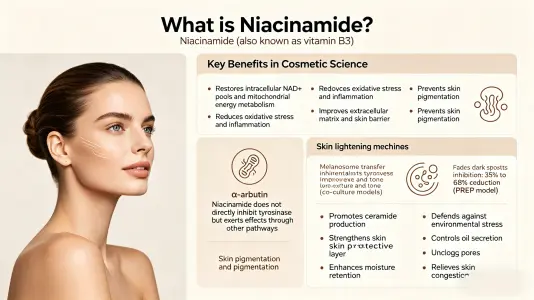
What Is Niacinamide?
One of the most useful active ingredients in beauty science is nicotinamide, which is also known as nicotinamide or Vitamin B3. A lot of research has been done on the pharmaceutical and cosmetic uses of niacinamide. Supplementing with niacinamide restores the cellular NAD+ pool and mitochondrial energetics, lowers oxidative stress and the inflammatory response, improves the extracellular matrix and skin barrier, and stops the skin from turning pigmented.
It works in a different way than alpha arbutin to stop browning. Instead of stopping tyrosinase directly, niacinamide works in a different way. Niacinamide is thought to be a good skin colouring chemical because it stops melanosomes from moving from melanocytes to keratinocytes. In thorough clinical tests, niacinamide stopped melanosome transfer by 35% to 68% in the coculture model and lowered skin pigmentation in the PREP model.
Besides colouration, niacinamide has a lot of other uses. By getting rid of dark spots and hyperpigmentation, niacinamide helps the skin look even and healthy. It also improves the skin's texture and appearance and makes more ceramides, which strengthen the skin's protective layer and make it better at keeping moisture in and protecting it from environmental stressors. Finally, by controlling oil production, niacinamide helps clear up congestion.
Science Behind Using Alpha Arbutin with Niacinamide
Dual-Pathway Action: Why This Combination Is Synergistic
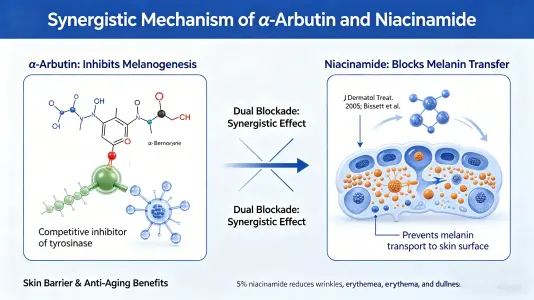
Combining these two items is mostly done because they work well together mechanically. They split the work instead of doing it twice. Niacinamide stops pigment from moving to the skin's surface, and alpha arbutin stops melanin production at its source. Together, these two ingredients work even better because they target different stages of pigmentation more quickly.
Simply put, alpha arbutin powder stops the enzyme that makes melanin from working. Niacinamide keeps the melanin that does form from getting to the skin's surface. There are two clear breaks in the pipes. That's why doctors recommend the two together. According to the Journal of Dermatological Treatment, dermatologists suggest that people who are worried about colour take alpha arbutin and niacinamide together.
The process of cells is exact. As a competing inhibitor of tyrosinase, the rate-limiting enzyme in melanogenesis, arbutin works by binding to the active site of tyrosinase and stopping the change of L-tyrosine to L-DOPA and then to melanin. Niacinamide also helps by stopping the transfer of melanin into keratinocytes. This keeps the colour made in melanocytes from reaching the skin's surface.
Anti-Aging and Barrier-Repair Properties
Colour isn't the only thing that makes this combo valuable. For B2B formulators making complete whitening serums or anti-aging ingredients, the extra useful layers are important for making money.
Niacinamide is known to improve the skin's barrier function.Niacinamide's barrier-boosting properties improve the skin's lipid matrix, which helps keep moisture in and lowers transepidermal water loss. This makes the skin smoother, less flaky, and better able to handle harsh skincare routines. A solid barrier does more than just keep water in; it also makes a steady formulation environment where alpha arbutin can work without being harmed by itching or inflammation.
Niacinamide works in the background like a calm, capable manager. It calms inflammation (the redness that often comes with treating discolouration) and strengthens the skin's barrier. This creates a stable environment where alpha arbutin can do its job well, without causing the irritation that can sometimes mess up a brightening routine. These benefits of niacinamide make the skin barrier stronger, which keeps moisture in and irritants out. This makes the routine gentler and more consistently effective.
More proof that niacinamide can help fight ageing supports its use as a co-active. Researchers (Bissett et al., 2005) found that 5% niacinamide significantly reduced the depth of wrinkles, erythema, redness, and sallowness in photoaged face skin over the course of 12 weeks. Alpha arbutin helps as an antioxidant. Its antioxidant qualities help protect the skin from reactive stress and damage from the environment.
Safety and Skin Type Compatibility
When mixing actives, the main thing that formulators worry about is the chance of discomfort or conflict. That risk is incredibly low with this pair. Niacinamide and alpha arbutin work well together and don't irritate the skin.
Most people think that alpha-arbutin is safe to use in cosmetics because it has been through a lot of safety tests and studies that show it doesn't usually irritate the skin. As long as it's used in the right amounts and according to normal cosmetic application methods, most people don't see any problems.
It's also useful that the pH match is there. When made between pH 4.0 and 6.0, alpha arbutin is most stable and effective. Because their ideal pH ranges overlap a lot, layering them usually doesn't cause a big problem; they don't tend to stop working together or irritate the skin because of a pH clash, unlike some other pairings. In other words, a makeup base with only one recipe can have both active ingredients without the need for pH adjustment buffers.
Niacinamide (Vitamin B3) Powder Alpha Arbutin
Basically, tyrosinase inhibition stops the production of melanin and stops the movement of melanosomes to keratinocytes.
Antioxidant activity: Yes, it guards against oxidative stress. guards against oxidative harm and ROS.
|
Property |
Alpha Arbutin Powder |
Niacinamide (Vitamin B3) |
|
Primary mechanism |
Tyrosinase inhibition (blocks melanin production) |
Inhibits melanosome transfer to keratinocytes |
|
Antioxidant activity |
Yes — protects against oxidative stress |
Yes — attenuates ROS and oxidative damage |
|
Skin barrier support |
Mild |
Strong — promotes ceramide production |
|
Anti-inflammatory |
Indirect (via reduced melanogenesis) |
Direct — soothes redness and congestion |
|
Water solubility |
High (151 g/L at 20°C) |
High — hydrophilic compound |
|
Optimal formulation pH |
4.0–6.0 (most stable at pH 5.0) |
5.0–7.0 |
|
Skin type suitability |
All types, including sensitive |
All types, including oily and acne-prone |
|
Combined benefit |
Dual-pathway brightening + barrier repair — synergistic, not redundant |
|
Formulation Benefits, Application Order, and Compatibility
Why Formulators Choose This Combination
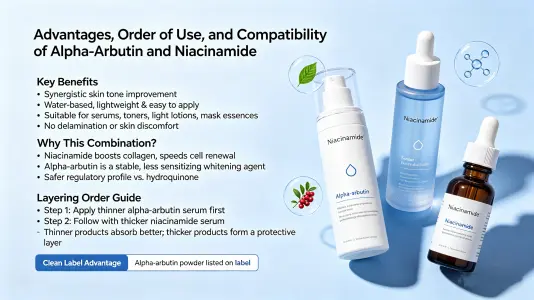
The mixture of alpha arbutin and niacinamide can be used in a lot of different forms for ingredient development. Niacinamide and alpha arbutin work well together to improve skin tone. Both are water-based ingredients that are often made to feel light on the skin. Because both actives are water-based, they can be used together in serums, toners, lightweight emulsions, and sheet mask essences without separating phases or making the skin feel bad.
People know that niacinamide increases collagen production, which makes the skin healthier, firmer, and more resilient. It also speeds up cell turnover, which gets rid of dull, hyperpigmented skin cells on the surface and reveals lighter, more even tones below the skin. This action works in support of alpha arbutin and makes its effects stronger. Formulators can now make claims that a single product can shine, protect against damage, slow down the ageing process, and improve the structure of the skin.
Putting alpha arbutin powder on a clean label is another business benefit. Bearberry leaves contain alpha arbutin, a skin-whitening ingredient that is meant to be more steady and less sensitive than other brightening agents. While hydroquinone is limited by regulations in many markets, alpha arbutin has a regulatory profile that is much safer while still inhibiting tyrosinase in the same way.
Layering Order: A Practical Guide for Product Developers
When making cosmetics with both active ingredients as different layers instead of mixed together, the order in which they are applied is important. Before taking niacinamide, you should usually take alpha arbutin. There is both physical and chemical reasoning in it.
There should be no blockages between thinner, water-based products like many alpha arbutin serums and thicker, water-based products like some niacinamide serums. Thicker products like these often have bigger molecules or make a thicker layer on top that can sometimes stop the absorption of anything that's applied after them. Putting on the thinner alpha arbutin first gives it the best chance to sink in and work where it's needed most, and then the niacinamide can come in and layer nicely on top
Alpha Arbutin Powder Supplier: Rebecca Bio-Tech
It takes more than a standard sheet to find high-purity alpha arbutin powder for cosmetics. Formulators around the world need a trusted production partner with the infrastructure, quality control, and export knowledge they need.
Rebecca Bio-Tech (Shaanxi Rebecca Bio-Tech Co., Ltd.) is a high-tech company that focuses on exports. They make, study, and sell plant extracts, separate herbs active ingredients, and do research on functional compounds used in traditional Chinese herbal medicine. Rebecca Bio-Tech has over 100 plant extracts in its catalogue and three dedicated .
production lines that can make more than 500 metric tonnes of botanical ingredients every year. It sells these ingredients to companies around the world that make cosmetics, medicines, health supplements, and drinks.
You can add our Alpha Arbutin Powder directly to serums, emulsions, toners, and cosmetics. It has been tested by HPLC and found to contain 99% arbutin.
Our expert team can give you samples, full analysis paperwork, and cheap bulk price whether you are making a new line of whitening serums, a cosmeceutical that targets acne, or a private-label skin care brand.
Send your question to information@sxrebecca.com right now.
FAQs
1. Can I use alpha arbutin with niacinamide safely?
Yes. You can safely use alpha arbutin with niacinamide, and they are a powerhouse combination for brightening skin, reducing dark spots, and improving skin texture. They act on different stages of the pigmentation pathway and do not antagonize each other. Their overlapping stable pH range of 4.0–6.0 makes co-formulation technically straightforward.
2. How do alpha arbutin and niacinamide work differently?
Alpha arbutin stops melanin production at the source while niacinamide prevents pigment from spreading to the skin surface. Alpha arbutin is a competitive inhibitor of tyrosinase — the enzyme that initiates melanin synthesis. Niacinamide works downstream by inhibiting melanosome transfer from melanocytes to keratinocytes. Together, they interrupt the pigmentation process at two separate stages.
3. Which should be applied first — alpha arbutin or niacinamide?
Generally, you will want to apply alpha arbutin before niacinamide. Alpha arbutin serums are typically thinner and water-based; they need to penetrate the skin before the denser niacinamide layer is applied. When applying skincare products containing alpha arbutin and niacinamide, it is considered best to first use alpha arbutin; niacinamide can then step in and restore balance with its humectant traits, enabling it to draw moisture into the lower layers of the skin.
4. Does niacinamide boost the effectiveness of alpha arbutin powder?
Yes — in two ways. First, niacinamide's cell turnover-enhancing effect removes hyperpigmented surface cells, exposing the clearer skin where alpha arbutin has been active. Second, niacinamide soothes inflammation — the redness that often comes with treating discoloration — and actively reinforces the skin's barrier, creating a stable environment where alpha arbutin can do its job effectively. A healthier barrier improves ingredient absorption consistency.
5. Is alpha arbutin powder suitable for sensitive skin formulations?
Yes. Unlike more aggressive skin-lightening agents, alpha arbutin is both gentle and effective, making it suitable for all skin types. When combined with niacinamide — itself a well-tolerated, non-irritating active — the pairing is particularly appropriate for sensitive and reactive skin formulations. Unlike harsh treatments, this combination is non-irritating and suitable for daily use.
References
1. Sugimoto, K., et al. (2004). "Inhibitory Effects of α-Arbutin on Melanin Synthesis in Cultured Human Melanoma Cells and a Three-Dimensional Human Skin Model." Biological & Pharmaceutical Bulletin, 27(4), 510–514.
2. Hakozaki, T., et al. (2002). "The effect of niacinamide on reducing cutaneous pigmentation and suppression of melanosome transfer." British Journal of Dermatology, 147(1), 20–31.
3. Greatens, A., et al. (2005). "Effective inhibition of melanosome transfer to keratinocytes by lectins and niacinamide is reversible." Experimental Dermatology, 14(7), 498–508.
4. Sadler, K. (2025). "Clinical Evaluation of Niacinamide in Hyperpigmentation and Barrier Repair." Journal of Cosmo Trichology, 11, 308.
5. Surini, S., et al. (2017). "Formulation and physical evaluation of microemulsion and W/O/W multiple emulsions dosage forms with alpha arbutin, lactic acid, and niacinamide as skin-whitening cosmetics." International Journal of Applied Pharmaceutics.
6. Anwar, A.I., et al. (2020). "Effectiveness of application of serum and cream containing combination of tranexamic acid, galactomyces ferment filtrate, niacinamide, and alpha arbutin using layering technique in melasma." Hong Kong Journal of Dermatology and Venereology.