
Gotu Kola Extract For Hair Growth
Millions of people throughout the world suffer from thinning hair and hair loss. Many are using botanical elements in their hair care routine. Among these, Gotu Kola extract, which is made from the plant Centella asiatica, has attracted the interest of both academics and consumers.
This small creeping plant is native to the marshes of Asia. It has been used for millenia in Ayurvedic and traditional Chinese medicine to boost wound healing, promote circulation and maintain skin health. The main active compounds are triterpenoids: asiaticoside, madecassoside, asiatic acid and madecassic acid. Most of the known biological activities of the plant are due to these compounds.
But does that stuff truly help with hair growth? The honest answer is that there is very little direct clinical evidence. Previous study has largely focused on skin health, wound healing and vascular function But the biochemistry of it – better blood flow, stronger collagen, less inflammation – is all intimately tied to the environment hair grows in. We set the science, And where acceptable expectations should set under.
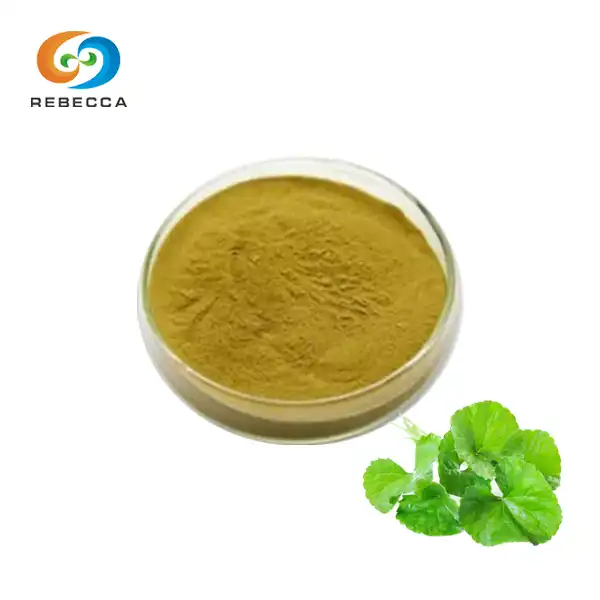
English name: Gotu Kola Extract
Latin Name:Centella Asiatica(L.) Urban
Active ingredients: asiaticoside
Specification: 10%-90%
CAS No.: 16830-15-2
Molecular forula: C48H78O19
Molecular Weight: 959.12
Use Part : The whole herb
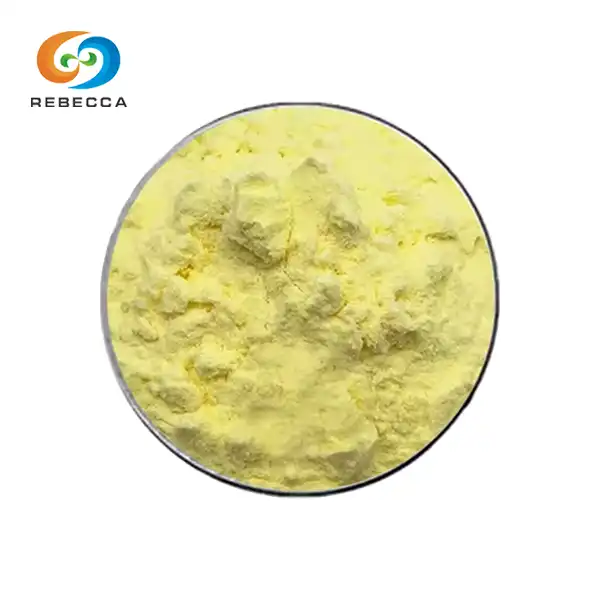
Appearance: Brown-yellow to White Powder
Mesh size:80 Mesh
Test Method: HPLC
How Gotu Kola Extract Supports Hair Growth
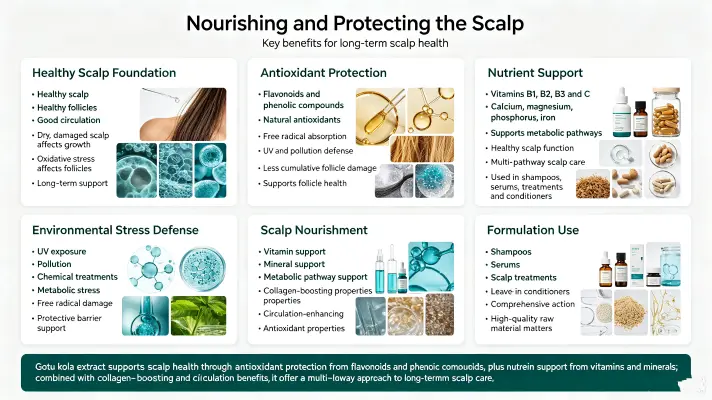
Hair doesn’t grow in a vacuum. It needs on a healthy scalp, with strong follicles and excellent blood circulation. The triterpenoids in Centella asiatica may help these fundamental conditions via two key mechanisms: increased scalp circulation and collagen formation.
Improving Scalp Blood Circulation
Good blood flow is the origin of healthy hair growth. Hair follicles are living structures, thus they are constantly supplied with oxygen, glucose and vitamins via tiny blood capillaries on the scalp . Poor circulation may cause follicles to shrivel and stop producing hair altogether.
The effects of Gotu Kola extract on the vascular system are well documented . Asiaticoside, a significant triterpenoid, has been shown to boost capillary wall strength and improve microcirculation. Studies on Centella asiatica have shown that these compounds may enhance the integrity of small blood arteries and boost blood flow in peripheral tissues.
What does this signify for our hair? The scalp is a peripheral tissue with a rich capillary supply. More oxygen and nutrients to each follicle ? That means greater micro-circulation. This promotes a more conducive environment for growth. Better blood flow may also assist in re-activating dormant follicles in areas of thinning hair.
Most vascular studies of the herb have been on venous insufficiency and wound healing, not specifically scalp circulation. The mechanism is plausible and the pharmacological evidence is strong but direct clinical trials measuring scalp blood flow after topical or oral dosing are still needed.
Boosting Collagen for Stronger Follicles
Collagen is the most common protein in your body. It has a structural role in the skin, connective tissue and – critically – the dermal layer of the scalp where the hair follicles are buried. With enough collagen, your follicles will be well supported. As it ages, the follicles usually become less structurally sound, which promotes to thinning and shedding.
One of the best known properties of Gotu Kola extract is its potential to improve the synthesis of collagen. The triterpenoids activate fibroblasts, the cells that create collagen. Studies on human skin fibroblasts have shown that Centella asiatica treatment increases the synthesis of type I collagen, the major structural collagen in skin and scalp tissue.
More collagen in the scalp means a better foundation for follicles. Stronger follicles will hold hair shafts more tightly, helping to reduce early loss. In addition, collagen provides the body with amino acids in particular proline and glycine, which are needed to generate keratin, the protein that makes up hair strands.
These benefits have been studied mostly within the framework of skin care and wound healing, but the biology underpinning these benefits is equally applicable to scalp tissue. The collagen boosting effect is a good base to increase hair strength and follicle health.
Good follicles and good blood supply provide the path for healthy growth. But what about the other side of the coin - reducing the elements that cause hair loss? Again, the anti-inflammatory and tissue-repairing properties of this natural ingredient may help.
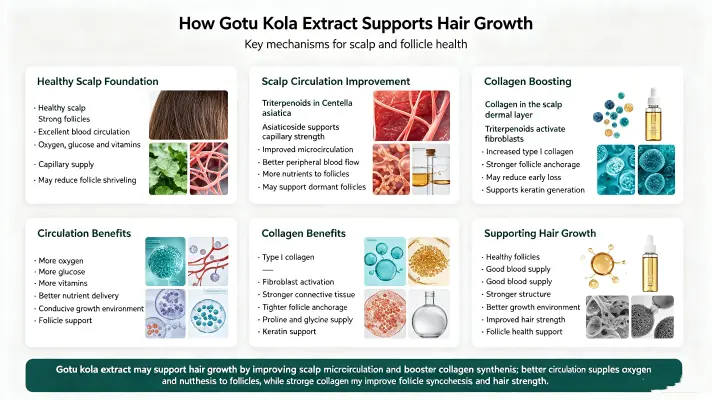
How It Helps Reduce Hair Loss
Hair loss often has more than one reason. Changes in hormones, heredity, stress, lack of nutrients and scalp conditions may all be involved. Centella asiatica is not a cure for hair loss, but its biological properties may target many underlying reasons at the same time.
Anti-Inflammatory Benefits for the Scalp
Another lesser known cause of hair loss is chronic inflammation of the scalp. Seborrheic dermatitis, folliculitis, or even microinflammation from stress may all harm follicles over time. Inflammation of the tissue surrounding a follicle may promote an early resting phase. If the inflammation persists the follicle may shrink permanently.
Gotu Kola extract has been shown in many studies to possess significant anti-inflammatory effects. Asiaticoside and madecassoside have been shown to inhibit pro-inflammatory cytokines and reduce tissue edema. Such effects have been shown in vitro in cell culture studies and in vivo in animal models.
For the scalp, this means the extract may help calm inflammatory processes that contribute to damage of the follicles. It may minimize chronic inflammation which may help follicles remain in the active growth phase longer. This is particularly true for those with hair loss and scalp inflammation or other inflammatory skin diseases.
Wound Healing and Follicle Recovery
Follicles may be killed by physical trauma, chemical treatments, tight hairstyles, or persistent scalp illnesses. You have to be able to repair this damage fast so you don’t lose your hair forever.
Perhaps the most widely known of the properties of Centella asiatica is its wound healing abilities. Asiaticoside has a variety of methods for promotion of tissue regeneration. It stimulates proliferation of fibroblast and increases collagen synthesis at sites of wounds. It enhances angiogenesis (creation of new blood vessels in treated tissue). These routes have been extensively studied for decades by the dermatological scientific community.
These restorative actions may speed up repair of damaged hair follicles in terms of hair health. The faster a follicle heals, the more likely it is to return to normal production. There are no clinical trials looking into Gotu Kola extract for follicular repair after injury, however the molecular mechanisms involved are well characterized.
Setting Realistic Expectations
It is crucial to be honest about what the evidence is showing now. Most study on this botanical ingredient has been related to skin healing, vascular health and tissue repair in general. Relatively few randomized controlled trials exist to evaluate hair density, thickness or growth rate in humans.
The benefits noted above are based on the known pharmacological properties and good biological extrapolation. The element is to be seen as a supportive factor that provides a positive environment for growth not a proven treatment in itself. If you’re experiencing significant hair loss, see a dermatologist or trichologist to discover what’s wrong with you before you put your confidence in one ingredient.
A well-nourished and protected scalp is just as important as addressing the causes of hair loss. Centella asiatica also possesses antioxidant levels and nutritional profile that offer extra advantages in this arena.
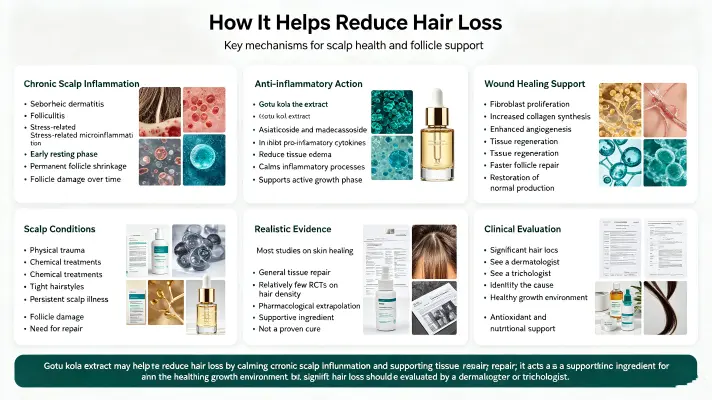
Nourishing and Protecting the Scalp
Healthy scalp leads to healthy hair. Healthy follicles and great circulation will assist but hair cannot grow on a dry, damaged or oxidative stressed scalp. This plant is full of bioactive compounds that provides numerous preventative and nourishing benefits to assist improve long term scalp health.
Antioxidant Protection for Hair Follicles
Oxidative stress, or damage to cells from free radicals, takes place in hair follicles. These unstable chemicals are produced by exposure to UV, pollution, chemical treatments and normal metabolic activity. Oxidative stress may damage the hair structure, kill cell of the follicle and accelerate the hair aging process over time.
Gotu Kola extract contains natural antioxidants such as flavonoids and phenolic compounds. Many parts of Centella asiatica were reported for considerable antioxidant activity in the studies. These substances absorb free radicals before they may harm the cells.
This implies less cumulative damage to the follicles on the scalp over time. Consistent topical use of hair care products with the chemical may provide a protective barrier against environmental stressors that might aid in maintaining follicle health and even prevent age-related thinning.
Nutrient Support for Scalp Tissue
In addition to its triterpenoids, Centella asiatica is also a good source of minerals for tissue health. They are rich in vitamins B (B1, B2, B3) and C and minerals including calcium, magnesium, phosphorus and iron. Gotu Kola extract alone cannot substitute a well-rounded diet yet these nutrients are part of metabolic pathways that enable healthy function of scalp tissue.
The extract’s nutritional profile, together with its collagen-boosting, circulation-enhancing and antioxidant properties, provide a multi-pathway approach to scalp care. One of the reasons for it is that the chemical has been utilized more and more in hair care products, such as shampoos, serums, scalp treatments and leave-in conditioners as a complete action.
For manufacturers and formulators that desire this ingredient in their products, the first step is to begin with an exceptional quality raw material. The efficacy of any finished product is directly influenced by how good the extract is.
Conclusion
Gotu Kola extract has a wide range of biological effects related to hair growth and scalp health. Its triterpenoid components have been shown to enhance microcirculation, stimulate collagen synthesis, reduce inflammation and accelerate tissue repair. These activities together provide a healthier environment for follicles to grow and remain healthy.
Transparency is a good thing. The most of the work on Centella asiatica focused on the studies of skin care and wound healing. Direct clinical research on hair growth in people are rare. This item should be regarded a promising additional ingredient – not a cure-all for hair loss.
The addition of this to a complete hair care routine may be of considerable benefit to consumers, particularly in terms of the health of their scalp. Its multi-pathway action makes it a versatile addition to formulators’ and manufacturers’ product lines. But any way, to get the intended effects you need to have a top grade, well standardized extract.
FAQ
1. Can Gotu Kola extract regrow hair on its own?
There is no strong clinical evidence that it can regrow hair as a standalone treatment. However, its ability to improve circulation, boost collagen, and reduce inflammation creates conditions that may support healthier growth. It works best as part of a comprehensive hair care approach.
2. How is it used for hair — topically or orally?
Both methods are common. Topical application through serums, shampoos, or scalp treatments delivers the active compounds directly to the scalp. Oral supplements provide systemic benefits such as improved circulation and collagen synthesis throughout the body. The best approach depends on individual needs and product formulation.
3. What are the active compounds in Centella asiatica?
The primary bioactive compounds are triterpenoids: asiaticoside, madecassoside, asiatic acid, and madecassic acid. These are responsible for most of the plant's biological effects. High-quality extracts are typically standardized to a defined percentage of total triterpenoids using HPLC analysis.
4. Is Gotu Kola extract safe to use?
Centella asiatica has a long history of safe use in traditional medicine and modern cosmetics. Topical application is generally well-tolerated. Oral supplements are considered safe for most adults at recommended doses. However, individuals who are pregnant, breastfeeding, or taking liver-related medications should consult a healthcare provider first. Allergic reactions are rare but possible.
5. How long before I see results?
Hair growth is a slow biological process. A single follicle takes 2–6 months to produce visible new growth. Any supportive ingredient requires consistent use over several months before results can be meaningfully assessed. There is no quick fix for hair growth, regardless of the ingredient used.
Choosing a Quality Supplier
Why Extract Quality Matters
Not all botanical extracts are created equal. The concentration of active triterpenoids — especially asiaticoside and madecassoside — varies significantly depending on the plant source, extraction method, and manufacturing standards. A low-quality product may contain insufficient levels of active compounds, reducing its effectiveness in any formulation.
When evaluating a Gotu Kola extract supplier, look for clearly defined specifications. Key factors include the percentage of total triterpenoids, standardization method (typically HPLC), heavy metal testing results, and microbial safety data. Third-party certifications such as GMP compliance provide additional assurance.
Rebecca Bio-Tech: Reliable Supply with Verified Quality
Rebecca Bio-Tech is a China-based manufacturer specializing in botanical extracts, including standardized Centella asiatica extract. Their product is manufactured under controlled quality conditions with defined triterpenoid content.
What sets Rebecca Bio-Tech apart for B2B buyers:
· Free samples available — Evaluate product quality before committing to an order
· MSDS documentation provided — Full Material Safety Data Sheets for safe handling and regulatory compliance
· COA (Certificate of Analysis) — Batch-specific testing results for transparency and verification
· Flexible supply capacity — Suitable for both small-scale formulators and large manufacturers
Whether you are developing a scalp treatment serum, a hair growth supplement, or a shampoo formulation, starting with verified, high-quality raw material is essential for product efficacy and consumer trust.
Request Your Free Sample Today
Looking for pharmaceutical-grade or cosmetic-grade Centella asiatica extract for your next formulation? Rebecca Bio-Tech provides standardized extract with full documentation.
· Free sample for quality evaluation
· MSDS and COA included
· Technical support for formulation guidance
contact us: information@sxrebecca.com Our team typically responds within 24 hours with product specifications and pricing.
References
1. Bylka, W., Znajdek-Awiżeń, P., Studzińska-Sroka, E., & Brzezińska, M. (2013). Centella asiatica in cosmetology. Postepy Dermatologii i Alergologii, 30(1), 46–49.
2. Hashim, P., Sidek, H., Helan, M. H., Sabery, A., Palanisamy, U. D., & Ilham, M. (2011). Triterpene composition and bioactivities of Centella asiatica. Molecules, 16(2), 1310–1322.
3. Gohil, K. J., Patel, J. A., & Gajjar, A. K. (2010). Pharmacological review on Centella asiatica: A potential herbal cure-all. Indian Journal of Pharmaceutical Sciences, 72(5), 546–556.
4. Brinkhaus, B., Lindner, M., Schuppan, D., & Hahn, E. G. (2000). Chemical, pharmacological and clinical profile of the East Asian medical plant Centella asiatica. Phytomedicine, 7(5), 427–448.
5. Zainol, M. K., Abd-Hamid, A., Yusof, S., & Muse, R. (2003). Antioxidative activity and total phenolic compounds of leaf, root and petiole of four accessions of Centella asiatica (L.) Urban. Food Chemistry, 81(4), 575–581.
6. Sh Ahmed, A., Taher, M., Mandal, U. K., Jaffri, J. M., Susanti, D., Mahmood, S., & Zakaria, Z. A. (2019). Pharmacological properties of Centella asiatica hydrogel in accelerating wound healing in rabbits. BMC Complementary and Alternative Medicine, 19(1), 1–7.
 EXTRACT_1756803389333.jpg)