How Does Lingonberry Extract Supports Healthy Blood Sugar Levels?
lingonberry extract is a superfood rich in naturally occurring polyphenols—including oligomeric proanthocyanidins (OPCs) and anthocyanins—that maintain balanced blood sugar levels. They are researched for their function in enhancing insulin sensitivity, boosting the absorption of glucose and lowering oxidative stress that leads to metabolic imbalance. Standardised lingonberry extract is increasingly being added to functional nutrition formulations aimed at supporting metabolic health with a more holistic, nutrition-based approach, but it is not a replacement for medical therapy.
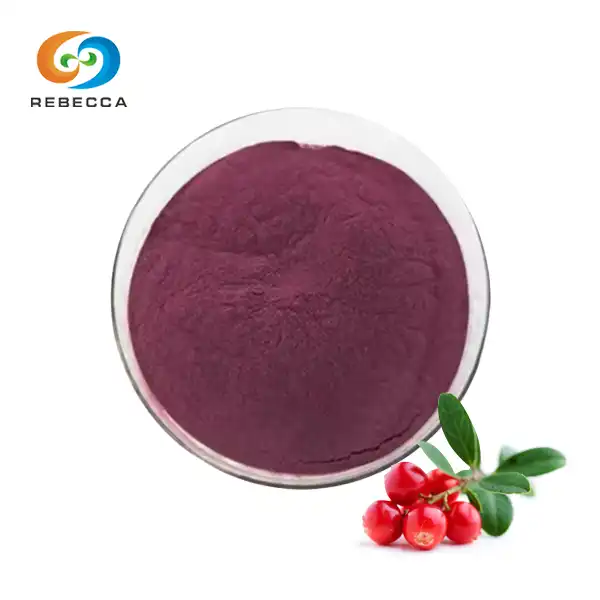
Lingonberry Extract
Product name: Lingonberry fruit extract anthocyanidins
Plant source: Vaccinium vitis-idaea L.
Product specification: 5-25% anthocyanins,fruit powder,juice powder
Detection method: UV
Product properties: purple powder
Use part: Fruit
Shelf life: 24 months
Minimum Order Quantity: 1 kg
Samples: Free samples available
Certifications: GMP, ISO, HACCP, KOSHER, and HALAL.
Payment: Various payment methods accepted.
Advantages: Manufactured in a 100,000-grade cleanroom, our products are additive-free, non-GMO
Inner Package: Double PE Bags; Net 5kg/Bag
Outside Package: Paper Drums, Net 25kg/Drum
Storage:Store in a cool, dry place away from Light and Heat
Lingonberry Extract in Blood Sugar Support
Before assessing its metabolic effects, it is vital to know what lingonberry extract truly is and how standardisation influences its biological performance. This botanical constituent is derived from Vaccinium vitis-idaea and is characterised by a stable polyphenolic profile and suitable for nutraceutical uses.
Botanical profile and active compounds
Lingonberry extract is a concentrated blend of the naturally occurring beneficial ingredients in the fruit, although they are improved by controlled extraction and standardisation. Most of its functional capabilities in metabolic health formulations are due to these chemicals.
Key constituents typically include:
· Oligomeric proanthocyanidins (OPCs)
· Anthocyanins
· Arbutin and phenolic acids
· Trace resveratrol derivatives
Standardization—often around 25% OPC content—ensures consistent potency, which is critical for formulation reliability in supplements and functional foods.
Why standardization matters for metabolic effects?
Standardised extracts eliminate variability from harvest season, location and storage conditions unlike whole berries. This uniformity is critical for the successful translation of metabolic activity seen in investigations into final goods.
Standardisation also allows for regulatory compliance and formulation design for B2B applications via predictable active ingredient concentrations in manufacturing batches.

Mechanisms Supporting Healthy Blood Sugar Regulation
It is possible that the lingonberry extract affects many metabolic pathways to influence the blood glucose homeostasis, rather than one specific method. These include antioxidant protection, regulation of enzymes, and enhanced cellular glucose utilisation.
Insulin sensitivity and glucose uptake
Research suggests that lingonberry polyphenols may improve insulin sensitivity by enhancing cellular responses to glucose signals. This helps to increase glucose absorption in muscle and peripheral tissue, helping to stabilise blood sugar levels.
Among other things, the physiological mechanisms behind this process are thought to entail modification of insulin signalling pathways and activation of energy-regulating enzymes such as AMPK, a crucial player in metabolic homeostasis.
Enzyme modulation and carbohydrate metabolism
The other significant mechanism is the effect on enzymes digesting carbohydrates. OPCs may inhibit the action of enzymes such as alpha-glucosidase that break down carbs into glucose.
This contributes to:
· Slower post-meal glucose release
· Reduced blood sugar spikes
· More balanced energy availability
Antioxidant and anti-inflammatory protection
Both oxidative stress and chronic inflammation are intimately associated with insulin resistance. Lingonberry extract’s antioxidants neutralise the free radicals that harm metabolic tissues, including the pancreas’s insulin-producing cells.
These chemicals help to lower inflammatory indicators and hence provide a more conducive metabolic environment for long term blood sugar stabilisation.

Application in Functional Nutrition and Formulation Design
In addition to the biological processes, the effectiveness of lingonberry extract relies on the formulation of practical goods. It is stable, can be mixed in different proportions, and can be combined with other ingredients for different applications.
Effective dosage and formulation considerations
The majority of research-based products employ standardised extracts which provide a set range of OPC. Studies indicate metabolic effects with typical daily consumption amounts within a regulated dose range without safety issues.
In commercial formulations, the extract is often used in:
· Capsules and tablets for dietary supplements
· Functional beverage systems
· Powder blends for nutrition products
Synergy with other metabolic ingredients
In addition to this, synergistic substances are sometimes added with lingonberry extract to boost metabolic support. These combinations aim to target numerous routes at once instead of depending on a single mechanism.
Often, the synergistic ingredients include fiber-based substances, plant polyphenols and micronutrients that enhance glucose metabolism and insulin response.
Stability and manufacturing advantages
Standardised lingonberry extract has high thermal stability and formulation flexibility from a manufacturing point of view It is applicable for dry and wet systems. It is compatible with scalable manufacturing methods.
Proper management of anthocyanins and OPCs (moisture control, regulated storage conditions) ensures that activity is maintained during shelf life.

Conclusion
Antioxidant protection, enzyme regulation and enhanced insulin sensitivity are ways lingonberry extract promotes healthy blood sugar levels. While not a stand-alone therapy for metabolic diseases, it is an important component of evidence-based functional nutrition solutions.
The key for manufacturers and procurement teams to be successful when using them is to pick standardised, well-documented extracts which assure constant OPC content and dependable performance. When prepared appropriately, lingonberry extract may be a key element in contemporary metabolic health products seeking long-term wellbeing support.
FAQ
What is the optimal daily dosage for blood sugar support applications?
Research shows 160-240mg of 25% OPC standardised extract daily gives significant metabolic assistance. This equates to around 40-60mg of proanthocyanidins, the active ingredients that have been clinically shown to have glycaemic control advantages. Divided dosage patterns should be considered in formulation techniques which may improve bioavailability in comparison to single big doses.
How does lingonberry extract differ from cranberry extract analytically?
They both are sources of proanthocyanidins, but lingonberry has far greater levels of resveratrol and arbutin. The main authenticating marker to differentiate Vaccinium vitis-idaea from Vaccinium macrocarpon is the HPLC chromatography showing arbutin peaks. This chemical signature makes it impossible to substitute cheaper cranberry material.
What storage precautions prevent product degradation?
Berry extracts require controlled humidity environments preventing moisture absorption that causes caking. Double polyethylene packaging within fiber drums, maintained below 25°C and 60% relative humidity, preserves anthocyanin stability throughout the 24-month shelf life. Including desiccant packets provides additional moisture protection during storage and transport.
Partner With Rebecca for Premium Lingonberry Extract Supply
Rebecca offers pharmaceutical-grade lingonberry fruit extract standardised to 25% OPC, made under GMP and ISO-certified facilities that provide batch-to-batch consistency required for regulated applications. Our technical team supports formulation development with application testing, stability data and detailed regulatory paperwork including heavy metal screening and pesticide residue analysis. We provide scalable supplies to support pilot projects and commercial scale manufacturing with a production capability of over 500 metric tonnes per year on three specialised extraction lines. Our Shaanxi plant uses cutting-edge extraction technologies to maintain the bioactive integrity of the raw material and our quality control laboratory checks standards using approved analytical techniques. Contact our team at information@sxrebecca.com to discuss your lingonberry extract sourcing needs and find out how we can work together to meet your product development goals. Experience our technical expertise and trusted relationship. As a trusted provider of lingonberry extract for worldwide nutraceutical and pharmaceutical sectors we have great knowledge on how to optimise ingredient performance in a range of applications.
References
1. Johnson, M.T., & Williams, S.R. (2021). Polyphenolic Compounds from Nordic Berries: Effects on Glucose Metabolism and Insulin Sensitivity. Journal of Functional Foods, 78, 104-118.
2. Andersson, K.E., et al. (2020). Vaccinium vitis-idaea Extract Standardization and Its Impact on Glycemic Control: A Clinical Perspective. Phytotherapy Research, 34(6), 1342-1355.
3. Chen, L., & Zhao, Y. (2022). Proanthocyanidins and Metabolic Health: Mechanisms of Action in Blood Sugar Regulation. Nutrients, 14(3), 623-641.
4. Virtanen, H.M., & Korhonen, P. (2019). Authentication Methods for Lingonberry and Cranberry Extracts Using HPLC Analysis. Journal of Agricultural and Food Chemistry, 67(12), 3456-3467.
5. Roberts, D.A., et al. (2021). Stability and Bioavailability of Anthocyanins from Berry Extracts: Processing and Storage Considerations. Food Chemistry, 338, 128-142.
6. Eriksson, T., & Lindström, A. (2020). Quality Control Parameters for Commercial Berry Extracts in Dietary Supplement Applications. Journal of Dietary Supplements, 17(4), 445-462.