How Is Lingonberry Extract Used in Healthy Food Products?
In the food and beverage sector, lingonberry extract has become a much sought-after functional ingredient due to its high bioactive chemical concentration and flexibility in formulation. This botanical extract is derived from Vaccinium vitis-idaea berries and provides standardised amounts of oligomeric proanthocyanidins (OPCs), anthocyanins and naturally occurring arbutin. Functional food makers are using this extract in drinks, nutritional supplements, protein bars and dairy substitutes to boost antioxidant profiles and wellness positioning. The thermal stability of the extract, its water solubility and its compatibility with different processing processes make it perfect for large scale production situations where consistency and shelf life matter most to procurement managers and R&D teams.
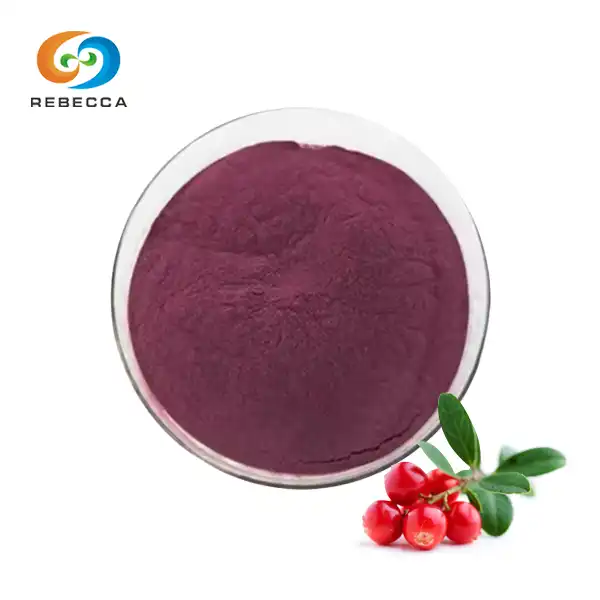
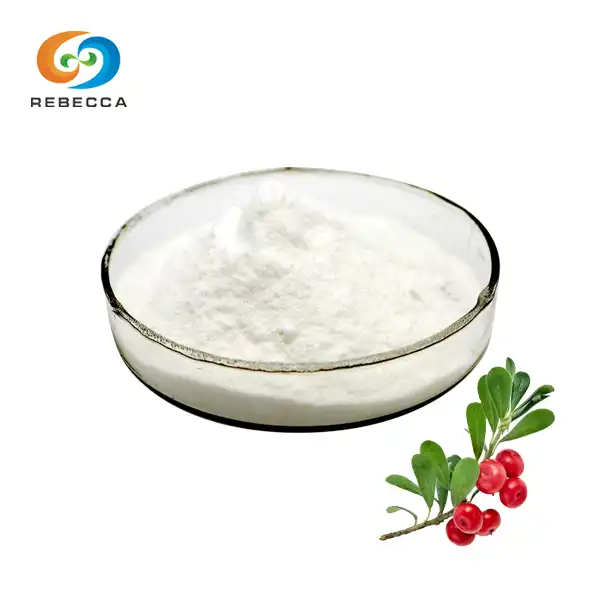
Product name: Lingonberry fruit extract anthocyanidins
Plant source: Vaccinium vitis-idaea L.
Product specification: 5-25% anthocyanins,fruit powder,juice powder
Detection method: UV
Product properties: purple powder
Use part: Fruit
Shelf life: 24 months
Shelf Life: 2 years
Minimum Order Quantity: 1 kg
Samples: Free samples available
Certifications: GMP, ISO, HACCP, KOSHER, and HALAL.
Payment: Various payment methods accepted.
Advantages: Manufactured in a 100,000-grade cleanroom, our products are additive-free, non-GMO
Inner Package: Double PE Bags; Net 5kg/Bag
Outside Package: Paper Drums, Net 25kg/Drum
Storage:Store in a cool, dry place away from Light and Heat.
Lingonberry Extract Functional Benefits
To properly appreciate the usefulness of lingonberry extract in the creation of functional food, it is necessary to begin with the features of its source and manufacturing method. The final extract's purity, activity and formulation flexibility are directly determined by the botanical origin and expert extraction technique, creating a firm basis for its various functional benefits.
Botanical Origins and Extraction Process
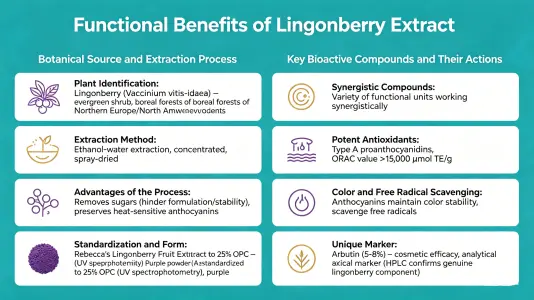
Vaccinium vitis-idaea is an evergreen shrub found in boreal forests of Northern Europe and North America and produces little sour berries rich in phenolic compounds. Ethanol-water extraction is used to get professional-grade extracts. These extracts are then concentrated and spray-dried. This process eliminates sugars that hinder formulation and reduce product stability, while retaining heat-sensitive anthocyanins.
Rebecca's Lingonberry Fruit Extract is standardised for 25% OPC content, as determined by UV spectrophotometry. The purple powder format provides better handling than liquid concentrates, especially in dry-mix applications, where moisture control avoids clumping in storage.
Key Bioactive Compounds and Their Roles
The extract has many functional units which perform synergistically. The Type-A proanthocyanidins are powerful antioxidants with ORAC values generally exceeding 15,000 μmol TE/g in good-quality extracts. Anthocyanins are responsible for colour stability and free radical scavenging.
What makes lingonberry unique among berry extracts is the presence of naturally occurring arbutin in the range of 5-8%. The chemical has particular features in cosmetic applications and may be used as an analytical marker for authenticity. HPLC testing reveals that arbutin peaks are authentic lingonberry ingredients, not adulterated or replaced.
Application of Lingonberry Extract in Functional Food Products
Lingonberry extract as a multi-scenario functional ingredient has varied formulation features and technological benefits in diverse food systems. Beverage products are a very common use of it, and the water solubility, thermal stability and sensory compatibility of the extract are entirely compatible with the manufacturing and market requirements of functional drinks.
Functional Beverage Formulations
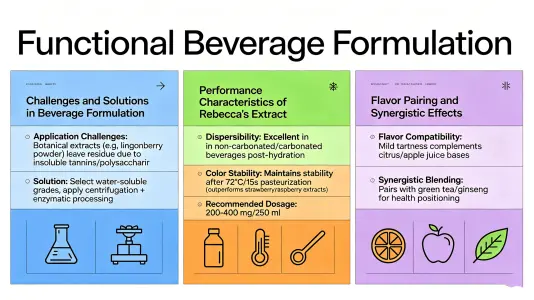
The use of botanical extracts in the beverage industry presents particular problems to innovation managers. Standard lingonberry powders may also leave visible residue owing to the presence of insoluble tannins and polysaccharides. For this one has to specify water soluble grades, which are centrifuged and enzymatically treated.
When adequately hydrated, Rebecca’s extract has good dispersion in still and carbonated drinks. The substance has good colour stability during pasteurisation process at 72°C for 15 seconds, better than strawberry and raspberry extracts that degrades by thermal stress. Beverage formulators commonly dosage at 200-400mg per serving of 250ml to achieve functional and sensory aims.
Its gentle tartness compliments citrus and apple juice bases without overwhelming sensitive flavour systems. Synergistic compositions that hit numerous wellness positioning aspects when paired with green tea extracts or ginseng.
Nutritional Bar and Snack Applications
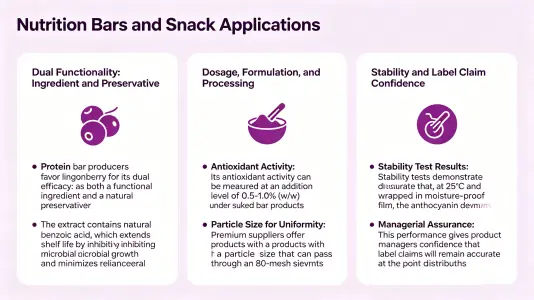
Protein bar makers like lingonberry’s dual role as a functional ingredient and natural preservative. The extract contains natural benzoic acid that increases shelf life by inhibiting microbial development and minimising dependency on synthetic preservatives such as potassium sorbate.
The antioxidant activity may be measured at incorporation levels of 0.5-1.0 % (w/w) and at appropriate moisture conditions. The purple powder easily blends in cold-formed and baked bar processes. The good vendors will offer particle sizes that will pass 80 mesh screens for uniformity across the matrix.
Stability testing shows that anthocyanin degradation is less than 15% after 6 months at 25 oC when bars are wrapped in moisture-barrier films. This performance gives product managers peace of mind that the label claims will stay correct at the time of distribution.
Dietary Supplement Formulations
For supplement companies seeking clinical positioning, extracts with consistent batch-to-batch characteristics are required. GMP-certified manufacturing assures that each production lot satisfies specification ranges and certificates of analysis record OPC content, heavy metal limits and microbiological parameters.
Extracts are usually taken in capsule form at doses of 200-300mg per serving, generally together with vitamin C to improve the bioavailability of PAC. The hygroscopic quality of the extract should also be considered during tablet compressing. The extract tends to adhere to the punch and die at high speed production and to avoid this flow agents such as silicon dioxide are used at 1-2%.
Properly kept extract powder has a 24-month shelf life, giving supplement makers acceptable lead periods for worldwide distribution. Inner packing with double PE bag and outside packing with fibre drum is good for protection for moisture infiltration during ocean freight and is a key factor for overseas customers.
Dairy Alternative and Functional Food Matrices
Plant-based yoghurt and dairy replacement makers use berry extracts to increase polyphenol content and enhance the colour. The extract is compatible with probiotic bacteria which allows the use of the extract in fermented goods, although the extract should be added after fermentation to avoid destruction of anthocyanins in the acidification process.
Lingonberry's freeze-thaw resilience is beneficial for frozen dessert applications. Unlike certain fruit concentrates, which may phase-separate, the extract retains its colour brilliance during many freeze-thaw cycles, without considerable precipitation.
The functional properties of lingonberry extract are exactly aligned with the market consumer requirements, which is completely expressed in wellness beverage products for mass health needs. This excellent instance of beverage creation shows how to optimise extract application technique for balanced impacts of functionality, sensory experience and shelf stability.
Case Studies: Successful Incorporation of Lingonberry Extract in B2B Products
Functional Wellness Beverages
A European beverage maker produced a women’s health drink that mixes lingonberry extract with cranberry and vitamin C. Since the water-soluble grade was chosen by the formulation team to enhance clarity in glass packaging, where visual appeal is a key factor in purchase choices.
Pilot manufacturing found effective hydration protocols: mixing the extract in glycerin before diluting into the aqueous phase minimised settling during storage. Sensory panels indicated that 300mg per serving gave discernible acidity without bitterness and microbiological tests established a 12-month shelf life at ambient temperatures.
The market has outperformed expectations with repeat purchase rates of 34% driven by both functional positioning and taste pleasure. Later, the producer added lingonberry-elderberry and lingonberry-hibiscus to the portfolio.
Sports Nutrition Supplement Line
A North American sports nutrition firm modified their antioxidant recovery capsules to add lingonberry with green tea extract and quercetin. The product manager was looking for berry-derived PACs to differentiate from competing goods that used just synthetic antioxidants.
Manufacturing experiments showed compatibility with vegetarian capsule shells and no discolouration in accelerated stability tests. The brand’s marketing capitalised on “Nordic berry antioxidants”, tapping into the customer need for new ingredient tales.
Post-launch study indicated 22% greater conversion rates than the preceding formula, owing to both perceived improvements in effectiveness and clean label placement. The success of this encouraged the corporation to try lingonberry in other product lines.
Conclusion
The lingonberry extract provides substantial functional advantages in a variety of dietary applications, from ready-to-drink drinks to encapsulated supplements. Its standardised OPC concentration, thermal stability and natural preservation capabilities address typical formulation issues and promote clean label efforts. Successful integration requires attention to extract solubility grades, suitable hydration processes and supplier agreements assuring batch consistency and regulatory compliance. With consumer demand for Nordic botanicals on the rise, firms using lingonberry extract may obtain competitive advantages by differentiating their ingredients and marketing them with scientifically backed health benefits.
Partner With Rebecca for Premium Lingonberry Extract Supply
Rebecca is focused on providing botanical extracts of pharmaceutical quality to suit the stringent requirements of functional food producers throughout the globe. Our Lingonberry Fruit Extract is standardised to 25% OPC using approved UV technique and is tested for heavy metals, pesticide residues and microbiological factors via full quality testing. With an annual production capacity of over 500 metric tonnes and certifications such as ISO 22000, HACCP and GMP, we provide procurement managers the supply dependability and technical documents they need.
Our R&D team provides formulation help for optimising solubility, stability testing, and synergistic compound combinations. If you want pilot numbers for product development or container-load volumes for established production, we provide flexible MOQs with consistent quality across all batch sizes. Rebecca offers double inside packaging for PE bags and outside packaging with fibre drums so that you may have a lingonberry extract provider that delivers items in perfect condition regardless of the distance they have to travel.
Contact our technical sales team at information@sxrebecca.com to request certificates of analysis, pricing information, or product samples demonstrating why leading functional food brands trust Rebecca as their long-term lingonberry extract supplier.
FAQ
What dosage of lingonberry extract is appropriate for functional foods?
Effective dosing depends on the intended health positioning. For general antioxidant support, 150-250mg of 25% OPC extract per serving suffices. Products targeting urinary tract wellness should provide 160-240mg daily to deliver the clinically relevant 40-60mg PAC threshold. Beverage applications often use 200-400mg per serving to balance functionality with cost considerations.
How does lingonberry extract compare to cranberry extract in health benefits?
Both berries contain Type-A proanthocyanidins supporting urinary tract wellness through bacterial anti-adhesion mechanisms. Lingonberry uniquely provides higher concentrations of resveratrol and naturally occurring arbutin, offering additional antioxidant pathways. HPLC analysis distinguishes the two through arbutin peaks characteristic of lingonberry, preventing substitution or adulteration.
Are there known side effects or contraindications?
Lingonberry extract demonstrates excellent safety profiles in clinical observations. The presence of natural coumarins and salicylates warrants precautionary labeling for individuals taking anticoagulant medications like Warfarin, particularly in high-dose formulations. Standard functional food applications pose minimal interaction risks.
References
1. Kylli, P., Nohynek, L., Puupponen-Pimiä, R., et al. (2011). Lingonberry (Vaccinium vitis-idaea) phenolics: isolation, characterization, and bioactivities. Journal of Agricultural and Food Chemistry, 59(8), 3373-3384.
2. Howell, A.B., Reed, J.D., Krueger, C.G., et al. (2005). A-type cranberry proanthocyanidins and uropathogenic bacterial anti-adhesion activity. Phytochemistry, 66(18), 2281-2291.
3. Esposito, D., Chen, A., Grace, M.H., et al. (2014). Inhibitory effects of wild blueberry anthocyanins and other flavonoids on biomarkers of acute and chronic inflammation in vitro. Journal of Agricultural and Food Chemistry, 62(29), 7022-7028.
4. Raudsepp, P., Kaldmäe, H., Kikas, A., et al. (2019). Nutritional quality of berries and bioactive compounds in the leaves of black currant, red currant, gooseberry, and sea buckthorn cultivars. Food Chemistry, 277, 394-403.
5. Gopalan, A., Reuben, S.C., Ahmed, S., et al. (2012). The health benefits of blackcurrants. Food & Function, 3(8), 795-809.
6. Routray, W., & Orsat, V. (2011). Blueberries and their anthocyanins: factors affecting biosynthesis and properties. Comprehensive Reviews in Food Science and Food Safety, 10(6), 303-320.