How to extract curcumin from turmeric?
As the core raw material of natural health products, turmeric contains curcumin that has a wide range of application value in improving physical condition and promoting metabolism due to its mild active properties. For health care product manufacturers, to achieve large-scale factory extraction of Curcumin powder, , it is necessary to ensure product purity and activity, as well as production efficiency, cost control and safety compliance, which requires a set of scientific and standardized process system support.
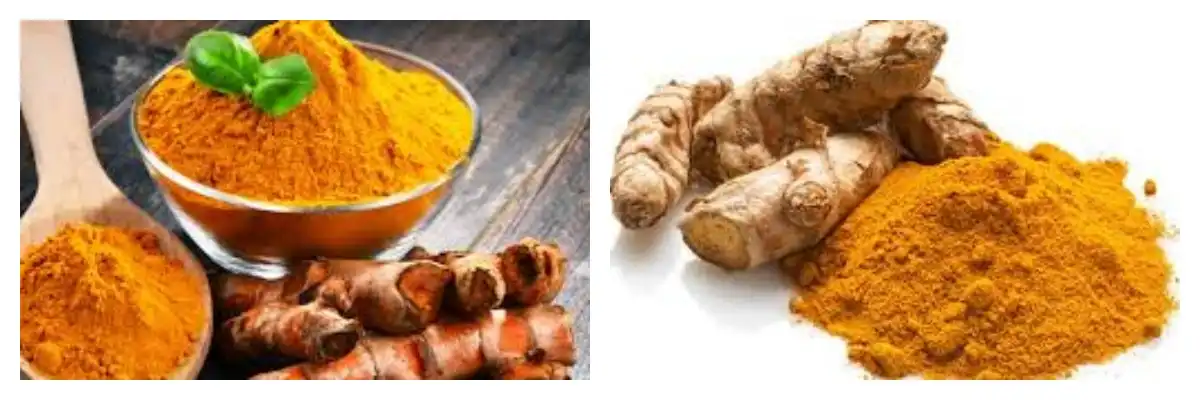
I. Core Objectives and Prerequisites of Factory Extraction: Large-Scale, High Purity, and Compliance
The core difference between factory-level curcumin powder extraction and laboratory-scale or home-based trials lies in simultaneously meeting three major objectives: "large-scale production," "high purity standards," and "compliance with health supplement production regulations." Large-scale extraction requires processes adapted to industrial equipment, enabling continuous or batch-based efficient production. To get high purity, you need to raise the curcumin content to the specifications for health supplement raw materials (typically at least 95%), and get rid of starch, fiber, contaminants, and other inactive parts. Compliance means that the whole manufacturing process has to follow GMP (Good Manufacturing Practices) and that the levels of heavy metals and solvent residues have to fulfill national food safety regulations. The first step to reaching these goals is to build a strong manufacturing base by controlling the raw materials and planning the process.
Factory production places extremely high demands on the stability and safety of raw materials. Turmeric raw materials must undergo rigorous acceptance before being used in production. The raw material acceptance process requires verification of the origin, planting environment, and pesticide residue test reports. Priority should be given to high-quality dried turmeric rhizomes with a curcumin powder content ≥3%, requiring no mold, no insect infestation, and a moisture content ≤10%. Simultaneously, heavy metal (lead, mercury, cadmium) testing must be conducted to ensure compliance with the standards for health product raw materials.
II. Mainstream Extraction Processes in Factories: High Efficiency, Environmentally Friendly, and Suitable for Large-Scale Production
Factory-grade curcumin powder extraction needs to be based on laboratory methods, combined with the characteristics of industrial equipment and environmental protection requirements, and the appropriate process scheme should be selected. At present, the three most widely used processes in the industry are: large-scale solvent extraction method, ultrasonic-microwave collaborative extraction method, and supercritical CO₂ extraction method.
2.1 Large-scale solvent extraction method: mature and stable mass production scheme
Large-scale solvent extraction method is the most widely used process in the early stage of the factory, based on the principle of "similar miscibility", through industrial-grade equipment to achieve batch production, with the advantages of mature process, low equipment investment and simple operation, suitable for the initial mass production of small and medium-sized health care product enterprises.
In factory production, solvent selection should take into account extraction efficiency and safety compliance, and prioritize the use of food-grade ethanol (95% concentration) or ethyl acetate, and avoid the use of industrial-grade solvents. The production equipment mainly includes extraction tanks, stirring systems, sandwich insulation devices, and plate and frame filter presses. During extraction, the raw materials and solvents are put into the extraction tank according to the solid-liquid ratio of 1:8 (turmeric powder: solvent), the stirring system (speed 60r/min) is turned on, and the extraction temperature is controlled at 45-50 °C by sandwich steam heating, and the extraction time is 4 hours.
2.2 Ultrasonic-microwave collaborative extraction method: an efficient and energy-saving upgrade solution
With the development of industrial technology, ultrasound-microwave collaborative extraction method has gradually become the preferred solution for medium and large enterprises, which is based on the solvent extraction method, combined with the cavitation effect of ultrasonic wave and the rapid heating characteristics of microwave, which greatly improves the extraction efficiency, shortens the production cycle, and reduces the amount of solvent and environmental protection pressure.
The advantage of this process is high efficiency and energy saving, but it requires high equipment stability, and it is necessary to regularly calibrate the microwave power and ultrasonic frequency to avoid curcumin decomposition caused by excessive local temperature. After the extraction is completed, the filtrate is directly transported to the subsequent purification link through the pipeline to achieve continuous production connection.
2.3 Supercritical CO₂ extraction method: high-purity, residue-free high-end solution
Supercritical CO₂ extraction method is the most advanced curcumin powder extraction process, using CO₂ in a supercritical state as the extraction medium, with no solvent residue, low extraction temperature, and good retention of active ingredients, suitable for the production of high-purity curcumin raw materials (purity ≥98%), suitable for high-end health product production lines. The core equipment of this process is a supercritical extraction kettle, a separation kettle, a CO₂ storage tank, and a high-pressure pump, and the whole system needs to have high-pressure sealing performance (extraction pressure 30-40MPa).
During production, turmeric powder is loaded into the extraction kettle, passed through the purified CO₂, and the system pressure is raised above the critical pressure through a high-pressure pump, while the extraction temperature is controlled at 35-40°C to make the CO₂ in a supercritical state. Supercritical CO₂ has a strong solubility and can quickly dissolve curcumin, while almost insoluble in impurities such as starch and fiber.
The supercritical CO₂ containing dissolved curcumin enters the separation vessel through a throttling valve. Inside the separation vessel, the pressure drops to 10-15 MPa and the temperature drops to 25-30℃. The CO₂ loses its supercritical properties, and curcumin crystallizes out, achieving separation from the CO₂. The separated CO₂ can be recycled after cooling and pressurization. The extraction time is 2-3 hours, and the extraction rate can reach over 95%. This process eliminates the need for organic solvents, resulting in a residue-free and high-purity product. However, it requires a significant initial investment in equipment and consumes more energy than other processes, making it suitable for large-scale production of high-end raw materials.
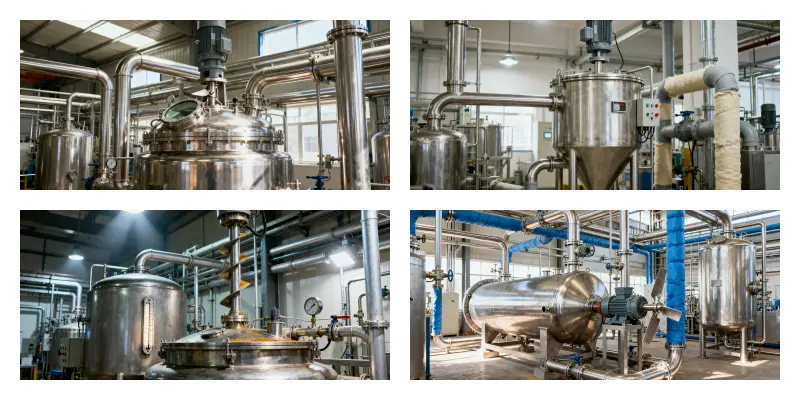
III. Factory-Level Post-Processing: Standardized Processes for Purification, Concentration, and Drying
The extracted filtrate (or extract) requires post-processing steps such as purification, concentration, and drying to obtain a finished curcumin powder that meets standards. Factory post-processing processes must be automated using specialized equipment to ensure stable product purity and uniform quality, while preventing the loss of active ingredients.
3.1 Purification: Removing Impurities and Improving Curcumin Purity
The core objective of factory purification is to remove impurities such as starch, polysaccharides, and pigments from the filtrate, increasing the curcumin purity from 30%-50% after extraction to over 95%. Currently, the mainstream purification processes are column chromatography and crystallization. Factories typically employ a combination of column chromatography and recrystallization to balance purification efficiency and purity.
3.2 Concentration and Drying: Obtaining a Stable Solid Product
Purified curcumin crystals require concentration and drying to remove residual solvents and moisture, resulting in a stable solid product. The concentration process utilizes an industrial-grade rotary evaporator or thin-film evaporator, with appropriate equipment selected for different processes: For solvent extraction, the eluent is concentrated using a rotary evaporator at 50-55℃ and a vacuum of -0.09 MPa to remove solvents such as ethyl acetate and ethanol; crystals from supercritical fluid extraction proceed directly to the drying stage.
The drying stage is crucial for ensuring product stability. The factory uses a vacuum freeze dryer or spray dryer. The dried curcumin powder is then pulverized and sieved (100 mesh) to ensure uniform particle size before being transferred to a sealed finished product silo for storage.
IV. Quality Control in Factory Production
For large-scale curcumin powder production, quality control and safety compliance are core guarantees. A full-process traceability system from raw materials to finished products must be established, while simultaneously meeting environmental protection and safety production requirements.
The factory must establish a dedicated quality testing laboratory, equipped with professional equipment such as HPLC (High Performance Liquid Chromatography), atomic absorption spectrophotometer, and gas chromatograph to achieve real-time monitoring at key stages. Upon arrival at the factory, raw materials are tested for curcumin content, moisture, pesticide residues, and heavy metals. During the extraction process, the curcumin concentration in the filtrate is measured to monitor the extraction rate. During purification, the purity of the eluent is tested using HPLC to ensure the removal of impurities. Finished product testing includes curcumin purity (≥95%), moisture (≤2%), solvent residue (≤50mg/kg), and heavy metals (lead ≤0.5mg/kg, mercury ≤0.1mg/kg). Only products meeting all standards are released from the factory. A batch traceability system is also established, recording the raw material number, production time, equipment parameters, and test results for each production batch to ensure product quality traceability.
Large-scale curcumin powder extraction in the factory is a crucial step in transforming natural turmeric into a raw material for health products. The core lies in achieving high purity, stability, and compliance of the product through standardized raw material processing, suitable extraction processes, and strict post-processing procedures. Different production processes are suitable for different scenarios, and companies need to choose the appropriate process based on their own scale and product positioning, while establishing a sound quality control and safety compliance system. With continuous upgrades in technology, curcumin powder production will become more efficient and environmentally friendly, providing the health supplement industry with higher-quality natural active ingredients and contributing to the popularization and development of natural health products.
We at Shaanxi Rebecca Bio-Tech Co., LTD focus on researching and making plant extracts, such as curcumin powder from turmeric that is of the highest quality. Our cutting-edge facilities and skilled research and development staff make sure that we provide high-quality curcumin extracts that fulfill the highest requirements of purity and quality. GAP rules carefully oversee every stage, from growing medicinal plants to the ultimate extraction procedure.
Please get in touch with our team if you want to add curcumin to your goods or are interested in learning more about its possible uses. Our specialists can give you personalized solutions that fit your exact demands, so you can be sure you're getting the best items for your needs. Please email us at information@sxrebecca.com to find out more about how our products may help your business.
References
[1] Zhou Jiahua, Cui Yingde. Natural Product Extraction Technology [M]. Beijing: Chemical Industry Press, 2006. (Large-scale solvent extraction technology and equipment adaptation)
[2] Zhang Weiming, Xiao Zhengchun. Natural Product Development and Application [M]. Nanjing: Southeast University Press, 2010. (Industrial extraction technology of plant active ingredients)
[3] Wang Zongde, Song Zhanqian. Application of supercritical fluid extraction technology in natural product extraction [J]. Forest Products Chemistry and Industry, 2012, 32(4): 123-128. (Industrial application of supercritical CO₂ extraction)[4] Li Yan, Wang Li. Ultrasound-microwave synergy