Is Ectoin Better Than Hyaluronic Acid?
There is no “winner” between ectoin powder and hyaluronic acid. It's about getting the proper chemical into the right formulation aim. Ectoin shields the cells. Hyaluronic acid is a water binder. Both are important, yet they handle distinct issues. This resource describes what each component does, where it functions well, and how sourcing teams may find the appropriate grade for their line of product.
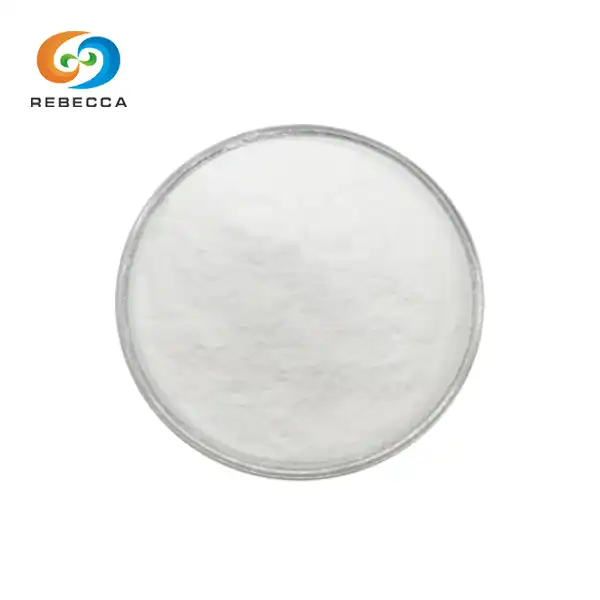
【English name】:Ectoin
【Nicknames】:Tetrahydropyrimidine, Tetrahydromethylpyrimidine Carboxylic Acid
【CAS No.】:96702-03-3
【Molecular Formula】: C6H10O2N2
【Specification】: 99%
【Appearance】: White to Off-white Powder
【Test Method】: HPLC
Basics of Ectoin and Hyaluronic Acid
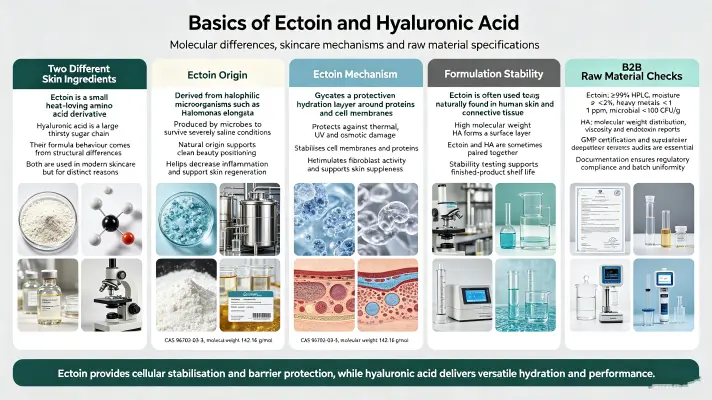
Prior to comparing performance, it is useful to know what these two substances are and where they originate from. Ectoin and hyaluronic acid are at polar extremes of the molecular spectrum. One is a small heat-loving amino acid derivative. The other is a big thirsty sugar chain. Almost everything about their behaviour in a formula is due to that structural difference.
What Makes Ectoin a Unique Extremolyte?
Ectoin powder is derived from halophilic microorganisms such as Halomonas elongata. These microorganisms thrive in severely saline conditions . They make ectoin as a defence chemical within them to live. What makes ectoin attractive to clean beauty formulators is its natural nature. It has the CAS number 96702-03-3 and a molecular weight of 142.16 g/mol. Cosmetic grade ectoin powder is usually described as white to off-white crystalline solid with purity 99% or above (as tested by HPLC).
What is special about ectoin is its “compatible solute” property. It creates a protective hydration layer around proteins and cell membranes. This shell protects the cellular frameworks from thermal, UV and osmotic damage. Unlike basic humectants, it is a powerful moisturiser and barrier booster that protects the skin from external aggressors such as UV radiation and pollution, and helps to stabilise cell membranes and proteins to decrease inflammation and support skin regeneration. The primary reason why ectoin powder is used in advanced skincare is because of its stabilising effect.
How Hyaluronic Acid Functions in Skincare Formulations
Hyaluronic acid: a glycosaminoglycan naturally found in human skin and connective tissue. This is only because of the water-binding power. High molecular weight HA resides on the surface of the skin and produces a light layer. HA with low molecular weight penetrates deeper and hydrates from inside. This spectrum offers versatility across serums, creams and injectable-style therapies.
HA's appeal is due to rapid, noticeable effects. Skin seems plumper within minutes after treatment. And it stimulates fibroblast activity, which helps maintain suppleness throughout the years. That stated, HA is not as stable as ectoin powder. It is sensitive to heat and light and must be kept inside a regulated pH window. Formulators pairing ectoin with HA often do so specifically to slow this degradation.
Raw Material Specifications for B2B Procurement
All about documentation: Sourcing choices Buyers should check the ectoin powder has a purity of 99% or above by HPLC, moisture level below 2% and heavy metals less than 1 ppm. Microbial counts should be less than 100 CFU/g. These characteristics ensure regulatory compliance and finished-product uniformity.
That’s how we get Hyaluronic Acid. Buyers require molecular weight distribution data (not simply an average number), viscosity and endotoxin reports for the pharmaceutical grade batches. If a firm is purchasing ectoin powder or HA, supplier audits and GMP certification are a must for large-scale manufacturing runs.
Having got the essentials out of the way, the main concern for formulators is how do these two chemicals truly work once they contact the skin.
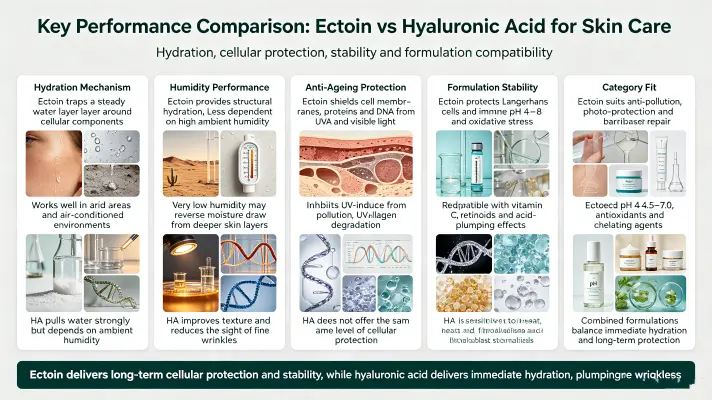
Key Performance Comparison: Ectoin vs Hyaluronic Acid for Skin Care
Hydration Mechanisms and Long-Term Effectiveness
Ectoin’s hydration technique is a structural one. It traps a steady layer of water around cellular components . The cosmetic formulations with ectoin protect cells, proteins, enzymes, vitamins, DNA, cell membranes and biomembranes of the skin from harm caused by drying out and the hydration action stabilises the water balance of the stratum corneum and skin barrier. That technique works effectively in arid areas or air conditioned workplaces, where humectants alone might have a hard time.
Hyaluronic acid provides a speedier but more humidity-dependent effect. It pulls water hard so it’s fantastic in a humid bathroom but unsafe in a dry desert area. In extremely low humidity, HA may draw moisture from deeper layers of the skin rather than from the air. Often formulators may combine it with occlusives, or ectoin powder to counteract this reversal action.
Anti-Aging Benefits and Cellular Protection
Ectoin has an anti-ageing and not a volumising effect. It encapsulates cell membranes, proteins and lipids in a highly organised protective coating of water molecules and shields cellular DNA and immune cells such as Langerhans cells from damage caused by UVA and visible light. This protective activity serves to inhibit the enzymatic degradation of collagen by UV. This is why ectoin powder may be found in sophisticated anti-pollution and photo-protection formulations.
Hyaluronic acid is another matter. It promotes fibroblast activity and boosts collagen formation for a smoother texture and a reduction in the sight of fine wrinkles. However, it does not give the same degree of cellular protection against oxidative or UV damage as ectoin powder. Many formulators see HA as the visible outcome component and ectoin as the long-term protection element.
Formulation Stability and Compatibility Challenges
Ectoin powder is remarkably easy to work with. You may add it to the water phase of your recipe and heat it up (typically up to 80°C or 176°F) without fear of spoiling it. It is also tolerant of a broad pH window . Most formulation guidelines suggest pH 4 to 8 for best long-term stability . Prolonged pH over 8.0 or below 4.0 may damage long-term ring stability for the molecule . This adaptability implies that ectoin powder may happily live alongside vitamin C, retinoids and acid-based actives that are generally a nightmare for stability.
Hyaluronic acid is trickier to work with. It is susceptible to degradation by heat, light and free radicals. Formulators often aim for a pH of 4.5 to 7.0 and include antioxidants or chelating agents to halt deterioration. High HA levels might also cause a recipe to be thicker than desired, affecting texture. Ectoin powder is compatible with HA and most common actives, thus many laboratories employ it as a stabilising partner.
These performance differences inevitably lead to the following question: which product categories genuinely benefit from each ingredient and how far can they be pushed together?
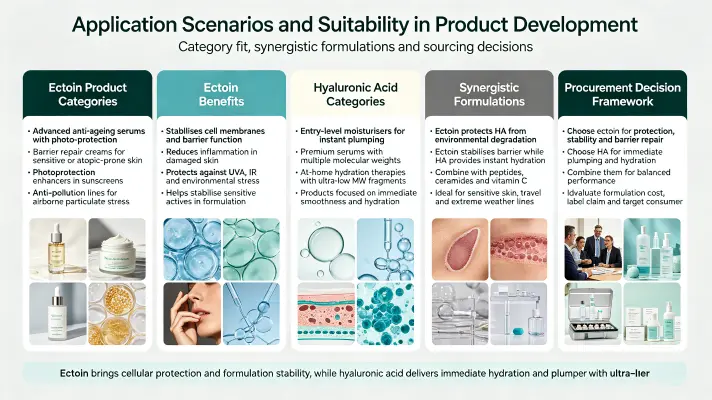
Application Scenarios and Suitability in Product Development
Optimal Product Categories for Each Ingredient
Ectoin powder is particularly effective in three areas. used in advanced anti-aging serums because to its photo-protective, MMP-inhibiting characteristics. Barrier repair creams for sensitive or atopic-prone skin take use of its cell-stabilizing impact. It is used in sensitive and atopic skin-care creams and lotions to decrease inflammation and maintain a damaged barrier, and in photoprotection enhancers to increase cellular defence against damage caused by UVA and IR in sunscreens. To combat the stress of airborne particulates, anti-pollution lines rely heavily on ectoin powder.
Hyaluronic acid is a major player in a larger hydration category. Entry level moisturisers employ high molecular weight HA for instant plumping. Premium serums combine numerous weights of HA for depth. Some at-home therapies replicate in-clinic hydration techniques using ultra-low molecular weight fragments. Brands that do one or the other leave the discretion to consumers who often choose depending on whether the product claims "protection" or "plumping" on the label.
Synergistic Combinations for Enhanced Product Performance
The most fascinating recipes don’t choose one ingredient over the other. And they merge them. The hydration shell of ectoin may protect HA molecules from environmental deterioration, therefore increasing the useful life of HA in a completed product. Ectoin is compatible with other common actives like peptides, hyaluronic acid, ceramides and even antioxidants such as Vitamin C.
This combination is very useful in formulations for sensitive or reactive skin. Ectoin stabilises the damaged barrier and HA provides the instant soothing hydration customers want. Brands that make “extreme weather” or travel-focused skincare may combine ectoin powder with HA for rapid comfort and long-lasting resistance in one solution.
While the technical and application case may be evident, procurement teams still want a practical framework to decide which ingredient – or mix of ingredients – is right for their brand and budget.
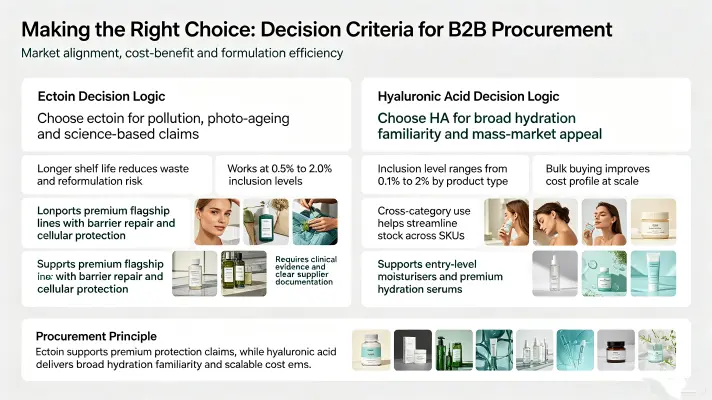
Making the Right Choice: Decision Criteria for B2B Procurement
Aligning Ingredient Selection with Target Markets
The positioning of the brand should lead the ultimate selection. Pollution, photo-aging and science-based claims resonate with consumers who are open to the extremolyte tale of ectoin powder. This audience is more likely to buy premium price if the ingredient story is supported by clinical evidence.
But hyaluronic acid is now very universally recognised among consumers. Mass-market businesses rely on that familiarity to fight without a large education cost. Up and coming markets in the anti-aging area tend to start out with HA and then graduate to more specialised actives, such as ectoin powder.
Cost-Benefit Analysis for Formulation Efficiency
Usage rates matter as much as raw pricing. Ectoin powder is generally effective at 0.5% to 2.0% inclusion levels, keeping ingredient cost acceptable, even in premium formulations. A longer shelf life means less waste and less need for reformulation over time.
Hyaluronic acid is much more varied by product type, ranging from 0.1% in supportive functions to 2% in specialist hydration serums. Bulk buying dramatically improves its cost profile at scale. HA’s cross-category efficacy may help businesses with many SKUs to streamline their stock, while ectoin powder will provide a distinctive claim for flagship goods focused on protection.
Conclusion
Ectoin and hyaluronic acid are not rivals, but rather complementing tools. Ectoin powder protects cells and stabilises formulae under stress . Hyaluronic acid gives quick and obvious plumping. The top skincare brands are increasingly using both, letting each ingredient do what it does best. For B2B purchasers, the key question is not “which one” but “how much of each, and from which supplier.”
FAQ
1. Can ectoin powder and hyaluronic acid be combined in the same formula?
Yes. Ectoin powder is chemically compatible with hyaluronic acid and can help extend its stability in a finished product. Many sensitive-skin and extreme-weather formulas combine both actives to deliver immediate hydration alongside longer-term barrier protection.
2. What purity level should buyers request when sourcing ectoin powder?
Cosmetic-grade ectoin powder should be verified at 99% purity or higher through HPLC testing. Buyers should also request documentation on heavy metals, moisture content, and microbial limits to confirm regulatory compliance before large-scale purchasing.
3. Does ectoin powder work well with vitamin C and retinoids?
Generally yes. Ectoin powder remains stable across a broad pH range and tolerates heat well during manufacturing, which makes it easier to pair with reactive actives like vitamin C and retinoids. Formulators should still run stability testing, since these actives can be sensitive on their own even when ectoin performs well alongside them.
Ready to Source Premium Ectoin Powder
Rebecca supplies pharmaceutical-grade ectoin powder at 99% purity (CAS 96702-03-3) to cosmetic manufacturers and R&D teams worldwide, backed by GMP-certified production and full documentation support. Contact our team at information@sxrebecca.com to request a certificate of analysis, discuss minimum order quantities, or start a formulation trial with our technical specialists.
References
1. Graf, R., Anzali, S., Buenger, J., Pfluecker, F., & Driller, H. (2008). The multifunctional role of ectoine as a natural cell protectant. Clinics in Dermatology, 26(4), 326–333.
2. Papakonstantinou, E., Roth, M., & Karakiulakis, G. (2012). Hyaluronic acid: A key molecule in skin aging. Dermato-Endocrinology, 4(3), 253–258.
3. Marini, A., Reinelt, K., Krutmann, J., & Bilstein, A. (2014). Ectoine-containing cream in the treatment of mild to moderate atopic dermatitis. Skin Pharmacology and Physiology, 27(2), 57–65.
4. Bukhari, S. N., Roswandi, N. L., Waqas, M., et al. (2018). Hyaluronic acid, a promising skin rejuvenating biomedicine. International Journal of Biological Macromolecules, 120, 1682–1695.
5. Heinrich, U., Garbe, B., & Tronnier, H. (2007). In vivo assessment of ectoin: A randomized, vehicle-controlled clinical trial. Skin Pharmacology and Physiology, 20(4), 211–218.
6. Pavicic, T., Gauglitz, G. G., Lersch, P., et al. (2011). Efficacy of cream-based novel formulations of hyaluronic acid of different molecular weights in anti-wrinkle treatment. Journal of Drugs in Dermatology, 10(9), 990–1000.