L-ergothioneine Safety
The first question procurement managers ask when they see a new bioactive ingredient is safety. The answer for L-ergothioneine is based on more than 10 years of toxicity investigations, regulatory assessments and human clinical trials. This book demystifies the science, the data, and the sourcing requirements that important to pharmaceutical, nutraceutical and cosmetic customers. Learn safety data, dosage restrictions, supplier benchmarking and formulation requirements in layman’s terms.
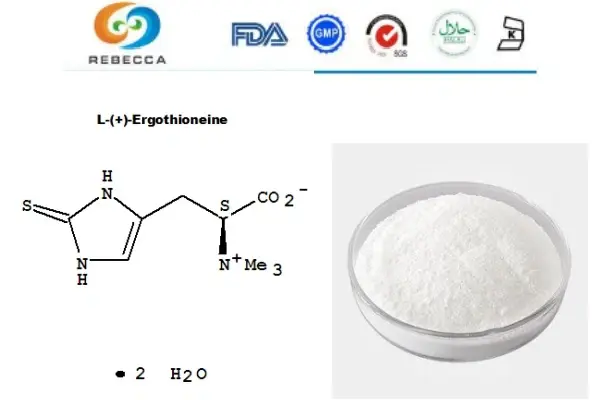
【English name】:L-Ergothioneine
【Chemical Name】:2-mercaptohistidine trimethylbetaine, EGT
【CAS No.】:497-30-3
【Molecular Formula】: C9H15N3O2S
【Specification】: 99%
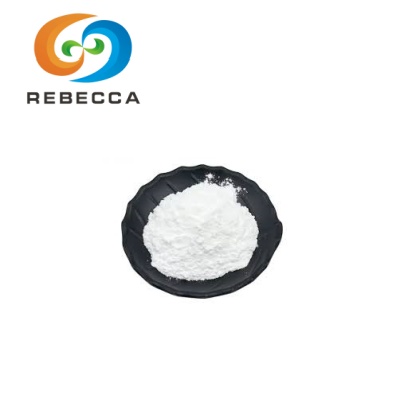
【Appearance】: White Crystalline Powder
【Test Method】: HPLC
【Solubility】:Soluble in Water (up to 10 mg/ml)
【Function】Remove stains, whiten skin, delay aging and prevent various diseases etc.
【Application】Food and health care,Cosmetic,Medicine etc.
L-Ergothioneine Powder Safety Foundation
Before we go into tolerability data, it is useful to understand what this chemical is and why the human body processes it differently from other antioxidants. It is its particular biology that gives it a pristine safety record.
What Is L-Ergothioneine Powder?
Ergothioneine powder is a naturally occurring derivative of a sulfur-containing amino acid. It’s called 2-mercaptohistidine trimethyl betaine. CAS Number: 497-30-3 C9H15N3O2S
In nature it is found exclusively in certain fungus, mycobacteria and cyanobacteria. It is a product of man’s diet. Common sources include beans, oats, mushrooms, and organ meats. The thione is dispersed globally and is synthesized solely by nonyeast fungus, mycobacteria and cyanobacteria, but is stockpiled by higher species to millimolar concentrations via an organic cation transporter (OCTN1).
Today, commercial ergothioneine powder is produced mostly via accurate microbial fermentation. This process provides the pure L-isomer, removes solvent residues and provides batch-to-batch uniformity that cannot be achieved by chemical synthesis.
How the Body Handles L-Ergothioneine Powder
The human body actively transports ergothioneine powder via a special transporter called OCTN1. The transporter is really fussy. It delivers the chemical to tissues under significant oxidative stress, for example red blood cells, liver, eyes, brain and skin.
The molecule is taken up and maintained for weeks. ET seems to be vital to humans because it is swiftly absorbed from the food by a transporter that is mainly or fully specialized for ET, and once absorbed it is maintained inside the body for weeks or months. This extended half-life is crucial in terms of safety. That implies tiny dosages each day build up to stable levels in the tissue with no peaks.
This molecule is resistant to fast oxidative degradation unlike vitamin C or glutathione. This molecule may accumulate to high amounts in the body from the food, and may have key physiological functions in human health and development, and perhaps in disease prevention and therapy. Blood levels of ergothioneine decrease with aging and beginning of several illnesses. The bottom line for formulators is simple: tiny, consistent dosages of l ergothioneine powder provide demonstrable tissue protection over time.

Safety Profile and Side Effects of L-Ergothioneine Powder
So, now that the biology is out of the way, let’s look at the real safety stats. This substance has been carefully evaluated by regulatory organizations and independent researchers . The findings are consistent and promising.
Clinical and Toxicological Safety Evidence
The most often referenced safety standard for l ergothioneine powder is from EFSA. Based on subchronic research, the European Food Safety Authority (EFSA) considered a no observed adverse effect limit (NOAEL) of 800 mg/kg body weight (bw)/day for synthetic L-EGT as safe as a new food, with margins of exposure (MOE) far over 200, even for high users.
To put this in perspective, a 60 kg adult would have to ingest almost 48,000 mg per day to attain the NOAEL. Typical dosages of supplements are generally 5 to 30 mg per day. There is a lot of room for error.
EFSA also looked into usage in vulnerable groups. The Panel considers that the new food, synthetic l-ergothioneine, is safe under the suggested uses and usage levels in babies, young children (i.e. toddlers) and pregnant and nursing women. Early worries about inflammatory illness have been the subject of human investigations. In its new food opinion, EFSA said the human studies presented “indicate that no relationships” exist between the use of l-ergothioneine supplements and fortified foods and susceptibility to or development of diabetes mellitus, Crohn's disease or rheumatoid arthritis.
In the United States, l-ergothioneine powder is Self-Affirmed GRAS (see GRAS Notices GRN 734 and GRN 828) for use in certain food categories at prescribed amounts. Buyers looking to the US market need to verify the specific food categories and usage levels covered by their supplier’s GRAS dossier.
Dosage Guidelines and Special Populations
For healthy people, the standard dose of l ergothioneine powder is 5 mg to 30 mg per day. In clinical work with older persons who have Mild Cognitive Impairment, dosages of around 25 mg per day for many months have been administered without deleterious effects.
Typical usage levels for topical cosmetics are 0.01% to 0.1%. Higher doses seldom increase effectiveness, since absorption is limited by the capacity of epidermal transporters.
Even special groups demand attention. Pregnant and lactating women may use it at EFSA approved novel food levels but medical grade dose should be on the guidance of a doctor. People with rare inherited defects of amino acid metabolism should visit a doctor. If you are taking various thiol based supplements, monitor your overall thiol consumption on a daily basis to minimize needless duplication.
Interactions with Other Ingredients
L ergothioneine powder has relatively few interaction issues. It has an exclusive transporter thus it does not compete with vitamin C, glutathione, n-acetylcysteine or CoQ10 for cell absorption.
In reality, it serves as a backup shield. It is useful only after main antioxidants like GSH have been used in the course of oxidative stress. This complementary function makes it a powerful addition to multi-ingredient antioxidant stacks, rather than a substitute for existing actives.
The powder is stable over a broad pH range (from 3.0 to 9.0) and survives pasteurization at almost 80°C. This also facilitates combination with acidic drinks, emulsion creams and heat processed nutraceutical forms.

Sourcing and Quality Standards for L-Ergothioneine Powder
When the raw material fulfills stringent quality requirements, safety on paper simply leads to safety on a final product. The following are the requirements and supplier verification that distinguish a premium ingredient from a commodity ingredient.
Quality Specifications to Verify
HPLC l ergothioneine powder should be 98% or above in purity, with premium grades being 99%. The stereochemical purity of L-isomer must be 100%. This is important since the D-isomer is not a substrate for the transporter OCTN1 and has no physiologic advantage.
Physical: White to off white crystalline powder. Water solubility should be > 5 mg/mL to ease absorption of the chemical in watery drinks and serums. Residual solvents, heavy metals and microbiological counts should be less than the therapeutic limits of USP or Ph. Eur Get a comprehensive Certificate of Analysis for all your batches from your supplier.
· Purity
· Identity (HPLC)
· Water content
· Ash content
· Heavy metals (Pb, As, Cd, Hg)
· Microbial load
· Residual solvents
Certifications and Supplier Selection
When you compare vendors of l ergothioneine powder, look past price and check documentation depth. The certifications below are the minimum for a serious B2B partner.
· GMP compliance: Confirms pharmaceutical-grade production controls, batch consistency, and full traceability.
· ISO 9001 and ISO 22000: Show that quality and food safety systems are audited by third parties.
· Halal and Kosher: Expand market access into the Middle East, Southeast Asia, and Israel.
· Novel Food authorization dossier (EU): Required for food and supplement use in Europe.
· GRAS documentation (US): Needed for food and beverage launches in North America.
Also check out the supplier’s technique of manufacture. Fermentation-based approaches often provide superior stereochemical purity and clearer impurity profiles than chemical synthesis. Check yearly capacity, lead time and MOQ before signing supply agreement. A red signal if a vendor cannot provide into information on batch traceability.

Applying L-Ergothioneine Powder in Product Development
The next step, after you have the right raw material, is to convert it into a finished product that is stable, compliant and marketable. The formulation and the label have to be chosen with care.
Formulation and Stability Considerations
The physical form of l-ergothioneine powder is adaptable to dose formulations. It is easily administered as pills and capsules, and does not need special coating. In drinks, its excellent water solubility and moderate flavor enable simple mixing without masking agents. It dissolves well into the water phases of topical serums and plays well with humectants like glycerin and hyaluronic acid.
Every new recipe should still be tested for stability. Incompatibilities: Strong oxidizers, iron salts and reactive preservatives. Keep completed product away from extended UV light. Under regular storage conditions (less than 25°C, low humidity) a shelf life of 24-36 months is common.
For high temperature treated drinks, l ergothioneine powder may tolerate pasteurization at 80℃ without significant loss. UHT conditions must be confirmed by genuine stability experiments.
Regulatory Compliance and Labeling
L ergothioneine powder regulatory status varies from area to region and you will need to incorporate it in your labeling. In the EU, synthesized L-ergothioneine is a new food with regulated maximum usage levels for particular food categories and supplement forms. It is sold in the US under Self-Affirmed GRAS notifications for certain uses. China, Japan and Korea have category-specific restrictions that need to be validated before to launch.
For cosmetics, ingredient listings should use the INCI term "Ergothioneine". For dietary supplements, comply with local supplement facts panel standards. Marketing claims must be consistent with authorized terminology of the product category . In most markets, structure-function claims are allowed, while disease-treatment claims are not.
Maintain a file of claim substantiation for each product. It should relate each on-pack statement to a particular published research or regulatory decision. This protects your brand during audits and complaints.

Conclusion
The safety narrative for l ergothioneine powder is quite strong. 800 mg/kg body weight/day NOAEL EFSA new food authorization US GRAS notifications Decades of dietary exposure via mushrooms and other foods . All the signs go in the same way. It has not caused any notable adverse effects at practical levels in human studies . It has its own special transporter and does not accumulate in dangerous amounts .
The main effort for B2B purchasers isn’t ensuring the substance is safe. It is selecting a vendor whose paperwork, purity and traceability meet that safety assurance. 99% HPLC purity, confirmed L-isomer content, GMP manufacture and all regulatory documentation. With those hurdles cleared, this chemical provides a unique combination: established safety, wide regulatory acceptability and enough scientific heft for effective commercial promises.
FAQ
Q1: Is l ergothioneine powder safe for long-term daily use?
A: Yes. EFSA's assessment set a NOAEL of 800 mg/kg body weight per day, which is thousands of times higher than typical supplement doses of 5–30 mg per day. Human trials lasting several months at practical doses have shown no adverse effects, and the compound is naturally present in the daily diet through mushrooms and other foods.
Q2: Can pregnant and breastfeeding women use products containing l ergothioneine powder?
A: EFSA specifically reviewed this question in 2017 and concluded that synthetic L-ergothioneine is safe for pregnant and breastfeeding women, infants, and young children at the authorized use levels. Any medical or high-dose use should still be discussed with a healthcare provider.
Q3: What is the difference between fermentation-derived and synthetic l ergothioneine powder?
A: Fermentation-derived material is produced by engineered microbes and typically delivers 100% L-isomer with clean impurity profiles. Chemical synthesis can produce mixed isomers and may leave solvent residues. Most premium pharmaceutical and cosmetic suppliers now use fermentation for consistency, purity, and sustainability.
Q4: What certifications should I ask for when sourcing l ergothioneine powder?
A: At minimum, ask for GMP certification, ISO 9001 quality management, a full CoA per batch, SDS, and either EU Novel Food or US GRAS documentation depending on your target market. Halal and Kosher certificates are useful for global brands.
Q5: Does l ergothioneine powder interact with other antioxidants like vitamin C or glutathione?
A: No harmful interactions have been reported. Because it uses its own dedicated OCTN1 transporter, it does not compete with other antioxidants for cellular uptake. It works as a backup defense when primary antioxidants are depleted, making it a strong complement in multi-ingredient formulations.
Partner with Rebecca for Premium L-Ergothioneine Powder Supply
Rebecca supplies high-purity l ergothioneine powder (99% by HPLC, 100% L-isomer) produced in GMP-certified facilities. Every batch ships with a full CoA, SDS, allergen statement, and stability data. Halal, Kosher, and ISO 9001 documentation are available on request.
We support pharmaceutical, nutraceutical, cosmetic, and functional beverage brands worldwide. Our technical team helps with formulation questions, stability trial design, and regulatory dossier preparation. Flexible MOQ options serve both early-stage brands and multinational buyers.
Ready to request a sample or a full technical dossier? Email our procurement team at information@sxrebecca.com or visit sxrebecca.com. We reply to qualified B2B enquiries within one business day and can ship samples under FOB, CIF, or DDP terms.
References
1. Cheah IK, Halliwell B. Ergothioneine, recent developments. Redox Biology. 2021;42:101868. doi:10.1016/j.redox.2021.101868
2. EFSA NDA Panel. Safety of synthetic l-ergothioneine (Ergoneine®) as a novel food pursuant to Regulation (EC) No 258/97. EFSA Journal. 2016;14(11):4629. doi:10.2903/j.efsa.2016.4629
3. EFSA NDA Panel. Statement on the safety of synthetic l-ergothioneine as a novel food – supplementary dietary exposure and safety assessment for infants and young children, pregnant and breastfeeding women. EFSA Journal. 2017;15(11):5060. doi:10.2903/j.efsa.2017.5060
4. Halliwell B, Tang RMY, Cheah IK. Diet-Derived Antioxidants: The Special Case of Ergothioneine. Annual Review of Food Science and Technology. 2023;14:323–345. doi:10.1146/annurev-food-060822-122236
5. Cheah IK, Tang RM, Yew TS, Lim KH, Halliwell B. Administration of Pure Ergothioneine to Healthy Human Subjects: Uptake, Metabolism, and Effects on Biomarkers of Oxidative Damage and Inflammation. Antioxidants & Redox Signaling. 2017;26(5):193–206. doi:10.1089/ars.2016.6778
6. Borodina I, Kenny LC, McCarthy CM, et al. The biology of ergothioneine, an antioxidant nutraceutical. Nutrition Research Reviews. 2020;33(2):190–217. doi:10.1017/S0954422419000301