L-ergothioneine powder helps muscle recovery
l ergothioneine powder is a sulfur-containing amino acid that occurs naturally in mushrooms and fermented foods. Over the last decade of research, it has been recognized as a powerful antioxidant with a unique cellular transport mechanism. The concern for sports nutrition companies and pharmaceutical makers is whether this chemical can effectively promote muscle repair after rigorous exercise.
Here we review the biochemical basis for L-ergothioneine powder, compare it to proven recovery antioxidants and give sourcing guidelines for procurement teams. Where there is little clinical proof, we state this explicitly.
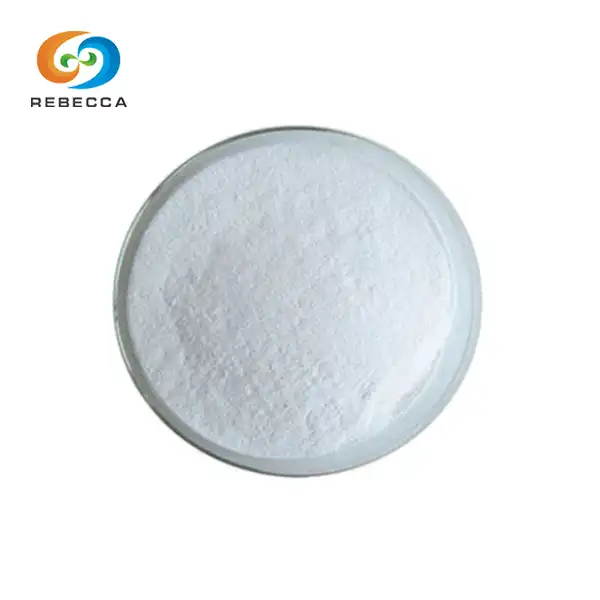
L Ergothioneine Powder
【English name】:L-Ergothioneine
【Chemical Name】:2-mercaptohistidine trimethylbetaine, EGT
【CAS No.】:497-30-3
【Molecular Formula】: C9H15N3O2S
【Specification】: 99%
【Appearance】: White Crystalline Powder
【Test Method】: HPLC
【Solubility】:Soluble in Water (up to 10 mg/ml)
【Function】Remove stains, whiten skin, delay aging and prevent various diseases etc.
【Application】Food and health care,Cosmetic,Medicine etc.
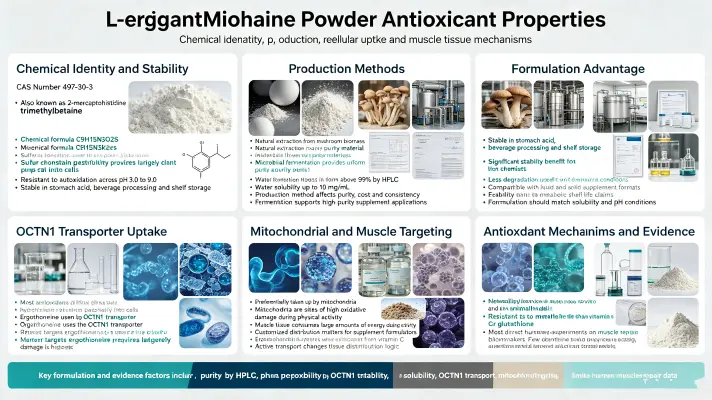
L-ergothioneine Powder Antioxidant Properties
Chemical Identity and Production
L-ergothioneine powder CAS Number 497-30-3 is also known as 2-mercaptohistidine trimethylbetaine. Its chemical formula is C9H15N3O2S which indicates the sulfur containing structure which provides the molecule its antioxidant stability (Cheah & Halliwell, 2012).
Two ways of production dominate the market. Natural extraction from mushroom biomass results in lesser purity material. But microbial fermentation provides a uniform purity of more than 99% as measured by HPLC. The product is a white crystalline powder that is water soluble up to 10 mg/mL.
Unlike many antioxidants, ergothioneine is resistant to autoxidation throughout pH ranges of 3.0 to 9.0. This stability is of significance to formulation chemists. This indicates that the chemical is stable in stomach acid, beverage processing and shelf storage without considerable degradation.
The Role of Cellular Uptake of the OCTN1 Transporter
Most antioxidants passively diffuse into cells. Ergothioneine is unique. A specific transporter protein, OCTN1 (Organic Cation Transporter Novel Type 1) actively pumps ergothioneine into the cells (Gründemann et al., 2005).
This carrier targets ergothioneine to the more metabolically active tissues. One such target is muscle tissue, which consumes a lot of energy during activity. Research shows that ergothioneine is preferentially taken up by mitochondria, the organelles where oxidative damage is highest during physical activity (Paul & Snyder, 2010).
This customized distribution is a major distinction for supplement formulators. Vitamin C is a common antioxidant that is found all throughout the body. Ergothioneine goes where oxidative damage is most.
Antioxidant Mechanisms in Muscle Tissue
L-ergothioneine powder helps with some of the reactive species created during exercise. These include hydroxyl radicals (very reactive oxygen molecules), hypochlorous acid (generated by immune cells during inflammation) and peroxynitrite (made when superoxide combines with nitric oxide).
The enzyme then regenerates the vitamin C after it has neutralised the free radicals. Ergothioneine doesn’t. It is resistant to metabolic degradation which results in longer half lives in tissues than vitamin C or glutathione (Cheah & Halliwell, 2012). Therefore one dosage may provide long lasting antioxidant protection throughout long healing periods.
A significant caveat is that most of the investigations on the antioxidant mechanisms of ergothioneine have been performed in vitro (cell cultures) and animal models. There are few direct human experiments evaluating biomarkers of muscle repair. The mechanistic plausibility is high but has to be confirmed in bigger clinical investigations.
Hence, how do these pathways translate to muscle repair after exercise, raising a practical challenge related to the antioxidant qualities discussed above? The following part puts the biochemistry in the perspective of the athlete.
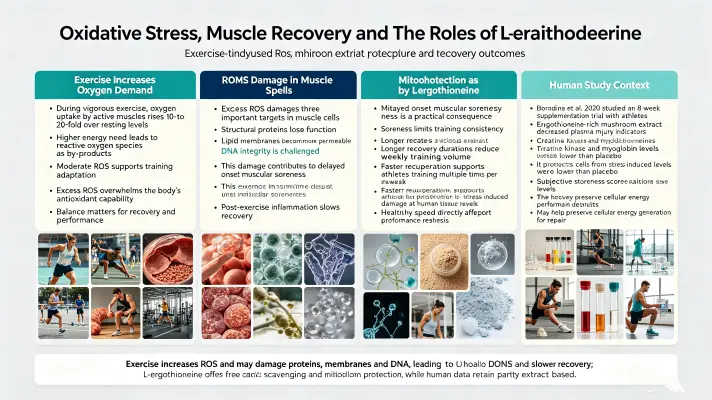
Oxidative Stress, Muscle Recovery and The Role of L-ergothioneine
How Exercise Creates Oxidative Damage
During vigorous exercise, oxygen uptake by active muscles rises 10- to 20-fold over resting levels. The higher energy need leads to the generation of reactive oxygen species (ROS) as physiological by-products of energy synthesis.
ROS at moderate levels are really good for athletes. They provide adaptive reactions that enhance strength and endurance. The issue emerges when ROS generation overwhelms the body's antioxidant capability.
Too much ROS is bad for three important things in muscle cells: the structural proteins, lipid membranes, and DNA. This damage results in delayed onset muscular soreness (DOMS), post-exercise inflammation and longer recovery durations. For athletes training numerous times each week, faster recuperation immediately translates into greater performance results.
Cytoprotective Effects on Muscle Mitochondria
L-ergothioneine powder not only mops up free radicals, but it also preserves the mitochondria, the energy manufacturers within your muscle cells. Damaged mitochondria produce more ROS . This creates a vicious loop that prolong the recovery .
Paul and Snyder (2010) describe ergothioneine as a physiologic cytoprotectant that protects cells from stress-induced damage at quantities usually observed in human tissues. Ergothioneine may help protect mitochondrial membranes and so assist preserve the cellular energy generation required for protein synthesis and tissue repair.
In an 8-week supplementation trial with athletes, plasma indicators of muscle injury were decreased using ergothioneine-rich mushroom extract. Specifically, creatine kinase and myoglobin levels were lower than placebo. Subjective soreness scores also decreased (Borodina et al., 2020). However, this research employed an ergothioneine-rich extract instead of pure substance, therefore it is impossible to distinguish the particular contribution of ergothioneine.
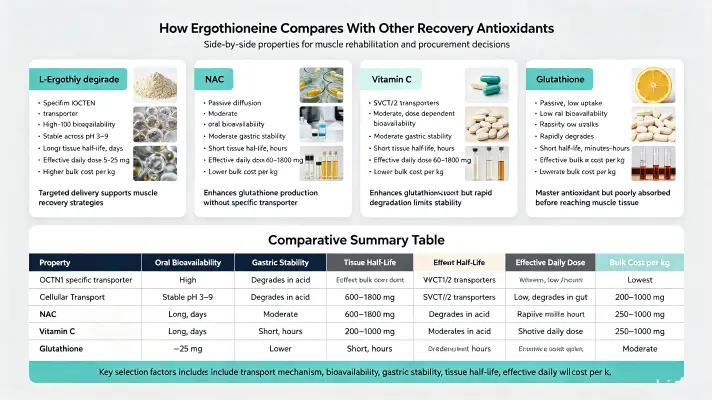
How Ergothioneine Compares With Other Recovery Antioxidants
Procurement teams require side-by-side comparisons when looking at substances for muscle rehabilitation. The main distinctions are summarized in the table below according to available pharmacological data:
Property L-Ergothioneine NAC Vitamin C Glutathione
Cellular Transport OCTN1 (specific) Passive diffusion SVCT1/2 transporters Passive (low uptake)
Oral Bioavailability High (Cheah et al. 2017) Moderate Moderate (dose dependant) Low (degrades in gut)
Gastric Stability Stable (pH 3-9) Moderate Degrades in acid Rapidly degrades
Half-life of tissue Long (days) Short (hours) Short (hours) Short (minutes-hours)
Effective Daily Dose 5-25 mg 600-1800 mg 200-1000 mg 250-1000 mg
Cost (bulk/kg) Higher Lower Lowest Moderate
N-acetylcysteine (NAC) enhances glutathione production but has no specific transporter. Vitamin C has a wide antioxidant support, but swiftly deteriorates. Glutathione is the body’s master antioxidant, but has low oral bioavailability, and most of an oral dosage is broken down in the digestive system before it reaches muscle tissue (Borodina et al., 2020).
With the scientific justification and comparative data established, the following part is dedicated to what procurement teams need to know when they are procuring L-ergothioneine powder for commercial product development.
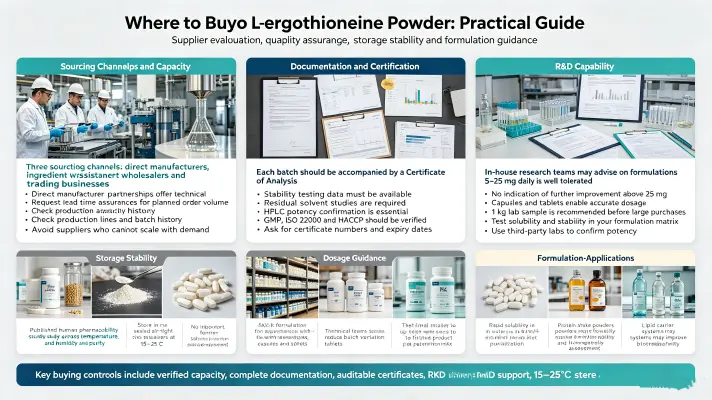
Where to Buy L-ergothioneine Powder: Practical Guide
Supplier Evaluation: Four Essential Criteria
Procurement managers have three sourcing channels: direct relationships with manufacturers, ingredient wholesalers and trading businesses. The main benefits of direct manufacturer partnerships are technical assistance, customisation and cost transparency.
Before you ask for samples, consider four things when assessing any supplier:
1. Capacity.Does the manufacturer routinely satisfy your volume requirements? Ask for yearly capacity numbers and lead time assurances for the amount of your planned order.
2. Quality of documentation.Each batch is accompanied by a Certificate of Analysis (CoA) from a reputable source, stability testing data and residual solvent studies. If you don’t see any of them, move away.
3. Scope of Certification.GMP accreditation ensures pharmaceutical manufacturing standards. ISO 22000 is about food safety management. HACCP considers hazard analysis. Ask for the numbers on the certificates and check them with the issuing organizations – don’t accept scans without traceable IDs.
4. • R&D Capability.In-house research teams at manufacturers may advise on formulations and tailor specs. This is important if you want certain particle sizes, solubility profiles, or purity levels.
Quality Assurance and Storage Stability
Properly kept, L-ergothioneine powder retains full efficacy for 24 months. Storage parameters: simple, sealed air-tight containers, at ambient temperature (15-25 °C), low humidity (< 60 % RH), protected from direct light.
Make sure you always ask your provider for a stability study. This data should include a variety of temperature zones and humidity situations. It checks shelf-life claims and shields you from responsibility if finished items deteriorate before their expiry date.
Get a free sample of 1 kilogram for your lab.Test solubility in your desired formulation matrix, assess CoA and do your own stability tests before large purchases.
Dosage and Formulation Guidance
Published human pharmacokinetic studies (Cheah et al., 2017) demonstrated that oral ergothioneine dosages of 5 to 25 mg daily were well tolerated with no side effects. There was no indication of further improvement at doses higher than 25 mg.
Ergothioneine may provide formulation benefits in beverage applications. It is rapidly soluble in water (up to 10 mg/mL), stable in the low pH of sports drinks and has negligible flavor affect. Thermal stability (up to 100°C) enables pasteurization operations.
Capsules and tablets enable for accurate dosage. A key emphasis in protein shake powders is the assessment of flowability and homogeneity of the blends. Encapsulation technologies such as lipid carrier systems may further improve bioavailability, however evidence on particular combinations of ergothioneine and lipids is still lacking.
Sourcing choices are not made in a vacuum. The third part explores the market landscape and competitive strategies of brands developing ergothioneine in their product pipelines.
Market Outlook and Future Opportunities
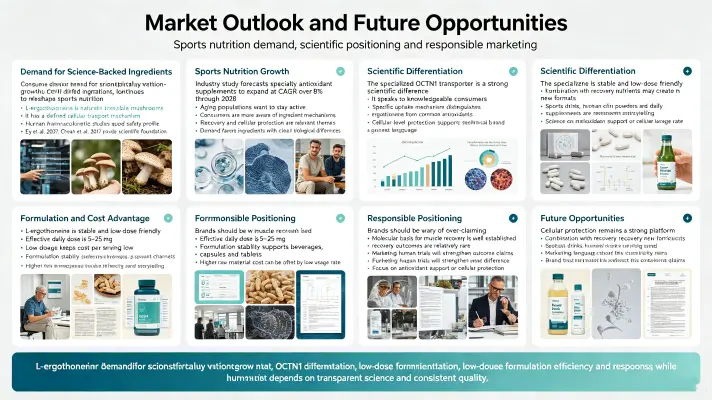
Demand Drivers in Sports Nutrition
“Consumer demand for scientifically validated, nature-derived ingredients continues to reshape the sports nutrition category. L-ergothioneine powder is one of them. It is present in edible mushrooms, has a defined cellular transport mechanism and a good safety profile on the basis of human pharmacokinetic studies (Ey et al., 2007; Cheah et al., 2017).
Industry study forecasts specialty antioxidant supplements will expand at a CAGR of over 8% through 2028. Aging populations want to stay active and consumers being more aware of how ingredients work are the key factors.
Strategic Positioning for Brands
Brands that include L-ergothioneine powder in their recovery formulas may take advantage of a number of positioning benefits. The specialized OCTN1 transporter is a strong scientific difference that will speak to knowledgeable customers. The compound’s stability and low effective dosage ( 5-25 mg ) make formulation easier and keep the cost per serving low , even with greater raw material expenses .
That said, businesses should be wary of over-claiming. The molecular basis for muscle recovery is well established, but substantial human clinical studies directly assessing recovery outcomes are relatively rare. Marketing language should reflect this honest difference. Instead of making a direct recovery claim that can’t completely be supported by present research, focus on “antioxidant support” or “cellular protection.”
FAQ
1. Daily Recommended Dose of L-ergothioneine For Muscle Recovery?
In human pharmacokinetic trials, dosages ranging from 5 to 25 mg daily have been utilized with no side effects recorded (Cheah et al., 2017). The appropriate dosage for particular muscle healing has not been determined in large scale experiments. Formulators should start at the low end (5-10 mg) and adapt according to application context and synergistic additives.
2. Can L-ergothioneine be taken with other supplement ingredients?
There are no known harmful interactions between ergothioneine and typical sports nutrition additives. Published studies have not identified conflicts with creatine, branched-chain amino acids (BCAAs), vitamin D or mineral cofactors. However, evidence regarding interaction of new combinations is scarce therefore companies should do compatibility testing in their own formulation matrices.
3. How do you store bulk L-ergothioneine powder?
Store in a cool place, away from direct light and moisture in sealed airtight containers – 15-25°C. Keep warehouse humidity less than 60% RH to avoid caking. In such cases the powder is still fully potent for 24 months. Always acquire a stability study report from your supplier to verify these characteristics for that particular batch.
4. What is the CAS number for L-ergothioneine, and why does it matter?
L-ergothioneine is identified by the CAS number 497-30-3. This identification enables procurement teams to verify product identity on CoAs, customs declarations and regulatory filings. Always verify the CAS number against the Chemical Abstracts Service registry to ensure you are buying the right substance.
Is L-ergothioneine recognized as safe by regulatory agencies
Ergothioneine has been tested for safety in human trials with no adverse effects found at levels up to 25 mg per day (Cheah et al., 2017). Regulatory status depends on area. Some ergothioneine preparations have GRAS (Generally Recognized as Safe) approval for specified uses in the US – ask your supplier for the GRAS notification number. EFSA has released scientific opinions on ergothioneine; should always check the current status for your individual product category and target market.
Shaanxi Rebecca Bio-Tech is a fermentation plant in Shaanxi Province, China with around 500 metric tons of yearly capacity. The firm is certified to GMP and ISO 22000 standards and offers comprehensive CoA paperwork. Buyers should ask for certificate numbers, verify by themselves and test samples before ordering commercially.
contact us for your volume needs and a personalized quotation.
Please contact us at information@sxrebecca.com for analytical parameters, bulk pricing and formulation help.
References
1.Cheah, I. K., and Halliwell, B. (2012). Ergothioneine; antioxidant potential, physiological function and involvement in illness. Biochimica et Biophysica Acta (BBA) - Molecular Basis of Disease, 1822 (5), 784-793.
2. Borodina I., Kenny L. C., McCarthy C. M., et al., 2020. Ergothioneine biochemistry – an antioxidant nutraceuticalNutrition Research Reviews, 33, 2, 190-217.
3.Gründemann, D., Harlfinger, S., Göpfert, S., et al. (2005). Identification of the ergothioneine transporter.Proceedings of the National Academy of Sciences, 102(14), 5256-5261.
4.B. Paul D. , & Snyder, S. H. (2010). L-ergothioneine is an uncommon amino acid and physiologic cytoprotectant.Cell Death & Differentiation, 17(7), 1134-1140.
5. Ey, J., Schömig, E. & Taubert, D. (2007). Dietary sources and antioxidant properties of ergothioneine.J. Agric. Food Chem. 2007, 55, 6466-6474.
6.Cheah, I. K., Tang, R. M., Yew, T. S., Lim, K. H. & Halliwell, B. (2017). Pharmacokinetic and tolerability data for pure ergothioneine administered to healthy human volunteers.Antioxidants & Redox Signaling, 26(6), 299-314.