Quercetin And Pterostilbene
Quercetin and pterostilbene extract are two of the most researched plant-derived polyphenols. They are typically mentioned in the context of nutritional research, supplement formulation, and functional food creation. But they vary considerably in their biological consequences, the quality of the evidence and how they are formulated. This paper presents a systematic, evidence-based comparison with emphasis on pharmacology, uses and practical issues of formulation.
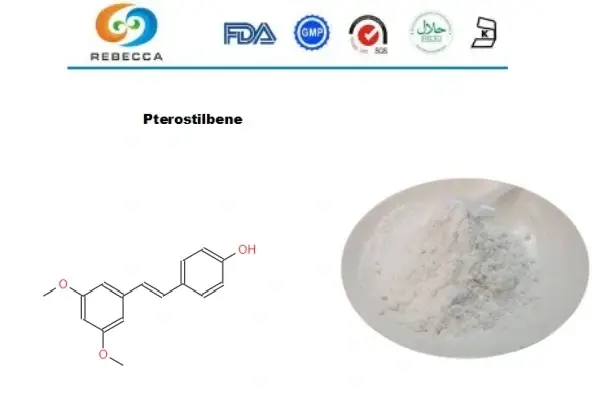
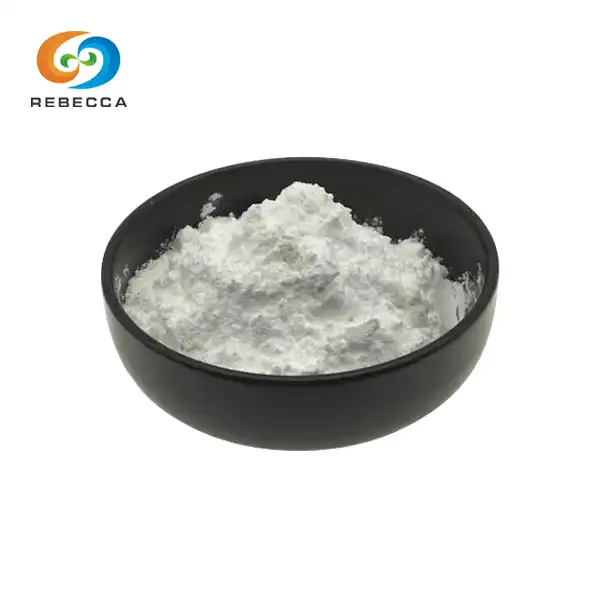
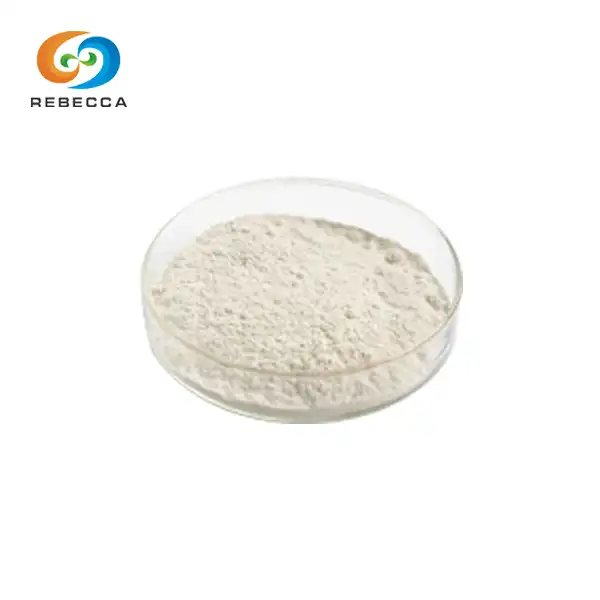
Pterostilbene Powder
Product: Pterostilbene
CAS No.: 537-42-8
Specification: Pterostilbene , Min 99%, HPLC.
Test Method: HPLC
Latin Name:Vaccinium uliginosum L.
Shelf Life: 2 years
Minimum Order Quantity: 1 kg
Samples: Free samples available
Certifications: GMP, ISO, HACCP, KOSHER, and HALAL.
Payment: Various payment methods accepted.
Advantages: Manufactured in a 100,000-grade cleanroom, our products are additive-free, non-GMO
Inner Package: Double PE Bags; Net 5kg/Bag
Molecular Characteristics and Biological Context
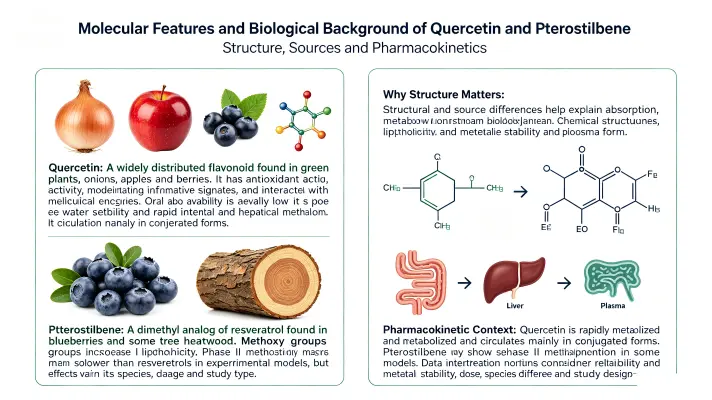
The biological behaviour of quercetin and pterostilbene can only be understood if one first studies the structural and origin distinctions between the two. These basic features determine absorption, metabolism and downstream biological function.
Quercetin: A Widely Distributed Flavonoid
Many green plants, onions, apples and berries contain the flavonoid quercetin. It has been widely explored in in vitro and in vivo research settings. Its pharmacological profile includes antioxidant activity, regulation of inflammatory signalling pathways and interaction with cellular enzymes.
However, quercetin is also associated with a somewhat poor oral bioavailability . This is largely due to low water solubility and quick metabolism in gut and liver. Quercetin is mostly present in plasma as conjugated forms rather than free aglycone.
Pterostilbene: A Methylated Stilbene Derivative
Pterostilbene is a dimethylated analogue of resveratrol, found naturally in trace levels in blueberries and some heartwood species. It structurally differs in the replacement of hydroxyl groups with methoxy groups, which leads to improved lipophilicity.
This structural change impacts its metabolic stability. In experimental models pterostilbene usually has slower phase II metabolism than resveratrol and certain flavonoids. But the size of this impact may vary based on species, dose and research type.
While some of the difference between these substances may be explained by chemical structure, real-world significance relies on absorption, distribution and biological persistence. The next section addresses pharmacokinetic behaviour with a more conservative interpretation of the available data.
Bioavailability and Pharmacokinetic Considerations
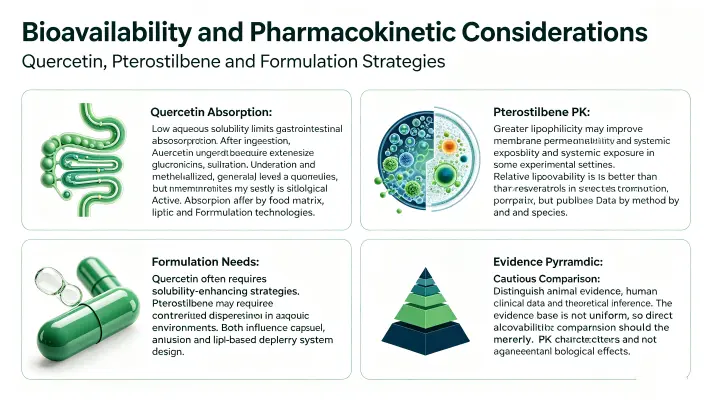
Nutraceutical substances are often compared in terms of their bioavailability. But the difference between animal evidence, human clinical data and theoretical extrapolation has to be made. The evidentiary foundation for quercetin and pterostilbene extract is not homogeneous and direct comparisons need to be taken with caution.
Absorption and Metabolism of Quercetin
Poor solubility of quercetin in aqueous media inhibits its absorption in the GI tract. After intake it undergoes considerable metabolism, mainly glucuronidation, sulfation and methylation.
Thus, quantities of unmetabolized quercetin in circulation are normally low. However, even if the particular functions are not completely known, metabolites may still contribute to biological activity.
Human studies have shown that absorption varies depending on the dietary matrix, co-ingested lipids, and formulation technologies, such as phytosomes or nanoparticles.
Pharmacokinetics of Pterostilbene
Pterostilbene is more lipophilic than several polyphenolics. Such characteristic might promote membrane permeability and may improve systemic exposure in several experimental scenarios.
Some comparative studies reveal better relative bioavailability than structurally similar substances such as resveratrol. However, published values vary greatly across the research methodology and species employed.
Instead of set multipliers or universal percentages it is more realistic to define pterostilbene as a molecule with possibly better pharmacokinetic stability.
Practical Interpretation for Formulation
Both molecules require specific delivery strategies from a formulation point of view. Quercetin is typically aided by solubility improvement methods, but pterostilbene may need dispersion control in aqueous environments owing to its hydrophobic nature.
These concerns have a direct impact on the design of dosage forms, such as capsules, emulsions and lipid-based delivery methods.
This readily segues into a discussion of functional applications, where pharmacokinetics is coupled to biological results.
Functional Applications and Evidence-Based Use Cases
Quercetin and pterostilbene are often grouped together in terms of cardiovascular, cognitive and metabolic health. However, the level of evidence differs for each outcome and research type. This area is for impartial interpretation, not advertising claims.
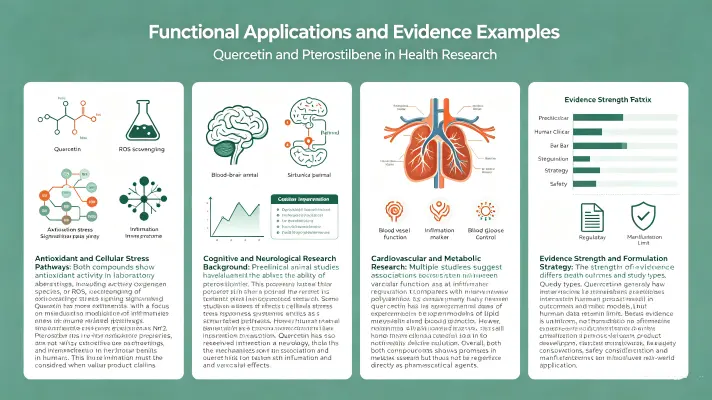
Antioxidant and Cellular Stress Pathways
Both chemicals have antioxidant action in the laboratory. - Scavenging of reactive oxygen species and modulation of oxidative stress associated signalling pathways.
Quercetin has been more intensively explored for its regulation of inflammatory enzymes and immune-related pathways. Pterostilbene extract has been studied for interaction with pathways such as Nrf2 in preclinical models.
However, in vitro antioxidant properties may not necessarily transfer into therapeutic benefits in people. This constraint is crucial to consider when considering claims about the product.
Cognitive and Neurological Research Context
Pterostilbene’s capacity to pass the blood-brain barrier has been evaluated in preclinical animals. This characteristic has generated attention in its possible relevance in neuroprotection research.
Some research look at its impact on cellular stress response systems ( for example sirtuin associated pathways ) . Human clinical data on cognitive performance results are scarce and should be handled with caution, however.
Quercetin has also been studied in neurological situations, although its processes seem more indirect, frequently related to systemic inflammation and vascular effects.
Cardiovascular and Metabolic Research
Several studies have connected quercetin with vascular function and regulation of inflammatory response. These results are more established in human studies than many of the newer polyphenols.
Pterostilbene has been studied in experimental models for lipid metabolism and glycaemic control. However, clinical data in people is still evolving and not definitive.
In summary, both chemicals have promise in the context of metabolic research, but should not be seen as medicinal agents per se.
Formulation strategy is a crucial differentiator in product development since strength of evidence is not consistent. In the next part, we explore the impact of regulatory frameworks, safety issues and manufacturing limits on practical application.
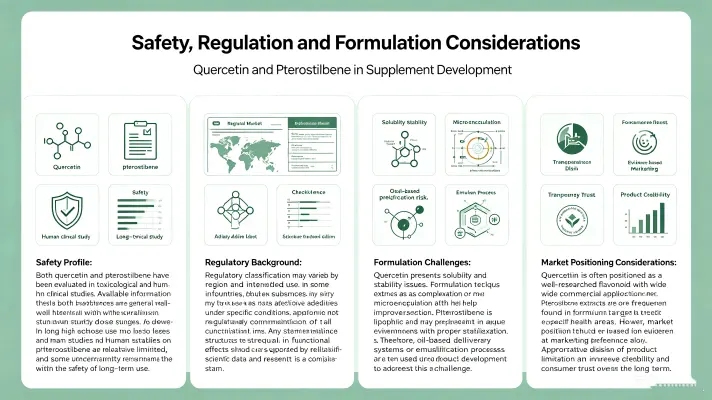
Safety, Regulation, and Formulation Considerations
In addition to biological activity, safety data, regulatory categorisation and manufacturing uniformity play a strong role in the creation of a supplement. These are the parameters that affect the suitability of a chemical for commercial usage in various markets.
Safety Profile Overview
Quercetin and pterostilbene have been researched in toxicology and in human beings. Available information shows that widely investigated doses have generally acceptable safety profiles.
However, the long-term high-dose data are more substantial for quercetin owing to a longer history of dietary intake and study interest. There are less research on pterostilbene in humans, and there is some doubt when it comes to long term usage.
Regulatory Context
The regulatory categorisation may differ depending on the locale and the intended purpose. In certain countries, both substances may be used as dietary additives under certain circumstances.
However, regulatory acceptance does not mean validation of all claims. Claims of structure/function must be properly substantiated by acceptable scientific data and conforming phrasing.
Formulation Challenges
Quercetin has solubility and stability issues. Complexation or encapsulation are formulation methods that frequently increase absorption.
Because of its lipophilic character, pterostilbene may precipitate in aqueous environments if not stabilised. Oil-based delivery methods or emulsification processes are often addressed in product development.
Market Positioning Considerations
Quercetin is often marketed as a well studied flavonoid constituent with a wide range of commercial uses. Pterostilbene extract is more often found in premium formulas for certain health categories.
But the positioning should depend on the validity of the facts and not only on marketing preferences. Effective disclosure of constraints may boost credibility and customer trust in the long run.
Conclusion
There are two polyphenols of scientific relevance, quercetin and pterostilbene, each with its own profile. Structural variations affect absorption, metabolism and potential biological activity.
Quercetin has greater evidence now, with a larger and more established study basis, notably in human trials. Pterostilbene has intriguing pharmacokinetic features and significant preclinical research interest, but human data is relatively restricted.
A context-dependent assessment is a better way than trying to choose the best chemical in every situation. Ingredient selection should be driven by formulation strategy, intended use and the regulatory environment.
Further definition of their significance in nutrition and functional product creation, and a better perspective on the relative efficacy of them in human populations, will come from ongoing study.
FAQ
How does pterostilbene's bioavailability compare to quercetin in practical formulation terms?
Pterostilbene achieves approximately four times higher oral bioavailability than quercetin due to its methoxy-substituted structure, which resists rapid Phase II metabolism. This translates to lower required dosages—typically 50-250 mg versus 500-1000 mg for quercetin—reducing per-unit manufacturing costs despite higher raw material pricing. Formulators can achieve equivalent biological activity with smaller capsule sizes or lower cost-per-serving in beverage applications.
Can quercetin and pterostilbene be combined safely in a single formulation?
Both compounds demonstrate excellent safety profiles with no documented adverse interactions. Combination formulas leveraging quercetin's immune-modulating properties alongside pterostilbene's cognitive benefits create differentiated product propositions. Stability testing should verify that no chemical interactions occur under your specific processing conditions, particularly in liquid or high-moisture formulations where oxidative degradation might accelerate.
What certifications should B2B buyers verify before committing to a pterostilbene supplier?
Priority certifications include GMP (pharmaceutical-grade manufacturing controls), ISO standards (quality management consistency), and HACCP (contamination prevention). Cosmetic applications require ISO 16128 compliance, while export markets may mandate KOSHER, HALAL, or organic certifications. Request C14 carbon dating verification to confirm natural sourcing versus synthetic alternatives, as economic adulteration remains a concern in this ingredient category. Third-party analytical certificates confirming HPLC-verified purity and heavy metal screening should accompany every batch.
Partner with Rebecca for Premium Pterostilbene Extract Supply
Rebecca delivers pharmaceutical-grade pterostilbene extract (CAS No. 537-42-8) at minimum 99% purity, manufactured in GMP-certified facilities equipped with advanced supercritical CO₂ extraction technology. As an established pterostilbene extract manufacturer serving pharmaceutical R&D, supplement brands, and cosmetic developers across North America and Europe, we provide comprehensive support including DMF documentation, stability data, and formulation guidance. Our 1 kg minimum order quantity accommodates pilot projects, while annual production capacity exceeding 500 metric tons ensures scalable supply for growing brands. Free samples enable risk-free evaluation of our additive-free, non-GMO material backed by complete analytical certification packages. Contact our technical team at information@sxrebecca.com to discuss your specific formulation requirements and receive customized pricing aligned with your procurement volume. Visit sxrebecca.com to explore our complete botanical extract portfolio.
References
1. Kapetanovic IM, Muzzio M, Huang Z, Thompson TN, McCormick DL. Pharmacokinetics, oral bioavailability, and metabolic profile of resveratrol and its dimethylether analog, pterostilbene, in rats. Cancer Chemotherapy and Pharmacology, 2011; 68(3): 593-601.
2. Riche DM, McEwen CL, Riche KD, Sherman JJ, Wofford MR, Deschamp D, Griswold M. Analysis of safety from a human clinical trial with pterostilbene. Journal of Toxicology, 2013; Article ID 463595.
3. Rimando AM, Kalt W, Magee JB, Dewey J, Ballington JR. Resveratrol, pterostilbene, and piceatannol in vaccinium berries. Journal of Agricultural and Food Chemistry, 2004; 52(15): 4713-4719.
4. McCormack D, McFadden D. A review of pterostilbene antioxidant activity and disease modification. Oxidative Medicine and Cellular Longevity, 2013; Article ID 575482.
5. Chiou YS, Tsai ML, Nagabhushanam K, Wang YJ, Wu CH, Ho CT, Pan MH. Pterostilbene is more potent than resveratrol in preventing azoxymethane-induced colon tumorigenesis via activation of the NF-E2-related factor 2-mediated antioxidant signaling pathway. Journal of Agricultural and Food Chemistry, 2011; 59(6): 2725-2733.
6. Kosuru R, Kandula V, Rai U, Prakash S, Xia Z, Singh S. Pterostilbene decreases cardiac oxidative stress and inflammation via activation of AMPK/Nrf2/HO-1 pathway in fructose-fed diabetic rats. Cardiovascular Drugs and Therapy, 2018; 32(2): 147-163.