What are the benefits of alpha-lipoic acid powder?
One naturally occurring molecule that might be present in human cells is Alpha-lipoic acid powder or ALA for short. Its chemical formula is 1077-28-7. It is involved in the process of energy metabolism inside mitochondria. It accompanies enzymes that convert glucose into usable cellular energy by acting as a cofactor in these processes.
Unlike other antioxidants, ALA can act in both water-and fat-based environments. A wide range of biological tissues may be interacted with by virtue of its amphipathic property.
From a biological perspective, ALA is also famous for its ability to influence oxidative reactions. This compound may also aid in the regeneration of other antioxidants in their reduced forms, including vitamins C and E. However, bear in mind that these effects are based on research done in controlled environments in the lab and in clinical trials. Results may vary with subject-specific physiology, dosage, and formulation.
As a metabolically and redox-active chemical, rather than a direct therapeutic drug, ALA is generally well understood.
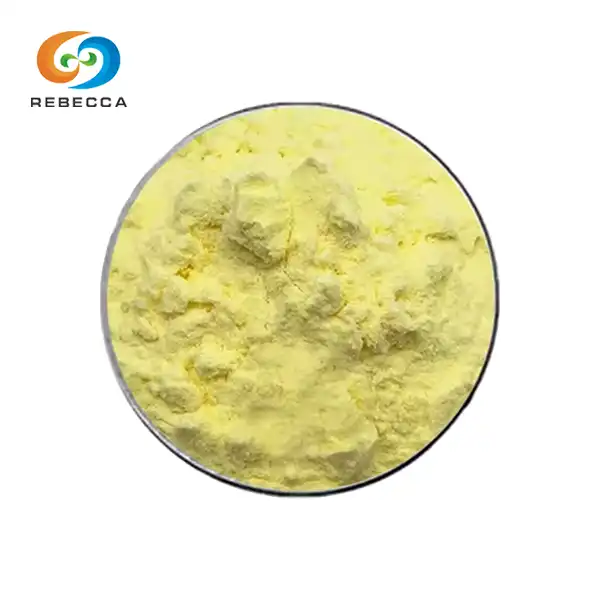
Product Name:alpha lipoic acid
CAS No.:1077-28-7
Specification:99%
Test Method:HPLC
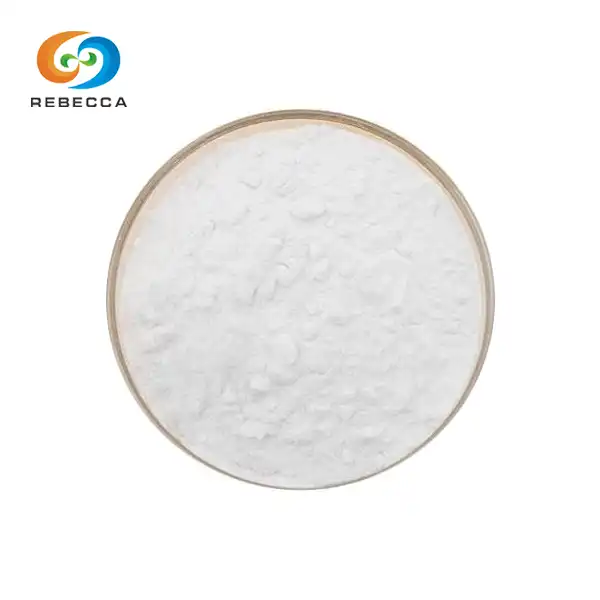
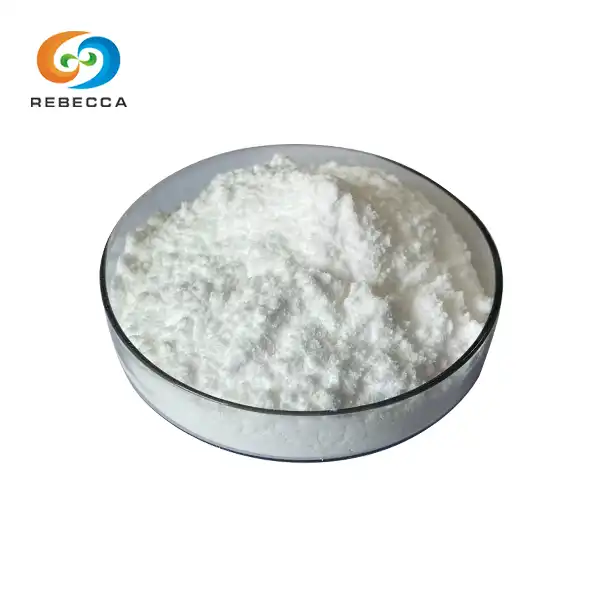
Appearance:Light yellow to yellow powder
Shelf Life: 2 years
Minimum Order Quantity: 1 kg
Samples: Free samples available
Certifications: GMP, ISO, HACCP, KOSHER, and HALAL.
Payment: Various payment methods accepted.
Advantages: Manufactured in a 100,000-grade cleanroom, our products are additive-free, non-GMO
Inner Package: Double PE Bags; Net 5kg/Bag
Outside Package: Paper Drums, Net 25kg/Drum
Storage:Store in a cool, dry place away from Light and Heat.
Potential Health-Related Benefits Supported By Research
More recent research on alpha-lipoic acid has focused on its potential effects in various physiological contexts. Most of the findings should be considered as supporting rather than conclusive for the treatment of sickness, even if there are some promising outcomes.
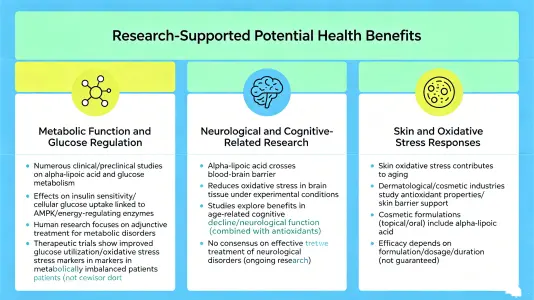
Metabolic function and glucose regulation
Numerous clinical and preclinical studies have examined ALA's effects on glucose metabolism. Based on what we know so far, its effects on insulin sensitivity and cellular glucose absorption may be due to pathways that include AMPK and other enzymes that regulate energy.
For the most part, alpha-lipoic acid powder has been studied in humans for its potential use as an auxiliary chemical in the management of metabolic disorders. Improvements in glucose utilisation and markers of oxidative stress have also been shown in some therapeutic trials, especially in those with metabolic imbalance. However, not all of the populations had the same results.
Neurological and cognitive-related research
The fact that ALA can traverse the blood-brain barrier has led researchers to speculate that it may have a role in neurological system health. The level of oxidative stress in brain tissue might be reduced in experimental settings.
Many studies have looked at its possible benefits for treating cognitive loss with age and improving nerve function, particularly when taken in conjunction with other antioxidants. Despite the fact that experts have not yet reached an agreement on whether or not ALA is effective as a treatment for neurological diseases, the chemical is now the subject of continuous investigation.
Skin and oxidative stress response
Skin oxidative stress is one of the causes of skin ageing. Research on ALA's antioxidant properties and its potential role in supporting the skin barrier function has been extensive in the dermatological and cosmetics industries.
Cosmetic compositions that aim to enhance the overall appearance of the skin, whether applied topically or taken orally, may sometimes include it. Still, there's no guarantee that it will work since clinical outcomes are so sensitive to formulation type, dosage, and duration of administration.
Formulation and Quality Considerations For Alpha-Lipoic Acid Powder
In commercial applications, alpha-lipoic acid powder is commonly supplied in powder form due to its flexibility in formulation and dosing.
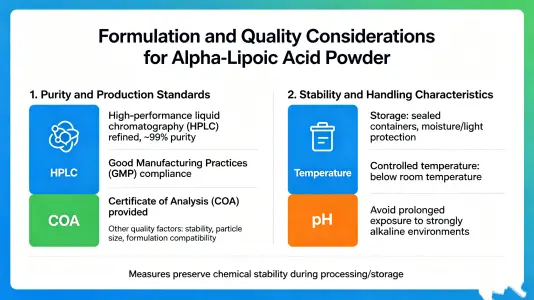
Purity and manufacturing standards
It is common practice to declare a purity level of around 99% for ALA powder of high quality when refined using HPLC procedures. Conformity with Good Manufacturing Practice (GMP) standards and the provision of supporting paperwork, such a Certificate of Analysis (COA), allow for quality verification in regulated supply chains.
However, excellence is not the exclusive determinant of success. Other considerations that impact product quality include stability, particle size, and compatibility with formulations.
Stability and handling characteristics
Alpha-lipoic acid powder is sensitive to environmental conditions such as heat, light, and alkaline pH. In practical manufacturing environments, it is generally recommended to:
· Store in sealed containers away from moisture and light
· Maintain controlled temperature conditions (typically below room temperature)
· Avoid prolonged exposure to strong alkaline environments during formulation
These factors help preserve chemical stability during processing and storage.
Applications and Practical Use in Industry Contexts
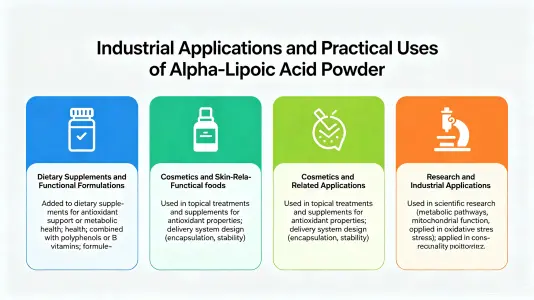
Alpha-lipoic acid powder is used across several industries, primarily in dietary supplements, functional foods, cosmetics, and pharmaceutical research. Its role varies depending on formulation goals and regulatory frameworks.
Dietary supplements and functional formulations
The addition of ALA to dietary supplement formulations with the stated goals of providing broad antioxidant support or metabolic health is common practice. This chemical is often combined with other nutrients, such polyphenols or B vitamins, when multi-ingredient blends are made.
Instead than basing formulation design on the assumed synergistic effects, regulatory restrictions and the current clinical evidence should take center stage.
Cosmetic and skin-related applications
Researchers in the cosmetics industry are looking at alpha-lipoic acid powder because of its antioxidant properties and the role it may play in improving the appearance of skin under oxidative stress scenarios. This chemical might be used in both topical treatments and dietary supplements for aesthetic purposes.
The delivery system's design, which involves encapsulation techniques and stability optimisation, is crucial to its efficiency.
Research and industrial use
Furthermore, ALA is used in scientific investigations to probe metabolic pathways, mitochondrial function, and oxidative stress. Not only that, but it also has uses in consumer items. Uniformity, documentation, and batch repeatability take precedence over marketing positioning in such a scenario.
Conclusion
Powdered alpha-lipoic acid is a metabolic and antioxidant chemical with physiological activity. Several areas of research have looked at it, including skin health, glucose metabolism, and brain function. Many investigations have been carried out on this substance.
Scientific literature lends credence to a variety of possible routes; nonetheless, current evidence is insufficient to classify it as a treatment for any illness. Not only does it serve an acknowledged role in research and formulation development, but its biochemical variety also contributes significantly to its value.
Results in real-world applications depend on more than just the chemical itself; other critical aspects include product stability, formulation design, and product quality. Therefore, rather than being used as a standalone treatment, alpha-lipoic acid is better suited as a functional component that is the subject of ongoing study. For the reasons stated before, this is the case.
FAQ
What purity grade should I specify for pharmaceutical applications?
We need ALA powder with a minimum purity of 99%, confirmed by HPLC testing, for pharmaceutical research and development purposes. The stability of the formulation or its acceptance by regulatory bodies may be assured by adhering to this standard, which guarantees low contaminants. In order to back up submissions of Drug Master Files or investigational new drug applications, suppliers should provide thorough paperwork, such as certificates of analysis, validation of testing methodologies, and stability data.
How does powder format compare to capsule forms regarding absorption?
The excellent bioavailability may be achieved by optimising delivery methods, which is made possible by the formulation flexibility offered by powder format. Powdered ALA may reach absorption rates that are on par with or higher than those of normal capsule forms when made correctly with the right excipients or added to lipid-based systems. The opportunity for customisation, not inherent absorption superiority, is the main benefit.
Can ALA powder be used during pregnancy or breastfeeding?
It is the responsibility of the completed product maker to do suitable safety evaluations and provide consumer recommendations, which ingredient suppliers should inform their B2B customers. The use of ALA supplements during pregnancy and breastfeeding is not well-documented in clinical trials. Supplements should not be used during these times unless supervised by a healthcare professional, according to conservative methods; this advice should be reflected on product labels.
What minimum order quantities do suppliers typically require?
MOQ varies significantly based on supplier scale and target customer segments. Established manufacturers serving pharmaceutical and supplement industries may accommodate orders starting at 25kg, while commodity-focused suppliers might require 100kg or greater. Discussing volume projections and establishing framework agreements often provides flexibility for initial qualification batches followed by larger production orders.
Rebecca: Alpha-Lipoic Acid Powder Supplier
Whether it's quality, consistency, or compliance paperwork, Rebecca's pharmaceutical-grade alpha-lipoic acid powder has you covered. The 99% purity specifications certified by HPLC testing are satisfied by every batch since our Shaanxi production factory follows strict GMP and ISO standards. As a seasoned provider of alpha-lipoic acid powder to pharmaceutical R&D businesses, supplement brands, beverage producers, and cosmetics developers in North America and Europe, we know firsthand the importance of consistent batches, thorough regulatory support, and quick technical service.
For further information, to receive COA paperwork, or to set up a sample examination, please contact our technical team. For more information about our whole line of botanical extracts, please email us at information@sxrebecca.com.
References
1. Shay, K.P., et al. (2009). "Alpha-Lipoic Acid as a Dietary Supplement: Molecular Mechanisms and Therapeutic Potential." Biochimica et Biophysica Acta, 1790(10), 1149-1160.
2. Rochette, L., et al. (2013). "Direct and Indirect Antioxidant Properties of α-Lipoic Acid and Therapeutic Potential." Molecular Nutrition & Food Research, 57(1), 114-125.
3. Golbidi, S., et al. (2011). "Diabetes and Alpha Lipoic Acid." Frontiers in Pharmacology, 2, 69.
4. Packer, L., et al. (1995). "Alpha-Lipoic Acid as a Biological Antioxidant." Free Radical Biology and Medicine, 19(2), 227-250.
5. Gorąca, A., et al. (2011). "Lipoic Acid - Biological Activity and Therapeutic Potential." Pharmacological Reports, 63(4), 849-858.
6. Moura, F.A., et al. (2015). "Antioxidant Therapy for Management of Oxidative Stress in Chronic Diseases: A Comprehensive Review with Focus on Alpha-Lipoic Acid." Biochemical Pharmacology, 97(1), 21-35.