What is piperine powder used for?
Main applications of piperine powder include as natural bioavailability enhancer in dietary supplements, pharmaceutical research, functional foods, drinks and cosmetic items. Piperine is the active alkaloid extracted from black pepper (Piper nigrum) or long pepper (Piper longum) and it is responsible for the distinctive strong flavour of pepper. Today, it is appreciated not only for its natural origin but also for its capacity to enhance the absorption of different nutrients and botanical substances.
Most commercial piperine powder is standardised to 95%–98% purity and HPLC tested to verify quality. Piperine has become a key component for producers looking to enhance product performance without substantially raising formulation costs because of its wide usefulness.
Before we discuss why piperine is so extensively employed in many sectors, let’s first look at the essential characteristics and functional advantages.
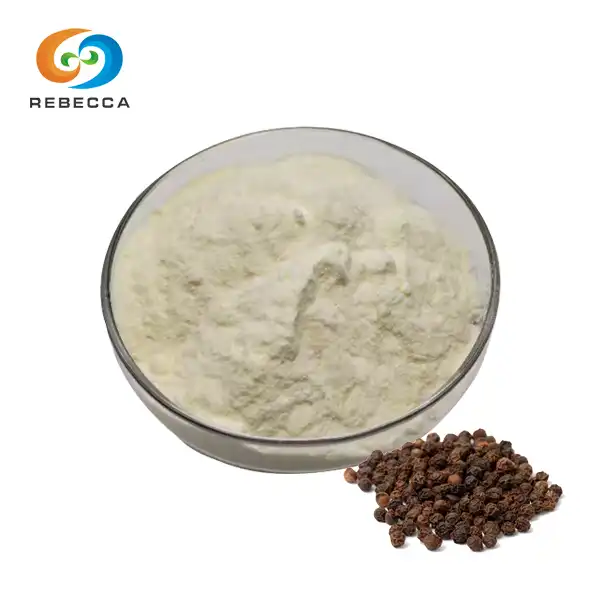
Piperine Powder
【English name】: Piperine Powder
【Latin Name】: Piper nigrum L.
【CAS No.】: 94-62-2
【Molecular Formula】: C17H19NO3
【Active ingredients】: piperine
【Specification】: piperine 95% 98%
【Use Part】 : Fruit
【Appearance】: Light yellow powder
【Mesh size】:80 Mesh
【Test Method】: HPLC
Piperine Powder: Properties and Benefits
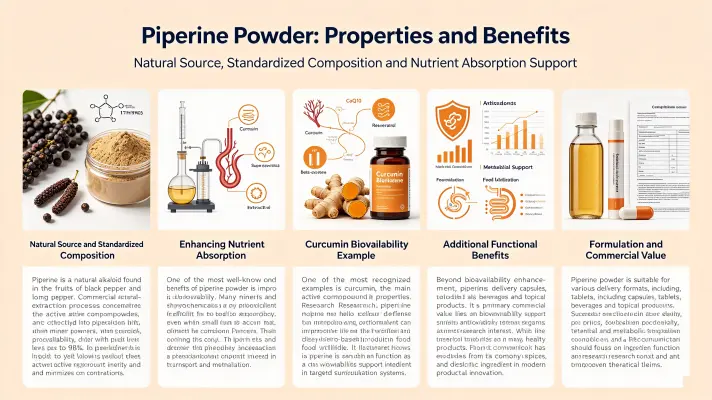
Natural Source and Standardized Composition
Piperine is a naturally occurring alkaloid present in the fruits of black pepper and long pepper. Commercial extraction procedures concentrate the active chemical to create a highly pure powder with up to 98% piperine.
The ingredient is usually a yellowish to light brown powder with a distinctive pepper smell . Its chemical formula is C17H19NO3 and it is often given in fine powder grades for capsules, tablets, drinks and topical applications.
High-quality producers use modern extraction processes such as supercritical CO2 extraction and ultrasonic-assisted extraction to retain the active component integrity and minimise contaminants.
Enhanced Nutrient Absorption
One of the most known benefits of piperine powder is that it increases bioavailability. Many minerals and phytochemicals are poorly absorbed by the human body. Even if taken in sufficient quantities, just a tiny proportion may reach the blood stream.
Piperine assists in this difficulty by affecting the metabolic pathways that are involved in nutrition transport and metabolism. Piperine has been found in studies to increase absorption of substances such as curcumin, coenzyme Q10, beta-carotene, selenium and resveratrol.
One of the best known examples is curcumin, the main active molecule in turmeric . Research has shown that combining curcumin with piperine may significantly boost curcumin bioavailability compared to curcumin alone. This discovery has made piperine a staple in many turmeric based supplements around the globe.
Additional Functional Benefits
In addition to the improvement of bioavailability, piperine has been under focus for its antioxidant and metabolic support activities. Research shows that piperine may assist cellular defence systems against oxidative damage.
Researchers are still investigating its impact in metabolic health, digestive support and food utilisation. Although not promoted as a pharmacological remedy, the multifunctional qualities of piperine make it a beneficial component of many wellness-oriented compositions.
These properties explain piperine’s transformation from a common spice to a niche component in the innovations of today’s products.
The use of piperine in a number of commercial goods is also increasing with the ongoing rise in demand for effective, science-based ingredients.
Applications and Uses of Piperine Powder Across Industries
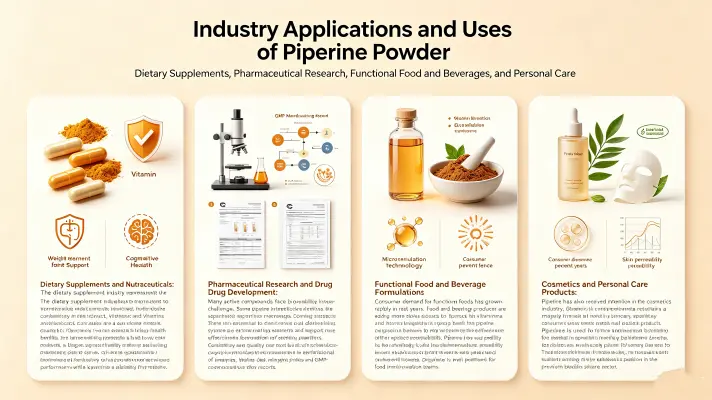
Dietary Supplements and Nutraceutical Products
Piperine powder is the biggest market for the dietary supplement business. Manufacturers often add piperine to formulations with turmeric extracts, herbal compounds, vitamins and antioxidants.
Curcumin pills are a good example. The health benefits of curcumin are well established, yet in its natural form it is poorly absorbed. Supplement producers may greatly increase their use of ingredients by adding a pinch of piperine.
Piperine is also commonly found in formulations designed for:
• Joint and mobility support
• Antioxidant protection
• Weight management products
• Digestive wellness supplements
• Healthy aging formulas
• Cognitive support blends
For supplement brands, piperine offers a simple way to enhance product effectiveness while maintaining relatively straightforward formulations.
Pharmaceutical Research and Drug Development
Many active compounds suffer from bioavailability issues and this has led to piperine being of increasing interest to pharmaceutical researchers. Some medications metabolise fast before they reach the ideal therapeutic concentrations.
Research is ongoing on the potential of piperine to increase oral delivery systems and help to absorb certain chemicals more effectively. While piperine is mostly employed as an excipient or as a supporting component and not as an active pharmaceutical ingredient, it is a useful tool in formulation research due to its effects on absorption pathways.
For pharmaceutical applications, consistency and quality control are key. Oftentimes, manufacturers may want full paperwork such as Certificates of Analysis, stability data, impurity profiles, and GMP-compliant manufacturing records.
Functional Food and Beverage Formulations
In recent years, consumer demand for functional foods has quickly increased. Food and beverage product manufacturers are putting more plant extracts, vitamins and speciality ingredients into ordinary meals and drinks.
These formulations may benefit from piperine since it can boost the potency of other bioactive compounds. It is also utilised in several spice mixes and speciality food items due to its natural origin and flavour qualities.
Piperine is not very water soluble however current techniques such as encapsulation and microemulsion systems may increase its suitability for beverage applications.
As customers want items that provide convenience and demonstrable advantages, piperine is a great tool for food innovation teams.
Cosmetic and Personal Care Products
Piperine is also being eyed in the cosmetics business. Botanical compounds continue to be a major trend in skincare, particularly for customers looking for natural options.
Piperine is used in cosmetics for its antioxidant effects and possible function in improving the penetration of ingredients. Piperine might be added to serums, lotions, masks and wellness-oriented skincare products by product producers.
It’s plant-based and matches with clean-label and natural-beauty trends. This makes piperine an appealing ingredient for manufacturers wanting to establish themselves in the premium botanical skincare space.
Because piperine is used differently in each business, obtaining the appropriate quality standard is a key buying issue.
What Should Buyers Consider When Sourcing Piperine Powder?
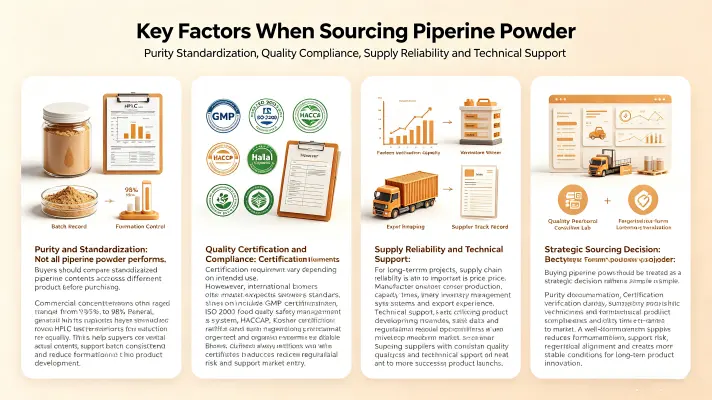
Purity and Standardization
Not every piperine powder performs the same. Buyers should compare standardised piperine content before buying. Commercial goods are usually supplied in concentrations from 95% to 98%.
Generally, higher purity levels mean more uniformity and simpler formulation control. Reliable providers will give HPLC testing records for every manufacturing batch.
Quality Certifications and Compliance
Certification requirements vary according to the intended application. However, several standards are commonly requested by international buyers.
These may include:
• GMP certification
• ISO 9001 Quality Management System
• ISO 22000 Food Safety Management System
• HACCP certification
• Kosher certification
• Halal certification
• Organic certification where applicable
Buyers should always request current documentation rather than relying solely on website claims.
Supply Reliability and Technical Support
Supply chain reliability is frequently just as critical as pricing to long term initiatives. Manufacturers should consider manufacturing capacity, lead times, inventory management systems and export expertise.
Technical help may also provide a lot of value during product development. Suppliers that provide formulation direction, stability data and regulatory documents may help minimise development delays and smooth market access.
Often more successful product launches result from selecting a provider with a proven record of consistent quality and fast technical assistance.
Manufacturers may decide whether the ingredient suits their formulation goals by studying how piperine is used and where to get it.
Conclusion
Piperine powder is extensively utilised as a natural bioavailability enhancer in dietary supplements, pharmaceutical research, functional foods, drinks, and cosmetic applications. It is one of the most useful compounds in current formulation science since it improves nutrient absorption.
One of the most famous examples of bioavailability increase is the combination of piperine and curcumin, among its various uses. But piperine is good for more than just turmeric supplements. Manufacturers continue to integrate it into creative goods aimed at delivering more effectiveness and better customer value.
When buying piperine powder, it is important to think about purity, quality certificates, testing reports, and the reputation of the seller. Careful assessment leads to constant performance and long-term success of the product.
FAQ
What is piperine powder mainly used for?
Piperine powder is mainly used to improve the absorption of nutrients, botanical extracts, and dietary supplement ingredients. It is commonly added to curcumin products, functional foods, and wellness formulations.
Why is piperine often combined with curcumin?
Curcumin has relatively low natural bioavailability. Piperine helps improve its absorption, allowing the body to utilize a greater amount of the active compound.
Is piperine powder used only in supplements?
No. Piperine is also used in pharmaceutical research, functional beverages, food products, and cosmetic formulations.
What purity level is commonly available for commercial piperine powder?
Most commercial piperine powder is standardized to 95%–98% purity and verified through HPLC testing methods.
What documents should buyers request from suppliers?
Buyers typically request Certificates of Analysis (CoA), HPLC test reports, microbiological testing reports, heavy metal analysis, and relevant quality certifications such as GMP and ISO standards.
Partner with Rebecca for Premium Piperine Powder Supply
Rebecca is an expert in the manufacture of pharmaceutical-grade and nutraceutical-grade botanical extracts including standardised 98% piperine powder from premium Piper nigrum seeds. In Shaanxi, we have a manufacturing facility with 3 specialised extraction lines with an annual capacity of more than 500 metric tonnes, equipped with supercritical CO2 and ultrasonic aided extraction technologies to ensure the greatest integrity of active ingredients. Each batch undergoes rigorous testing using HPLC and complete quality checks in line with GMP, ISO22000 and HACCP standards.
Our technical team offers customised formulation assistance, stability data and regulatory paperwork packages to ensure easy product development and market registration. We provide consistent quality tailored to your unique application needs, whether it is sourcing pharmaceutical-grade ingredients with DMF assistance, organic-certified compounds for premium supplements, or food-grade extracts for functional drinks. Flexible MOQ options are available for trial amounts and bulk container loads with competitive FOB, CIF and DDP pricing structures to maximise your overall landing expenses.
For your piperine powder needs, reach out to our procurement experts at information@sxrebecca.com. We will supply you with exact product specifications, pricing based on your volumes, and technical consulting to make sure you are using the best ingredient for your application. Find out why top pharmaceutical R&D firms, supplement brands and functional food manufacturers choose Rebecca as their go-to source of piperine powder for dependable quality, thorough compliance assistance and prompt customer service.
References
1. Srinivasan K. "Black Pepper and its Pungent Principle-Piperine: A Review of Diverse Physiological Effects." Critical Reviews in Food Science and Nutrition, 2007, 47(8): 735-748.
2. Shoba G, Joy D, Joseph T, et al. "Influence of Piperine on the Pharmacokinetics of Curcumin in Animals and Human Volunteers." Planta Medica, 1998, 64(4): 353-356.
3. Dudhatra GB, Mody SK, Awale MM, et al. "A Comprehensive Review on Pharmacotherapeutics of Herbal Bioenhancers." The Scientific World Journal, 2012, Article ID 637953.
4. Meghwal M, Goswami TK. "Piper nigrum and Piperine: An Update." Phytotherapy Research, 2013, 27(8): 1121-1130.
5. Butt MS, Pasha I, Sultan MT, et al. "Black Pepper and Health Claims: A Comprehensive Treatise." Critical Reviews in Food Science and Nutrition, 2013, 53(9): 875-886.
6. Johnson JJ, Nihal M, Siddiqui IA, et al. "Enhancing the Bioavailability of Resveratrol by Combining it with Piperine." Molecular Nutrition & Food Research, 2011, 55(8): 1169-1176.