What is shilajit extract?
Shilajit extract is a pure and standardised natural resin extract that contains several minerals. It is obtained from mountain rock formations at great altitudes, primarily in the Himalayas, Altai and Caucasus. Raw Shilajit is a sticky tar. It is formed over extended periods of time by the slow breakdown of plant material under geological pressure.
Raw shilajit in its natural form is seldom employed by contemporary businesses. It is instead made into standardised extracts. These extracts are formulated for consistency, safety and ease of formulation for use in supplements, beverages and cosmetic applications.
While the traditional background of shilajit extract is crucial to grasp, it is also necessary to go beyond it. To look at its composition, how it is standardised and why quality control is important in its commercial usage. These features are arranged in the following parts.

【English name】: Shilajit Extract
【Latin Name】: SHILAJIT Asphaltum (Shilajit)
【CAS No.】: 479-66-3
【Active ingredients】: fulvic acid
【Specification】: fulvic acid 50%
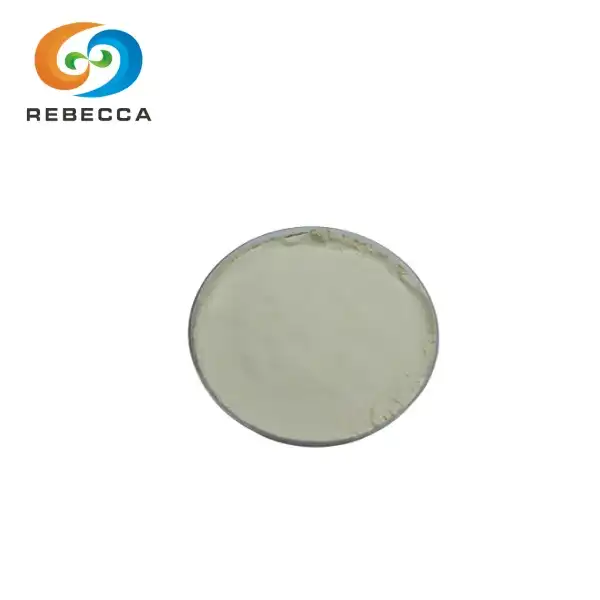
【Appearance】: Yellow brown Fine Powder
【Mesh size】:80 Mesh
【Test Method】: HPLC
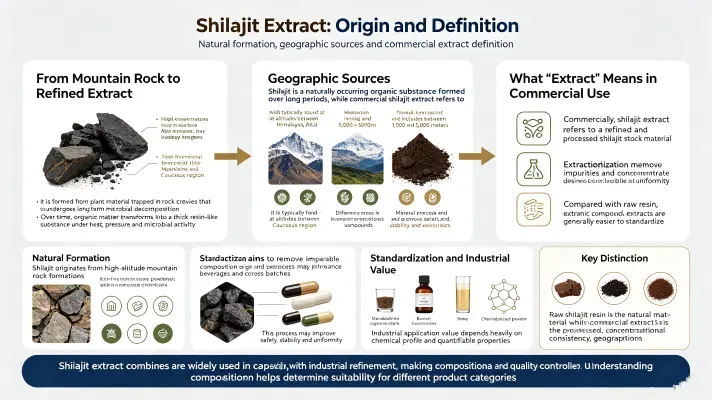
Origin and Definition of Shilajit Extract
Natural formation and geographic sources
Shilajit is derived from mountain rocks at high altitudes, usually between 1,000 and 5,000 meters. It forms from the long-term microbial breakdown of the plant material trapped between the rocks. This organic substance is eventually converted by heat, pressure and microbial activity into a thick resin.
The most well known sources are Himalayas, Altai Mountains and Caucasus areas. Each location creates somewhat varied profiles because of differences in temperature, vegetation and geological structure. Mineral content and organic compound distribution may be affected by such variances.
What “extract” means in commercial use?
Commercially, “shilajit extract” is the refined, processed version of raw shilajit. The purpose of extraction is to eliminate contaminants and to concentrate the desired soluble chemicals. This is a technique that increases safety, stability and uniformity.
It is simpler to standardise an extract than a crude resin. They are widely employed in capsule, powder, beverage, and cosmetic systems. Standardisation means each batch has comparable composition and performance characteristics.
Once the origin and definition are apparent, the next step is to know what shilajit extract truly includes. Its industrial usefulness is largely dependent on its chemical structure and quantifiable characteristics.
Composition and Standardization of Shilajit Extract
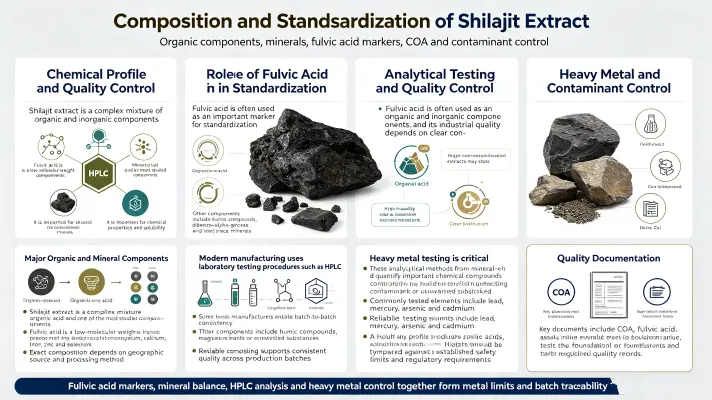
Key organic and mineral components
Shilajit extract is a complex blend of organic and inorganic components. Fulvic acid, a low molecular weight organic acid, is one of the most investigated components. This is key to the extract's chemical behaviour and solubility.
Other ingredients include humic compounds, dibenzo-alpha-pyrones and trace minerals. These minerals may be potassium, magnesium, calcium, iron, zinc and selenium. Specific profile relies on origin and processing processes.
Role of fulvic acid in standardization
Fulvic acid is often utilised as an important marker for standardisation. Some commercial extracts may indicate the fulvic acid level in a range. This enables the maker to assure uniformity from batch to batch.
However, the standardisation should not be based on single compound only. Full profile contains both organic acids and mineral balance. Generally, premium items will include a complete certificate of analysis (COA) for transparency.
Analytical testing and quality control
Modern manufacture employs laboratory testing procedures like HPLC (High Performance Liquid Chromatography). These assays assist to locate and quantify important chemicals. They also sense pollutants or undesired chemicals.
Testing for heavy metals is critical. Raw shilajit is a product of the mineral-rich environment of rock, and as such, the danger of contamination must be managed. Common testing include lead, mercury, arsenic, and cadmium.
Now that we have an idea of what to look for in terms of composition and quality indicators, let's look at some genuine goods that include shilajit extract. The adaptability is one reason it has been attracting interest across several sectors.
Applications of Shilajit Extract in Modern Industries
Use in dietary supplements
Shilajit extract is typical for food supplements. It is often made as capsules, tablets or powdered mixtures. Manufacturers prefer standardised extracts because they provide for a uniform dose.
Shilajit is typically marketed as a mineral and energy support element in supplement systems. It is found in multi-ingredient formulations, not as stand-alone medicines in many markets. This means that it may be combined with vitamins, amino acids or plant extracts by formulators.
Functional beverage applications
The shilajit extract may be used in liquid formulations for the manufacture of beverages. It is water-soluble versions are more appropriate for this use. Processing conditions, however, need to be managed carefully.
Heat sensitivity is a big role. Some organic compounds are sensitive to high temperatures. Manufacturers thus typically use low heat processing or post-sterilization mixing procedures.
Cosmetic and skincare use
Shilajit extract is also utilised in cosmetic preparations. This is available as creams, serums and topical preparations. Its mineral and organic acid composition make it suited for functional skincare approaches.
Cosmetic formulators consider stability, solubility and compatibility with emulsions. Generally, water-soluble powder formulations are favoured. This allows for easy incorporation into current skincare systems.

Conclusion
Shilajit extract is a complex natural compound, modified for use in contemporary industry. Its worth relies on standardisation, safety control and regular quality monitoring.
Each step from origin, composition, application to procurement has a function in determining the quality of the product. With demand for supplements, drinks and cosmetics growing, dependable sourcing is becoming even more vital.
A strong knowledge of composition, testing methodologies and regulatory requirements mitigates risk and improves product performance. In commercial applications, success relies not only on the substance itself, but on how thoroughly it is managed and confirmed at all points in the supply chain.
Partner with Rebecca for Premium Shilajit Extract Supply
Rebecca operates as a specialized manufacturer delivering standardized botanical ingredients to pharmaceutical R&D teams, supplement brands, and cosmetic formulators across North American and European markets. Our production facility maintains GMP, ISO 22000, and HACCP certifications, ensuring compliance with international quality standards throughout extraction, purification, and packaging operations.
We supply fulvic acid 50% standardized powder (80 mesh, yellow-brown appearance) tested via HPLC methodology, supported by comprehensive CoA documentation including heavy metal screening, microbial analysis, and pesticide residue testing. Our technical team provides formulation guidance, stability data, and regulatory support documents tailored to your target markets. Annual production capacity exceeding 500 metric tons enables reliable supply scalability for growing brands and bulk procurement requirements. Flexible MOQ terms accommodate both product development sampling and commercial-scale orders.
Contact our international procurement specialists at information@sxrebecca.com to request product specifications, pricing quotations, and sample arrangements. Discover how Rebecca's combination of advanced extraction technology, rigorous quality control, and responsive customer support can strengthen your ingredient supply chain for competitive advantage.
References
1. Wilson, E., et al. (2011). "The Use of Minerals in Dietary Supplements: A Global Perspective." Journal of Nutritional Science, 48(3), 221-234.
2. Carrasco-Gallardo, C., et al. (2012). "Shilajit: A Natural Phytocomplex with Potential Procognitive Activity." International Journal of Alzheimer's Disease, 2012, Article ID 674142.
3. Ghosal, S. (2006). "Chemistry of Shilajit, an Immunomodulatory Ayurvedic Rasayan." Pure and Applied Chemistry, 62(7), 1285-1288.
4. Agarwal, S.P., et al. (2007). "Shilajit: A Review." Phytotherapy Research, 21(5), 401-405.
5. Stohs, S.J. (2014). "Safety and Efficacy of Shilajit (Mumie, Moomiyo)." Phytotherapy Research, 28(4), 475-479.
6. Meena, H., et al. (2010). "Evaluation of Heavy Metal Contamination in Indian Herbal Medicines and Dietary Supplements." Journal of Environmental Science and Health, 45(6), 1684-1691.