What's the function of octacosanol in lipid metabolism?
Octacosanol is a long-chain fatty alcohol found naturally in plant waxes, such as sugarcane, rice bran, and wheat germ oil. It has been examined for its possible function in cholesterol control and fatty acid utilisation in lipid metabolism studies. This page reviews what is known, what is being investigated, and where octacosanol fits into metabolic and nutritional research.
To understand its function fully it is crucial to separate apart biochemical findings from clinical evidence. It is also vital to differentiate octacosanol as an individual chemical from more general combinations, such as policosanol. Then we can see how it works, the proof, how it compares and how it is formulated.
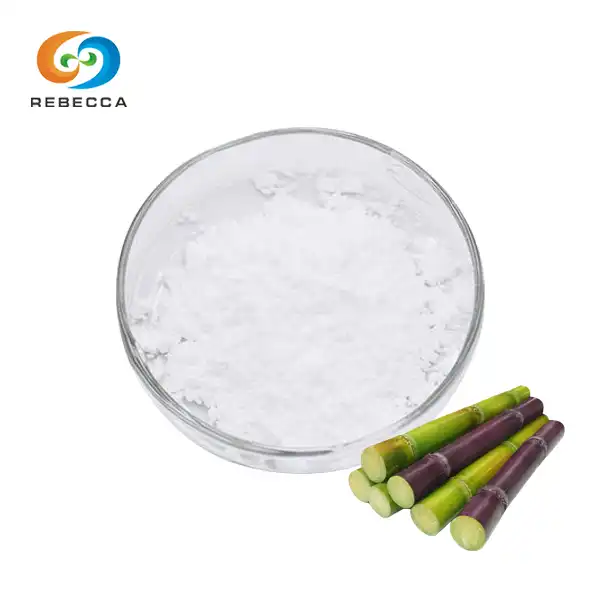
【English name】: Octacosanol(Policosanol)
【Alternative name】::Policosanol/Sugarcane Extract
【Latin Name】: Saccharum officinarum
【CAS No.】: 557-61-9
【Molecular Formula】: C28H58O
【Active ingredients】: Octacosanol
【Specification】: 5%~95%
【Use Part】 : The stalks of sugar cane
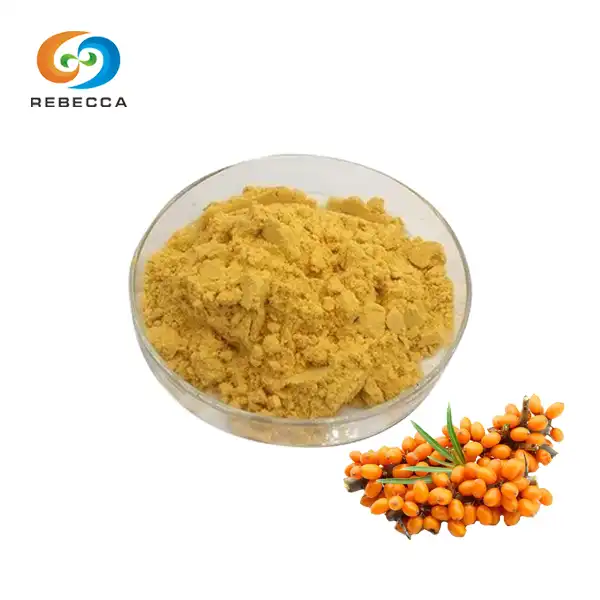
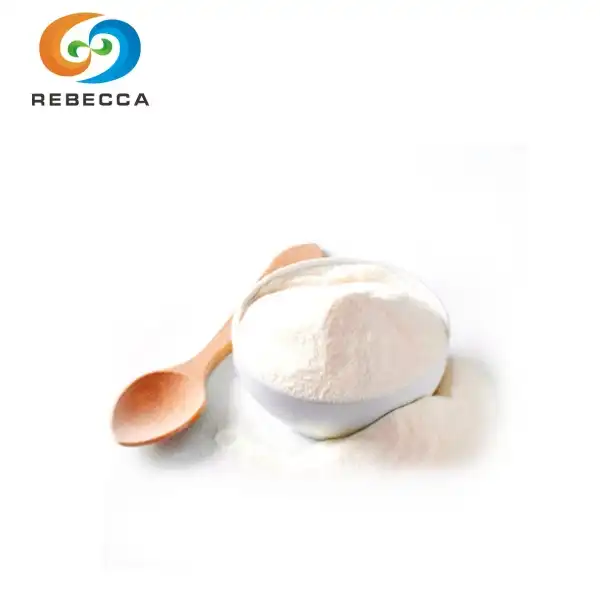
【Appearance】: Off-white to White Fine Powder
【Mesh size】:80 Mesh
【Test Method】: GC
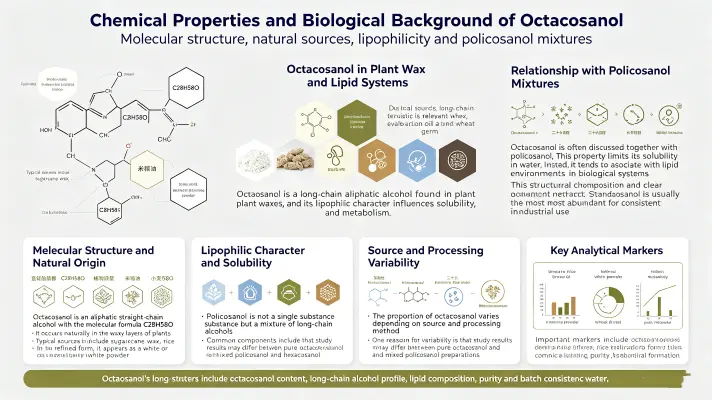
Chemical Nature and Biological Context of Octacosanol
Molecular structure and natural sources
Octacosanol (C28H58O) is an aliphatic linear alcohol. It occurs naturally in the waxy coats of plants. Typical sources include sugarcane wax, rice bran oil and wheat germ; It is a fine white or off-white powder in its refined state.
It is very lipophilic, due to its lengthy carbon chain. This feature restricts the solubility of the compound in water. On the contrary it likes to connect with lipid environments in biological systems. This structural property is worth evaluating in the light of its absorption and metabolism.
Relationship with policosanol mixtures
Octacosanol is typically addressed along with policosanol. Policosanol is not a single substance. It is a blend of long chain alcohols such octacosanol, triacontanol and hexacosanol.
Octacosanol is the most abundant component in most plant-derived extracts. However, ratios vary with source and processing technique. One explanation for this difference is because outcomes of study may vary across studies utilising pure octacosanol and mixed policosanol formulations.
With this chemical background set, we can now consider how octacosanol is said to interact with pathways of lipid metabolism.
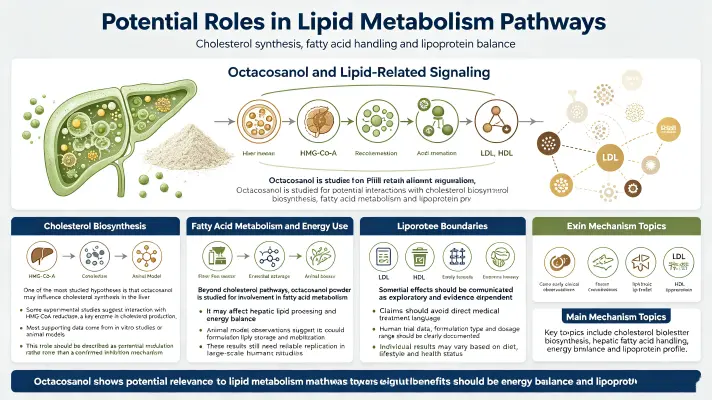
Proposed Roles in Lipid Metabolism Pathways
Interaction with cholesterol biosynthesis
One of the most studied hypotheses is that octacosanol may influence cholesterol synthesis in the liver. Some experimental studies suggest an interaction with HMG-CoA reductase, a key enzyme in cholesterol production.
However, the strength of this evidence varies. Most supporting data comes from in vitro studies or animal models. Direct human evidence remains limited and not fully conclusive. Therefore, it is more accurate to describe this effect as a potential regulatory influence rather than a confirmed inhibitory mechanism.
Fatty acid metabolism and energy utilization
Apart from cholesterol routes, octacosanol powder has been explored for its involvement in fatty acid metabolism. Some research suggests probable impacts on hepatic lipid processing and energy balance.
Observations in animal models report alterations in lipid storage and mobilisation. But the results still need to be reliably reproduced in big human studies. This suggests that octacosanol may be engaged in a larger metabolic signalling pathway, although its precise physiological function is still being actively investigated.
Lipoprotein profile modulation
Some early clinical observations report changes in LDL and HDL levels after supplementation. These results are not uniform across studies. Variability may depend on dosage, formulation type, and population differences. At present, octacosanol should not be considered a standalone lipid-lowering agent in the same category as established pharmaceuticals. With these mechanistic insights in mind, it is necessary to examine what clinical evidence actually supports these proposed effects.
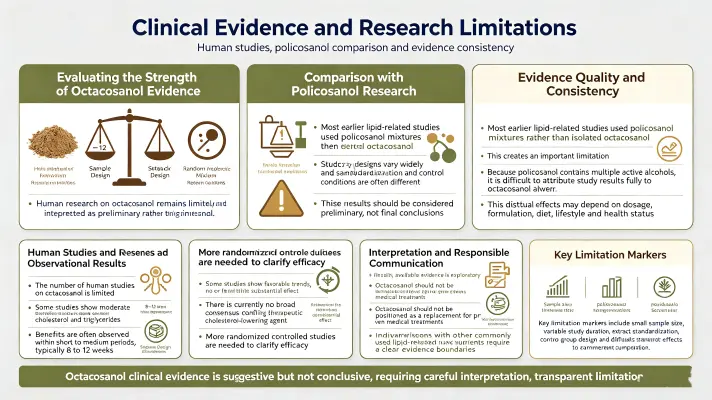
Clinical Evidence and Research Limitations
Human studies and observed outcomes
There are a limited number of human research on octacosanol. Some studies show moderate benefits in cholesterol and triglycerides. These effects are often detected over short to medium periods (8-12 weeks). The studies, however, differ widely in design. Sample sizes tend to be modest. Extract standardisation and control conditions are not usually the same. The results should thus be regarded as preliminary and not definite.
Comparison with policosanol research
A significant portion of historical lipid-related research has been conducted on policosanol mixtures rather than isolated octacosanol. This creates an important limitation.
Because policosanol contains multiple active alcohols, it is difficult to attribute outcomes to octacosanol alone. This distinction is often overlooked in commercial summaries of research findings.
Evidence quality and consistency
In general, the evidence base is exploratory in nature. Some research demonstrate favourable tendencies . Others have no or very little substantial impact. Currently, there is no wide scale agreement to validate octacosanol as a therapeutically proven cholesterol reducing agent. More randomised controlled studies are required to define its significance. With the evidence landscape defined it is important to compare octacosanol with other regularly utilised lipid-related nutrients.
Comparison with Other Lipid Metabolism Nutrients
Octacosanol vs fish oil
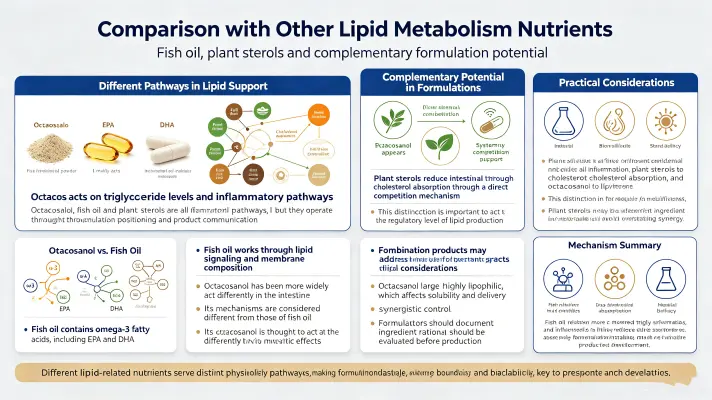
Fish oil contains omega-3 fatty acids, including EPA and DHA. They mainly act on triglyceride levels and inflammatory pathways.
In contrast, octacosanol powder is widely investigated about cholesterol associated pathways. The mechanisms vary. Fish oil works via lipid signalling and membrane composition. Octacosanol is thought to work at the level of control of lipid production.
Octacosanol vs plant sterols
Plant sterols reduce cholesterol absorption in the intestine. This is a direct competition mechanism.
Octacosanol does not act in the gut in the same way. Its proposed activity is more systemic and metabolic rather than absorption-based.
Complementary potential
Because these compounds operate through different pathways, they are sometimes combined in nutritional formulations. However, synergistic effects are not yet fully validated in large clinical studies.
After comparing functional roles, formulation and bioavailability become important practical considerations.
Conclusion
Octacosanol powder is a naturally occurring long-chain alcohol of relevance in lipid metabolism studies. Proposed roles include control of cholesterol production, impact on fatty acid metabolism, and possible effects on lipid profiles.
However, the existing evidence is still preliminary. Most results are from early-stage research or mixed-compound extracts, not isolated octacosanol.
From the scientific point of view, octacosanol must be considered as a bioactive chemical with possible metabolic importance rather than as a well-characterized medicinal drug for lipid diseases.
Further study with bigger, well-controlled human trials will be needed to clarify its specific biologic function and therapeutic usefulness.
FAQ
What distinguishes high-purity octacosanol from standard policosanol mixtures?
High-purity octacosanol contains 90% or greater C28H58O verified by gas chromatography, while policosanol represents a blend of multiple long-chain alcohols where octacosanol comprises approximately 60-70%. This distinction matters because therapeutic consistency depends on precise molecular ratios. Pharmaceutical applications and premium supplement brands prefer isolated octacosanol to eliminate batch variability inherent in mixed alcohol extracts. The purity level directly influences bioavailability and efficacy, making specification verification critical during procurement processes.
Can octacosanol be effectively formulated into liquid delivery systems?
Native octacosanol remains hydrophobic and poorly dispersible in aqueous environments. Successful liquid formulations require specialized processing including microencapsulation, cyclodextrin complexation, or nano-emulsion technology. Cold-water-dispersible (CWD) grades undergo surface modification that enables suspension stability in beverages. Alternatively, pre-emulsifying octacosanol with lecithin or incorporating it into lipid-based delivery matrices creates stable liquid formats. Functional beverage manufacturers should collaborate with suppliers offering these specialized forms rather than attempting to disperse standard powder grades.
How should procurement teams verify batch consistency across shipments?
Establish supplier agreements requiring CoA documentation with each shipment that includes GC chromatograms showing specific C28 peak area normalization. Beyond assay verification, monitor particle size distribution (D90 <80 mesh), acid value (<1.5 mg KOH/g), and microbial counts. Request retained samples from multiple production batches to conduct independent verification testing. Suppliers demonstrating low coefficient of variation across batches indicate robust manufacturing controls. Building quality audits into annual supplier reviews identifies consistency trends that single-batch testing might miss.
Partner with Rebecca for Premium Octacosanol Powder Supply
Shaanxi Rebecca Bio-Tech is reliable octacosanol powder supplier, yearly production capacity of more than 500MT to serve worldwide markets. Our sugarcane octacosanol is pharmaceutical grade with specifications from 5% to 95%. Our sugarcane octacosanol is tested under strict GC testing techniques. GMP, ISO 22000, and HACCP certifications assure the consistency that pharmaceutical R&D teams and supplement companies expect from each batch. We provide full documentation such CoA, residual solvent analysis and heavy metal testing to make your regulatory compliance procedures easier. Whether you need large volumes of existing product lines or customised formulas for new product launches, our technical team will give application assistance specific to your market needs. contact us at information@sxrebecca.com to discuss your octacosanol sourcing requirements and learn how our combined R&D and production expertise can optimise your supply chain.
References
1. Arruzazabala ML, Carbajal D, Mas R, et al. "Cholesterol-lowering effects of policosanol in rabbits with hypercholesterolemia induced by a wheat starch-casein diet." British Journal of Nutrition, 1994;71(6):817-824.
2. Kabir Y, Kimura S. "Tissue distribution of (8-14C)-octacosanol in liver and muscle of rats after serial administration." Annals of Nutrition and Metabolism, 1995;39(5):279-284.
3. Menéndez R, Amor AM, Rodeiro I, et al. "Policosanol modulates HMG-CoA reductase activity in cultured fibroblasts." Archives of Medical Research, 2001;32(1):8-12.
4. Noa M, Más R. "Effect of policosanol on foam-cell formation in carrageenan-induced granulomas." Journal of Pharmacy and Pharmacology, 1998;50(3):241-246.
5. Saint-John M, McNaughton L. "Octacosanol ingestion and its effects on metabolic responses to submaximal cycle ergometry, reaction time and chest and grip strength." International Clinical Nutrition Review, 1986;6(2):81-87.
6. Taylor JC, Rapport L, Lockwood GB. "Octacosanol in human health." Nutrition, 2003;19(2):192-195.