Apple Cider Vinegar Production Process
apple cider vinegar powder is a dehydrated variant of the typical fermented vinegar. It is developed for industrial applications where stability, handling efficiency and formulation flexibility are more critical than the liquid form.
The change from apples to a stable powder is carried out via a number of regulated steps. Each step impacts acidity, solubility and how it performs in the ultimate end use. This approach allows producers to analyse the quality of ingredients and make educated choices about sourcing.
The manufacturing process is broken down into several steps, with a description of how each step contributes to the final result. It also covers drying technologies and the top procurement issues that matter to B2B customers.
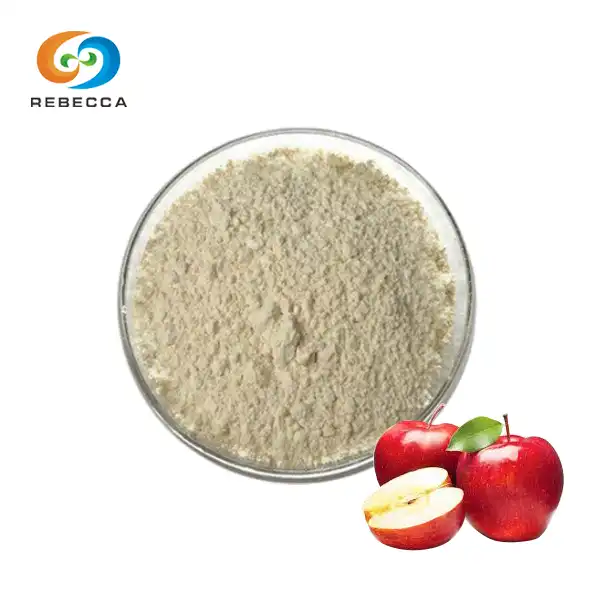
【English name】: Organic Apple cider vinegar powder
【Latin name】: Malus Pumila Mill.
【CAS No.】: 85251-63-485251-63-4
【Used Part】: Fruit
【Solubility】: Water-soluble
【Specification】: Total Acidity 5% 10%
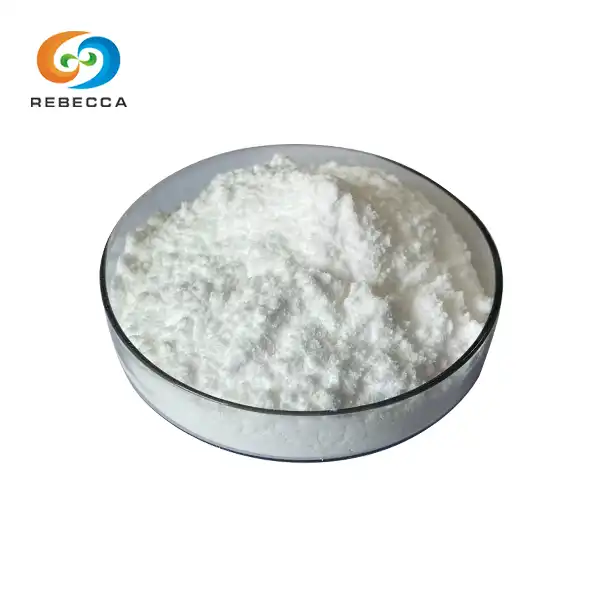
【Appearance】: White fine powder
【Mesh size】: Pass 80 Mesh
【Test Method】: GB12456-202
Raw Material Selection and Fermentation Foundation
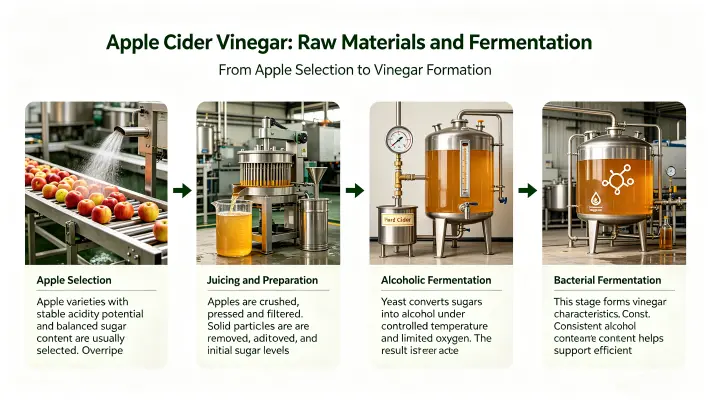
Selection of Apples and Raw Inputs
The procedure of making starts with the choosing of apples. Usually the kinds with consistent acidity potential and balanced sugar content are selected by the manufacturers. Sugar levels directly impact the effectiveness of fermentation, and the quality of raw materials used influences the final flavour and uniformity of the acids.
For industrial manufacturing, apples are cleaned and sorted before processing. Usually overmature or damaged fruit is culled to minimise microbial diversity. This procedure helps to prevent a more stable fermentation result.
Juice Extraction and Pre-Fermentation Preparation
Once selected, apples are smashed and pressed to obtain the juice. The juice is filtered to take out solid particles. At this point, microbial control and clarity are critical.
Some manufacturers modify the starting sugar amounts according to the desired acidity. This procedure guarantees that fermentation may be carried out uniformly for various batches.
Alcohol Fermentation Stage
In the initial step of fermentation , sugars are converted into alcohol by yeast . This procedure usually happens at a controlled temperature. Oxygen exposure is kept to a minimum to avoid undesirable bacteria development.
Fermentation time may vary with source material composition and manufacturing size. The process produces a stable alcoholic basis called hard cider. This intermediate provides the basis for the conversion to vinegar.
The important part is consistency. The alcohol percentage might vary, affecting the downstream acetic acid conversion efficiency.
If this stage is steady the process goes to bacterial fermentation. During this step the properties of vinegar are created.
Acetic Acid Conversion and Process Stabilization
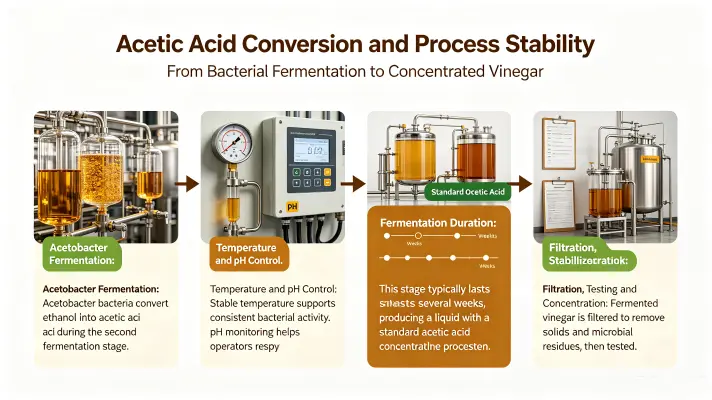
Acetobacter Fermentation
Acetobacter bacteria turn ethanol into acetic acid in the second stage of fermentation. This is the critical phase in the manufacturing of vinegar.
The bacteria need controlled exposure to oxygen to do the conversion. However, too much oxygen results in undesirable oxidation, therefore a balance must be maintained.
Process Control Factors
There are many factors that affect conversion efficiency. Temperature regulation is one of the most crucial. Stable conditions ensure bacterial activity and avoid batch variation.
The pH level is also checked throughout the procedure. Fast or slow development of acidity may necessitate changes for stabilisation of fermentation.
This phase often lasts a few weeks. The end liquid is normally a normal concentration of acetic acid for further processing.
Filtration and Quality Stabilization
When fermentation is finished the vinegar is filtered to eliminate any solid material or microbiological debris. This increases stability before concentration and drying.
At this point the liquid is analysed for acidity, microbiological limits and basic composition. Based on these findings the batch goes to downstream processing.
The vinegar is then stabilised and concentrated to preparation for dehydration.
Concentration and Drying Technologies
Concentration Before Drying
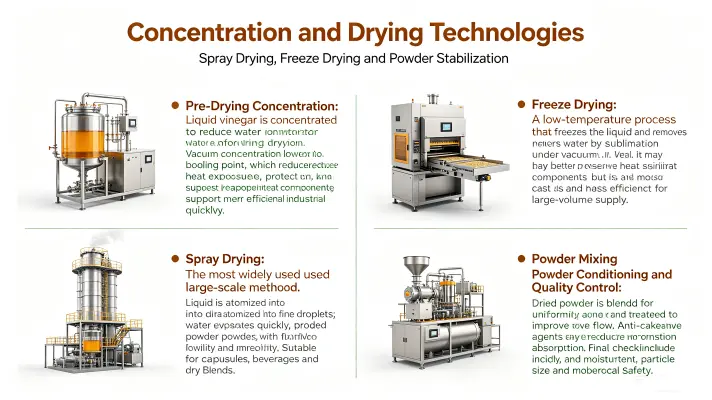
Prior to drying, liquid vinegar is often concentrated to decrease the water content. This increases the drying efficiency and decreases the energy usage. Vacuum concentration is often utilised because it reduces the boiling temperature. This helps to decrease heat exposure and protect critical components. The concentrated liquid is more acidic and of smaller volume and therefore more appropriate for an industrial drying equipment.
Spray Drying Process
Spray drying is the most common way to produce apple cider vinegar powder in bulk. The process involves transforming the liquid into a fine spray and subjecting it to hot air. The water evaporates nearly immediately, leaving a fine powder behind.
Spray dried powders have generally excellent flow and dispersibility. It is used in capsules, drinks and dry mix formulations. However, exposure to high temperature may decrease certain volatile chemicals. In most industrial applications stability is more essential than the preservation of enzymes and the trade off is often acceptable.
Freeze Drying Process
A lower temperature option is freeze drying. The liquid is frozen, and water is then sublimed under vacuum. This approach retains more heat-sensitive components. Sometimes used in premium formulations when ingredient integrity is important. Freeze drying, however, is more costly and less efficient for large scale manufacturing. Therefore, it is less typical in bulk commodity supply.
Powder Conditioning and Anti-Caking Treatment
The powder is dried and then treated to enhance flow properties. Mixing finely divided particles gives homogeneity. Small quantities of anti-caking chemicals, e.g. silicon dioxide, are occasionally added. These aid in reducing moisture absorption during storage and transit. The final powder is packed in moisture-resistant packaging to ensure stability throughout distribution. At this point, our quality control testing includes the acidity, moisture level, particle size and microbiological safety.
Quality Control, Applications, and Procurement Considerations
Quality Control and Testing Standards
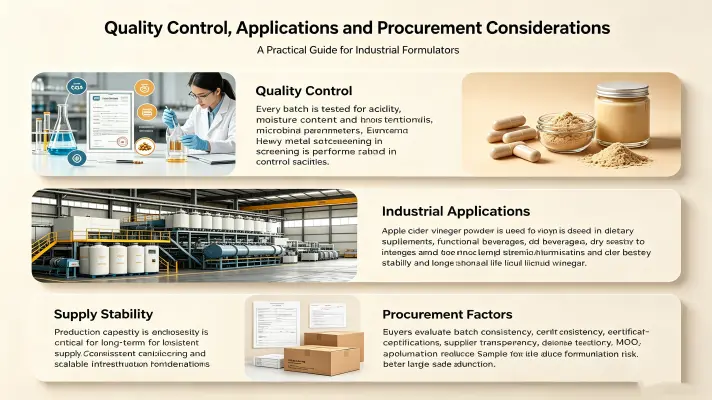
Quality control is a vital aspect of manufacturing. Every batch is checked for acidity concentration, moisture content and microbiological restrictions. Heavy metals screening is also done in controlled industrial facilities. The tests guarantee the norms of food safety. Certificates of analysis are normally provided per batch. These records promote transparency for industrial formulators and purchasers.
Industrial Applications of Apple Cider Vinegar Powder
Apple cider vinegar powder is often used in nutritional supplements, functional drinks and nutraceutical compositions. It is also utilised in dry seasoning mixes and cosmetic formulations. Being in powder form makes it simpler to include in non-liquid systems. Powder vinegar is more stable and has a longer shelf life compared to liquid vinegar. It also helps with shipping and storage problems.
Procurement Factors for B2B Buyers
When sourcing apple cider vinegar powder, buyers typically evaluate several factors beyond price. These include consistency between batches, certification status, and supplier transparency.
· Production capacity is also important for long-term supply stability.
· Minimum order quantities may vary depending on supplier scale. Smaller MOQs can support pilot projects, while larger orders are common for established manufacturers.
· Logistics terms such as FOB or CIF should also be clarified in advance. Packaging formats influence storage efficiency and downstream handling costs.
· In many cases, technical documentation and sample testing play a key role in supplier selection. These steps help reduce formulation risks before large-scale adoption.
Conclusion
Apple cider vinegar powder is a highly specialised industrial component, which is derived from fresh apples via a defined process of transformation. Raw material selection, fermentation, concentration, drying and quality control are each stages that contribute to the ultimate performance of the product.
Spray drying and freeze drying have various trade-offs regarding cost, stability and preservation of compounds. Knowing these distinctions allows manufacturers to pick the optimal processing procedure for their purposes.
For procurement, variables like certification, batch uniformity and technical assistance are as crucial as price. Transparency of quality and manufacturing capacity are key prerequisites for a trustworthy supply chain.
Apple cider vinegar powder is utilised in supplements, drinks and personal care products as the demand for useful ingredients continues to expand. The unit is versatile and stable for large scale industrial applications.
Frequently Asked Questions About Apple Cider Vinegar Powder Bulk
Does spray drying destroy beneficial enzymes?
High-temperature spray drying can reduce enzymatic activity compared to freeze drying. However, the organic acids and minerals remain bioavailable and functional. Suppliers offering low-temperature processing can preserve more enzymatic properties for formulations emphasizing "with the mother" claims.
Why does the powder clump in humid conditions?
The hygroscopic nature of organic acids causes moisture absorption from the atmosphere. Adding 2-5% silicon dioxide as an anti-caking agent mitigates this issue. Storing powder in moisture-barrier, induction-sealed packaging further prevents clumping during transport and warehousing.
How does acidity affect capsule shell stability?
High-acid powders can make gelatin capsules brittle over time. Using HPMC (vegetable-based) capsules and incorporating buffering agents maintains shell integrity throughout a 24-month shelf life, ensuring consistent product performance.
What is the conversion ratio from liquid vinegar to powder?
A 10:1 ratio is standard for 10% acetic acid powder, meaning 100 mg of powder provides the equivalent acid content of 1 g of liquid vinegar. This conversion simplifies formulation calculations and dosing precision for supplement developers.
Partner with Rebecca for Reliable Apple Cider Vinegar Powder Bulk Supply
Rebecca is a global supplier of premium organic apple cider vinegar powder in bulk to pharmaceutical R&D firms, health supplement brands and functional beverage producers. Our manufacturing plant in Shaanxi, China is GMP and ISO22000 compliant, assuring uniformity of batches and regulatory compliance for worldwide markets. Our yearly capacity of over 500 metric tonnes and innovative extraction processes allow us to produce powders standardised to 5% or 10% total acidity, satisfying the demanding needs of cosmetic chemists, innovation managers and purchasing managers.
We provide Flexible Minimum Order Quantities, Customised Formulations and full Technical Support to speed your product development deadlines. As a professional apple cider vinegar powder bulk supplier, we provide standard specification sheets, third-party test results, and certifications such as HACCP, organic, kosher, and halal to fulfil varied regulatory needs. For samples, private label or customised sourcing solutions to maximise your competitive edge, please contact us at information@sxrebecca.com.
References
1. Johnston, C.S., & Gaas, C.A. (2006). Vinegar: Medicinal uses and antiglycemic effect. MedGenMed: Medscape General Medicine, 8(2), 61.
2. Budak, N.H., Aykin, E., Seydim, A.C., Greene, A.K., & Guzel-Seydim, Z.B. (2014). Functional properties of vinegar. Journal of Food Science, 79(5), R757-R764.
3. Ho, C.W., Lazim, A.M., Fazry, S., Zaki, U.K.H.H., & Lim, S.J. (2017). Varieties, production, composition and health benefits of vinegars: A review. Food Chemistry, 221, 1621-1630.
4. Petsiou, E.I., Mitrou, P.I., Raptis, S.A., & Dimitriadis, G.D. (2014). Effect and mechanisms of action of vinegar on glucose metabolism, lipid profile, and body weight. Nutrition Reviews, 72(10), 651-661.
5. Yagnik, D., Serafin, V., & Shah, A.J. (2018). Antimicrobial activity of apple cider vinegar against Escherichia coli, Staphylococcus aureus and Candida albicans. Scientific Reports, 8(1), 1732.
6. Samad, A., Azlan, A., & Ismail, A. (2016). Therapeutic effects of vinegar: A review. Current Research in Nutrition and Food Science, 4(Special Issue), 93-102.