Best Menthol Crystals Process Analysis: Quality Differences Between CO₂ Extraction and Low-Temperature Crystallization
Sourcing raw materials requires precision. Manufacturers in the pharmaceutical and cosmetic industries demand consistency. They search for the best menthol crystals to ensure product efficacy. The market offers various extraction methods. Two dominant techniques stand out. These are CO₂ extraction and low-temperature crystallization. Buyers often hesitate when choosing between them. Understanding the technical nuances helps. It clarifies which method yields superior purity. This guide analyzes the process differences. We will examine how these methods impact the final product quality. Our goal is to provide the data you need to make an informed decision.
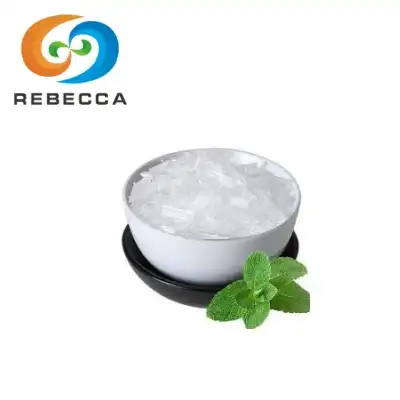
Best Menthol Crystals
【English name】: l-menthol
【CAS No.】: 2216-51-5
【Molecular Formula】: C10H20O
【Active ingredients】: L-Menthol
【Specification】: L-Menthol Crystal 99%
【Appearance】: White crystal
【Test Method】: HPLC
Shelf Life: 2 years
Minimum Order Quantity: 1 kg
Samples: Free samples available
Certifications: GMP, ISO, HACCP, KOSHER, and HALAL.
Payment: Various payment methods accepted.
Advantages: Manufactured in a 100,000-grade cleanroom, our products are additive-free, non-GMO
Inner Package: Double PE Bags; Net 5kg/Bag
Outside Package: Paper Drums, Net 25kg/Drum
Storage:Store in a cool, dry place away from Light and Heat.
Science Behind Menthol Extraction Techniques
Extraction is the critical factor that determines menthol quality from the very beginning. The process starts with the plant source, most commonly Mentha arvensis, which is favored for its naturally high menthol content. However, the plant alone does not guarantee quality. The isolation technique directly shapes the chemical integrity and sensory profile of the final crystals. Low-temperature crystallization is a purely physical separation method based on thermodynamic principles. By slowly reducing the temperature of peppermint oil, menthol molecules reach their solidification point and separate from the remaining liquid fraction. This gradual cooling mirrors natural crystallization, allowing orderly crystal growth. The result is a clean separation that yields the familiar needle-like menthol crystals prized for consistency, purity, and predictable performance.
CO₂ extraction follows a fundamentally different scientific pathway. It relies on supercritical carbon dioxide, which behaves as both a gas and a liquid under high pressure. In this state, CO₂ becomes an efficient solvent capable of penetrating plant material and dissolving a wide range of phytochemicals. The method operates at relatively low temperatures, helping preserve compounds that might degrade under heat. However, this strength is also a limitation. CO₂ extraction pulls a broad chemical spectrum rather than isolating menthol alone. The initial output is an oleoresin, not a crystal. Achieving pure L-Menthol requires additional refinement steps, increasing complexity, energy consumption, and cost. For large-scale crystal production, many manufacturers question its economic efficiency compared with direct crystallization.
Understanding molecular behavior helps buyers evaluate extraction choices. During crystallization, menthol molecules align into a stable lattice structure, creating the solid, translucent “ice-like” appearance associated with high-quality crystals. This direct phase change limits chemical variability and preserves aromatic sharpness. In contrast, CO₂ extraction produces a semi-solid extract that must undergo further processing to become a dry crystal. Each additional step introduces potential variability in composition and sensory profile. Manufacturers seeking the best menthol crystals often favor controlled freezing because it minimizes thermal stress and avoids unnecessary chemical manipulation. Scientific evidence supports physical separation as the most reliable method for achieving maximum purity in menthol, especially when consistency, clarity, and olfactory strength are critical quality benchmarks.
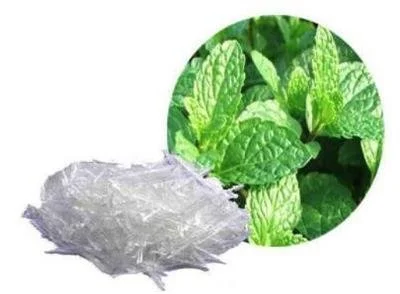
Analyzing Purity and Yield in CO₂ Versus Crystallization Methods
Purity is the decisive factor shaping demand across pharmaceutical, food, and personal care sectors. Pharmaceutical standards typically require L-Menthol purity levels of 99% or higher, leaving little margin for variability. Low-temperature crystallization consistently meets these expectations because of its inherent selectivity. As menthol slowly solidifies, unwanted terpenes and secondary compounds remain dissolved in the liquid oil phase. This natural exclusion mechanism produces clean, well-defined crystals that need only minimal post-processing. Washing steps are limited, reducing the risk of degradation or contamination. Final appearance is uniform, bright white, and chemically consistent. Yield is closely linked to the original menthol concentration in cornmint oil, but when high-grade raw material is used, crystallization delivers both excellent purity and reliable output.
CO₂ extraction is often praised for its ability to achieve high overall yields, but yield and purity are not the same. This method extracts nearly all soluble components from plant material, including pigments, waxes, and minor aromatic compounds. While this comprehensive recovery is ideal for full-spectrum products, it complicates the production of a 99% L-Menthol isolate. Additional fractionation and purification steps become necessary, increasing processing time, energy use, and operational cost. Each step introduces variability and potential quality loss. In contrast, crystallization targets menthol specifically, producing a sharp cooling profile without off-notes. For applications demanding isolated menthol rather than botanical complexity, crystallization remains the more precise and commercially efficient choice.
Safety considerations extend beyond purity to include processing residues and consumer perception. Supercritical CO₂ is widely recognized as a clean solvent because it leaves no toxic residues, offering a clear advantage over hydrocarbon-based extraction. However, crystallization goes one step further by eliminating solvents entirely. It relies solely on temperature control and phase separation, making it inherently safe and chemically neutral. This simplicity appeals to buyers seeking natural or clean-label positioning, as the process does not chemically modify the raw material. Instead, it isolates menthol in its native crystalline form. The best menthol crystals result from methods that preserve molecular integrity, meet safety expectations, and align with regulatory and consumer demands for transparency.
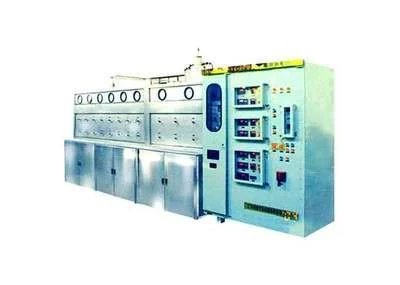
How Manufacturing Processes Impact the Final Application of Menthol?
Final application requirements determine which menthol raw material is suitable, and manufacturing methods directly shape those outcomes. Toothpaste formulations prioritize rapid solubility and uniform dispersion, while balms and ointments depend on predictable melting behavior. Low-temperature crystallization produces larger, well-formed crystals with a clearly defined melting point, which is essential for formulation stability. When melting points vary, products can soften, separate, or fail under real-world conditions. The stable crystal lattice created during slow cooling enhances thermal resistance, helping menthol remain solid during storage and long-distance transport. This reliability is critical for global supply chains. By contrast, CO₂-derived isolates may form finer or irregular crystal habits, which can alter flow properties and affect how evenly they blend into different formulation bases.
Aroma quality is a decisive factor in menthol applications because scent directly influences consumer perception. Menthol’s cooling aroma should be crisp, clean, and distinctly minty, without heavy or “cooked” notes. Excessive heat during processing can damage delicate terpene structures, dulling the scent profile. Crystallization avoids high thermal stress, preserving the plant’s original aromatic character. This freshness is especially important in confectionery, oral care, and inhalation products, where users are highly sensitive to odor deviations. Even minor off-notes can signal poor quality. The best menthol crystals deliver a pure, bright olfactory experience that reinforces effectiveness and comfort. Consistent aroma quality not only enhances functionality but also strengthens brand trust and repeat consumer preference across competitive markets.
Economic considerations strongly influence manufacturing choices alongside performance requirements. Crystallization offers efficiency by avoiding high-pressure systems and complex equipment, reducing both energy consumption and capital investment. This streamlined setup allows manufacturers to maintain competitive pricing while delivering consistent quality. Buyers must balance cost with reliability, particularly when menthol is a high-volume ingredient. A dependable process supports stable supply chains and predictable lead times. Shaanxi Rebeccia recognizes this balance and prioritizes scalable, market-aligned technologies. By focusing on efficient crystallization methods, we provide high-value menthol ingredients that meet performance expectations without unnecessary cost burdens. Our approach ensures batch-to-batch consistency, enabling customers to formulate with confidence while meeting both technical and commercial objectives.
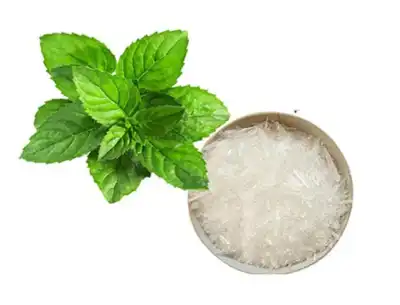
Best Menthol Crystals Supplier: Rebecca Bio-Tech
Finding a partner requires trust. You need a supplier who guarantees quality. Rebecca Bio-Tech stands as a leader in this field. We are a high-tech export-oriented company. We specialize in the production and R&D of plant extracts. Our focus is on herbal active ingredient separation. We serve customers worldwide. We cater to the pharmaceutical, health product, beverage, and cosmetic industries. Our facility boasts three production lines. We handle over 100 plant extracts. Our annual production capacity exceeds 500MTS. This ensures we can meet large-scale demands.
We invite you to experience the quality difference. Our product, L-Menthol, represents the pinnacle of extraction technology. We utilize a refined process to ensure maximum purity. Below are the specifications for our premium offering:
Specification: L-Menthol Crystal 99%
Appearance: White crystal
Test Method: HPLC
We prioritize safety and compliance. Our products are manufactured in a 100,000-grade cleanroom. They are additive-free and non-GMO. We hold certifications for GMP, ISO, HACCP, KOSHER, and HALAL. This guarantees that our crystals meet global standards.
Do not compromise on your formulations. Choose a partner committed to excellence. For inquiries regarding the best menthol crystals, contact us today. Let us support your business growth. Send your request to information@sxrebecca.com.
FAQ
Q1: What determines the "best" quality in menthol crystals?
A: Purity is the primary factor. The best menthol crystals should contain at least 99% L-Menthol. They should appear as clear or white needle-like crystals. The aroma must be sharp and clean. There should be no solvent residues or heavy metals.
Q2: Why is the melting point important for menthol crystals?
A: The melting point indicates purity. Pure L-Menthol melts between 42°C and 44°C. A lower melting point suggests impurities. It also affects how the product behaves during manufacturing. A consistent melting point ensures the final product remains stable.
Q3: Are naturally extracted crystals better than synthetic ones?
A: Natural crystals come from plant sources. They possess a specific optical rotation (L-isomer). This provides a stronger cooling sensation. Synthetic menthol often contains a mix of isomers. It may not provide the same efficacy. Most consumers prefer natural ingredients.
References
1. European Pharmacopoeia (Ph. Eur.) 10.0, "Menthol, Racemic and Menthol, Levomenthol Monograph."
2. Journal of Essential Oil Research, "Comparative Analysis of Mentha arvensis Extraction Methods," Vol. 32, 2020.
3. Food Chemical Codex (FCC), "Menthol Specifications and Purity Standards."
4. Industrial Crops and Products, "Supercritical CO2 Extraction of Essential Oils: A Review," 2018.