Best Way To Take L Carnitine
L-Carnitine powder is widely employed in sports nutrition, metabolic support and functional food formulations. Proper use is more than numbers of dose. It’s about time, distribution format, absorption behaviour and application environment. This guide re-organizes certain essential material in a clearer structure with a view to practical application and logic of formulation.
Before we explore the several ways to use l carnitine powder , it is necessary to understand what L-Carnitine is and how it acts in the body. This basis helps to understand the importance of time and dose in practical applications.
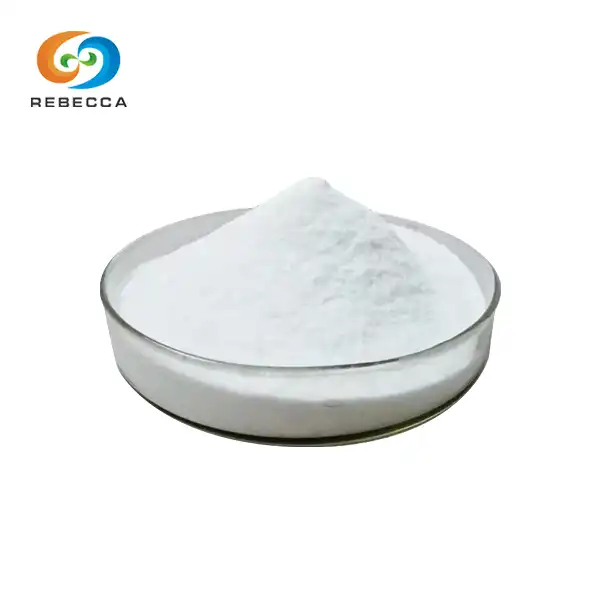
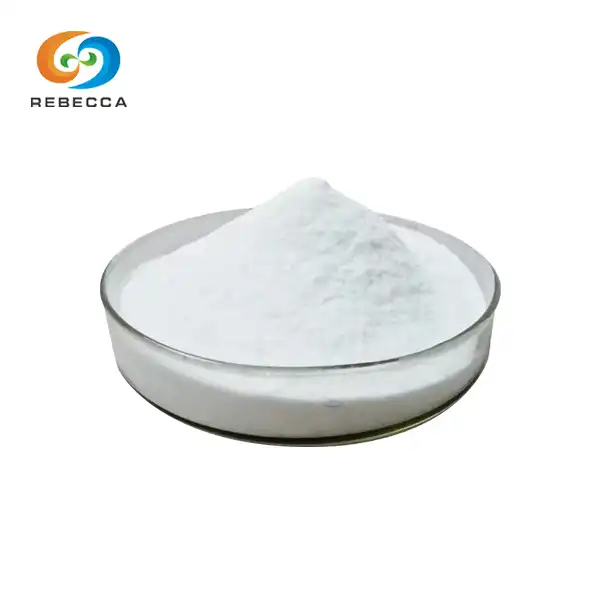
L Carnitine Powder
Product Name:L-carnitine
CAS No.:541-15-1
Specifications :L(-)-Carnitine,Min 99%
Test :HPLC
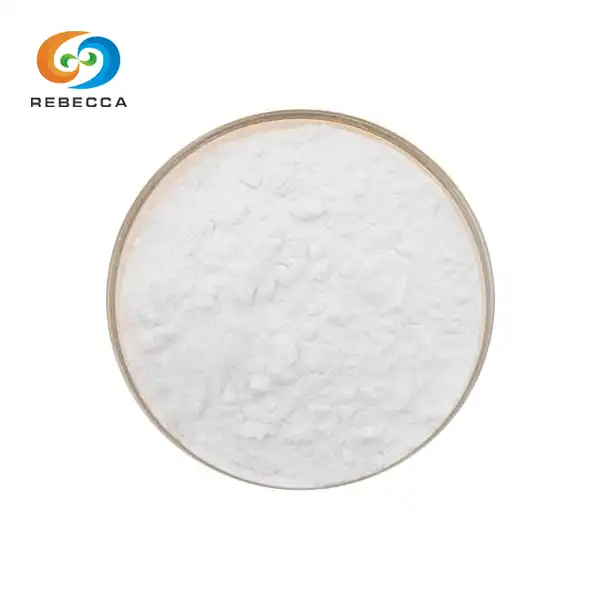
Appearance :White crystalline Powder
Applying:The safest nutritional supplement for weight loss without side effects.
L-Carnitine and Its Benefits
What L-Carnitine Is and How It Works?
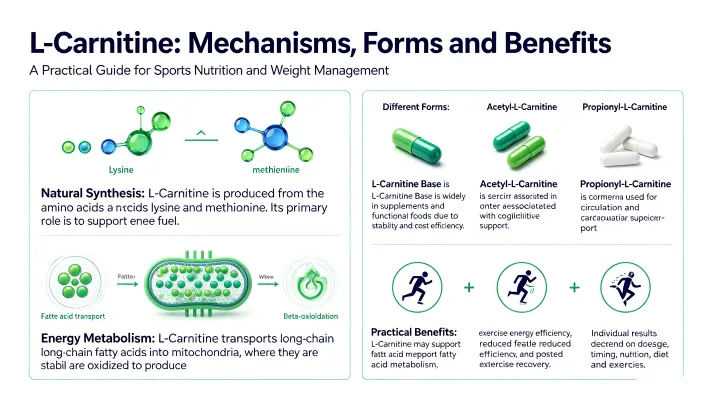
L-Carnitine is an amino acid that is naturally occurring from the amino acids lysine and methionine. It has an important function in energy metabolism. Its major role is to carry long-chain fatty acids into mitochondria for oxidation and energy production.
This process is called beta-oxidation. It helps to produce energy in the cells, particularly during physical activity or when you need to limit calories. This mechanism makes L-Carnitine a popular ingredient in formulas for sports nutrition and weight control.
There are multiple forms of L-Carnitine. Each has slightly different characteristics:
· l-carnitine base: Most commonly used in bulk supplements and functional foods.
· Acetyl-L-Carnitine (ALCAR): Often associated with cognitive and neurological applications.
· Propionyl-L-Carnitine: Commonly used for circulatory and cardiovascular support.
Among these, L-Carnitine base is the most widely used in manufacturing due to its stability and cost efficiency.
Functional Benefits in Practical Applications
In practical nutrition systems, L-Carnitine is associated with several functional outcomes. These include:
· Support for fatty acid metabolism
· Improved exercise energy utilization
· Reduced perception of fatigue during physical activity
· Assistance in post-exercise recovery processes
But these impacts are not instantaneous nor uniform. They are dependent on dose, timing, baseline nutrition status, and general lifestyle variables including food and workout intensity.
With this biological basis in mind we can now go on to how L-Carnitine should really be consumed in real-life settings.
How to Take L-Carnitine for Best Results?
Timing Strategies and Daily Dosage
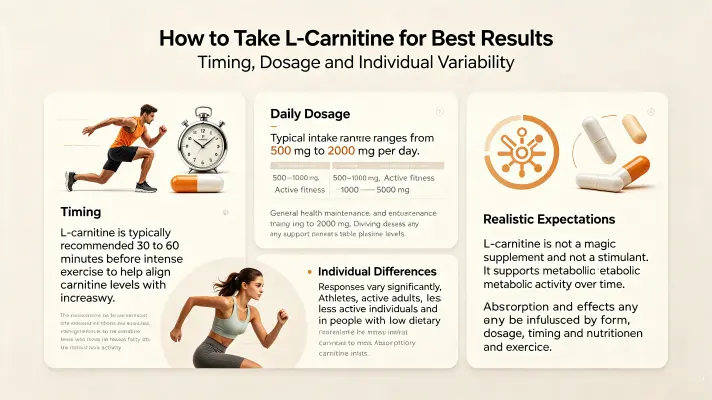
Timing is one of the most essential elements in L-Carnitine supplementation. In most practical uses it is usually taken 30 to 60 minutes before to strenuous exercise.
The timing is designed to match circulating L-Carnitine powder with the demand of exercise. The body boosts its utilisation of fatty acids during exercise and L-Carnitine availability may promote this process.
Typical daily intake ranges from 500 mg to 2,000 mg. This range is not absolute. It depends on individual goals:
· General wellness use: 500–1,000 mg/day
· Active fitness users: 1,000–1,500 mg/day
· Endurance-focused training: up to 2,000 mg/day
To maintain stable levels, some users divide the dose into two portions during the day. This approach may help maintain consistent plasma concentration.
Application Context and User Differences
L-Carnitine is not a single solution supplement. Its efficiency varies widely across people.
For example, athletes with a high training volume may respond differently than inactive users. Similarly, a more marked response may be seen in persons with limited dietary intake of carnitine (e.g., poor red-meat intake). It’s also crucial to know that L-Carnitine is not a stimulant. It doesn’t give you the instant buzz you get from caffeine. Rather, it promotes metabolic activities throughout time. This difference helps to establish reasonable expectations for the user and to avoid abuse or misunderstanding of its purpose.
As well as knowing the concepts of timing and dose, you also need to think about how the various forms of formulation may affect absorption and efficacy.
Types of L-Carnitine and Bioavailability Factors
Powder, Liquid, and Capsule Formats
M-Carnitine is offered in a variety of delivery methods, with varied consequences for the manufacturer and the consumer.
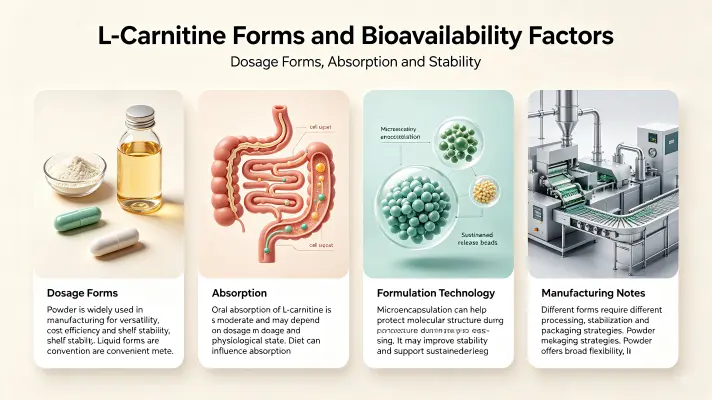
The powdered forms are the most extensively employed in industrial manufacturing. They provide versatility, cost efficiency and extended shelf stability. They are employed in capsule, tablet and beverage formulations.
Liquid forms are often included in ready-to-drink items. They give convenience but need stabilisation mechanisms to ensure integrity of the product.
Capsules and pills provide accurate dosage and convenience for the user. But they need more processing processes in manufacture.
Absorption and Bioavailability Considerations
L-Carnitine has moderate oral absorption and is usually administered at doses which vary widely depending on dose and physiological state. Diet may alter absorption. For example, taking carbohydrates will elevate insulin response, which will increase the cellular absorption of L-Carnitine powder.
Some formulations also incorporate modern technology, such as microencapsulation. These methods can protect the molecule throughout processing, and may increase stability and controlled release. These formulation considerations are particularly relevant in the creation of functional beverages and performance supplements.
Then we go from product science to practical issues of selection for manufacturers and companies.
Choosing the Right L-Carnitine Product for Use
Quality Standards and Manufacturing Controls
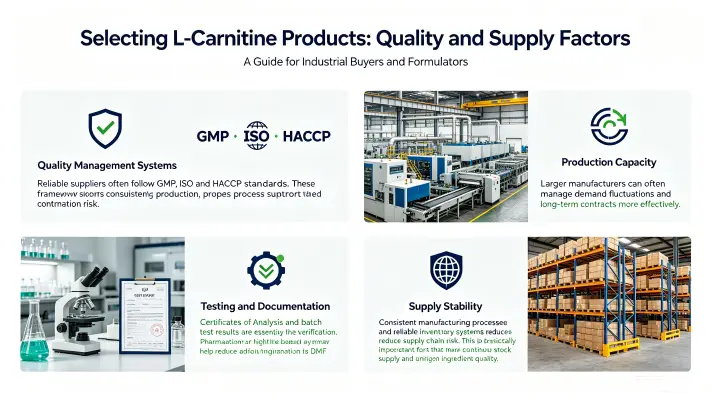
Quality assurance is important while choosing L-Carnitine compounds. Good vendors normally will have GMP, ISO and HACCP processes in place. Such technologies guarantee uniform manufacturing quality and limit the possibility of contamination. They give paperwork, such as certificates of analysis and testing results. If pharmaceutical or advanced supplement uses are intended, you may need other paperwork such as DMF files.
Manufacturing Scale and Supply Stability
Supplier dependability is a significant determinant of production capability. The big manufacturers are better able to cope with variations in demand and long-term contracts. Stable manufacturing methods lower supply chain risk too. This is crucial for firms who depend on always having products in stock.
Pricing and Procurement Considerations
The price of L-Carnitine is determined on the purity, quantity ordered and packaging needs. Buying in bulk usually means less per unit. But consumers need to remember the whole landing cost including shipping, customs and quality testing. Long-term agreements with suppliers may provide you more price stability and guarantee of supply. Ultimately selection should balance cost, quality and regulatory compliance, not just price.
Conclusion
The best approach to take L-Carnitine powder is to match the dose, timing and form of the medication to the objectives of the consumer. The usual effective dosage is 500-2000 mg per day administered 30-60 minutes before exercise or in split doses.
Overall efficacy is affected by variables such as: diet training intensity formulation type. All of powder, pill and liquid have their own usage cases.
From a product development standpoint, production standards and quality control are equally vital. They provide uniformity, safety and regulatory compliance across markets.
All in all, Carnitine is most effective when utilised as part of an overall dietary and exercise regimen, rather than a single answer.
FAQ
What distinguishes powder from liquid L-carnitine formats for manufacturing purposes?
Powder formats offer superior cost-efficiency, extended shelf stability, and formulation versatility, making them preferred for bulk ingredient procurement. Liquid forms provide convenience for ready-to-drink applications but require additional stabilization measures and typically command premium pricing. Powder enables precise dosing control across diverse delivery formats including capsules, tablets, and beverage mixes.
How quickly can buyers expect to observe efficacy in end-user applications?
Individual response timelines vary based on baseline nutritional status and dosage protocols. Clinical research indicates measurable improvements in exercise performance typically emerge after 2-4 weeks of consistent supplementation at therapeutic dosages. Fat metabolism benefits may require 8-12 weeks for observable outcomes, information valuable for setting realistic consumer expectations in product marketing.
Does L-carnitine interact with other common supplement ingredients?
L-Carnitine demonstrates excellent compatibility with most supplement ingredients including caffeine, creatine monohydrate, and branched-chain amino acids. Synergistic formulations combining these compounds may enhance overall metabolic support and performance outcomes. Manufacturers should conduct stability testing when developing complex multi-ingredient formulations to verify long-term compatibility and potency retention.
Partner with Rebecca for Premium L-Carnitine Powder Supply Solutions
Rebecca specializes in manufacturing high-purity L-carnitine powder (CAS No. 541-15-1) meeting stringent international quality standards with minimum 99% purity verified by HPLC. Our white crystalline powder serves as the foundational ingredient for pharmaceutical formulations, health supplements, functional beverages, and cosmetic applications worldwide. With three dedicated production lines producing over 500 metric tons annually, we guarantee consistent supply for bulk procurement requirements while maintaining the flexibility to accommodate customized purity specifications ranging from standard to pharmaceutical-grade formulations.
Our comprehensive quality certifications—including GMP, ISO 22000, and HACCP—ensure regulatory compliance across North American, European, and Asia-Pacific markets. As an experienced L carnitine powder manufacturer, we provide complete technical documentation supporting product registration, formulation development consultation, and supply chain optimization strategies. Connect with our procurement specialists at information@sxrebecca.com to discuss tailored solutions, competitive bulk pricing, and reliable delivery terms designed to strengthen your product portfolio and accelerate market entry.
References
1. Fielding R, Riede L, Lugo JP, Bellamine A. L-Carnitine Supplementation in Recovery after Exercise. Nutrients Journal, 2018, 10(3):349-362.
2. Brass EP. Pharmacokinetic Considerations for the Therapeutic Use of Carnitine in Hemodialysis Patients. Clinical Therapeutics, 2015, 37(11):2444-2458.
3. Xu Y, Jiang W, Chen G, Zhu W, Ding W, Ge Z. L-Carnitine Treatment of Insulin Resistance: A Systematic Review and Meta-Analysis. Advances in Clinical and Experimental Medicine, 2017, 26(2):333-338.
4. Pooyandjoo M, Nouhi M, Shab-Bidar S, Djafarian K, Olyaeemanesh A. The Effect of L-Carnitine on Weight Loss in Adults: A Systematic Review and Meta-analysis of Randomized Controlled Trials. Obesity Reviews, 2016, 17(10):970-976.
5. Karlic H, Lohninger A. Supplementation of L-Carnitine in Athletes: Does It Make Sense? Nutrition Journal, 2004, 20(7-8):709-715.
6. Lombard KA, Olson AL, Nelson SE, Rebouche CJ. Carnitine Status of Lacto-Ovo-Vegetarians and Strict Vegetarian Adults and Children. American Journal of Clinical Nutrition, 1989, 50(2):301-306.