
Can Gotu Kola extract powder help with anxiety?
Gotu kola (Centella asiatica) is often used in the management of stress and mood. R&D teams and supplement companies and beverage producers are all looking to see whether gotu kola extract powder really can reduce anxiety, and if it can be sourced for a commercial product. This guide distinguishes between what the science supports and what providers commonly say.
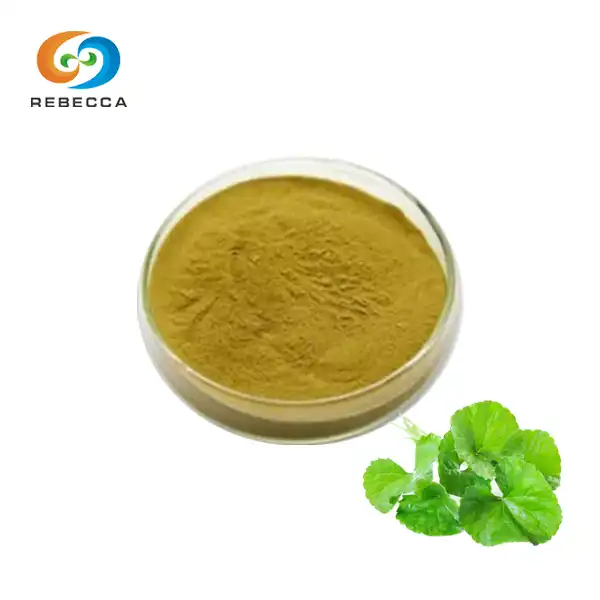
Gotu Kola Extract Powder
English name: Gotu Kola Extract
Latin Name:Centella Asiatica(L.) Urban
Active ingredients: asiaticoside
Specification: 10%-90%
CAS No.: 16830-15-2
Molecular forula: C48H78O19
Molecular Weight: 959.12
Use Part : The whole herb
Appearance: Brown-yellow to White Powder
Mesh size:80 Mesh
Test Method: HPLC
What the Science Says About Gotu Kola and Anxiety
Active Compounds Behind the Calming Effect
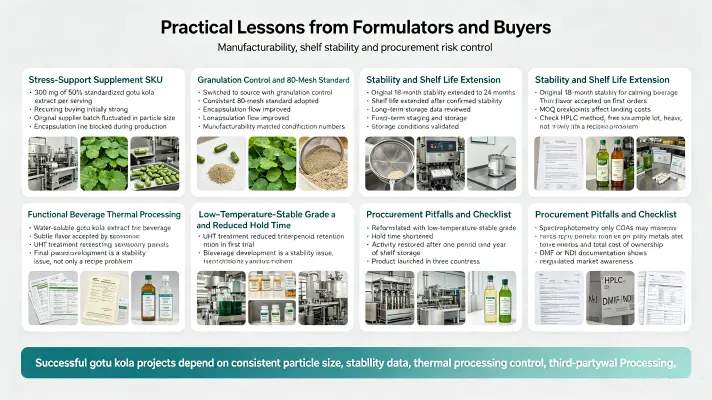
The four pentacyclic triterpenoids are responsible for the soothing qualities of Centella asiatica. They are madecassic acid, asiatic acid, asiaticoside and asiaticoside. The marker chemical for quality control is usually asiaticoside (CAS number 16830-15-2).
Powdered gotu kola extract works on many stress pathways simultaneously. Studies compiled by Gray et al. (2018) suggest that there is less oxidative stress in the neurons and regulation of monoamine neurotransmitters such as dopamine and serotonin. A variety of triterpenoids also inhibit mono-amine oxidase. This action may enhance the amount of serotonin available in synapses.
Animal evidence show that the hypothalamic-pituitary-adrenal (HPA) axis, the primary chain of reactions in the body to stress, may be impaired. Rats under chronic stress generally show a decrease in corticosterone levels. This is consistent with the usual classification of the herb as an adaptogen.
What Clinical Studies Actually Show
Human evidence is limited yet positive. The most often referenced research by Bradwejn and colleagues (2000) was a study in which healthy volunteers were given 12 g of Centella asiatica daily for 60 days. We looked at an auditory startle reaction. Those treated participants exhibited a significant decrease in startle – a reliable marker of anxiety.
In another open label trial, Jana et al (2010) examined individuals with generalized anxiety disorder being treated with an extract from Centella asiatica. Scores decreased throughout the testing session. The small size of the trial and absence of placebo control limit the extent to which the findings may be generalized.
How It Compares with Other Calming Botanicals
Gotu kola is a more subtle all-rounder compared to ashwagandha, bacopa and rhodiola. Superior by cortisol readings is Ashwagandha. Bacopa is the memory champ. In between them is the gotu kola extract powder which helps with vascular and cognitive function.
The dual profile is important in product design. One extract may be used in a mood formula as well as a circulation or skin restoring recipe. This means inventory can be sourced. It is more costly than commodity leaf powders, but still cheaper than specialist mushroom extracts.
Science tells us the " does it work " question . The second more challenging problem is which extract will continue to work batch after batch at what standards. That’s where most of the sourcing mistakes occur.
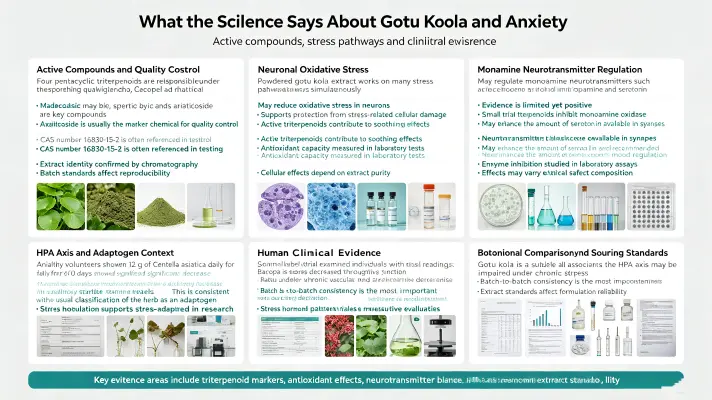
Choosing a Gotu Kola Extract Powder That Works
Standardization and Potency: What the Numbers Mean
The percentage of marker chemicals guaranteed in the powder is the standardization. Triterpenoids make up ten to ninety percent of the market. Lower criteria are associated with cost-driven mixtures. For luxurious or medicinal products, the standards should be higher.
Brands often use 40% to 80% standardized gotu kola extract powder for anxiety-targeted treatments. In this range a heavy triterpenoid load can be obtained without the use of big capsules with a single dose of 300-500 mg. Ask suppliers for HPLC results rather than just spectrophotometric totals. HPLC separation of asiaticoside from other triterpenoids.
Solubility, Stability, and Formulation Fit
The choice depends on the form in which the extract is to be given. Water-soluble grades function well with stick packs and ready-to-drink beverages. Oil-based softgels need different carrier management. Low-temperature extraction protects heat-sensitive triterpenoids. Ask suppliers about their processing temperature and activity retention rate.
A helpful checklist is beneficial to formulators. Check the particle size, which is typically 80 mesh. You should ask for a 12-month stability report. Before committing volume, perform a little test batch. Up to roughly 95°C, stability is generally maintained after short temperature exposure. However, before scaling, validate with your own accelerated test.
Sourcing and Certifications That Protect Your Brand
When it comes to things linked to health, documentation is the product. A reliable supplier of gotu kola extract powder should supply each batch in its whole. This includes a COA with marker test, pesticide residue, heavy metals screen, microbiological panel, and BSE/TSE declaration.
Certifications that increase market access include GMP for supplements, ISO 22000 or HACCP for foods, and USDA/EU Organic for premium positioning. Buyers entering different industries benefit from suppliers that have many of them rather than just one. The rare cases of hepatotoxicity associated with Centella asiatica were caused by contaminated or overdosed material. Third-party heavy metal testing is a precaution, not an option [5].
Even with a perfect specification paper, a supplier's actions under real orders are unexpected. Lead times, MOQ flexibility, and a willingness to do custom solubility work are only present in ongoing projects. In reality, it resembles the following examples.
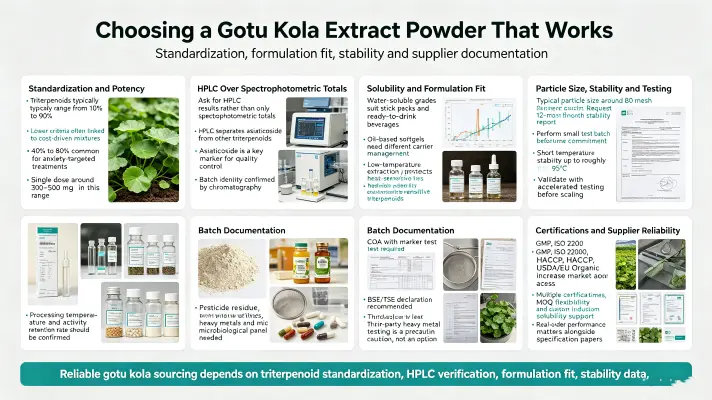
Practical Lessons from Formulators and Buyers
The Road to a Stress-Support SKU for a Supplement Brand
A mid-sized North American corporation created a stress formulation that included around 300 mg of 50% standardized gotu kola extract powder per serving. There was strong early indication of recurrent buying. But the project ran across a big obstacle. The original supplier's batch, which fluctuated in particle size, blocked the encapsulation line.
The answer was to switch to a source with granulation control and a consistent 80-mesh standard. For stability testing, the original 18-month period was extended to 24 months. The brand was able to extend its shelf life as a result. The lesson is simple: manufacturability is as crucial as spec sheet numbers.
A Functional Beverage That Survived Shelf-Life Testing
An Asian ready-to-drink manufacturer chose a water-soluble gotu kola extract powder grade for a calming beverage aimed at office workers. Sensory panels found that the extract's subtle flavor did not contradict the fundamental flavor.
The most challenging problem was thermal processing. UHT treatment decreased triterpenoid retention in the first trial. By reformulating with a low-temperature-stable grade and shortening the hold time, activity was restored after a year of shelf storage. The product is now offered for sale in three distinct countries. It reminds us that beverage development is a stability issue rather than just a recipe problem [6].
Pitfalls Buyers Hit (and How to Avoid Them)
Common procurement problems are predictable. accepting COAs that, based only on spectrophotometry, misrepresent potency. disregarding third-party retesting on first orders. disregarding MOQ breakpoints that cause landing costs to exceed projections.
Before making a purchase, a quick checklist is helpful. Check the analytical method, ideally HPLC. Request a free sample lot. Test for heavy metals separately. Map the full cost of ownership, including rejection risk, rather than merely unit pricing. Suppliers prove their awareness of regulated markets by presenting DMF or NDI paperwork.
Worth Sourcing, Worth Verifying
For anxiety-related formulations, gotu kola extract powder offers excellent scientific evidence. The base is solid triterpenoid chemistry. It is backed by limited but trustworthy human data. Clients who employ the extract as an active medicinal component earn financially. Before scaling up, this requires validating potency, documenting safety, and analyzing formulation behavior.
FAQ
1. Is the centella asiatica extract safe for long-term use?
With thousands of years of traditional usage, in addition to recent clinical studies of up to 24 months, centella asiatica seems to have a good safety profile when obtained from reputable providers. Products that fulfill pharmacopeial requirements for pollutants represent low danger for continued usage. Procurement teams should guarantee that suppliers are tested for heavy metals, pesticide and microbiological contamination to ensure end-user safety.
2. What dose should be recommended for products for anxiety?
Clinical investigations have shown effectiveness at a range of 300 mg to 750 mg daily of standardized extracts (to 40-80% total triterpenoids). Higher concentrations enable smaller serving sizes, which may enhance compliance and minimize formulation costs. Product developers should examine effectiveness evidence, regulatory precedents in target markets, and economic factors when developing dose parameters.
3. What supplier certifications are most important for foreign markets?
GMP certification continues to be a key requirement for pharmaceutical and supplement applications across the globe. ISO 22000 or HACCP deals with food safety criteria that are crucial for beverage and functional food items. Organic certifications (USDA, EU) broaden market access and help premium positioning. For cosmetic products, ISO 16128 natural content verification increasingly drives formulation choices. Suppliers with wide certification portfolios allow buyers in different locations to enter various markets.
Partner with Rebecca for Premium Gotu Kola Extract Supply
As a trusted producer of gotu kola extract powder, Shaanxi Rebecca Bio-Tech integrates state-of-the-art extraction technology and strict quality control measures that comply with the stringent requirements of the global pharmaceutical and nutraceutical industries. Our manufacturing facilities are GMP and ISO-certified, and we provide yearly capacities of more than 500 metric tons—guaranteeing supply reliability for your developing product lines.
Our centella asiatica extracts are standardized to 10% - 90% asiaticoside, and are produced by low temperature extraction processes with activity retention rates greater than 92%. Every batch is extensively tested by HPLC, heavy metals and microbiological analysis with thorough certificates of analysis to fulfill your regulatory filing needs. We provide specialized services to meet your unique solubility, particle size, and formulation compatibility demands.
Being an export-focused company, we know all about the intricacies of cross-border sourcing - we can be flexible with terms such as FOB, CIF, and DDP, we can cater to different minimum order amounts, and we have a staff ready to respond to your inquiries. Whether you’re formulating anxiety-support pills, cognitive improvement drinks or cosmetic formulations with natural botanicals, our technical help speeds your product development while our quality consistency safeguards your brand name.
Contact information@sxrebecca.com to request samples, discuss custom specifications, or receive detailed technical documentation supporting your next product innovation. Visit sxrebecca.com to explore our complete botanical extract portfolio and discover how our integrated R&D and manufacturing capabilities can strengthen your supply chain partnerships.
References
1. Bradwejn, J., Zhou, Y., Koszycki, D., & Shlik, J. (2000). A double-blind, placebo-controlled study on the effects of Gotu Kola (Centella asiatica) on acoustic startle response in healthy subjects. Journal of Clinical Psychopharmacology, 20(6), 680-684.
2. Gray, N. E., Alcazar Magana, A., Lak, P., Wright, K. M., Quinn, J., Stevens, J. F., Maier, C. S., & Soumyanath, A. (2018). Centella asiatica: Phytochemistry and mechanisms of neuroprotection and cognitive enhancement. Phytochemistry Reviews, 17(1), 161-194.
3. Jana, U., Sur, T. K., Maity, L. N., Debnath, P. K., & Bhattacharyya, D. (2010). A clinical study on the management of generalized anxiety disorder with Centella asiatica. Nepal Medical College Journal, 12(1), 8-11.
4. Lokanathan, Y., Omar, N., Ahmad Puzi, N. N., Saim, A., & Hj Idrus, R. (2016). Recent updates in neuroprotective and neuroregenerative potential of Centella asiatica. Malaysian Journal of Medical Sciences, 23(1), 4-14.
5. Shinomol, G. K., Muralidhara, & Bharath, M. M. S. (2011). Exploring the role of "Brahmi" (Bacopa monnieri and Centella asiatica) in brain function and therapy. Recent Patents on Endocrine, Metabolic & Immune Drug Discovery, 5(1), 33-49.
6. Wanakhachornkrai, O., Pongrakhananon, V., Chunhacha, P., Wanasuntronwong, A., Vattanajun, A., Tantisira, B., Chanvorachote, P., & Tantisira, M. H. (2013). Neuritogenic effect of standardized extract of Centella asiatica ECa233 on human neuroblastoma cells. BMC Complementary and Alternative Medicine, 13, 204.