Does alpha lipoic acid raise blood pressure?
Current RCTs and meta-analyses indicate that Alpha-lipoic acid does not increase blood pressure. Instead, most human trials demonstrate a slight to moderate decrease in both systolic and diastolic blood pressure, especially in persons with metabolic syndrome, diabetes, or Stage I hypertension. Here we review the data, methods, safe usage and what buyers need to know when obtaining this substance.
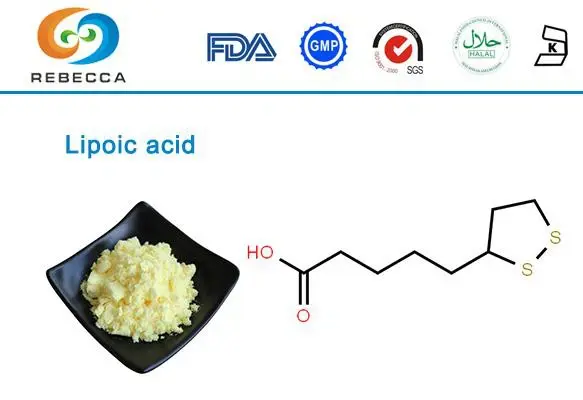
Product Name:alpha lipoic acid
CAS No.:1077-28-7
Specification:99%
Test Method:HPLC
Appearance:Light yellow to yellow powder
Does Alpha-Lipoic Acid Powder Raise Blood Pressure?
Before we go into processes and formulation issues, let's deal with the problem that brought most of you here: may taking ALA raise blood pressure?
What the Latest Meta-Analyses Show
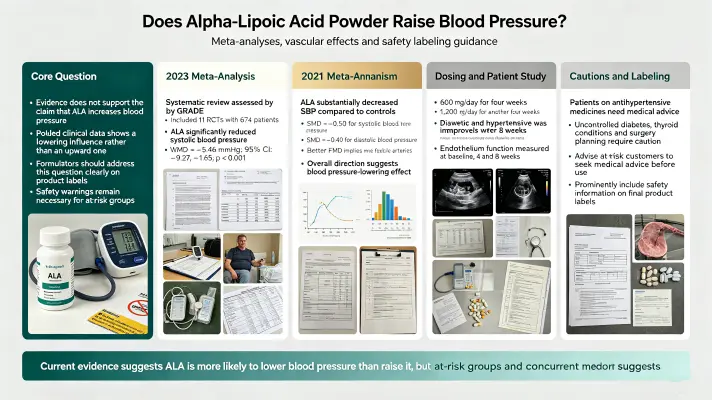
Pooled clinical data refute the claim that alpha-lipoic acid powder might increase blood pressure. A systematic review that was assessed by the 2023 GRADE and published in Frontiers in Cardiovascular Medicine included a total of 11 RCTs involving 674 patients. The meta-analysis showed that supplementation with ALA significantly reduced systolic blood pressure (WMD = −5.46 mmHg; 95% CI: −9.27, −1.65; p < 0.001). Another meta-analysis published in 2021 also found that alpha-lipoic acid supplementation substantially decreased SBP (SMD = −0.50) and DBP (SMD = −0.40) compared to controls . Overall, the data at present suggests a lowering rather than an upward influence on blood pressure.
How Alpha-Lipoic Acid Powder Interacts with Blood Vessels
Rather, alpha-lipoic acid powder seems to dilate the arteries rather than constrict them. Clinical investigation in diabetic and hypertensive individuals, ALA was given 600 mg/day for four weeks then 1,200 mg/day for another four weeks, endothelium function was measured at baseline, 4 and 8 weeks. The outcome was evident Flow mediated dilation ( FMD ) was considerably improved after 8 weeks in both diabetes and hypertension groups . Better FMD often implies more flexible arteries and better blood flow – the reverse of what you would expect if ALA increased blood pressure.
Who Still Needs to Be Cautious
Alpha-lipoic acid powder has been shown to reduce blood pressure rather than increase it, however certain people need to be cautious. In those currently using antihypertensive medicines, cumulative effects might lower blood pressure too much. Individuals with uncontrolled diabetes, thyroid conditions and those planning for surgery should additionally see a physician before to usage. Formulators are told to prominently identify their products and to advise at-risk customers to seek medical advice.
Now we know that ALA is far more likely to reduce blood pressure than increase it. The next issue is, how does it achieve this?
Biochemical Mechanisms Behind ALA's Effect on Blood Pressure
The mechanics behind them will enable R&D teams build wiser formulations and will help customers understand what to anticipate.
Reducing Oxidative Stress in Vascular Tissues
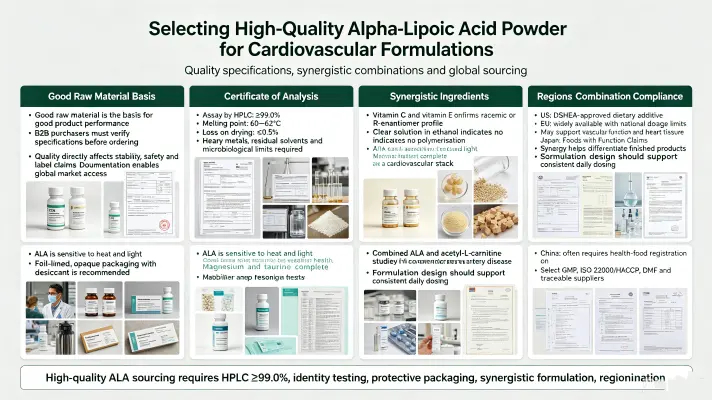
And, oxidative stress affects the blood vessel endothelium and causes stiffening of arteries, both of which increase blood pressure. What sets alpha-lipoic acid powder apart from other antioxidants is that it is active in both aqueous and fat-based cellular settings. It not only directly neutralises free radicals but also recycles other antioxidants including vitamin C, vitamin E and glutathione. Preclinical studies confirms this. El Midaoui and de Champlain claimed reduction of hypertension, insulin resistance and oxidative stress by alpha-lipoic acid in Hypertension, 2002. ALA serves to decrease oxidative stress in the walls of blood vessels, aiding in keeping arteries flexible and reactive.
Supporting Nitric Oxide and Endothelial Function
Nitric oxide (NO) is the body’s major “vasodilation signal” -- when NO is present, vessels dilate and blood pressure lowers. Alpha-lipoic acid powder has two benefits for preserving NO. It helps protect NO molecules from oxidative degradation, and it helps assist the enzymes that create NO. This is why endothelial function always improves in studies with ALA. In a landmark study in metabolic syndrome patients, the ISLAND trial, irbesartan with lipoic acid enhanced endothelial function and lowered markers of inflammation in the metabolic syndrome (Circulation 2005;111:343-8). One of the greatest determinants of long-term cardiovascular health is better endothelial function.
Modulating Inflammation and Insulin Sensitivity
Both chronic inflammation and insulin resistance raise blood pressure. Alpha-lipoic acid powder does both. It inhibits inflammatory cytokines and increases cellular insulin signalling, therefore decreasing vascular strain over time. In a clinical study of diabetic individuals with Stage I hypertension, researchers in an 8-week crossover double-blinded design coupled the ACE inhibitor quinapril (40 mg/d) with ALA (600 mg/d) and saw favourable improvements in blood pressure and endothelial-dependent dilation. That “multi-pathway” activity explains the popularity of alpha-lipoic acid powder in current cardiometabolic compositions.
With the science settled, the issue now is: how much, how frequently, and how safely?
Practical Guidance for Using Alpha-Lipoic Acid Powder Safely
Turning research into a viable product involves realistic dose, understanding of interactions, and clean sources.
Effective Dosage Ranges from Clinical Trials
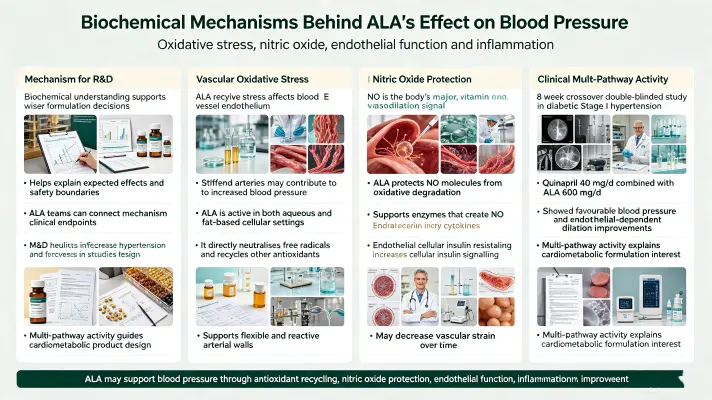
For cardiometabolic results, human studies most often utilise 300 mg to 600 mg of alpha-lipoic acid powder per day, with some ascending to 1,200 mg for brief durations. For example, the Korean investigation of endothelial function utilised 600 mg/day in the first month and then increased it to 1,200 mg/day in the second month. For consumer supplements for general cardiovascular support, a well-tolerated regularly used dose range is 300-600 mg once daily. Dividing the daily amount may decrease moderate GI upset in sensitive individuals.
Interactions with Antihypertensive Medications
Because alpha-lipoic acid powder may reduce blood pressure on its own, it may have additive vasodilatory effects when used with ACE inhibitors, ARBs, calcium channel blockers, or diuretics. This is not always bad – the QUALITY trial, for instance, deliberately coupled ALA with quinapril – but it should always be done under physician supervision. Labels on products should clearly advise consumers on blood pressure medicines and customer facing information should reinforce this without making illness treatment promises.
Safety Profile and Side Effects
Alpha-lipoic acid powder has a good safety record at common supplementary dosages. The adverse effects reported are typically mild: temporary nausea, skin rash or a metallic taste. Another rationale for medical care in that demographic is that very large dosages (far beyond 1,800 mg) have seldom been linked with hypoglycemia in diabetic people. To further limit the possibility of impurity-related reactions, pharmaceutical-grade alpha-lipoic acid powder with confirmed purity (≥99% by HPLC) is used.
Once you know what to dose and how safe it is, the next piece of the jigsaw is sourcing. Ingredient quality directly influences clinical results.
Selecting High-Quality Alpha-Lipoic Acid Powder for Cardiovascular Formulations
“Good raw material is the basis for good product performance.” What B2B purchasers should be looking at.
Critical Quality Specifications to Verify
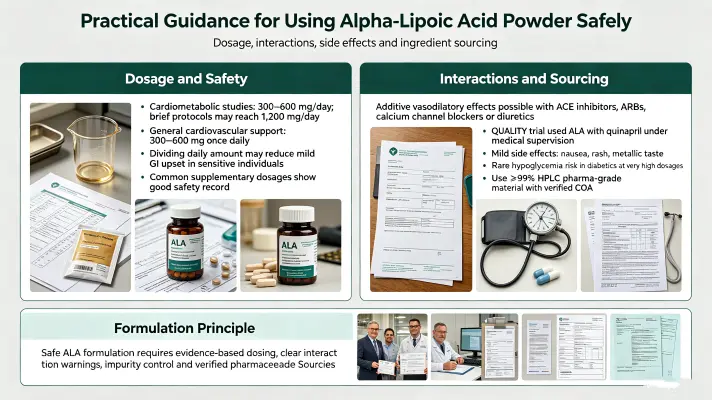
When buying alpha-lipoic acid powder, request a comprehensive Certificate of Analysis (CoA) with assay by HPLC (≥99.0%), melting point (60–62 °C), loss on drying (≤0.5%), heavy metals, residual solvents (per ICH Q3C) and microbiological limits. The optical rotation is used to determine the substance is racemic or richer in R-enantiomer. Request stability data, packaging info (foil-lined, opaque, desiccant) due to heat and light sensitivity of ALA. A fast test for no polymerisation during storage is a “clear solution in ethanol” test.
Synergistic Ingredient Combinations
Alpha-lipoic acid powder goes well with a few complimentary actives. Vitamin C and vitamin E are added to its antioxidant recycling network. CoQ10 supplies energy in mitochondria in heart tissue . Acetyl-L-carnitine plus ALA has actually been studied together for vascular health. McMackin and colleagues reported the effect of combined treatment with α-lipoic acid and acetyl-L-carnitine on vascular function and blood pressure in patients with coronary artery disease (Journal of Clinical Hypertension, 2007;9(4):249–255). Magnesium and taurine round up a full cardiovascular stack. This combination helps companies to distinguish their goods and improve effectiveness.
Regulatory and Sourcing Considerations
Acceptance of the regulation varies from area to region. Alpha-lipoic acid powder is a DSHEA-approved dietary additive in the United States. It is widely available as a dietary supplement in the EU, while certain member states have specified dosage limitations. In Japan it is utilised in Foods with Function Claims files and in China it often needs registration for health-food positioning. Select providers with GMP certification, ISO 22000/HACCP paperwork, DMF references and complete traceability from source material to final powder. This paperwork is not a bonus – it is the thing that gets your final product to the worldwide markets without delay.
Conclusion
Alpha-lipoic acid powder does not elevate blood pressure, according to clear and reliable data. Controlled clinical studies, however, and many meta-analyses indicate a moderate but significant decrease in both systolic and diastolic blood pressure mediated by enhanced endothelial function, reduced oxidative stress and improved insulin signalling. For consumers, this makes ALA a valuable auxiliary, not a danger. For formulators and procurement teams it makes ALA a crucial element – if the raw material passes stringent purity, stability and documentation criteria. Alpha-lipoic acid powder may be used effectively in cardiovascular wellness products created for the health-conscious market of today if it is obtained and manufactured appropriately.
FAQ
1. Can alpha-lipoic acid increase blood pressure?
No. Pooled evidence from randomised controlled studies suggest that alpha-lipoic acid supplementation moderately decreases rather than raises systolic and diastolic blood pressure, especially in persons with metabolic syndrome, diabetes, or mild hypertension.
2. Is it okay to use alpha lipoic acid powder with my blood pressure medicine?
Maybe, but only under medical supervision. ALA also may reduce blood pressure by its effects on the vasculature. Thus, ALA may have additive effects when used with ACE inhibitors, ARBs, calcium channel blockers or diuretics. Before combining, talk to your doctor.
3. Which dosage of alpha-lipoic acid has been researched for blood pressure lowering?
Most studies utilise 300–600 mg/day, some up to 1200 mg/day for 8–12 weeks. Effects on blood pressure are often not seen until after many weeks of steady usage.
4. Are there any negative effects at this doses?
Alpha-lipoic acid powder is usually well tolerated. Side effects may be mild, such as nausea, skin rash or metallic taste. Diabetic users should check their blood sugar carefully, as ALA may enhance insulin sensitivity.
5. How do I know I am getting a quality alpha lipoic acid powder?
Request a Certificate of Analysis: HPLC assay ≥99% Melting point 60–62 °C Low loss on drying Heavy metals compliant Residual solvents under ICH Q3C limits Good vendors will also offer stable data and GMP or ISO documentation.
Partner with Rebecca for Pharmaceutical-Grade Alpha-Lipoic Acid Powder
Rebecca supplies alpha-lipoic acid powder (CAS 1077-28-7) at ≥99% purity, verified by HPLC and backed by full CoA, stability data, and DMF support. Whether you are developing capsules, tablets, or functional beverages targeting cardiovascular and metabolic health, our GMP-, ISO 22000-, and HACCP-certified production lines support both trial batches and bulk orders. Request a free sample, a current Certificate of Analysis, or a tailored quotation today.
Email: information@sxrebecca.com
References
1. Vajdi M., Noshadi N., Hassanizadeh S., et al. The effects of alpha lipoic acid (ALA) supplementation on blood pressure in adults: a GRADE-assessed systematic review and dose-response meta-analysis of randomized controlled trials. Frontiers in Cardiovascular Medicine. 2023;10:1272837.
2. Boccardi V., Mancinetti F., Baroni M., et al. Blood pressure lowering effects of alpha-lipoic acid supplementation: a meta-analysis of randomized controlled trials. Arterial Hypertension. 2021;25(1):29–38.
3. Lee S.R., Jeong M.H., Lim S.Y., et al. The effect of alpha lipoic acid (Thioctacid HR®) on endothelial function in diabetic and hypertensive patients. Korean Circulation Journal. 2006;36(8):559–564.
4. Sola S., Mir M.Q., Cheema F.A., et al. Irbesartan and lipoic acid improve endothelial function and reduce markers of inflammation in the metabolic syndrome: results of the Irbesartan and Lipoic Acid in Endothelial Dysfunction (ISLAND) study. Circulation. 2005;111:343–348.
5. Rahman S.T., Merchant N., Haque T., et al. The impact of lipoic acid on endothelial function and proteinuria in quinapril-treated diabetic patients with stage I hypertension: results from the QUALITY study. Journal of Cardiovascular Pharmacology and Therapeutics. 2012;17(2):139–145.
6. El Midaoui A., de Champlain J. Prevention of hypertension, insulin resistance, and oxidative stress by alpha-lipoic acid. Hypertension. 2002;39(2):303–307.
_1730079799361.webp)