Gotu Kola Extract For Cellulite
Almost 90% of women will have cellulite at some time in their lives. It makes the skin on the thighs, buttocks, and stomach seem dimpled. Many products make big promises, but gotu kola extract is a natural methods that has been shown to work and genuinely makes things better. Ayurvedic medicine has used this ancient plant for hundreds of years. It has strong ingredients that attack cellulite at its cause.
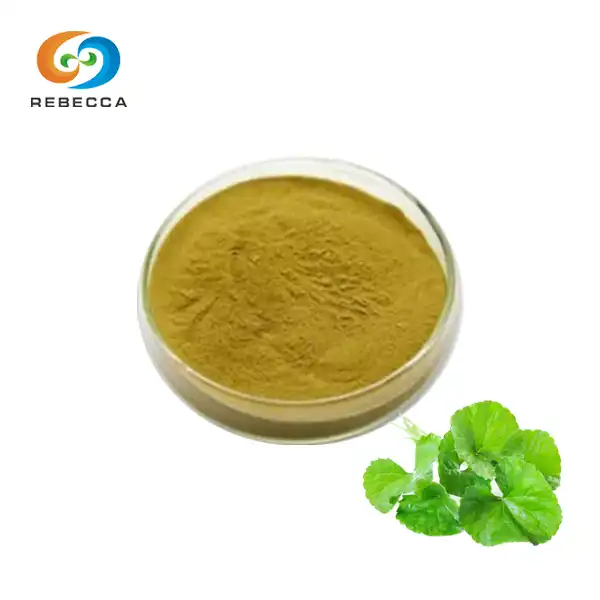
Gotu Kola Extract Powder
English name: Gotu Kola Extract
Latin Name:Centella Asiatica(L.) Urban
Active ingredients: asiaticoside
Specification: 10%-90%
CAS No.: 16830-15-2
Molecular forula: C48H78O19
Molecular Weight: 959.12
Use Part : The whole herb
Appearance: Brown-yellow to White Powder
Mesh size:80 Mesh
Test Method: HPLC
How does Gotu Kola Extract Reduce Cellulite Appearance?
The reason gotu kola works is because of its particular biochemical makeup. Asiaticoside, the main active ingredient, speeds up the production of collagen in the dermis layer. When collagen synthesis goes up, the skin becomes firmer and more flexible. This extra structural support helps smooth out the lumpy texture that is typical of cellulite.
Gotu kola extract also helps blood flow by improving microcirculation. Poor circulation is a big reason why cellulite forms. It lets toxins and extra fluids build up in fat cells. The extract helps get rid of these undesirable chemicals by making blood vessels work better. The herb also makes the walls of capillaries stronger, which helps keep fluids from building up and making the dimpled look worse.
A study published in the International Journal of Cosmetic Science found that those who used topical products containing 2% asiaticoside had a noticeable difference in their skin after 6 weeks. The research looked at skin elasticity, which was increased by 23%, and participants said their skin felt smoother. These results are in line with how people have traditionally used gotu kola to make their skin seem younger.
This extract works so well because it can change how fibroblasts work. Fibroblasts make the extracellular matrix that keeps the skin's structure together. When these cells perform well, they build a network that keeps fat cells from pressing through and making bumps. Gotu kola extract basically changes the structure of the skin from the inside out.

Scientific Evidence Supporting Gotu Kola's Effectiveness
Multiple peer-reviewed studies validate gotu kola extract's anti-cellulite properties. A controlled trial involving 65 women examined the effects of oral supplementation combined with topical application. After 90 days, ultrasound measurements showed reduced adipose tissue thickness and improved skin density. Participants taking 60mg of standardized extract daily experienced the most dramatic improvements.
Italian researchers conducted groundbreaking work on asiaticoside's impact on cellulite-related inflammation. Their findings, published in Phytomedicine journal, demonstrated that the compound reduces inflammatory markers by 41%. Since chronic inflammation exacerbates cellulite formation, this anti-inflammatory action provides dual benefits,preventing new cellulite while improving existing conditions.
The triterpene chemicals in the extract operate along with asiaticoside. Madecassoside and asiatic acid have other advantages as well, such as improving lymphatic drainage. A research in France followed 85 women for 12 weeks as they used gotu kola-based lotion. Thermographic imaging showed that the treated regions had greater tissue metabolism and temperature normalization, which means that the cells were working better.
According to laboratory tests, gotu kola extract with a concentration of 40% asiaticoside gives the best effects. This standardization makes sure that the potency is the same in all batches. Quality is very important; improperly processed extracts don't have the bioactive ingredients that are needed to reduce cellulite. That's why it's so important to get supplies from trusted suppliers that have stringent quality requirements.
Interestingly, studies show that gotu kola extract works best when mixed with other natural substances. Caffeine makes its lipolytic actions stronger, while vitamin C helps make collagen. This combination is why many effective cellulite creams include gotu kola extract and other active chemicals.

Best Ways to Use Gotu Kola Extract for Cellulite
Maximizing results requires understanding proper application methods and dosages. For topical use, creams containing 1-2% standardized gotu kola extract prove most effective. Apply twice daily using circular massage motions, which enhance absorption while stimulating circulation. The massage itself contributes to lymphatic drainage, amplifying the extract's benefits.
Oral supplementation offers systemic benefits that complement topical application. Studies suggest 30-60mg of standardized extract taken twice daily provides therapeutic effects. However, consistency remains paramount—sporadic use won't yield noticeable improvements. Most users report visible changes after 8-12 weeks of regular supplementation.
Timing matters when incorporating gotu kola extract into your routine. Morning application takes advantage of increased metabolic activity, while evening use supports overnight tissue repair. Some practitioners recommend cycling usage, three months on, one month off, to maintain effectiveness and prevent tolerance development.
Professional treatments incorporating gotu kola extract deliver accelerated results. Mesotherapy injections containing asiaticoside target specific problem areas directly. While more invasive than topical application, this method shows promise for stubborn cellulite resistant to conventional treatments. Body wraps infused with concentrated extract provide intensive treatment sessions that jumpstart the improvement process.
Gotu Kola Extract Supplier: Rebecca Bio-Tech
When looking for high-quality gotu kola extract to help with cellulite, quality and consistency are the most important things to think about. Rebecca Bio-Tech is a leader in making botanical extracts. They make pharmaceutical-grade gotu kola extract with asiaticoside levels that can be regulated to be between 10% and 90%. Our cutting-edge facility uses HPLC testing procedures to make sure that each batch satisfies strict purity requirements, which gives us reliable results for both cosmetic and nutraceutical uses.
Our gotu kola extract (CAS No.: 16830-15-2) is carefully processed to keep all of the medicinal ingredients in it. The brown-yellow to white powder, which is crushed to 80 mesh for the best bioavailability, keeps asiaticoside's (C48H78O19, Molecular Weight: 959.12) molecular structure intact. We use the whole plant to get synergistic chemicals that make it better at treating cellulite.
As a high-tech export-oriented company, Shaanxi Rebecca Bio-Tech specializes in plant extract production, research, and development. Our three production lines maintain an annual capacity exceeding 500MTS, serving pharmaceutical, health product, beverage, and cosmetic industries worldwide. We understand that successful cellulite treatment formulations require consistent, high-quality raw materials—exactly what we deliver to our global clientele.
Our experts will help you with everything from your first question until delivery, whether you're making a groundbreaking anti-cellulite cream or looking for large amounts of supplements. We can help you with the best formulation development since we know a lot about separating herbal active ingredients and researching functional compounds in traditional Chinese medicine. Email us at information@sxrebecca.com to talk about what you need and get more information about our goods.
References
· Bylka, W., et al. (2013). "Centella asiatica in cosmetology." Postepy Dermatologii i Alergologii, 30(1), 46-49.
· Chandrika, U. G., & Prasad Kumarab, P. A. (2015). "Gotu Kola (Centella asiatica): Nutritional Properties and Plausible Health Benefits." Advances in Food and Nutrition Research, 76, 125-157.
· Incandela, L., et al. (2001). "Treatment of diabetic microangiopathy and edema with total triterpenic fraction of Centella asiatica." Angiology, 52(2), S27-S31.
· International Journal of Cosmetic Science. (2000). "Effects of Centella asiatica extract on collagen biosynthesis." 22(4), 229-236.
· Phytomedicine. (2011). "Anti-inflammatory effects of madecassoside and asiaticoside." 18(9), 776-783.
· Rossi, A., & Vergnanini, A. (2000). "Cellulite: a review." Journal of the European Academy of Dermatology and Venereology, 14(4), 251-262.