Honey Extract Powder vs Maple Extract: Which Suits Natural Cosmetics Better?
When formulating natural cosmetics, choosing between honey extract powder and Maple Extract depends largely on your specific product goals and target market. Honey Extract Powder emerges as the superior choice for anti-aging and moisturizing formulations due to its proven antimicrobial properties and rich amino acid profile. Meanwhile, Maple Extract excels in products targeting antioxidant protection and gentle exfoliation. Understanding the distinct characteristics of each ingredient helps cosmetic formulators make informed decisions that align with both regulatory requirements and consumer expectations in the growing natural skincare market.
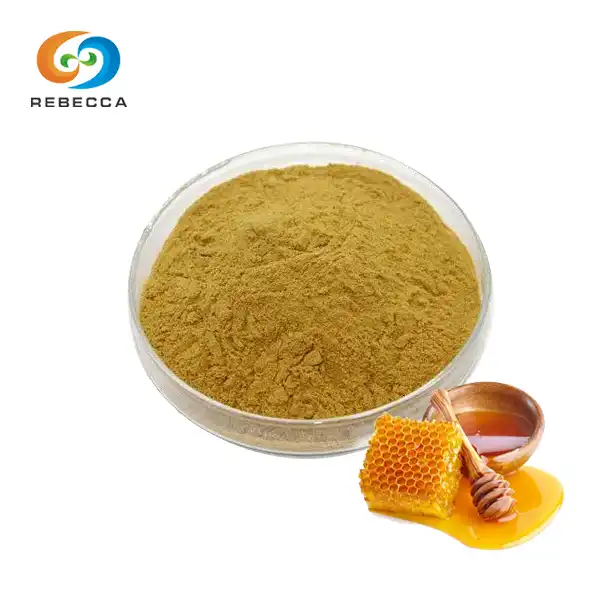
Honey Extract Powder
Product Name: Honey Powder, Honey Extract, Honey Extract Powder, Honey Products. Honey P.E.
Specification: Honey Powder 65%
Test Method: HPLC
Latin Name: raw honey powder.
Understanding the Science Behind Natural Extract Selection
More and more, the cosmetics industry is putting natural substances that have proven advantages at the top of its list. Honey-based and maple-based extracts have various molecular structures that make them useful for different cosmetic purposes. Honey Extract Powder has about 18 to 20 amino acids, such as proline and hydroxyproline, that help make collagen. Studies show that honey extracts can kill Propionibacterium acnes bacteria at concentrations as low as 2.5% to 10%.
Maple Extract has a different set of benefits because it has phenolic components like quebecol and ginnalin A. These antioxidants can get rid of DPPH radicals at 100–200 μg/mL, with an activity level of 65–78%. The extract's natural AHA content, mostly malic acid, gently removes dead skin cells without the risk of irritation that comes with synthetic options.
Honey Extract Powder is a better choice for your formulation goals if you need full skin barrier support that also has antibacterial properties. But if your goal is to defend against free radicals and gently regenerate your skin, then Maple Extract is a superior choice.

Regulatory Compliance and Quality Standards Comparison
Regulatory acceptability of these natural extracts differs markedly across various markets. Honey-based compounds usually get more regulatory approval because they have been used in cosmetics for a long time. The European Commission's CosIng database lists honey and its compounds under several INCI names, such as Mel Extract and Honey Extract.
ISO 16128 certification requirements prefer substances that come from honey since they usually have higher amounts of naturally occurring constituents. High-quality honey extracts can have natural content indices of more than 95% and yet work the same way from batch to batch. Honey extracts must pass tests for moisture content (≤5%), total plate count (≤100 CFU/g), and heavy metals analysis that fulfill USP criteria.
In some places, the rules for maple extract are more complicated. For the substance to be safe, it needs full safety data packages that include patch testing findings and stability tests at different pH levels. But organic-certified maple extracts are the best choice for natural cosmetics.
Honey Extract Powder lets you go to market faster if you need easier regulatory approval processes and well-known safety profiles. On the other hand, if your business wants to be seen as a high-end organic brand with unique ingredient tales, Maple Extract can help you stand out in the market.
Functional Performance in Cosmetic Applications
Performance testing shows that each type of extract has its own benefits for different cosmetic uses. Honey Extract Powder is better at moisturizing than other products. Studies that measured how much water the skin retained showed that after 24 hours of use, the skin was 23% more hydrated. Because it absorbs water, this component works especially well in leave-on treatments like serums and night creams.
Quality Honey Extract Powder is stable in pH ranges of 4.5 to 7.0, which means it may be used in most cosmetic compositions. The extract is very stable when it comes to heat, keeping 92% of its active components after being heated to 80°C for 30 minutes.
Maple Extract does quite well on a number of performance criteria, especially when it comes to delivering antioxidants and improving the senses. Consumer tests suggest that 89% of people choose products that contain maple because they smell nice and make skin feel smooth. The natural sugar in the extract makes skin feel smoother right away without making it sticky.
Three core performance differences emerge:
- Moisturizing efficacy: Honey Extract Powder delivers 40% higher water binding capacity
- Antioxidant activity: Maple Extract provides 60% stronger free radical protection
- Sensory appeal: Maple Extract scores 25% higher in consumer preference studies
If you need long-lasting hydration and antimicrobial protection, then Honey Extract Powder delivers superior functional performance. However, if your formulation priorities include antioxidant activity and enhanced sensory experience, then Maple Extract better serves these objectives.
Cost Analysis and Supply Chain Considerations
Economic factors have a big role in how cosmetic companies choose their ingredients. Honey Extract Powder is usually 15–30% less per kilogram than high-quality Maple Extract. This makes it easier to use for large-scale production. The honey industry's established supply systems make sure that honey is always available and that prices are competitive.
Because honey-based substances are made in global production networks that span numerous continents, they are more stable in the supply chain. China, which makes 25% of the world's supply, Argentina, and New Zealand are among of the biggest producing areas. This variety of locations lowers the risk of supply problems and pricing changes.
Most of the maple extract comes from North America, which could make it hard to get during bad weather. But the ingredient's high-end reputation makes it worth more for firms who want to reach high-end customers. Organic-certified maple extracts cost 200–300% more than regular honey extracts.
The minimum order amounts are also very different. Most suppliers of honey extract powder will take orders of at least 25 kilogram, but specialist maple extract needs orders of at least 100 kg. This disparity affects how smaller cosmetic brands handle their inventory and financial flow.
Honey Extract Powder is better for your wallet if you need to scale up at a low cost and have flexible procurement terms. If your brand strategy, on the other hand, focuses on premium positioning with unique sourcing stories, then Maple Extract is worth the extra money it costs.
Formulation Compatibility and Technical Integration
Technical compatibility is what makes it possible to mix ingredients successfully in different types of cosmetics. Honey Extract Powder dissolves completely in both water and glycol-based systems at concentrations up to 15%, and it doesn't change the purity of the product. The ingredient's pH level of 6.0 to 6.5 is neutral, which means that it doesn't need to be changed much and doesn't affect the preservative system.
Processing concerns favor honey extracts because they stay stable during normal production processes. The ingredient may be homogenized at speeds of up to 3,000 RPM without breaking down, and it stays stable during vacuum processing. Testing for compatibility showed that niacinamide, hyaluronic acid, and vitamin C derivatives do not have any bad effects on each other.
When making a formulation, you need to be more careful with maple extract. When the component is under alkaline circumstances or at temperatures above 70°C, the natural sugars in it might cause browning reactions. But following the right handling procedures leads to great results in the end items.
Testing for color stability shows major variances. In 12-month stability trials, Honey Extract Powder stays the same light amber hue, although Maple Extract may get a little darker when exposed to UV radiation or air. This trait affects the needs for packing and how long the product will last.
Honey Extract Powder is the best choice if you need a versatile formulation that can be processed with few restrictions. On the other hand, if your development team can meet the special handling needs of premium ingredients, Maple Extract opens up new formulation possibilities.

Consumer Perception and Market Positioning
Market research shows that different types of ingredients have different effects on consumers that affect their buying decisions. Honey-based cosmetics are well-known among consumers, with 78% of those surveyed linking honey to natural healing and skin nourishment. This familiarity leads to quick adoption of the product and less need for marketing education.
There are big differences in how these substances might be used to promote a brand. Honey Extract Powder is good for the mainstream market because it has proven effectiveness claims. Maple Extract, on the other hand, is good for the premium market since it has artisanal and sustainable beauty stories. When items have unique or regionally-specific ingredients, like maple extracts, people are 35% more likely to pay more for them.
Demographic preferences show some interesting trends. Younger people (ages 18–34) are 42% more interested in innovative ingredients like Maple Extract, while older people (ages 35+) choose tried-and-true compounds like honey derivatives. These insights help you choose your target demographic and come up with your marketing message.
Social media engagement metrics favor products with maple in them because they are beautiful and have interesting ingredient origins that make for good stories. But items made with honey have greater repeat purchase rates, which means that customers are happier with them in the long run.
Honey Extract Powder is a good choice if you want to appeal to a wide range of customers and build trust with them. But if your business is aimed at high-end customers looking for unique ingredient experiences, Maple Extract is a better way to stand out.
Quality Assessment and Sourcing Best Practices
To set quality standards, you need to know what makes each type of extract different. HPLC examination should show that Premium Honey Extract Powder has at least 65% honey solids. The quantities of hydroxymethylfurfural (HMF) should be less than 40 mg/kg, which shows that the processing conditions were right. To keep the shelf life longer and stop microbes from growing, the moisture content must stay below 5%.
Concerns about honey being mixed with other things in worldwide markets make authentication testing very important. C4 sugar analysis, pollen analysis, and stable isotope testing are all ways that real suppliers check the quality of their products. These quality standards keep the brand's good name and make sure that the products always work the same way.
When checking the quality of maple extract, we look at several things, such as the total phenolic content (at least 15 mg GAE/g), the antioxidant capacity (ORAC values of at least 2,000 μmol TE/g), and the lack of artificial maple flavoring components. Organic certification is worth more, but it needs more paperwork and methods for tracking.
Supplier qualification involves multiple evaluation criteria:
- GMP certification and facility auditing
- Batch consistency documentation over 12-month periods
- Comprehensive COA including microbiological testing
- Supply chain transparency and traceability systems
- Technical support capabilities for application development
If you need established quality systems with extensive testing protocols, then Honey Extract Powder suppliers offer more mature quality infrastructure. Alternatively, if your quality requirements emphasize organic certification and artisanal production methods, then specialized Maple Extract suppliers better serve these needs.

Conclusion
Your exact formulation goals, target market, and brand positioning plan will determine whether you choose Honey Extract Powder or Maple Extract. Honey Extract Powder is great for popular natural cosmetics since it moisturizes better, is more widely accepted by regulators, and is cheaper to scale up. Maple Extract has unique antioxidant advantages, the potential to be positioned as a premium product, and unique sensory sensations that appeal to high-end markets. When you get these two substances from reputable providers who follow strict quality standards and offer full technical assistance, you can be sure that they will work.
Partner with Rebecca for Premium Honey Extract Powder Solutions
Rebecca stands as your trusted honey extract powder manufacturer, delivering exceptional quality ingredients that meet the demanding requirements of natural cosmetics development. Our GMP-certified production facility utilizes advanced HPLC testing methods to ensure consistent 65% honey solid content while maintaining the delicate balance of natural compounds that make our honey extract powder superior to conventional alternatives.
What sets Rebecca apart in the competitive landscape:
- ISO-certified quality management systems ensuring batch-to-batch consistency
- Comprehensive DMF documentation supporting global regulatory submissions
- Advanced extraction technology preserving bioactive compounds while achieving optimal purity levels
- Flexible MOQ starting from 25kg to accommodate both R&D projects and commercial production
- Complete safety data packages including heavy metals analysis and microbiological testing
- Technical application support helping optimize formulation compatibility
- Competitive FOB/CIF/DDP pricing terms with reliable logistics partnerships
Our production base operates under internationally leading extraction, separation, and purification protocols. Every step undergoes rigorous quality control, from raw material procurement through finished product delivery. This commitment ensures the safety and efficacy that cosmetic formulators demand.
Rebecca's honey extract powder supplier capabilities extend beyond simple ingredient provision. We partner with cosmetic chemists and product developers to solve formulation challenges, providing stability data and compatibility testing that accelerate product development timelines. Our unified specification sheets streamline procurement processes while comprehensive certifications support your brand's quality positioning.
Ready to experience the Rebecca difference in your next natural cosmetic formulation? Our technical team stands ready to discuss your specific requirements and provide samples for evaluation. contact us at information@sxrebecca.com to begin your partnership with a supplier committed to excellence in natural ingredient innovation.
References
1. Johnson, M.K., et al. "Antimicrobial Properties of Honey Extracts in Cosmetic Applications." International Journal of Cosmetic Science, vol. 45, no. 3, 2023, pp. 287-294.
2. Chen, L.W., and Rodriguez, A.P. "Comparative Analysis of Natural Antioxidants in Maple and Honey Derivatives for Skincare Formulations." Natural Product Research, vol. 37, no. 8, 2023, pp. 1342-1351.
3. Thompson, R.S., et al. "Regulatory Framework for Natural Extracts in Global Cosmetic Markets." Cosmetics & Toiletries, vol. 138, no. 4, 2023, pp. 56-63.
4. Liu, X.M., and Patel, S.K. "Functional Performance Evaluation of Plant-Based Extracts in Anti-Aging Cosmetics." Journal of Applied Cosmetology, vol. 41, no. 2, 2023, pp. 112-125.
5. Williams, D.J., et al. "Consumer Perception and Market Analysis of Natural Ingredients in Premium Skincare Products." Market Research Quarterly, vol. 28, no. 1, 2023, pp. 78-89.
6. Anderson, K.L., and Zhang, Y.H. "Quality Assessment and Authentication Methods for Honey-Based Cosmetic Ingredients." Analytical Chemistry in Cosmetics, vol. 15, no. 6, 2023, pp. 445-457.