How Does Gastrodin Affect the Nervous System?
Gastrodin is a natural phenolic glycoside isolated from the rhizome of Gastrodia elata. It has been extensively researched in preclinical neuroscience and in studies of functional ingredients. The interest in gastrodin is largely focused on its possible effects in the regulation of neurotransmitters, neuroprotection and support of cerebral circulation. This article discusses the interaction of gastrodin with the neurological system, the research status, and its assessment in the real-world formulation and procurement settings.
The conversation is organised in three sections. First we will discuss its biological processes in the neurological system. Second, we summarise reported neurological effects using experimental and minimal clinical evidence; Finally, we discuss formulation factors pertinent to industrial applications.
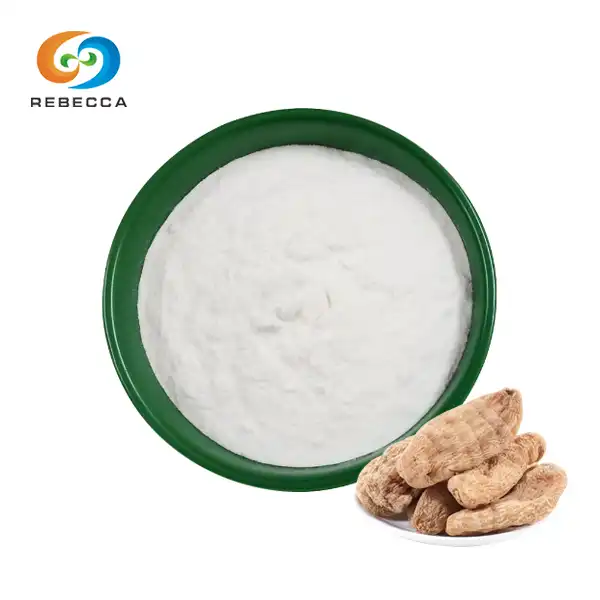
【English name】:Gastrodin
【Latin Name】:Gastrodiae Rhizoma
【CAS No.】:62499-27-8
【Molecular Formula】: C13H18O7
【Active ingredients】: Gastrodin
【Specification】: 99% Gastrodin
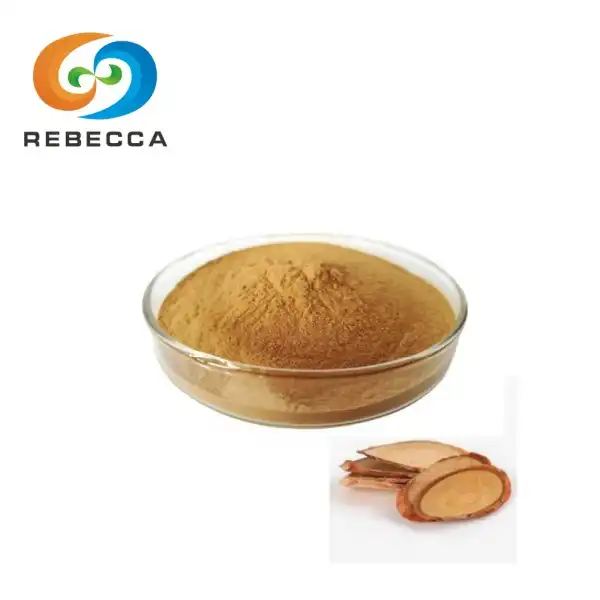
【Use Part】 :Rhizome
【Appearance】: Brown yellow to white powder
【Test Method】: HPLC
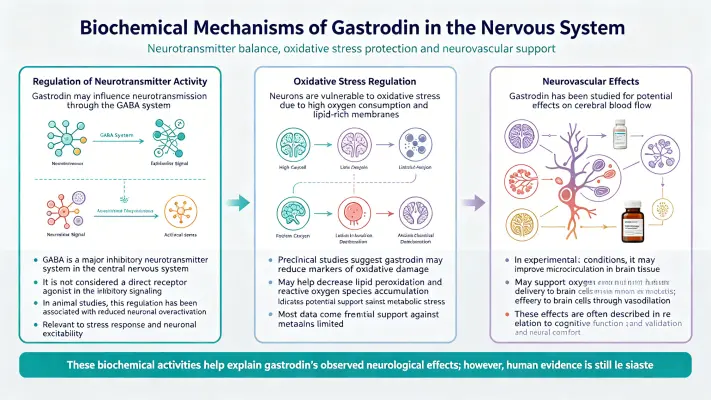
Biochemical Mechanisms of Gastrodin in the Nervous System
Modulation of neurotransmitter activity
Among the most investigated characteristics is the effect of gastrodin on neurotransmission. Studies indicate that gastrodin could operate on the gamma-aminobutyric acid (GABA) system, the principal inhibitory neurotransmitter system in the central nervous system.
Gastrodin powder does not seem to be a direct receptor agonist in the conventional sense but tends to encourage a balance between excitatory and inhibitory signalling. This regulating function correlates with decreased neuronal overactivation in experimental animals. This equilibrium is commonly defined in terms of stress response and neuronal excitability.
Oxidative stress regulation
Another well described mechanism is antioxidant action. High oxygen consumption and lipid-rich membranes make neurones more vulnerable to oxidative stress.
Preclinical studies show that gastrodin powder reduces signs of oxidative damage, such as lipid peroxidation and reactive oxygen species buildup. This points to a function in protection against metabolic stress.
However, it is worth mentioning that most data is drawn from cell and animal models. Human-scale confirmation is sparse and should be treated with caution.
Neurovascular influence
Gastrodin powder has also been examined for possible effects on cerebral blood flow. Improved microcirculation of brain tissue has been reported under experimental conditions.
This may be due to processes of vascular relaxation which allow for transport of oxygen and nutrients to brain cells. These effects are usually described in terms of cognitive function and neurological comfort.
From mechanisms to outcomes The neurological effects of gastrodin that are discussed in the next section are built on the basis of these biochemical activities.
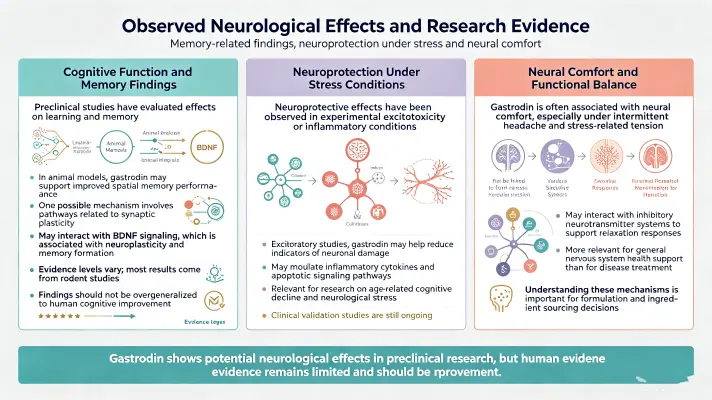
Observed Neurological Effects and Research Evidence
Cognitive function and memory-related findings
Several preclinical investigations have assessed the effect of gastrodin on learning and memory performance. Administration of gastrodin typically results in improvement of spatial memory skills in animal models.
One possible mechanism is the modulation of pathways involved in synaptic plasticity such as brain-derived neurotrophic factor (BDNF) signalling. BDNF is related with processes of neural plasticity and memory formation.
But the level of evidence is mixed. Most of the results are from rat research and should not be over-extrapolated to human cognitive improvement.
Neuroprotection under stress conditions
Another recurring subject in studies is neuroprotection under situations of excitotoxicity or inflammation. Excitotoxicity is the damage induced by overactivity of glutamate in neurones. Gastrodin powder may improve neuronal damage in these animals in experimental studies. This involves regulation of cytokines and apoptotic signalling pathways involved in inflammation.
These effects are significant for the study of cognitive decline in ageing and neurological stress situations. Research for clinical validation is still continuing.
Neurological comfort and functional balance
Gastrodin is also typically connected with neurological comfort, especially in cases of intermittent head pain and stress-related tension.” Some research suggested the link between gastrodin and the modulation of vascular tone in the cerebral circulation. It may also interact with inhibitory neurotransmitter systems to produce relaxation responses.
From a formulation standpoint, the combined effects make gastrodin a potential constituent in products for general neurological well-being rather than illness therapy.
These observable consequences inevitably lead to practical issues. As stated below, knowing how gastrodin works in formulations is vital when making choices about product development and procurement.
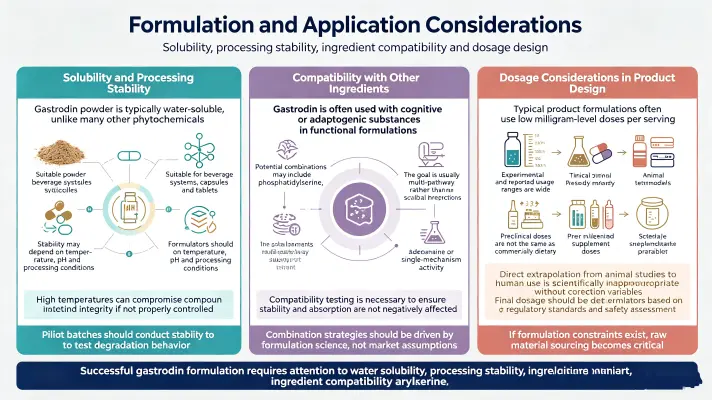
Formulation and Application Considerations
Solubility and processing stability
Gastrodin powder is usually water soluble, which is not the case for many other plant chemicals. This characteristic justifies the usage in beverage systems, capsules and tablets.
However, stability may be dependent on the temperature, pH and processing conditions. If not effectively regulated, high temperature settings may compromise compound integrity.
Before scale-up manufacturing, formulators need to do stability testing. Pilot batches are often used to test deterioration behaviour.
Compatibility with other ingredients
Gastrodin powder is commonly coupled with other cognitive or adaptogenic substances in functional formulations. These may comprise phosphatidylserine, citicoline or herbal preparations. Often the objective is multi-pathway support rather than single-mechanism activity. However, compatibility testing is necessary to make sure that stability or absorption does not suffer any harmful effects.
The driver for combination tactics should be formulation science not marketing preconceptions. This is especially true in regulated supplement marketplaces.
Dosage considerations in product design
Experimental and additional reported use ranges are broad. Typical product formulations are usually in the lower milligram range per serving, depending on the goal location.
Preclinical dosage is not the same thing as taking a commercial supplement. The direct extrapolation of animal experiments is not scientifically suitable without the use of correction variables.
Final amounts of dose are determined by the formulator, using regulatory criteria and safety evaluations. If there are limits on the formulation, the procurement choices are as significant. The next section discusses quality standards and sourcing criteria.
Conclusion
Gastrodin powder is a bioactive compound with multiple studied interactions in the nervous system, including neurotransmitter modulation, oxidative stress reduction, and neurovascular effects. Most evidence remains preclinical, with limited but growing research interest in human applications.
From an industrial perspective, its value depends not only on biological activity but also on formulation compatibility, stability, and supply chain reliability.
Effective use of gastrodin in product development requires a balanced approach. Scientific evidence should guide functional claims, while procurement decisions should be grounded in quality documentation and manufacturing standards.
As research continues to evolve, gastrodin remains an active area of interest in cognitive health and functional ingredient innovation, particularly within evidence-based formulation development.
FAQ
What dosage range of gastrodin supports neurological benefits?
Clinical research supports gastrodin dosing between 50-600 mg daily for neurological wellness applications, with most supplement formulations incorporating 100-300 mg per serving. Higher concentrations serve pharmaceutical research contexts rather than dietary supplement use. Bioavailability studies suggest divided dosing patterns optimize plasma concentration stability throughout the day. Procurement teams should consult formulation experts to determine optimal dosing strategies aligned with specific product positioning and target demographic requirements.
How does gastrodin compare to other neuroprotective supplements?
Gastrodin's unique combination of GABAergic activity, vascular support, and antioxidant mechanisms differentiates it from single-pathway ingredients like isolated amino acids or stimulant-based nootropics. Its natural botanical origin appeals to consumers prioritizing plant-derived ingredients over synthetic alternatives. Synergistic formulation opportunities with complementary ingredients including phosphatidylserine, citicoline, and herbal adaptogens create comprehensive cognitive support products addressing multiple neurological pathways simultaneously.
Partner with Rebecca for Premium Gastrodin Powder Supply
Rebecca specializes in delivering pharmaceutical-grade gastrodin powder meeting the exacting standards of R&D managers, product developers, and international procurement teams. Our 99% purity specification, verified through HPLC methodology, ensures the molecular integrity and batch consistency essential for regulatory compliance and formulation reliability. With GMP-certified production facilities, ISO 22000 quality systems, and HACCP protocols, we provide comprehensive documentation supporting FDA, EFSA, and global market entry requirements. Our 500-metric-ton annual production capacity accommodates both development-stage sampling and commercial-scale bulk orders, with flexible MOQ options supporting your product lifecycle from concept through market expansion. Technical support services include formulation guidance, stability testing recommendations, and regulatory documentation assistance, streamlining your product development timeline. Contact our team at information@sxrebecca.com to discuss your gastrodin sourcing needs, request sample specifications, or explore OEM partnership opportunities. Visit sxrebecca.com to discover why leading nutraceutical brands and pharmaceutical researchers trust Rebecca as their preferred gastrodin powder manufacturer.
References
1. Chen, P.J., and Sheen, L.Y. (2011). "Gastrodiae Rhizoma (Tianma): A review of biological activity and antidepressant mechanisms." Journal of Traditional and Complementary Medicine, 1(1), 31-40.
2. Huang, J.L., et al. (2018). "Gastrodin ameliorates cognitive impairment through regulation of synaptic plasticity in aged rats." Neuroscience Letters, 686, 175-181.
3. Liu, Y., Gao, J., and Peng, M. (2017). "Neuroprotective effects of gastrodin: Mechanisms and therapeutic potential." Pharmacological Research, 119, 20-32.
4. Peng, Z., et al. (2015). "Gastrodin alleviates cerebral ischemic damage in mice by improving anti-oxidant and anti-inflammation activities." Neurological Research, 37(5), 420-428.
5. Zhang, X., and Wang, Y. (2019). "Pharmacokinetics and bioavailability of gastrodin: A comprehensive review." Biomedicine & Pharmacotherapy, 118, 109266.
6. Zhu, M., and Li, W. (2020). "Clinical applications of Gastrodia elata and its active compound gastrodin in neurological disorders." Chinese Herbal Medicines, 12(3), 209-217.