What Is Creatine Monohydrate Good For?
Creatine monohydrate is one of the most researched and efficient dietary supplements on the market today. This substance is natural and helps you perform better during high intensity exercise, grow muscle and recuperate. It is often used by athletes, bodybuilders and fitness enthusiasts to increase strength and power output . Emerging study indicates potential benefits for brain health, aging and metabolic function, in addition to sports performance. In this essay we’ll look at what Creatine Monohydrate Powder is good for, according to the current scientific research.
Full Name: β-Nicotinamide Mononucleotide
Abbreviation: β-NMN
CAS No. : 1094-61-7
Raw Material & Synthesis Route: Chemical enzymatic synthesis using nicotinamide riboside, ribose and phosphate as starting materials; multi-step purification via ultrafiltration & recrystallization
Core Active Marker: β-NMN
Main Specifications: 98%, 99% HPLC
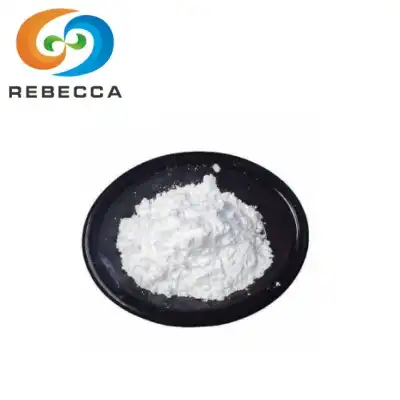
Appearance: White crystalline fine powder, slight characteristic odor
Available Certifications: ISO22000, cGMP, HACCP, HALAL, KOSHER, COA & SDS per batch
What Is Creatine Monohydrate and How Does It Work?
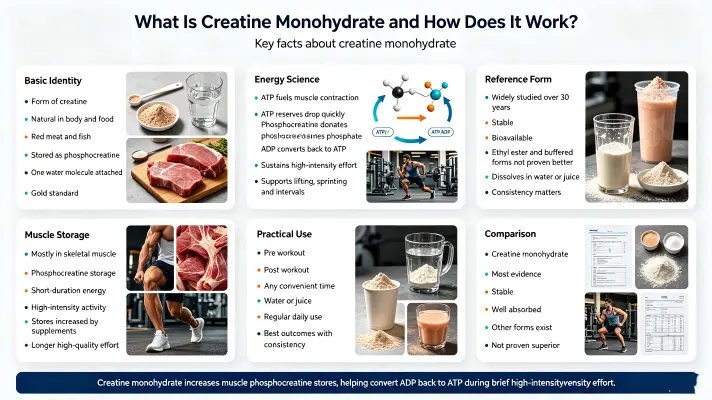
Creatine monohydrate is a kind of creatine, a nutritional supplement that is produced naturally in the body and found in foods such as red meat and fish. It is present mostly in skeletal muscle as phosphocreatine. This form of storage is particularly significant in the production of energy during short duration and high-intensity activities. Your muscular creatine stores are raised above normal levels by using creatine monohydrate powder supplements.
The Science Behind Energy Production
When you work out hard, your muscles get immediate energy from adenosine triphosphate (ATP). ATP is the fuel for muscle contractions But the atp reserves are spent seconds from maximum exertion. Enter creatine. Phosphocreatine is a quick way to convert adenosine diphosphate (ADP) back to ATP by donating a phosphate group. This approach helps you keep up high intensity activities for longer. The addition of creatine monohydrate powder can increase phosphocreatine stores up to 40%. This surge means you’re going to do better in weightlifting, sprinting and interval training.
Forms and Bioavailability
Creatine monohydrate is creatine with a water molecule attached to it. This type has been widely studied for over 30 years. In supplement form, it has great stability and bioavailability. The gold standard in creatine supplementation is still the monohydrate form. Other versions exist such as creatine ethyl ester or buffered creatine, however research has not proven these to be any better. Creatine monohydrate powder is easily dissolved in water or juice. It can be taken pre or post workout or any time of day. When you do it doesn't matter, but it does matter that you do it consistently for best outcomes.
Understanding the mechanism helps to account for the constant effects of creatine monohydrate. Let’s review the key uses, and evidence-based benefits.
Primary Benefits of Creatine Monohydrate Supplementation
Research has identified a number of benefits for creatine supplementation in various populations. Well documented impacts are mainly workout performance and muscular development. But the benefits go beyond the gym to cognitive function and healthy aging. Creatine monohydrate powder is a great tool to improve both physical and mental performance.
Enhancing Muscle Strength and Power
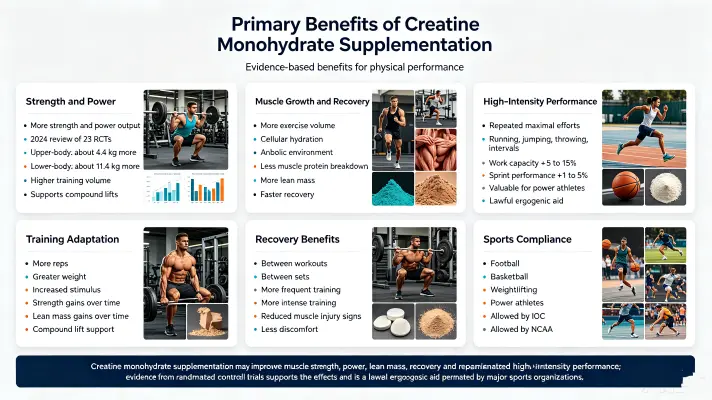
The best known benefit of creatine supplementation is an increase in muscle strength and power output. These effects have been confirmed in several meta-analyses in different populations. A 2024 review of 23 randomized controlled trials showed considerable strength increases. Upper body strength gained about 4.4 kg in those using creatine plus resistance exercise. Lower-body strength improved around 11.4 kg more than training alone. These benefits are due to creatine allowing for increased work volume in training. You can do more reps or greater weight. This increased training stimulus with time results in enhanced strength adaptations. Creatine monohydrate powder is particularly good for compound lifts such as squats, deadlifts and bench presses.
Supporting Muscle Growth and Recovery
Creatine supplementation may elicit muscular growth by various mechanisms . First, it allows for more exercise volume, which encourages muscular growth. Secondly, creatine raises water content in muscle cells. This cellular hydration provides an anabolic environment for protein synthesis. Third, creatine may inhibit muscle protein breakdown after hard training. Studies indicate that creatine users put on more lean mass than non-users during training periods. It also speeds recovery time from workout to workout and set to set. If you recover faster you can train more often and more intensely. Creatine monohydrate powder reduces signs of muscle injury during intense exercise. This result means less discomfort and a quicker return to training.
Improving High-Intensity Exercise Performance
Creatine is excellent for improving performance during tasks that involve repeated bursts of maximal effort. This encompasses running, jumping, throwing, and interval training. Studies indicate an increase in total ability to do tasks of 5 to 15%. Athletes can do extra sets for more reps. Most studies increase the sprint performance by 1 to 5%. These benefits might appear insignificant yet they provide significant competitive advantages. Power athletes, such as football players, basketball players and weightlifters, gain a lot. Creatine monohydrate powder is not banned by any major sports organization. It is regarded as a lawful ergogenic aid. The International Olympic Committee and the NCAA allow it. That’s the kind of accessibilty that has made it a favorite for competitive athletes looking for performance edges.
With these performance benefits out of the way, let’s now look at how to utilize creatine efficiently to gain the best outcomes.
How to Use Creatine Monohydrate for Best Results?
Optimized supplementation increases the advantages of creatine and minimizes the risk of negative effects. Research has supported a number of successful dosage techniques. The ideal approach relies on your goals, timeline and personal preferences. Creatine monohydrate powder is versatile in how you can add it to your routine.
Loading Phase vs. Maintenance Dosing
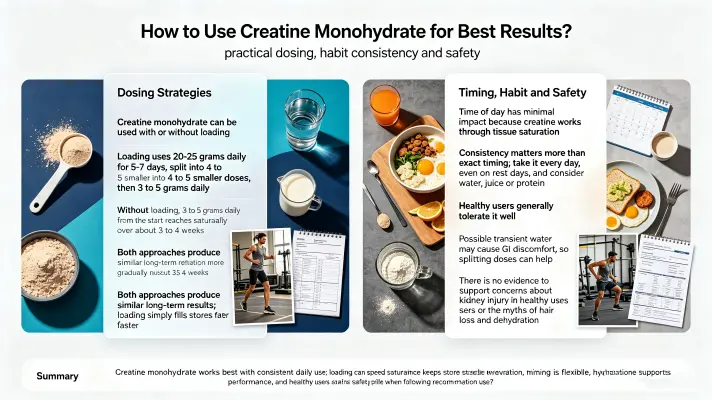
There are two main ways to dose creatine supplements. The loading phase method fills the muscular reserves quickly. This treatment consists of consuming 20-25 grams everyday for 5-7 days. The total dose is usually divided into 4 to 5 portions of 5 grams each. This approach boosts muscle creatine content by 20-40% in a single week. After loading, 3 to 5 grams per day maintenance dose keeps storage increased. Or you can just skip loading and just take 3 to 5 grams a day from the beginning. This method will take 3 to 4 weeks to reach saturation. Both strategies lead to identical long-term effects. Loading is just speeding up the clock. Creatine monohydrate powder may be put into water, juice or protein drinks. Taking it with glucose and protein may improve absorption by insulin mediated uptake.
Timing and Consistency
Time of day has minimal impact on effectiveness, according to studies. Creatine does not have rapid pharmacologic effects and acts by saturating tissue. So it’s the steady daily intake that’s more important than timing. Some studies suggest somewhat better results when dosed post workout. But the changes are tiny and scattered. The trick is taking creatine monohydrate powder every day, even on your rest days. Muscle creatine levels decrease when supplementation is stopped. Stores are upgraded and maintained daily. Many people take creatine with their breakfast or exercise drink. This is creating a sustainable habit. Staying hydrated when using supplements is vital. Creatine causes increased water retention in muscular tissue. Good hydration can help your muscles work better and will help to prevent cramps that may occur.
Safety and Side Effects
Creatine monohydrate is one of the safest supplements you can take. It has been tested in over 1000 human trials and proven safe. Mild and rare side effects are frequent. Some people may notice a transient 1-2 lb water weight gain. This is due to an increase in the water content of the muscles and not fat accumulation. Very high single dosages can cause gastrointestinal discomfort. This difficulty can be avoided by dividing doses throughout the day. There is no indication of concern for kidney injury in healthy people. Long term trials up to 5 years showed no harmful impact on renal function. But people with current kidney problems should discuss it with their health care specialists. Creatine monohydrate powder is safe for teens, adults, and older individuals when used as advised. There is no data to substantiate reports of hair loss or dehydration. These myths are still around even if there is no scientific evidence for them.
Conclusion
Creatine monohydrate is one of the most studied substances to improve exercise performance and muscle building. Benefits include greater strength, power, muscle mass and ability to handle high intensity workouts. Decades of studies in a variety of populations have validated these benefits . In addition to improving athletic performance, creatine may also benefit cognitive function, healthy aging, and metabolic health. Creatine monohydrate powder is legal, safe and accessible to most individuals. The optimum outcomes will be achieved by appropriate dosing via loading or maintenance strategies. The greatest advantages, with the fewest adverse effects, are achieved with consistent and adequate hydration. There are evidence-based advantages for athletes searching for performance gains or anybody on an evidence-based healthy aging path using Creatine monohydrate.
Want to feel the advantages of superior quality Creatine Monohydrate? Contact Rebecca Bio-Tech Factory now for more information on our excellent creatine monohydrate powder products and get your free sample. Start your voyage of discovery by visiting our website or contact us at information@sxrebecca.com!
FAQ
1. How to utilize creatine monohydrate in the best way?
Best for: Improving performance in high intensity exercise, increasing muscular strength and power, supporting muscle development. Creatine monohydrate. It is particularly beneficial for resistance training, sprinting and sports requiring repeated maximum effort.
2. How much creatine monohydrate should I take daily?
The normal maintenance dosage is 3 – 5 g per day. Loading phase: 20 to 25 grams per day for 5 to 7 days. Maintenance dose: 3 to 5 grams per day. This method will get you results faster. In the long run they both asymptote to the same level.
3. Is it safe to use creatine monohydrate long-term?
Is Creatine Monohydrate Safe for Long-Term Use? Studies to 5 years have showed no adverse effects in healthy persons. It is one of the best researched supplements with more than 1,000 human studies to support its safety profile.
4. Is it OK to consume creatine monohydrate on rest days?
Yes you should be taking creatine monohydrate on off days. Consistency is key to maintaining high creatine levels in the muscles. It gives ideal saturation and lasting results, not only on days you work out (including rest days).
5. Does creatine monohydrate cause weight gain?
In the beginning, creatine might result in a weight gain of 1-2 kg water, since it raises the water content in the muscles. That is not a fat fill-in. Long term weight change is driven by workout and eating. Creatine may help you grow muscle, which over time can increase your lean body mass.
6. Is creatine monohydrate banned in sport?
Is creatine monohydrate prohibited in sports? Nope. It is authorized by NCAA and other major sports body such as International Olympic Committee. It is listed as an acceptable dietary supplement and ergogenic aid.
References
1. Burke DG, Candow DG, Greenwood M, et al. International Society of Sports Nutrition position stand: safety and efficacy of creatine supplementation in exercise, sport, and medicine. J Int Soc Sports Nutr. 2024;21(1):2278987.
2. Sharifian A, et al. Effects of creatine supplementation on upper- and lower-body strength and muscular power: A systematic review and meta-analysis. Sports Med. 2025;55(3):789-804.
3. Kuźniców J, Karaban L. Additional Benefits of Creatine Monohydrate Supplementation on Muscle Strength, Mass Gain and Training Performance. Quality in Sport. 2025;11(2):45-58.
4. Healthline. Creatine Loading Phase: Research, Benefits, Safety, and How To. 2018.
5. Australian Institute of Sport. Creatine | ASC. 2024.
6. Pure City Research. Creatine Monohydrate: Evidence, Doses, Real Risks. 2026.