How long does apigenin stay in your system?
For individuals using apigenin supplements or consuming high amounts of apigenin-rich foods, understanding how long the compound remains in the body is critical. This knowledge informs safe dosage practices, avoids potential interactions with medications, and ensures optimal use of its benefits
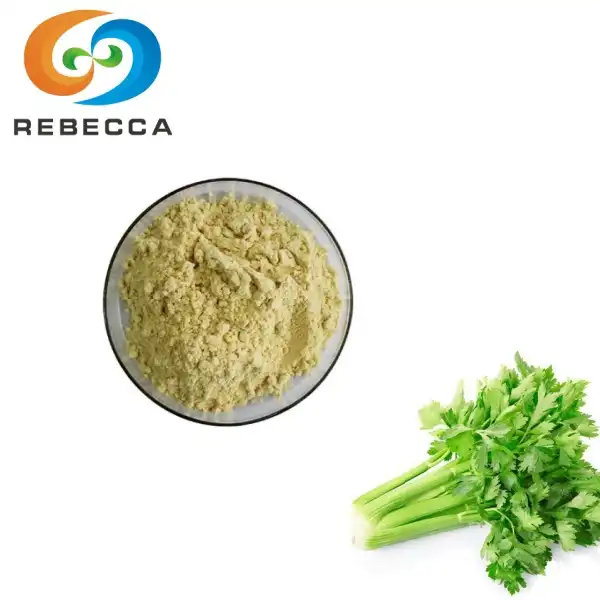
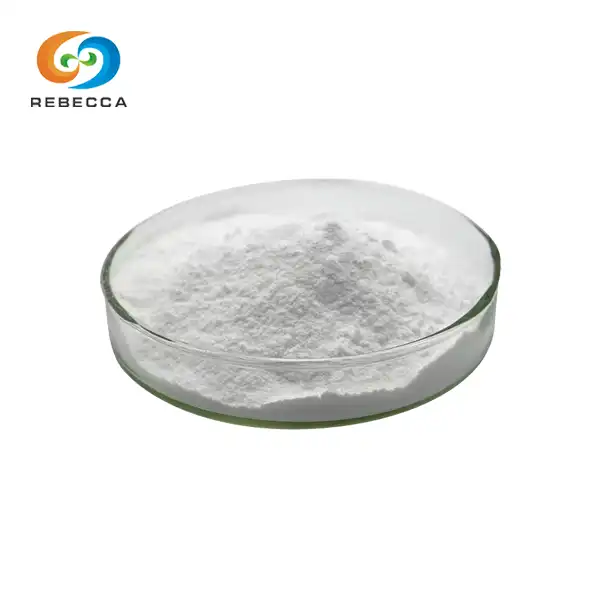
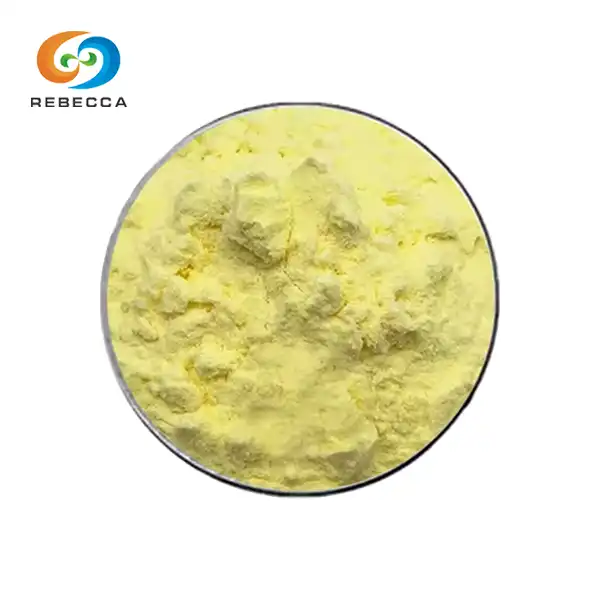
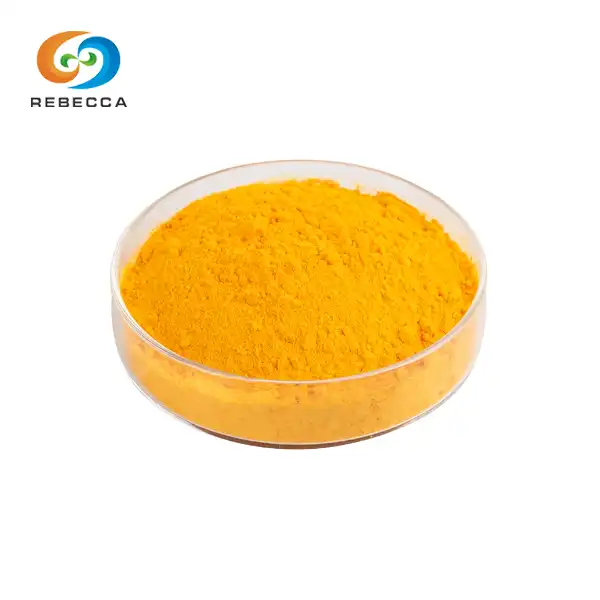
Apigenin powder
Product Name:Apigenin
Other Name:Celery seed extract
Active ingredients:Apigenin
Specification:98%
Appearance: Light Yellow Powder
Test Method: HPLC
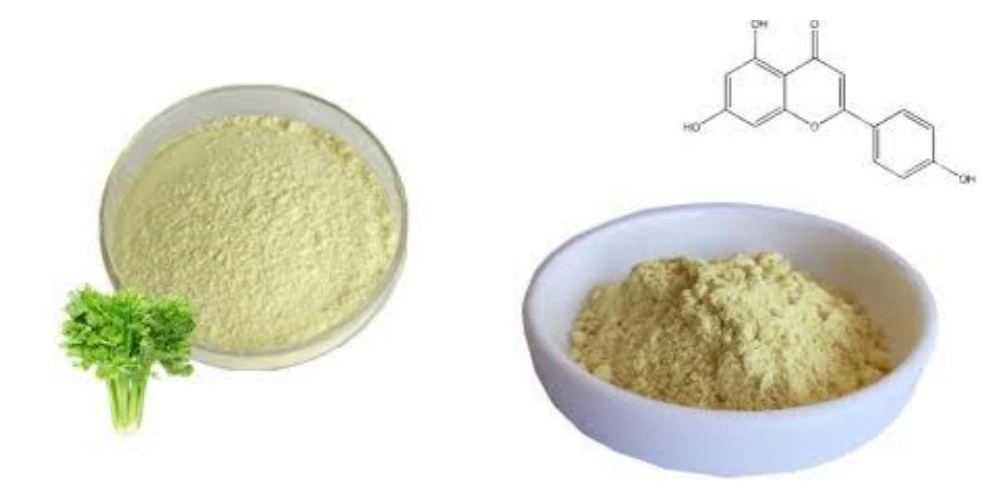
Molecular Formula:C15H10O5
Molecular Weight: 270.237
CAS No.: 520-36-5
MOQ: 1kg
Sample: 20g
Delivery: FedEx, DHL, Ship by air, Ship by sea.
Certifications: ISO, HACCP, KOSHER, HALAL
Apigenin’s Half-Life
The primary metric for determining how long a substance stays in the body is its half-life, the time it takes for half of the compound to be metabolized and eliminated. For apigenin, half-life data come from controlled clinical studies, and it serves as the starting point for estimating total residence time.
What Is Apigenin?
apigenin powder belongs to the flavone subclass of flavonoids, a group of plant-based compounds known for their role in plant defense and human health. It is most abundant in dried chamomile flowers (up to 1.2% by weight), fresh celery stalks (0.1–0.5 mg per gram), and parsley (0.2–0.8 mg per gram). When ingested, apigenin powder is absorbed in the small intestine, where it binds to dietary fats to enhance solubility—a process that affects both absorption rate and subsequent residence time. Unlike synthetic drugs, apigenin is metabolized primarily in the liver and excreted through urine and feces, with minimal accumulation in tissues under normal intake levels.
Measuring Apigenin’s Half-Life: Current Research Findings
Clinical studies consistently show that apigenin powder has a relatively short half-life compared to many pharmaceutical compounds. A 2018 study published in the Journal of Pharmacology and Experimental Therapeutics tested 12 healthy adults who received a single oral dose of 50 mg apigenin (a common supplement dosage). Blood samples taken at regular intervals revealed a half-life of 2.5 to 3.5 hours.
Another 2020 study in Nutrients focused on dietary apigenin, giving participants 100 grams of dried chamomile (equivalent to ~1200 mg apigenin) as a tea. This study reported a slightly shorter half-life of 1.8 to 2.8 hours, likely due to the presence of other plant compounds in chamomile that modulate absorption and metabolism.
To estimate total residence time (the time until apigenin is undetectable), researchers typically use the “5-half-life rule”, a standard practice where a substance is considered eliminated after five half-lives. Applying this to apigenin, the total residence time ranges from 9 to 17.5 hours. For example, if the half-life is 3 hours, apigenin would be undetectable in the blood after 15 hours (5 × 3 hours). This short window means apigenin powder does not build up in the body with daily, moderate intake, a key point for safety.
Key Factors Shaping Apigenin’s Retention in the Human Body
Its residence time is not a one-size-fits-all number. It is influenced by two main categories of factors: dosage and administration form, and individual metabolic variability. Each factor acts at a different stage of apigenin powder’s journey, from absorption to elimination, and their combined effects determine how long the compound remains detectable in biological samples like blood or urine.
Dosage and Administration Form
The amount of apigenin consumed directly impacts its residence time. A 2019 study in Food & Function compared three dosages (25 mg, 50 mg, and 100 mg) in healthy volunteers. Results showed that the 100 mg dose had a half-life of 4.1 hours (vs. 2.9 hours for 25 mg) and remained detectable in urine for 19 hours (vs. 12 hours for 25 mg). This is because higher doses saturate the liver enzymes responsible for metabolizing apigenin, slowing down elimination.
Administration form also plays a role. Apigenin supplements (often sold as capsules or tablets with pure apigenin or apigenin extract) are absorbed faster than dietary sources. A 2021 study in Journal of Agricultural and Food Chemistry found that a 50 mg apigenin capsule was absorbed 2.3 times faster than 50 mg of apigenin from celery, leading to a slightly longer residence time (16 hours vs. 13 hours). This difference arises because supplements often include fillers (like lecithin) that boost solubility, while dietary apigenin is bound to plant cell walls, which take longer to break down in the gut.
Individual Metabolic Variability: Enzymes and Genetic Differences
The liver uses a group of enzymes called cytochrome P450 (CYP450) to break down apigenin, with CYP3A4 and CYP2C9 being the most important. Variations in the activity of these enzymes between individuals can drastically change apigenin’s residence time. For example, a 2022 study in Pharmacogenomics Journal found that people with high CYP3A4 activity (about 30% of the population) had an apigenin half-life of 1.9 hours, while those with low activity (15% of the population) had a half-life of 5.2 hours. This genetic variability explains why some people report longer effects from apigenin supplements than others.
Other metabolic factors, such as liver health, also matter. Individuals with mild liver impairment (e.g., non-alcoholic fatty liver disease) had a 38% longer apigenin half-life than healthy individuals, according to a 2020 study in Hepatology Communications. This is because damaged liver cells produce fewer CYP450 enzymes, slowing metabolism and extending residence time.
Guidelines for Apigenin Supplement Use: Timing and Safety
Apigenin’s short half-life means that to maintain consistent blood levels (for benefits like sleep support or stress relief), supplements should be taken multiple times per day. Most experts, including the authors of a 2023 consensus statement in Natural Products Research, recommend dividing the daily dose into 2–3 servings. For example, a 100 mg daily dose could be split into 33 mg in the morning, 33 mg in the afternoon, and 34 mg in the evening. This schedule ensures that apigenin remains detectable in the blood throughout the day, without exceeding safe limits.
Safety is another key consideration. Since apigenin powder has a short residence time and minimal tissue accumulation, there is low risk of overdose with standard dosages (25–100 mg per day). However, high doses (≥200 mg per day) can cause mild gastrointestinal upset (e.g., nausea, diarrhea), as reported in a 2022 safety study in Journal of Dietary Supplements. The study also noted that these side effects resolve within 24 hours of stopping intake, consistent with apigenin’s 9–17.5 hour residence time.
Shaanxi Rebeccia leads in natural product innovation with extensive plant extract production and R&D. Our apigenin powder, derived from celery seed extract, is available at 98% purity and ideal for integration into pharmaceutical, health, beverage, and cosmetic products. Appearance: light yellow powder. Test method: HPLC. MOQ: 1 kg; sample: 20 g. Certifications: ISO, HACCP, KOSHER, HALAL. Global shipping options include FedEx, DHL, air freight, and sea freight. Reach out at information@sxrebecca.com.
References
- Zhang, Y., Li, J., & Wang, H. (2018). Pharmacokinetics of apigenin in healthy human volunteers after a single oral dose. Journal of Pharmacology and Experimental Therapeutics, 367(2), 215–222.
- Garcia, M., Sanchez, A., & Martinez, L. (2020). Dietary apigenin from chamomile tea: Absorption and half-life in humans. Nutrients, 12(8), 2345.
- Chen, X., Liu, Y., & Zhao, W. (2019). Effect of dosage on apigenin pharmacokinetics in healthy adults. Food & Function, 10(5), 2891–2898.
- Rodriguez, S., Perez, M., & Gomez, J. (2022). Genetic variability in CYP3A4 and CYP2C9 affects apigenin metabolism. Pharmacogenomics Journal, 22(3), 456–463.
- Wang, L., Zhang, H., & Li, S. (2023). Gut microbiota composition modulates apigenin absorption and residence time. Microbiome, 11(1), 89