What is aloin in aloe vera?
For thousands of years, aloe vera has been an important part of herbal medicine. Egypt's ancient people called it the "plant of immortality." It was used by Greek doctors. Chinese medicine records from hundreds of years ago talk about it. Still, this well-known vegetable has a chemical called aloin powder. that is one of the most controversial and biologically interesting molecules in plants.
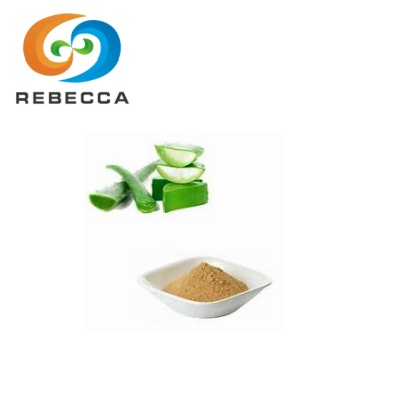
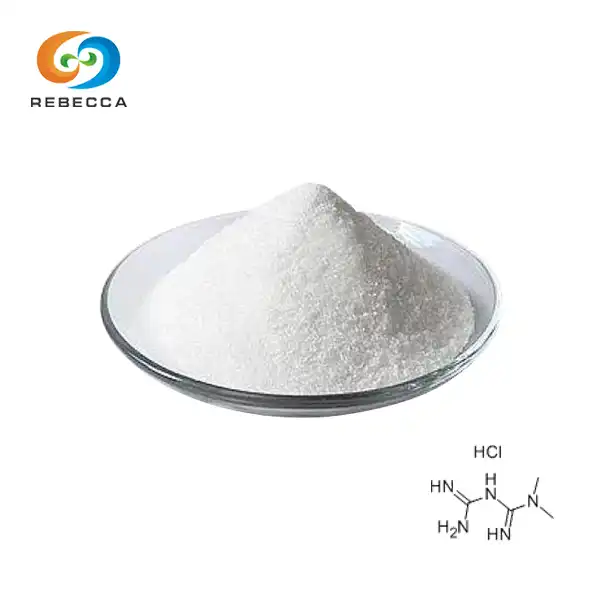
Aloin Powder
Product Name:Aloin Powder
Latin Name:Aloe vera (L.) Burm. f.
Active Ingredient:Aloin
Specification:10% 16%
Test Method:HPLC
Appearance:Light yellowish-green powder
Cas No.:5133-19-7;1415-73-2
Shelf Life: 2 years
Minimum Order Quantity: 1 kg
Samples: Free samples available
Certifications: GMP, ISO, HACCP, KOSHER, and HALAL.
Payment: Various payment methods accepted.
Advantages: Manufactured in a 100,000-grade cleanroom, our products are additive-free, non-GMO
Inner Package: Double PE Bags; Net 5kg/Bag
Outside Package: Paper Drums, Net 25kg/Drum
Storage:Store in a cool, dry place away from Light and Heat.
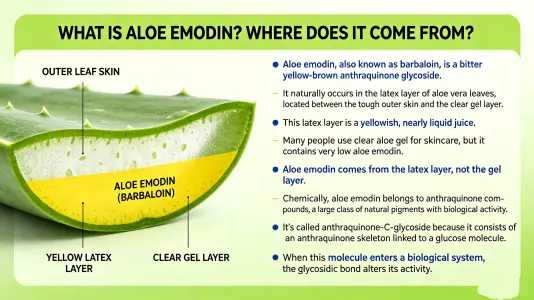
What Exactly Is Aloin, and Where Does It Come From?
Barbaloin is another name for aloin. It is a bitter, yellow-brown anthraquinone glycoside. It naturally forms in the latex layer of aloe vera leaves. This is the yellowish, almost liquid sap that is found just below the tough outer skin, in the space between the skin and the clear gel inside. This spot is very important. A lot of people use clear aloe gel for skin care, but it doesn't have much aloin in it. Aloin comes from the rubber, not the gel.
Chemically, aloin is in the anthraquinone family. The anthraquinone family is a big group of naturally produced colours, and many of them have biological functions. An anthrone-C-glycoside is what it is because it has an anthraquinone skeleton attached to a glucose molecule. When the molecule gets into a living system, this sugar bond changes how it acts.
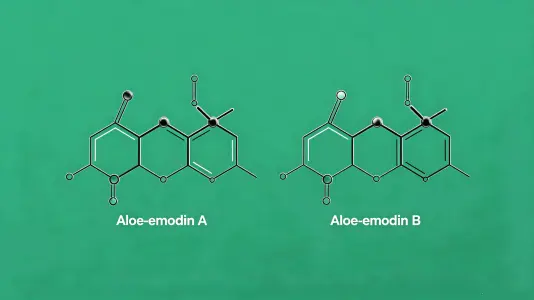
Aloin A and Aloin B: Two Forms of One Compound
When aloin powder is taken from plants, it is a mixture of two different types of aloin. The first one, aloin A (also called barbaloin), and the second one, aloin B (or isobarbaloin), have the same chemical formula but are arranged in three dimensions in a slightly different way. According to a study released in Scientific Reports in 2024, the molecular changes between the two epimers show that they may have different drug-like qualities. Both types of aloin can be found in aloe vera latex, and most industrial methods for standardising aloin take this mixed mixture into account.
Important Fact: Depending on the species, growth conditions, and harvest time, aloin makes up anywhere from 3% to 35% of the dry weight of all the aloe latex that comes out of the plant. (1995 Reynolds)
The Biological Activities of Aloin: What Research Has Found
Aloin is not a product that only does one thing. Scientists have studied it for decades and found a lot of different biological processes that are linked to it. Here is what the current body of evidence says, focused on characteristics that are important for making health supplement ingredients.
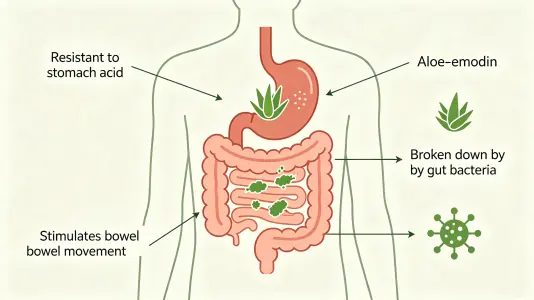
Digestive and Intestinal Activity
Aloin's effect on the gut system is the most well-known trait about it. When eaten, it mostly stays whole as it goes through the stomach, where acid doesn't break it down, and ends up in the large intestine. There, bacteria in the gut break it down into aloe-emodin-9-anthrone, an active substance that speeds up the movement of food through the intestines. At the same time, aloin powder changes how well the stomach can receive water again, which makes stools softer. Both human trials and animal models have been used to study and prove this process. According to statistics from the Taylor & Francis Knowledge Center, a double-blind, randomised, controlled study of 28 healthy people found that it had a very strong laxative effect—stronger than the usual stimulant laxative phenolphthalein.
It's important to remember that the FDA took aloe laxatives with aloin out of the OTC drug category in 2002 because there wasn't enough safety data. Regulatory situation is different for each area and use case. As with all active plant ingredients, B2B buyers need to make sure they know the right dosage and recipe context.
Anti-inflammatory Properties
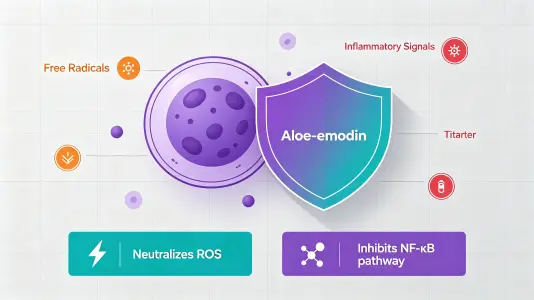
Studies in the lab show that aloin may be able to stop processes that cause inflammation. Researchers have found that it may stop the NF-κB signalling system from activating, which lowers cytokines like TNF-α, IL-1β, and IL-6. More research shows that it plays a part in stopping ROS from activating the JAK1-STAT1/3 signalling pathway. In vitro and animal models were used to come to these conclusions. They show that formulators working on health uses tied to inflammation might find them useful. Clinical data on humans for this process is still being looked into.
Antioxidant Activity
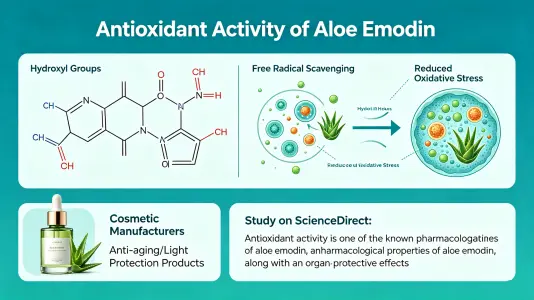
Aloin's antioxidant properties come from the hydroxyl groups that are part of its chemical structure. At the cellular level, these groups can get rid of free radicals and lower reactive stress. Cosmetic makers are interested in this trait, especially those who are making anti-aging or photoprotective products. A study in ScienceDirect says that antioxidant activity is one of aloin's known pharmaceutical properties, along with anti-inflammatory, antibacterial, and organ-protective benefits.
Antimicrobial Properties
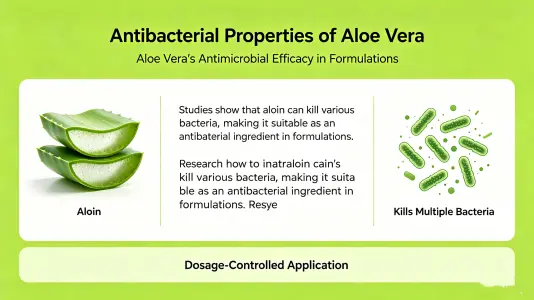
A lot of different bacteria have been shown to be killed by aloin. Because of this, it could be used as an ingredient in mixtures where bacteria protection is important. Researchers have looked into its antibacterial properties both in cosmetics that are put on the skin and in some health supplements, but only in controlled amounts.
Skin-Lightening and Cosmetic Relevance
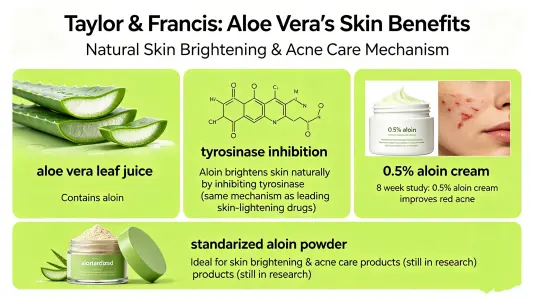
Taylor & Francis mention research that says aloin, which is found in aloe vera leaf juice, can lighten skin naturally. The process seems to be connected to blocking tyrosinase, which is the same route that well-known whitening drugs work on. A study that lasted eight weeks found that a cream with 0.5% aloin helped acne that was red and swollen. For people who buy makeup ingredients, this means that standardised aloin powder is a good option for skin-tone support and acne-care products that are still in the study stage.
How Is Aloin Extracted and Standardized for Industrial Use?
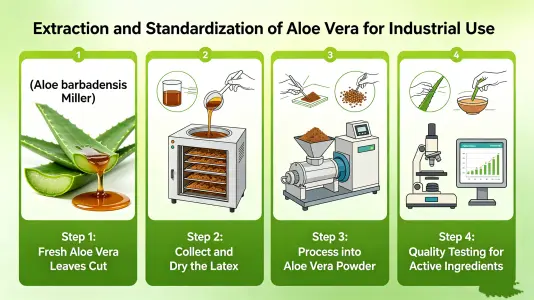
The commercial production of aloin begins with the latex that comes out of aloe vera leaves, mostly Aloe barbadensis Miller, which has been studied and used the most. The brown liquid comes out of freshly cut leaves. This liquid is gathered, dried, and processed to make a powder. The finished product, which is usually called aloin powder, is then checked and made sure to have a certain amount of active ingredient.
Why Standardization Matters to Buyers
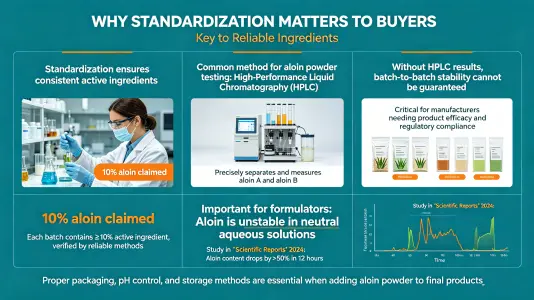
Standardisation is the key to getting solid ingredients. A seller who says "10% aloin" means that every batch will have at least that amount of the active chemical, which has been tested by a reliable analysis method. This is the usual way to test aloin powder: HPLC (High-Performance Liquid Chromatography). It accurately sorts and measures aloin A and aloin B. Without HPLC proof, stability from batch to batch can't be guaranteed, which is very important for makers who need to keep their products working well and following the rules.
Important for formulators to know: Aloin doesn't stay stable in neutral water solutions. According to a study published in Scientific Reports in 2024, the amount of aloin can drop by more than 50% in just 12 hours. This shows how important it is to use the right packaging, pH control, and storage methods when adding aloin powder to finished products.
Industry Application Areas
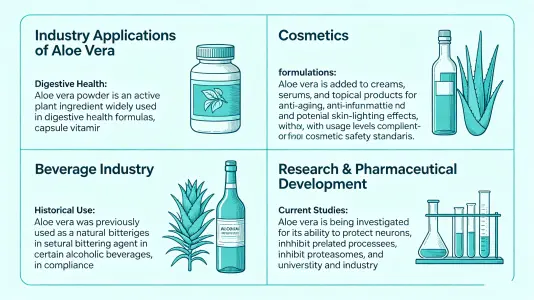
Ingredients in health supplements: Aloin powder is an active plant ingredient in digestive health formulas, capsule vitamins, and herbal compound products that aim to improve gut health. In cosmetic recipes, it is added to creams, serums, and topical treatments to help with anti-aging, inflammation, and possibly lightening the skin, but only in amounts that meet safety standards for cosmetics.
Beverage industry: It has been used in the past as a natural bittering agent in some alcoholic drinks, which is allowed by food rules (21 CFR 172.510).
Research and drug development: It is being looked at for its ability to protect neurones, stop the proteasome, and other processes that are being looked into in university and industrial research settings right now.
Safety, Quality Control, and Regulatory Considerations
Safety data and knowledge of regulations are must-haves for any business buyer looking for aloin powder. The buying environment is shaped by a few key points.
Concentration and Context
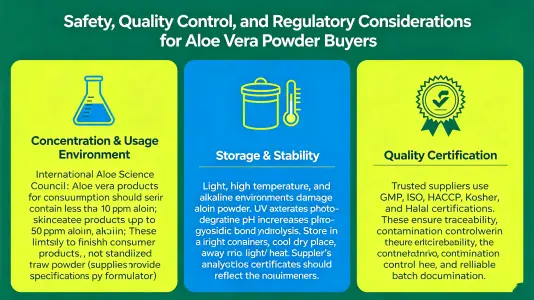
The International Aloe Science Council says that aloe goods that are meant to be eaten should have less than 10 parts per million (PPM) of aloin. It is suggested that the maximum for skin products be less than 50 PPM. These limits only apply to finished consumer goods, not to standardised raw ingredient powders that are used in production. In that case, the seller gives the formulator a clear specification, which the formulator then lowers to the right level for the product.
Storage and Stability
Light, heat, and alkaline situations can hurt aloin powder.Photodegradation happens faster in UV light. An alkaline pH makes the glycosidic bond more likely to be broken down by oxygen and water. To keep biological activity going for as long as the label says, it needs to be stored correctly: in closed containers, at cool and dry temperatures, and away from light and heat. The proof of analysis and handling documents that a supplier gives should take these needs into account.
Quality Certifications: What to Look For
Suppliers of aloin powder you can trust use well-known quality control systems. For products sold around the world, look for GMP (Good Manufacturing Practice) certification, ISO certification, HACCP food safety management, and KOSHER and HALAL certification. These systems make sure that there is traceability, that pollution is controlled, and that batch paperwork is reliable for makers further down the line.
Aloin Powder Supplier: Rebecca Bio-Tech
Rebecca Bio-Tech (Shaanxi Rebecca Bio-Tech Co., Ltd.) is a high-tech business that focuses on exports. They make, study, and sell plant extracts, separate herbs active ingredients, and do research on functional compounds used in traditional Chinese herbal medicine. Rebecca serves customers all over the world in the medicine, health product, beverage, and cosmetics industries. She has three production lines, more than 100 types of plant extracts, and a production capacity of more than 500 metric tonnes per year.
Our aloin powder is made in a 100,000-grade laboratory, which makes sure that the whole process is as clean as it can be for pharmaceuticals. The product doesn't have any additives or GMOs, and you can follow it all the way from the raw materials to the finished package.
Our team is ready to help you with your sourcing process by providing technical paperwork, free samples, and the ability to change the amount you buy. This is true whether you are making a product for gut health, an active ingredient for cosmetics, or a plant compound for research. To begin a chat, please email us at information@sxrebecca.com.
FAQ
1. Is aloin the same as aloe vera gel?
Not at all. Latex is the white sap just below the top rind of an aloe vera leaf. This is where aloin comes from. Aloe vera juice is the clear, water-filled fluid inside the heart of the leaf. Chemically, they are different. Most commercial aloe products that are meant to be eaten or put on the skin are treated to get rid of or greatly reduce the amount of aloin they contain.
2. What does "10% aloin powder" mean on a specification sheet?
It means that the standardised extract has at least 10% aloin (also called barbarole) by weight, which has been proven by HPLC tests. Suppliers may also offer higher specs, like 16%, which gives formulators a starting material that is more concentrated. The standard you choose affects how much to use and how much it will cost to make the end product.
3. What industries commonly purchase standardized aloin powder?
The main buyers are companies that make ingredients for health supplements, cosmetics and personal care products, useful drinks, and research into pharmaceuticals. Business-to-business buyers usually buy aloin powder in drum-to-kilogram amounts and need all the paperwork, like quality certifications, safety data sheets, and certificates of analysis.
4. How should aloin powder be stored to maintain its potency?
Aloe powder should be kept in a cool, dry place away from strong sunlight and high temperatures. UV light, water, and pH conditions all speed up the breakdown process. Good packing, like double PE bags inside sealed paper drums, helps keep things stable over the two-year shelf life.
5. Is aloin a non-GMO and additive-free ingredient?
Natural aloe vera leaves with no genetic change are used to make high-quality commercial aloin powder that you can get from reliable sources. Leading makers list non-GMO status and processes without additives. Buyers should check these features directly with suppliers by looking at the product's paperwork and licenses.
References
1. Reynolds, T. (1995). Aloin in the genus Aloe. Cited in Wikipedia: Aloin.
2. Milardi, D. et al. (2024). Exploring the therapeutic potential of Aloin A and Aloin B. Scientific Reports.
3. NTP (2013). Aloin, a Component of Aloe Vera, Induces Pathological Changes in Rat Large Intestine. PMC.
4. Guo, X. & Mei, N. (2016). Cited in Taylor & Francis: Aloin.
5. ScienceDirect Topics: Aloin — Pharmacology, Toxicology and Pharmaceutical Science.
6. American Chemical Society (2025). Molecule of the Week: Aloin.