Is siberian ginseng root extract a Vitamins?
Siberian ginseng root extract from Eleutherococcus senticosus, is not a vitamin. It is considered an adaptogenic plant extract. Vitamins are important micro nutrients . They must be acquired from nutrition, since the human body is incapable of synthesising them in enough levels. Siberian ginseng, on the other hand, is not a micronutrient. It is not directly involved in typical metabolic pathways like enzymatic cofactor reactions.
This extract includes eleutherosides instead. They are bio-active chemicals which interact with physiological stress systems. The most studied system is the hypothalamic–pituitary–adrenal (HPA) axis. This biological variation in function is the basis for the distinction between adaptogens and vitamins in scientific and regulatory settings.
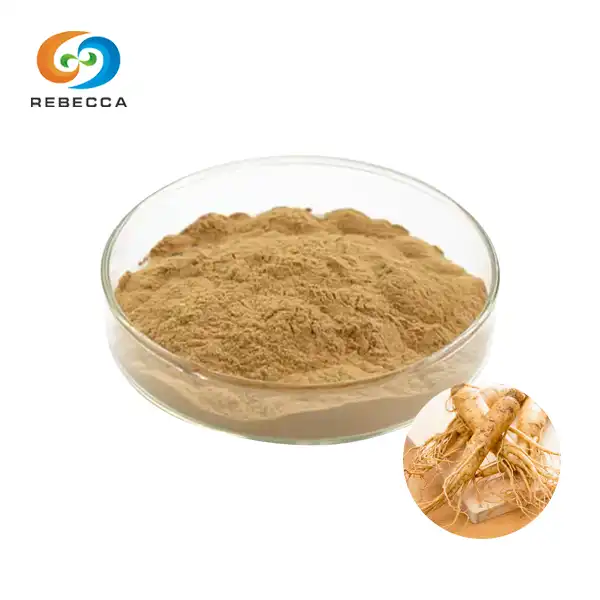
【English name】: Siberian ginseng extract
【Latin name】: Acanthopanax senticosus (Rupr. Maxim.) Harms)
【Active ingredients】: Eleutherosides
【Use Part】: Root and Stem
【Specification】: Eleutherosides Min 0.8%, HPLC
Eleutherosides Min 1.3%, HPLC
Eleutherosides Min 1.5%, HPLC
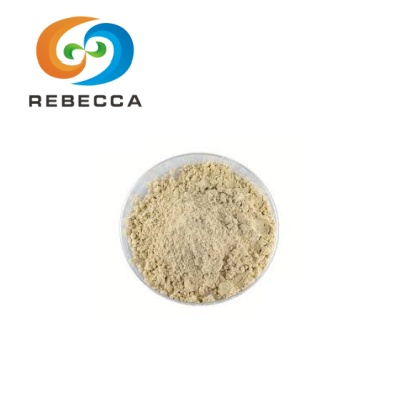
【Appearance】: Brown yellow powder
【Mesh size】: 80 Mesh
【Test Method】: HPLC
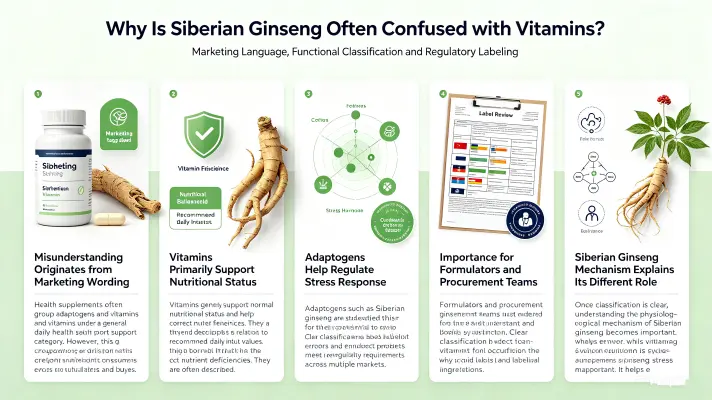
Why It Is Often Confused With Vitamins?
The misunderstanding is in the marketing speak. It’s common for supplement goods to include adaptogens and vitamins under the “daily wellness support” category. But this categorisation is functional rather than biological. Vitamins make up for deficits. Adaptogens help regulate stress response.
This is a crucial difference for formulators and procurement teams to understand. It avoids wrong labelling. It also guarantees adherence to regulatory requirements across a number of markets.
Once the categorisation is obvious, it is needed to comprehend how the Siberian ginseng operates physiologically. This helps to understand its dissimilar behaviour from vitamins and its role in the supplement compositions.
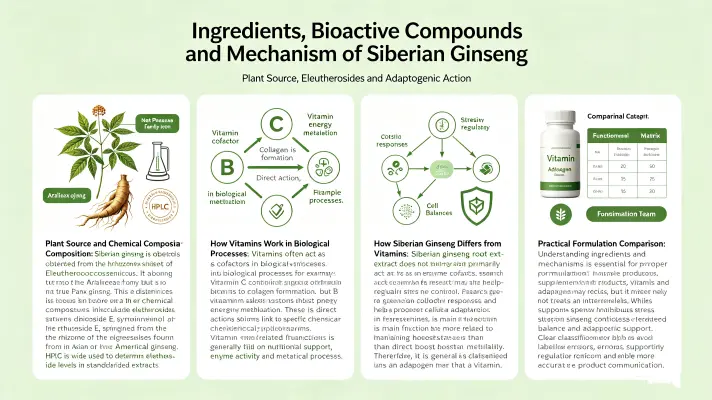
Composition, Bioactive Compounds, and Mechanism of Action
Botanical Origin and Chemical Profile
Siberian ginseng is collected from the roots and stems of the plant Eleutherococcus senticosus. It is a member of the Araliaceae family, however it is not a real ginseng from the Panax genus. This is crucial since the chemical makeup is quite different.
Main active chemicals include eleutherosides such as Eleutheroside B (Syringin) and Eleutheroside E (Syringaresinol diglucoside). These chemicals are different from the ginsenosides found in Asian or American ginseng. HPLC testing is widely used to regulate the content of eleutherosides in standardised extracts.
How Adaptogens Work Differently From Vitamins?
Vitamins serve as co-factors in biological processes. For instance, vitamin C helps in collagen formation. B vitamins help in energy metabolism. These are direct functions, particular to pathways.
Siberian ginseng root extract is a different story. It does not function as an enzyme cofactor directly. But it modulates the control of stress response. Research shows Siberian ginseng extract may assist regulate cortisol response and promote cells adapting to stress.
This is an indirect mechanism. Its major function is to maintain homeostasis rather than to fuel metabolism. This is the reason why it is mostly categorised as an adaptogen and not a vitamin.
Function , of course , is knowing what it is made of and how it works . The following section details how it compares with vitamins, and other botanical adaptogens, in practical formulations.
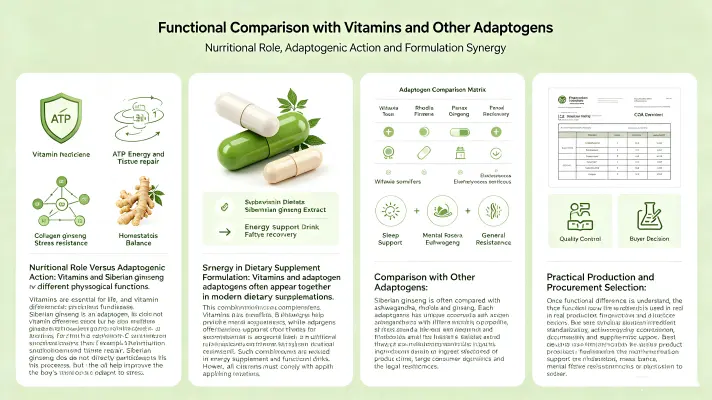
Functional Comparison With Vitamins and Other Adaptogens
Differences Between Nutritional and Adaptogenic Roles
Vitamins and Siberian ginseng are diverse in their physiological functions. Vitamins are necessary to life. Deficiencies may result in well-documented illnesses. Siberian ginseng is an adaptogen. It does not prevent deficiency disorders. Instead they help build resistance under adverse settings.
For instance, B-complex vitamins are engaged in the biochemical processes that transform food into ATP. Vitamin C is involved in antioxidant defence and tissue healing. Siberian ginseng has no direct role in these effects. And it also helps larger stress adaption mechanisms.
Synergistic Use in Supplement Formulations
Vitamins and adaptogens are typically found together in current supplement composition. This combo has a complimentary function. Vitamins provide nutritional adequacy. Adaptogens provide functional assistance for stress and weariness.
For example, a multivitamin may include Siberian ginseng extract for perceived vitality support. This is not a substitute for the nutritional function of vitamins. Instead it offers an extra layer of functionality.
This combination is employed extensively in energy supplements and functional drinks. Claims nevertheless must be compliant. Vitamins help metabolic health claims Adaptogens fall under structure-function claims such as overall vitality or stress assistance.
Comparison With Other Adaptogens
Siberian ginseng is commonly likened to ashwagandha, rhodiola, and Panax ginseng. Every adaptogen has a distinct predominant bioactive ingredients and varied functional location.
Ashwagandha is often linked to relaxation and sleep assistance. Rhodiola is commonly associated with resistance to mental weariness. Siberian ginseng is often targeted for muscular endurance and overall resilience.
These variations affect judgements about procurement. The choice of ingredients is guided by the claims of the intended product, the demographics of the consumers and the legal limits.
Once you grasp the functional differences, the next step is to understand how this element is used in real-world production and sourcing choices.
Applications, Procurement Considerations, and Regulatory Positioning
Use in Dietary Supplements and Functional Products
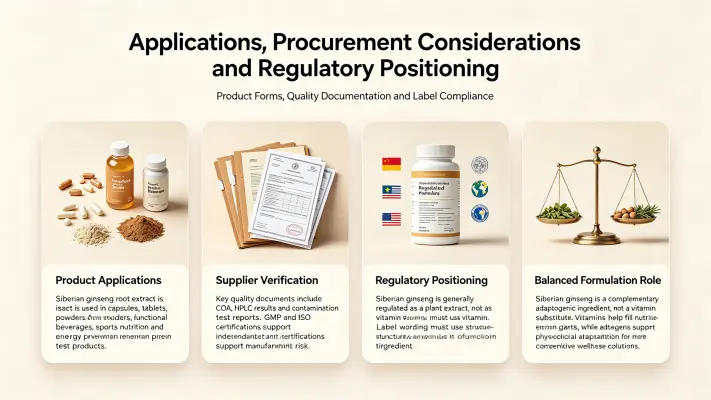
Siberian ginseng root extract is often found in capsule, tablet, powder and functional beverage form. It is also included in sports nutrition and energy products. Its adaptogenic character makes it a good fit for formulas aimed at resisting fatigue and supporting stress.
Manufacturing requires standardisation. Standardised extracts are available for their eleutheroside concentration. Consistency leads to predictable formulation performance and product stability batch to batch.
Quality Control and Supplier Verification
Quality paperwork for the procurement teams to analyse with attention. Key needs are Certificates of Analysis, HPLC profiles and contamination tests reports The dependability of manufacturing is confirmed by GMP and ISO certificates as well.
Supplier assertions are typically confirmed by independent third-party testing. This technique mitigates risk in global supply networks. It also helps meet regional regulatory demands.
Regulatory and Labeling Considerations
Regulatory bodies do not regulate Siberian ginseng as a vitamin. Instead it is seen as a plant extract. The difference impacts the wording used on the label and allowable health claims.
Vitamins may bolster allegations of nutritional insufficiency. Siberian ginseng must be defined in structure-function terms such as ‘supports vitality’ or ‘helps the body adapt to stress’. Claims must comply with local legislation in markets such as the US, EU and Asia-Pacific regions.
Siberian ginseng root extract is a unique functional category in today’s nutraceuticals. It is not a substitute for vitamins. It’s a supplementary adaptogenic element that enhances stress response and resilience.
Properly understood this permits formulators to make better balanced goods. Vitamins fill the nutritional void. Adaptogens facilitate physiological adaptability. Together they develop a more holistic wellness plan for the end customers.
FAQ
Can Siberian ginseng root extract replace vitamins in dietary supplements?
No it can't replace vitamins. It has a fundamentally distinct physiological purpose. Vitamins address nutritional deficits and facilitate certain metabolic pathways, and this adaptogenic extract improves stress resistance and homeostatic control. Good formulations often include both so that the vitamins may assist with nutritional adequacy and the extract can give further support for the stress response. These sorts of ingredients have unique categories with regulatory bodies and need independent explanation for their presence in final goods .
What extract format is optimal for OEM product development?
The best format depends on your distribution method and desired bioactivity. Formulation of capsules, tablets or powdered drinks may be made using standardised (0.8%-1.5% eleutherosides) powdered extracts of HPLC. Water-soluble requirements allow for liquid applications such as ready-to-drink goods and effervescent formulations. Glycerin liquid extracts could be simpler to incorporate into emulsion systems and useful for cosmetic applications. Collaborating with suppliers to provide technical requirements guarantees material specifications fit with production processes and stability needs.
How can I verify supplier authenticity and quality?
Request full paperwork including CoAs with HPLC chromatograms, third party testing reports for contaminants, current GMP certificates and traceability data back to raw material suppliers. Supplier claims are validated by independent laboratory testing of samples before bulk purchase. Production capabilities and quality systems are confirmed by internal or competent third party site audits. Transparent suppliers, who are engaged in long-term partnerships, lower supply chain risk and guarantee the quality of materials is constant throughout several orders.
Partner with Rebecca for Premium Siberian Ginseng Root Extract Supply
Rebecca specialises in offering pharmaceutical quality siberian ginseng root extract standardised to exact eleutheroside criteria (0.8 %, 1.3 %, 1.5 %) with modern HPLC verification. From our base in Shaanxi, China, we run three specialised manufacturing lines and produce over 500 metric tonnes per year to service the scalable needs of emerging brands and existing businesses. We are fully certified with GMP, ISO 22000 and HACCP and provide complete documentation assistance for worldwide regulatory submissions. If you want bulk ingredients for supplement manufacture, functional beverage development or cosmetic formulation, our technical staff can provide application assistance and customisation choices to meet your product requirements. We are a recognised provider of siberian ginseng root extract to pharmaceutical R&D organisations, health supplement brands and ingredient distributors in North America, Europe and Asia-Pacific markets. Contact our team at information@sxrebecca.com to get specification sheets, prices for your volume needs and free samples for assessment. We provide consistent quality, timely service, and technical experience to help drive your product innovation and commercial success.
References
1. Panossian, A., & Wikman, G. (2010). Effects of Adaptogens on the Central Nervous System and the Molecular Mechanisms Associated with Their Stress-Protective Activity. Pharmaceuticals, 3(1), 188-224.
2. Cicero, A. F., Derosa, G., & Brillante, R. (2004). Effects of Siberian Ginseng (Eleutherococcus senticosus Maxim.) on Elderly Quality of Life: A Randomized Clinical Trial. Archives of Gerontology and Geriatrics, Supplement 9, 69-73.
3. Kuo, J., Chen, K. W., & Cheng, I. S. (2010). The Effect of Eight Weeks of Supplementation with Eleutherococcus senticosus on Endurance Capacity and Metabolism in Human. Chinese Journal of Physiology, 53(2), 105-111.
4. World Health Organization. (2002). WHO Monographs on Selected Medicinal Plants, Volume 2. Radix Eleutherococci.
5. Davydov, M., & Krikorian, A. D. (2000). Eleutherococcus senticosus (Rupr. & Maxim.) Maxim. (Araliaceae) as an Adaptogen: A Closer Look. Journal of Ethnopharmacology, 72(3), 345-393.
6. European Food Safety Authority. (2013). Scientific Opinion on the Safety of 'Eleutherococcus senticosus' Root Extract as a Novel Food Ingredient. EFSA Journal, 11(4), 3146.