Is glabridin safe for skin?
glabridin extract is a popular natural active substance from liquorice root. It is frequently utilised in cosmetic and dermatological formulas worldwide. Skin safety is the main concern of formulators, procurement specialists and end customers. Standard clinical studies and authoritative literature verification show that glabridin is safe for most skin types in scientifically proven concentration levels. It has a brightening and anti-inflammatory effect with low risk of irritation. This paper rigorously analyses its skin safety, functional mechanism, formulation benefits and industrial application value, so as to give reliable reference for product creation and ingredient procurement.
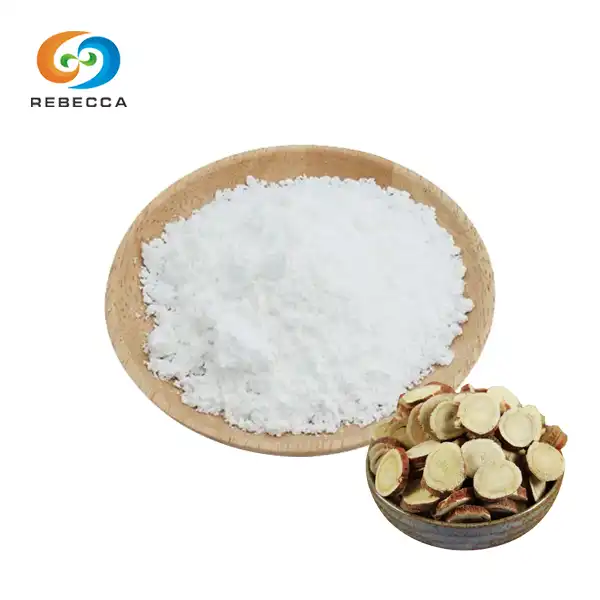
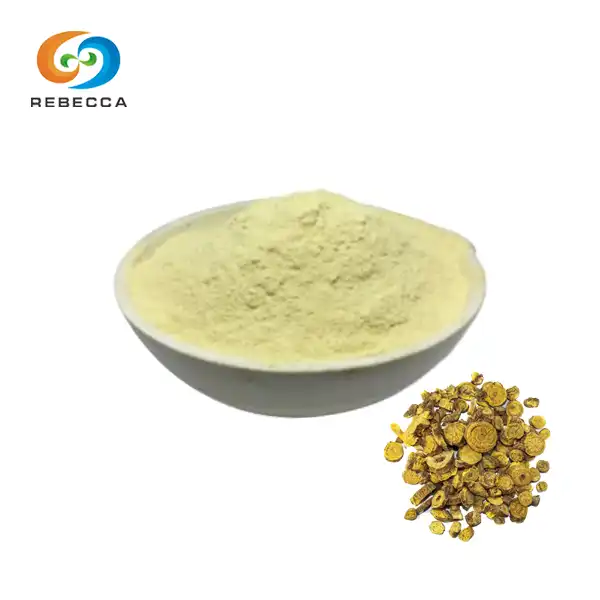
Glabridin Extract
Product Name:Glabridin
CAS No.: 59870-68-7
Specification:Glabridin 98%,HPLC
Test Method:HPLC
Latin Name:Glycyrrhiza uralensis Fischl.
MOQ: 1kg
Sample: 20g
Delivery: FedEx, DHL, Ship by air, Ship by sea.
Certifications: ISO, HACCP, KOSHER, HALAL
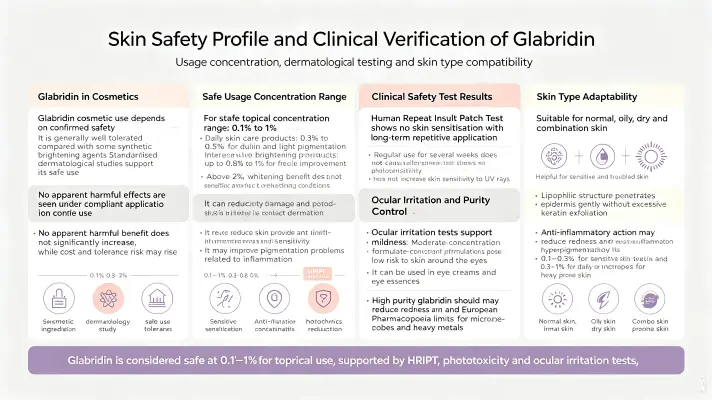
Skin Safety Profile and Clinical Verification of Glabridin
The cosmetic use of glabridin is only possible if safety is ensured. Unlike annoying synthetic bleaching agents, glabridin is well tolerated by the skin, as shown in several standardised dermatological studies. No apparent harmful nor adverse effects on human skin are seen under conditions of compliance use.
Scientific and Safe Usage Concentration Range
The concentration is directly responsible for the safety and efficacy of glabridin in skin care products. Many clinical studies demonstrate that the most safe concentration of glabridin to be applied topically to the skin is 0.1% to 1% . This window of concentration strikes a perfect mix of efficacy and tolerance. Daily skin care products including face creams, serums and masks normally have a concentration of 0.3% to 0.5%. This dose is stable for dull skin and light pigmentation and does not burden the skin. Intensive brightening products can boost the concentration appropriately to 0.8%-1% to improve the efficacy of removing freckles.
For sensitive skin and damaged barrier skin, the safety concentration should be controlled around 0.1%-0.3%. At low dosage, glabridin has an anti-inflammatory and soothing action. Reduces skin redness & sensitivity and improves pigmentation problems related to inflammation. The whitening effect does not rise appreciably when the concentration is more than 2%. but it causes extra costs waste and marginal dangers to skin tolerance. This is why popular cosmetic formulations globally have been careful not to over-use them.
Standardized Clinical Safety Test Results
The skin safety of glabridin has been proven using worldwide standard dermatological examinations. Results of the Human Repeat Insult Patch Test (HRIPT) demonstrated that glabridin will not cause skin sensitisation with long-term repetitive topical application.
Even after regular usage for several weeks, it will not cause allergic contact dermatitis. The phototoxicity test of glabridin showed no photosensitivity. . It does not increase the sensitivity of the skin to UV rays and is therefore safer than vitamin C derivatives and alpha-hydroxy acids to use throughout the day.
Its mildness is also supported by the ocular irritation tests. modest-concentration glabridin formulations pose modest risk of irritation to the skin around the eyes. It is safe to be used in eye cream and eye essence products. Meanwhile, the detection of high purity glabridin (98% HPLC purity) for microbes and heavy metals is conforming to USP and European Pharmacopoeia. It excludes residual pollution hazards and assures the overall safety of products.
Adaptability for All Skin Types
Glabridin extract has a wide skin adaptability. It ideal for normal skin, oily skin, dry skin and combo skin. It is very helpful for sensitive and troubled skin. Its lipophilic molecular makeup does not compromise the skin barrier. It softly penetrates the epidermis without excessively exfoliating keratin and weakening the skin. Its anti-inflammatory action can help minimise redness and post-inflammatory hyperpigmentation for acne-prone skin. It’s an answer to the widespread pain point that standard whitening chemicals sometimes aggravate troublesome skin.
The sustained skin care efficacy of glabridin based on unambiguous safety performance is the primary reason for its vast industrial application. Its multi-effect skin care mechanism forms a comprehensive advantage that many single-function chemicals can not match.
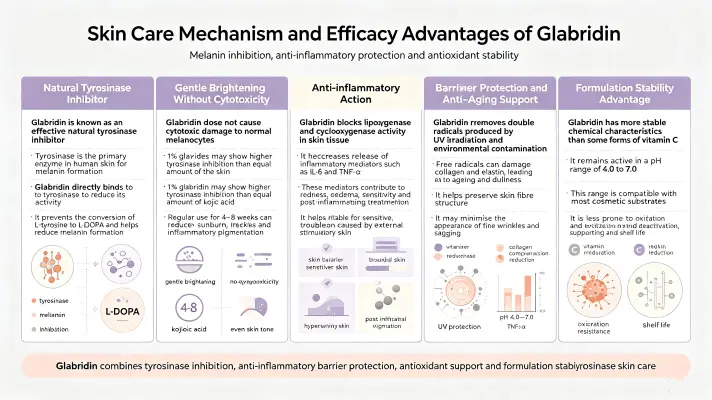
Skin Care Mechanism and Efficacy Advantages of Glabridin
Targeted Melanin Inhibition Mechanism
In the business, glabridin is known as an effective natural tyrosinase inhibitor. The primary enzyme in human skin for melanin formation is tyrosinase. Glabridin directly binds to tyrosinase to inhibit its activity. It prevents the conversion of L-tyrosine to L-DOPA and hence effectively reduces melanin formation. It does not cause cytotoxic damage to normal melanocytes like severe whitening agents. It does light whitening without damaging the skin.
Relevant experimental data indicate that the tyrosinase inhibition rate of 1% glabridin was higher than that of the same quantity of kojic acid. It has a more stable and efficient whitening effect. Regular use for 4-8 weeks can considerably diminish sunburn, freckles and inflammatory pigmentation. It definitely makes the skin more uniform and brighter.
Anti-Inflammatory and Barrier-Protecting Effect
Glabridin has very good anti-inflammatory effects for skin. It can effectively block the activity of lipoxygenase and cyclooxygenase in the skin tissue. It decreases the release of inflammatory mediators like IL-6 and TNF-α. These mediators are the main cause of skin redness, oedema, sensitivity and post inflammatory hyperpigmentation.
The primary advantage of glabridin for sensitive skin care is its double effect of whitening and anti-inflammatory. It helps relieve mild skin irritation caused by external stimulation. It heals the weak skin barrier and at the same time whitens it. It eliminates the frequent problem that most whitening treatments are easy to cause skin dryness and hypersensitivity.
Antioxidant and Anti-Aging Auxiliary Effect
Glabridin extract is an important natural antioxidant. It can also remove free radicals produced by UV irradiation and environmental contamination. Free radicals will destroy the skin collagen and elastin which will cause skin ageing and dullness. Glabridin removes free radicals to preserve the structure of the skin fibre. It minimises the look of fine wrinkles and sagging.
Compared with the fragile vitamin C, glabridin possesses stable chemical characteristics. It can remain active at a constant level in the pH range of 4.0 to 7.0, which is compatible to most of the cosmetic substrates. Oxidation is not easy and it fails, ensuring the long term efficacy of completed items.
In an effort to further prove the distinctiveness of glabridin in the ingredient market, we need to compare it with the standard whitening and skin care ingredients. The safety and efficacy gaps can fully represent its usefulness on the industrial application.
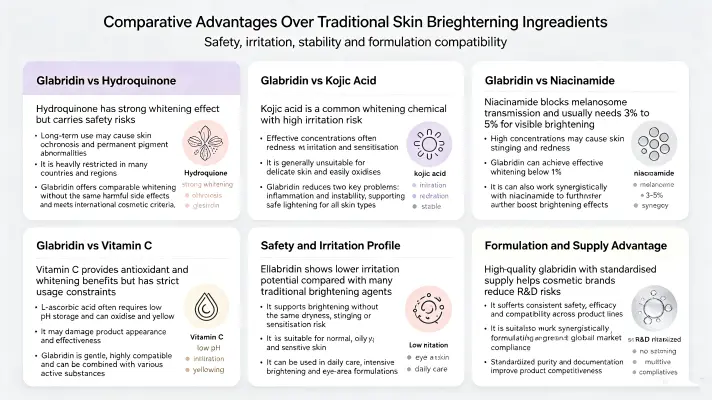
Comparative Advantages Over Traditional Skin Brightening Ingredients
Safety Comparison with Hydroquinone and Kojic Acid
Hydroquinone has a great whitening effect, however it has apparent safety hazards. Long term use can result in skin ochronosis and permanent pigment abnormalities. In many countries and places it has been heavily prohibited. Glabridin is equally effective as hydroquinone in whitening skin, however it does not have harmful and side effects. It meets international cosmetic regulatory criteria and is more flexible for the worldwide market.
Kojic acid is a frequent whitening chemical, although it has a high risk of irritation. Effective concentrations of kojic acid often induce skin redness, irritation and sensitisation. Basically it is not for delicate skin. Meanwhile, the efficacy of the product is not stable, because kojic acid is easy to be oxidised and decomposed. Glabridin alleviates 2 key problems of kojic acid: inflammation and instability. It does safe and stable lightening for all skin types.
Efficacy Comparison with Niacinamide and Vitamin C
Niacinamide works to lighten skin by blocking the transmission of melanosomes. It takes a high concentration of 3% to 5% to get apparent brightening effect. Niacinamide at high concentrations causes skin stinging and redness. Glabridin can achieve effective whitening at a low concentration of <1%. It can also have a synergistic impact with niacinamide to further boost the skin lightening effect.
Vitamin C and its compounds offer antioxidant and whitening benefits. But there are strict usage constraints. L-ascorbic acid must be stored in a low pH environment, which is not compatible with most neutral skin care substrates. It can be oxidised and yellowed which may damage the look and effectiveness of the product. Glabridin extract is gentle in nature and is highly compatible. It can be used with a variety of active substances to produce composite skin care solutions.
High-quality raw materials of glabridin and standardised supply services with superior safety and efficacy advantages can assist cosmetic brands decrease R&D risks and boost product competitiveness.
Conclusion
Glabridin extract is a safe, effective and stable natural whitening active ingredient. Clinical trials and international authority studies totally validate it. It is suitable for all skin types, including sensitive skin, when used in concentrations ranging from 0.1% to 1%. It synergises whitening, anti-inflammatory and antioxidant actions. It addresses the safety and stability pain points of several existing whitening agents. Thanks to standardised quality certification and variable formulation flexibility, glabridin has become the natural active ingredient of choice for high-end cosmetic and dermatological goods. It has a broad application possibility in the global skin care market.
FAQ
Is glabridin extract suitable for sensitive skin formulations?
Glabridin demonstrates excellent compatibility with sensitive skin types when incorporated at recommended concentrations between 0.1% and 1%. Clinical testing shows minimal irritation potential and low sensitization risk, making it appropriate for products targeting reactive or compromised skin conditions. The anti-inflammatory properties actually help calm existing irritation while addressing pigmentation concerns. Formulators should conduct stability and compatibility testing within specific formulation matrices to confirm optimal performance.
What concentration of glabridin extract should I specify for brightening serums?
Brightening serums typically employ glabridin concentrations between 0.5% and 1% to deliver clinically meaningful results within reasonable timeframes. This range balances efficacy with cost considerations while maintaining excellent safety margins. Products targeting intensive treatment or professional use may approach 1%, whereas daily maintenance formulations often succeed with 0.3% to 0.5%. The concentration decision should consider complementary actives, overall product positioning, and target demographic expectations.
What are typical lead times for bulk glabridin extract orders?
Standard production and delivery timelines for glabridin extract range from 3 to 5 weeks depending on order volume and destination. Stock availability for commonly requested specifications may enable shorter fulfillment periods of 1 to 2 weeks for smaller quantities. Custom specifications requiring additional testing or special packaging extend timelines accordingly. We recommend discussing specific project requirements and desired delivery schedules directly with our team to establish realistic expectations and explore expedited options when necessary.
Partner With Rebecca for Premium Glabridin Extract Supply
Rebecca provides pharmaceutical-grade glabridin extract with full quality certificates, high production capacity, competent technical support for formulators and purchasing agents. Our 98% purity criteria, confirmed by comprehensive HPLC testing, guarantees batch-to-batch consistency to satisfy the exacting requirements of regulated industries around the world. As a seasoned supplier of glabridin extract with a proven track record in cosmetic, pharmaceutical and nutraceutical applications, we offer tailored solutions including flexible MOQ, multiple packaging options and complete regulatory documentation to speed up your product development timeline.
For special formulation requirements, Certificates of Analysis or detailed prices for bulk quantities please contact our technical team at information@sxrebecca.com. Visit sxrebecca.com to browse our full range of botanical extracts and see how our production expertise can support you in achieving your innovative goals. We stand ready to be your trusted partner to source superior natural actives that promote market distinctiveness and commercial success.
References
1. Yokota T, Nishio H, Kubota Y, Mizoguchi M. The inhibitory effect of glabridin from licorice extracts on melanogenesis and inflammation. Pigment Cell Research, 1998, 11(6): 355-361.
2. Leyden J J, Shergill B, Micali G, Downie J, Wallo W. Natural options for the management of hyperpigmentation. Journal of the European Academy of Dermatology and Venereology, 2011, 25(10): 1140-1145.
3. Draelos Z D. Skin lightening preparations and the hydroquinone controversy. Dermatologic Therapy, 2007, 20(5): 308-313.
4. Zubair S, Mujtaba G. Natural skin whitening agents: An overview of their mechanisms and safety profiles. Journal of Cosmetic Dermatology, 2016, 15(2): 195-203.
5. Stamford N P. Stability, transdermal penetration, and cutaneous effects of ascorbic acid and its derivatives. Journal of Cosmetic Dermatology, 2012, 11(4): 310-317.
6. Hollinger J C, Angra K, Halder R M. Are natural ingredients effective in the management of hyperpigmentation? A systematic review. Journal of Clinical and Aesthetic Dermatology, 2018, 11(2): 28-37.