Red Clover Benefits For Hair
Hair loss is a complex disorder, impacted by hormones, oxidative stress, inflammation, and exposure to environmental factors . Among the botanical substances examined in current hair care preparations, red clover (Trifolium pratense) has been of interest owing to its isoflavone concentration and its involvement in promoting scalp and follicle health.
But its effects need to be considered in a mechanistic and formulation context rather than as a stand-alone therapeutic treatment.
This review paper gives a systematic assessment of the bioactive profile of red clover extract , putative mechanisms of action, formulation issues and regulatory landscape in cosmetic and nutraceutical applications.
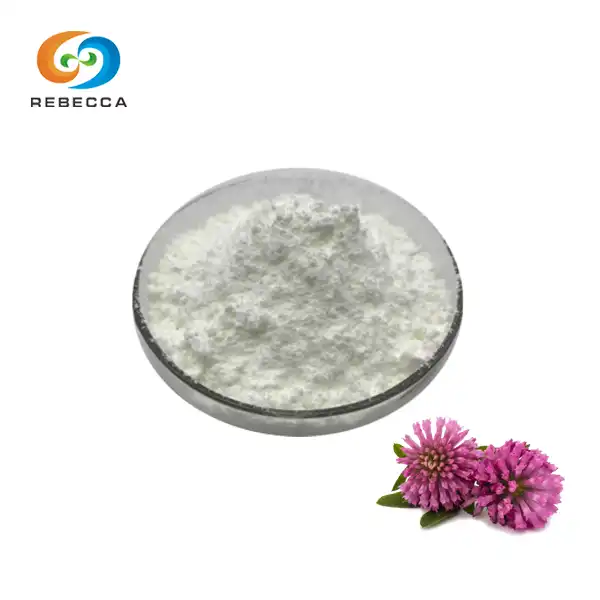
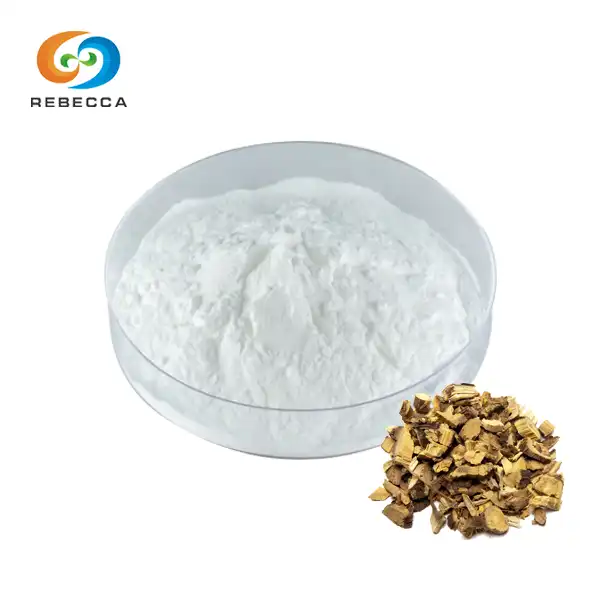
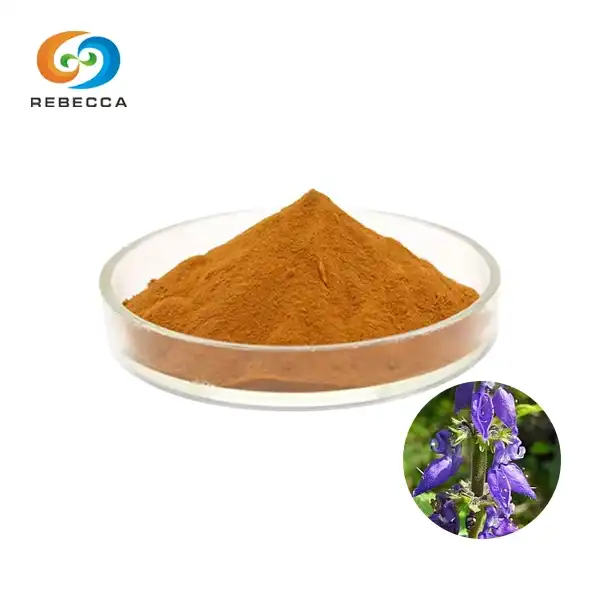
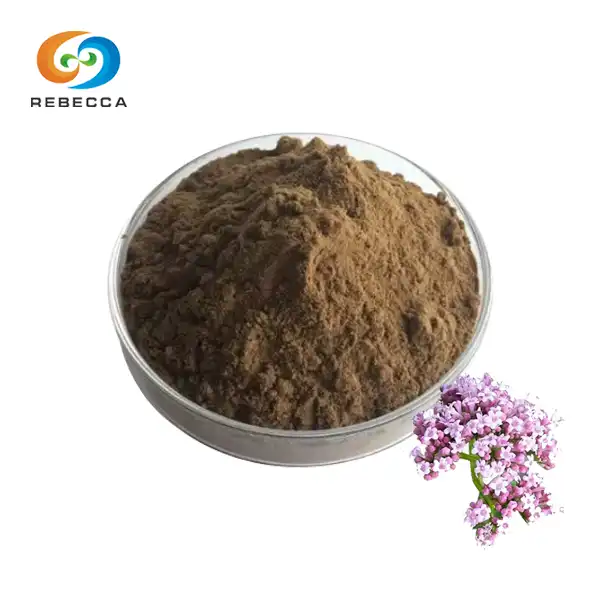
【English name】: Red clover Extract
【Latin name】: Trifolium pratense L.
【Other name】: Formononetin
【CAS No.】: 485-72-3
【Active ingredients】: Formononetin
【Molecular Formula】: C16H12O4
【Molecular Weight】: 268.26
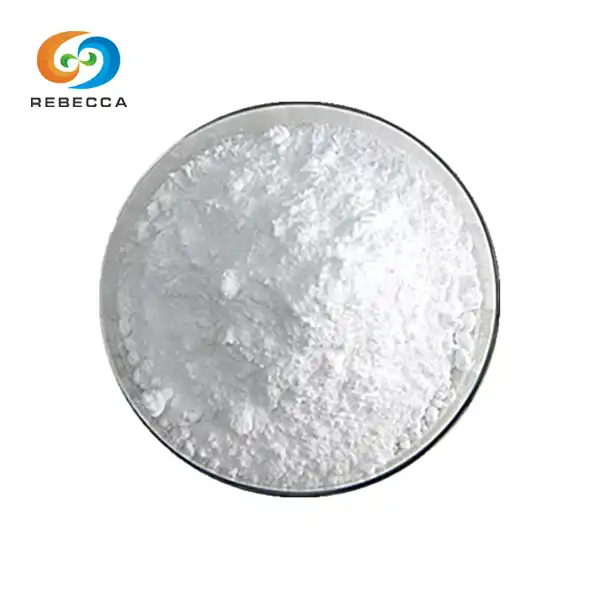
【Specification】: Formononetin Min 98%
【Appearance】: White to light beige powder
【Test Method】: HPLC
Botanical Profile and Active Compounds of Red Clover
The first thing to look at while trying to understand red clover is its chemical makeup and how it is extracted. Rather than considering it as a general herbal extract, the standardised active chemicals and the effect of processing on bioactivity should be assessed.
Key Bioactive Constituents
Red clover contains a group of plant-derived compounds known as isoflavones. The most studied include:
· Formononetin
· Biochanin A
· Genistein (trace levels depending on extraction method)
These chemicals are structurally related to oestrogen and are sometimes grouped together as phytoestrogens. In general, their biological activity is less than that of the endogenous hormones yet they may interact with oestrogen receptor pathways under certain situations.
Extraction and Standardization Considerations
Modern extraction procedures like as supercritical CO2 and ethanol based purification are utilised to extract isoflavones. Standardisation is needed, since raw plant material may be very variable depending on growing circumstances.
High grade extracts are often standardised to a certain proportion of total isoflavones (e.g. 20% or greater). More sophisticated manufacturing processes could isolate particular molecules such as formononetin, although any claims of purity should always be substantiated by a recognised analytical technique e.g. HPLC.
From the formulation point of view, it is more vital that the composition of the raw material be uniform than that the single peak potency be high for long-term stability of cosmetic products.

Proposed Biological Mechanisms in Hair and Scalp Health
The potential involvement of red clover in hair health is mainly based on 3 interrelated mechanisms: hormonal regulation, antioxidant activity and anti-inflammatory actions. These routes are currently being investigated and evidence should be used with caution.
Hormonal Pathway Modulation
The interaction of isoflavones with oestrogen receptor beta (ER-β) is one of the most studied processes. Phytoestrogens bind poorly, unlike synthetic hormone treatments, and may function more as selective modulators than direct activators.
This modulation might, theoretically, assist to rebalance androgen-related activity in the hair follicles, especially in hormonal fluctuation-related disorders. But the data available does not demonstrate a direct or clinically relevant impact on hair regrowth in controlled human studies.
Antioxidant Protection of Follicular Structures
Hair follicles are subjected to oxidative stress due to UV exposure, pollutants and metabolic activities. Red clover isoflavones have antioxidant characteristics that may aid to neutralise reactive oxygen species (ROS).
This protective action is more related to protecting hair quality than stimulating new follicle development directly. “Over time, reducing oxidative damage may help in the formation of healthier hair fibres, and may help to keep the scalp environment more stable.”
Inflammatory Regulation and Scalp Environment
Disturbed hair growth cycles have been linked to chronic low-grade inflammation. Red clover contains biochanin A and other bioactive chemicals that have been examined for their ability to affect inflammatory mediators, such as COX-2.
These data, primarily based on in vitro or indirect research, show a potential involvement in the improvement of scalp comfort and barrier function. This may indirectly promote healthy follicular activity, especially for sensitive or irritated scalp conditions.

Formulation Strategies and Product Development Applications
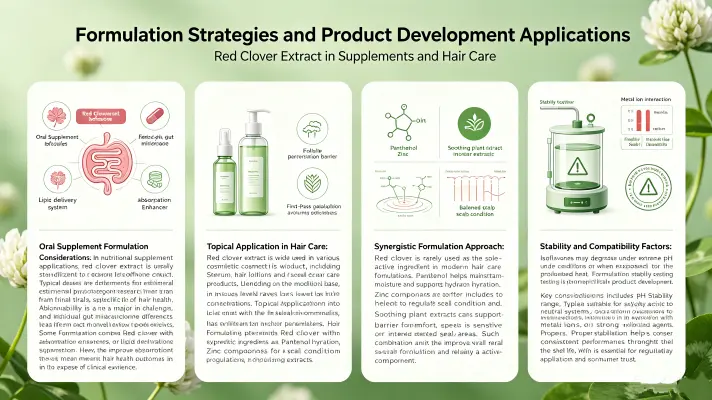
From an industrial point of view, the value of red clover extract is not only based on biological plausibility, but also on formulation stability, compatibility and delivery efficiency. This section is about how it is often used in hair care and supplement regimens.
Oral Supplement Formulation Considerations
In applications for nutritional supplements, red clover extract is often standardised to a specified isoflavone content. Typical dosages are extrapolated from general phytoestrogen studies, not hair clinical trials.
A big difficulty is bioavailability. Isoflavones are metabolised in the gut and individual variances in the microbiota may impact greatly on conversion efficiency. Therefore, several formulations are designed to mix red clover with absorption enhancers or lipid based delivery methods.
However, it should be noted that the increase of absorption does not always mean a better result on hair development in the absence of clinical proof.
Topical Application in Hair Care Products
Red clover extract is included in cosmetic products including serums, tonics and scalp treatments. Typical inclusion levels fall between low to high concentrations depending on the formulation foundation.
Topical administration allows for localised contact with the scalp environment and skips first-pass metabolism. Nevertheless, entry into the follicle is still a limiting issue, since the skin permeability of certain polyphenols is limited.
Formulators often combine red clover with complementary ingredients such as:
· Panthenol for moisture retention
· Zinc compounds for scalp regulation
· botanical extracts with known soothing properties
These combinations are designed to improve overall scalp condition rather than rely on a single active ingredient.
Stability and Compatibility Factors
Isoflavones can degrade under extreme pH conditions or prolonged heat exposure. Therefore, formulation stability testing is essential during product development.
Key considerations include:
· pH stability range (typically mildly acidic to neutral systems)
· Oxidation sensitivity in water-based formulations
· Interaction with metal ions or strong oxidizing agents
Proper stabilization ensures consistent performance throughout shelf life, which is critical for both regulatory compliance and consumer trust.
Conclusion
Red clover extract is a botanically intriguing substance with many bioactive pathways, important to the scalp and hair health, including phytoestrogen activity, antioxidant protection and modest anti-inflammatory properties.
However, its importance should be understood within a wider formulation and evidence framework. It is not an independent remedy for hair loss, but an auxiliary element in multi-component systems of hair care.
Future study should completely establish the function of finasteride in hair growth science with particular investigations into follicular results, standardised dose, and controlled human trials. Until then, prudent formulation and correct claim placement remain important for producers and consumers.
FAQ
Is red clover extract safe during pregnancy or breastfeeding?
Current safety data advises against medicinal-level isoflavone intake during pregnancy and lactation due to potential endocrine effects, though dietary exposure through food sources poses minimal risk. B2B formulators targeting reproductive-age women should clearly label products with appropriate contraindications and recommend consultation with healthcare providers, aligning with FDA pregnancy category labeling conventions for botanical supplements.
What formononetin concentration optimizes hair growth efficacy?
Clinical trials demonstrating measurable improvements in hair density typically employ 40-80mg total isoflavones daily, equivalent to 200-400mg of 20% standardized extract. Pharmaceutical R&D teams developing investigational products may utilize 98% pure formononetin at 20-40mg doses to maximize bioactive concentration while minimizing excipient load in capsule formulations.
How does red clover compare to minoxidil or finasteride alternatives?
Unlike pharmaceutical agents requiring prescription oversight, red clover functions as a dietary supplement supporting physiological processes rather than pharmacologically altering them. This distinction appeals to health supplement brands targeting consumers seeking preventive wellness approaches without medication side effect profiles, though efficacy magnitude differs from FDA-approved hair loss treatments.
Partner with Rebecca for Premium Red Clover Extract Solutions
Shaanxi Rebeccia is capable of helping you formulate your hair care products with pharmaceutical grade red clover extract that are made under strict quality control measures. We use formononetin as our benchmark for consistent performance batch after batch and we can guarantee 98% purity by HPLC analysis. Our flexible standards range from 10-98% to meet the formulation needs of a variety of finished products in the nutraceutical and cosmetic space. We have a yearly manufacturing capacity of more than 500 metric tonnes and we have GMP, ISO22000 and HACCP certifications for safe supply chains in worldwide procurement networks.
Our technical staff offers full assistance, including formulation advice, stability testing methodologies and regulatory paperwork for FDA, EFSA and other jurisdictions. Whether it’s organic certification, kosher/halal compliance or bespoke particle size criteria, we will customise our production procedures to suit your demands. For samples, wholesale red clover extract supplier prices, or to discuss bespoke ingredient development collaborations, contact information@sxrebecca.com. Learn how our combination of state-of-the-art extraction technology and quality assurance skills can prepare your products for success in the competitive natural hair care sectors. For further technical specifications and application case studies see sxrebecca.com.
References
1. Lipovac M, et al. "Improvement of postmenopausal depressive and anxiety symptoms after treatment with isoflavones derived from red clover extracts." Maturitas 65(3): 258-261, 2010.
2. Hidalgo LA, et al. "The effect of red clover isoflavones on menopausal symptoms, lipids, and vaginal cytology in menopausal women." Gynecological Endocrinology 21(5): 257-264, 2005.
3. Booth NL, et al. "Clinical studies of red clover (Trifolium pratense) dietary supplements in menopause: a literature review." Menopause 13(2): 251-264, 2006.
4. Rotem C, Kaplan B. "Phyto-Female Complex for the relief of hot flushes, night sweats and quality of sleep." Gynecological Endocrinology 23(2): 117-122, 2007.
5. Atkinson C, et al. "The effects of phytoestrogen isoflavones on bone density in women: a double-blind randomized trial." American Journal of Clinical Nutrition 79(2): 326-333, 2004.
6. Ghazanfarpour M, et al. "Red clover for treatment of hot flashes and menopausal symptoms: a systematic review and meta-analysis." Journal of Obstetrics and Gynaecology 36(3): 301-311, 2016.