Reishi Mushroom Powder Benefits
Reishi mushroom extract is becoming as one of the most sought-after functional ingredients in the nutraceutical sector. This is derived from the fruiting body or mycelium of Ganoderma lucidum, and provides a unique composition of bioactive chemicals. Professional-grade powder is produced differently from raw mushroom material. The procedure increases the bioavailability of its active ingredients. The outcome is a multi-purpose substance that promotes many health pathways.
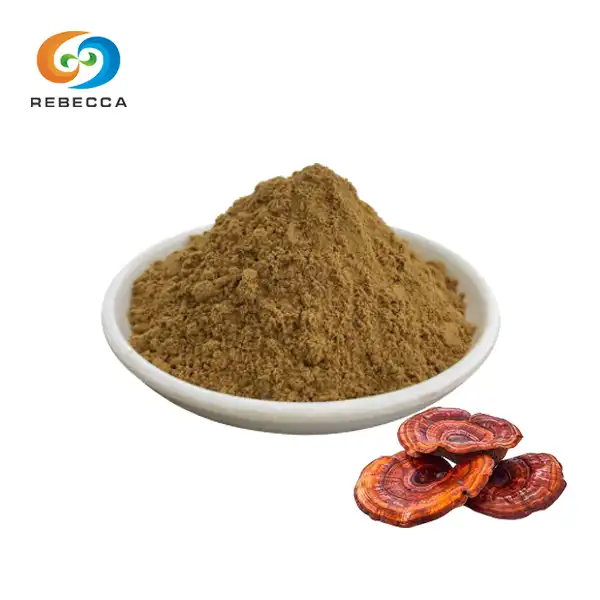
Product Name: Natural Reishi Mushroom Extract
Other Name:Ganoderma lucidum Extract;Reishi Mushroom Extract;lingzhi extract.
Latin Name:Ganoderma lucidum
Specification:10:1 ,polysaccharides 50%
Color:Red-brown Powder
Used Part:Fruiting body/sporophore
Test Method: TLC;UV
Shelf Life: 2 years
Minimum Order Quantity: 1 kg
Samples: Free samples available
Payment: Various payment methods accepted.
Advantages: Manufactured in a 100,000-grade cleanroom, our products are additive-free, non-GMO Inner Package: Double PE Bags; Net 25kg/Drum
Storage:Store in a cool, dry place away from Light and Heat.
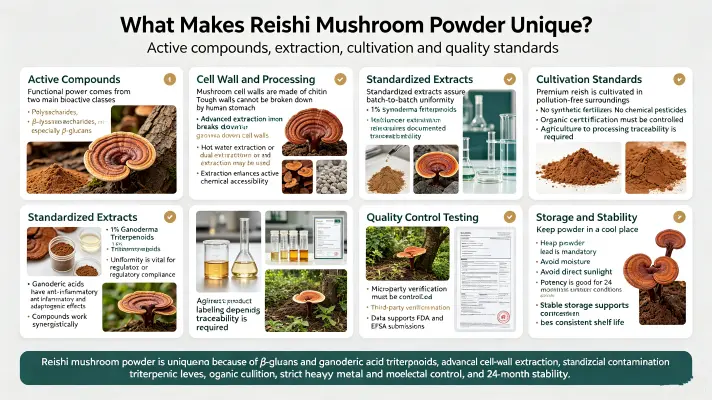
What Makes Reishi Mushroom Powder Unique?
Active Compounds and Bioavailability
The functional power of reishi mushroom powder is derived from two main classes of bioactive chemicals. The first type are polysaccharides, especially β-glucans. These chemicals activate the activity of immunological cells. The second category includes triterpenoids containing ganoderic acids. These chemicals have anti-inflammatory and adaptogenic effects. They work together synergistically to do things raw mushroom material can not.
Processing is very important. The cell walls of mushrooms are made of chitin and are tough. They cannot be broken down adequately by human stomach. Advanced extraction techniques are used to break down the cell walls, such as hot water extraction or dual extraction. This procedure enhances the accessibility of active chemicals. For example, standardized extracts of 1% and 1.6% Ganoderma Triterpenoids assure batch-to-batch uniformity. This uniformity is vital for regulatory compliance and correct product labels.”
Cultivation and Quality Standards
Quality starts at the growing stage. Premium reishi mushroom powder is made from mushrooms cultivated in pollution free surroundings. They do not utilize synthetic fertilizers or chemical pesticides. Organic certification (USDA Organic or EU Organic) requires documented traceability from agriculture to processing. These are companies that care about pesticide-free ingredients.
The traditional solutions provide economic benefits, but without compromising on the quality criteria. Heavy metals testing including lead, cadmium and mercury is a must and should be stringent. Microbial contamination should also be controlled. Third-party verification offers clear evidence of the CoA. This material is used for regulatory submissions for both FDA and EFSA countries . Keep powder in a cool place, avoid moisture and direct sunlight. Potency is good for 24 months.
Based on the above, we know more about what makes reishi mushroom powder so special. Now let’s look at the health advantages that are backed by science and that consumers are looking for.
Scientifically Validated Health Benefits of Reishi Mushroom Powder
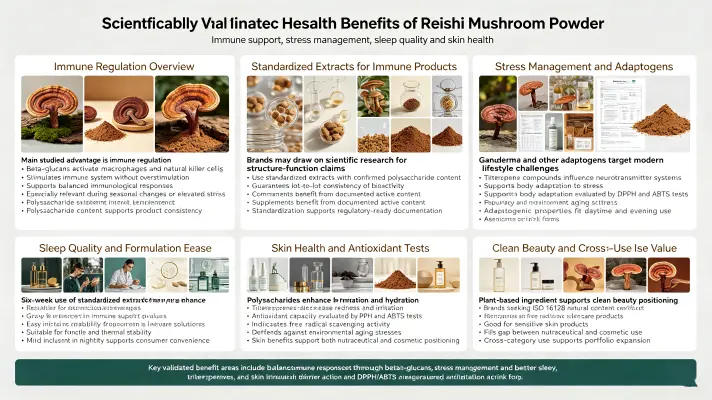
Scientists have been studying the health advantages of reishi mushroom powder for decades. Research areas include immunological regulation, stress management, sleep quality and skin health. Most of the evidence is from preclinical investigations, although there is increasing clinical data to support its conventional usage. Understanding these advantages enables formulators to develop products that suit the increasing customer desire for natural, evidence-based ingredients.
Immune Support and Modulation
The main studied advantage of reishi mushroom powder is immune regulation. Activation of macrophages and natural killer cells by beta-glucans in the polysaccharide fraction. It stimulates the immune system without overstimulation. Clinical studies show that frequent supplementation helps balanced immunological responses. This is especially important during seasonal changes or times of elevated stress.
This makes reishi constituents important in immune health areas for supplement products. Brands that want to make structure-function claims that are approved by the FDA may draw on the body of scientific research that exists. The trick is to use standardized extracts with confirmed polysaccharide content. This guaranties lot-to-lot consistency of bioactivity. Therefore, reishi mushroom powder is a common element in immune support products.
Stress Management and Sleep Quality
Ganoderma and other adaptogens have grown popular in formulations targeting the problems of the modern lifestyle. The triterpene compounds interfere with neurotransmitter systems, resulting to a non-sedating relaxation. Studies have indicated that individuals taking standardized extracts for six weeks showed enhanced sleep latency and quality. This makes reishi mushroom powder a great element to use in nite time health supplements and functional beverages.
For product manufacturers, reishi offers a mild flavor profile and thermal stability throughout processing. These properties allow for simple inclusion to powdered blends or ready-to-drink forms. Its adaptogenic properties help the body to better deal with stress. This is in reaction to an increased customer desire for natural stress management solutions.
Skin Health and Antioxidant Properties
Cosmetic chemists are increasingly using reishi mushroom powder because to its anti-inflammatory and brightening benefits. Polysaccharides enhance barrier function to assist maintain skin hydrated. Triterpenes decrease redness and irritation. The antioxidant capacity was evaluated by DPPH and ABTS tests, indicating the free radical scavenging activity. This defends against environmental stresses that age the skin more rapidly.
Reishi is plant-based and brands seeking ISO 16128 natural content certification would like that. The synergy and compatibility of its clean beauty positioning make it popular in natural skincare products. Its anti-inflammatory effects also make it a good ingredient for products for sensitive skin. Thus, Reishi mushroom powder fills the gap between nutraceutical and cosmetic use.
Now that you are aware of the health advantages, let’s look at how to properly include reishi mushroom powder in B2B product formulations.
How to Use Reishi Mushroom Powder in B2B Settings?
However, recognizing the health advantages alone is not enough to ensure successful product creation. Formulators need to think about dose, source and safety. Each use, whether it's a nutritional supplement, functional beverage or cosmetic, has its own particular needs. The right formulation makes it work and makes it acceptable to the customer.
Optimal Dosage Ranges for Formulation
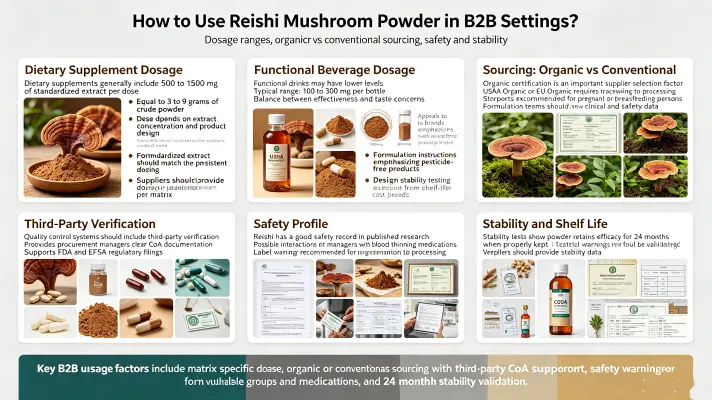
Recommended dosages will depend on the use and concentration of the extract. Dietary supplements generally include 500 to 1500 mg of standardized extract per dose. This is equal to 3 to 9 grams of crude powder. Functional drinks may have lower levels, ranging from 100 to 300 mg per bottle. This is a trade-off between effectiveness and taste concerns.
Application instructions should be relevant to your product matrix . Design stability testing techniques for your shelf-life needs. Flexible minimum order numbers for test runs to meet innovation managers and large scale manufacturing for established companies. The correct dose guarantees reishi mushroom powder provides its intended advantages without affecting product quality.
Sourcing Considerations: Organic vs. Conventional
Organic certification is an important factor in the choice of suppliers. Traceability from growing to processing recorded is needed for USDA Organic or EU Organic designation. This appeals to health supplement businesses that emphasize pesticide-free products. Cost benefits are achieved using conventional alternatives with extensive testing ensuring quality requirements are met.
Quality control systems should include third party verification for both organic and conventional grades. This gives procurement managers clear documentation of COA. Such material may be used to support regulatory filings to the FDA and EFSA. When choosing reishi mushroom powder, consumers should choose vendors who offer full testing data and traceability.
Safety Profiles and Contraindications
Reishi mushroom powder has a good safety record in published research. However, formulation teams should be aware of possible interactions with immunosuppressive drugs or blood thinning medications. This is owing to its immune stimulating and modest anticoagulant activities. The product labeling should contain the usual warning comments for pregnant or breastfeeding persons.
Stability tests showed that the powder, when properly kept, retained efficacy for 24 months. This is crucial information for inventory control and expiry dates. The safety profile is understood so that companies may develop products which are both efficacious and responsible. It also covers you for any liability concerns that may arise.
Now that you know the best methods for formulation, we want to answer an important question: how to choose the proper provider for your requirements of reishi mushroom powder.
Choosing the Right Reishi Mushroom Powder Supplier
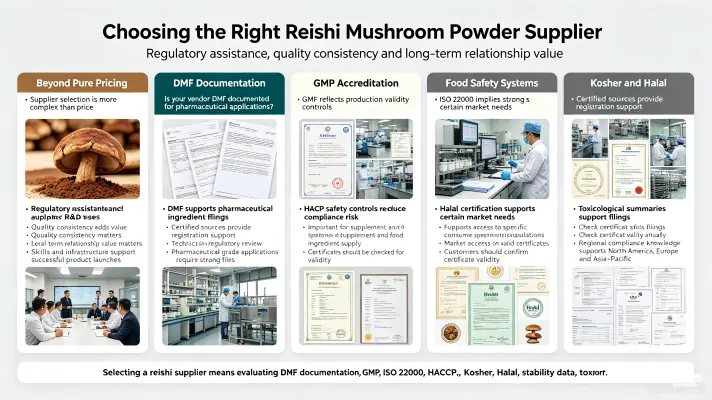
Selecting suppliers is a lot more complex issue than just pricing. It provides regulatory assistance, quality consistency and long-term relationship value. The ideal supplier becomes an extension of your own RD team. They provide the skills and infrastructure to help you launch successful products.
Critical Evaluation Criteria
Is your vendor DMF documented for pharmaceutical applications? Is there a kosher or halal certification for certain market needs? These are really important issues. Support with registration is provided by a certified source. They provide stability data and toxicological summaries to fast track regulatory filings. Knowing how to export to North American, European and Asia-Pacific markets means you can expect regional compliance variations before they become hurdles.
GMP accreditation reflects the controls needed in production for pharmaceutical and supplement uses. ISO 22000 and HACCP imply strong food safety systems. Kosher and halal certifications provide market access for items catering to certain consumer populations. Customers need to check the validity of the reishi mushroom powder supplier’s certificates and ensure they have an annual audit.
The Value of Established Partnerships
Long term supplier relationships provide operational advantages that spot buying cannot match. Your Partner for Compatibility Testing of Excipient Systems. They do shelf-life research on your packaging conditions. They provide application advice for new delivery types. These value-added services shorten R&D timeframes and cut formula optimization expenses.
Developing together may lead to unique forms. For example, water-soluble reishi forms have been produced that remain clear in bottled goods during the full 18-month shelf life. This sort of creativity comes from strong connections, not transactional relationships.” When picking a source of reishi mushroom powder, it is important to go beyond the product specs and examine the breadth of support services they offer..
Emerging Trends: Technology and Sustainability
The quality of Reishi mushroom powder is constantly enhanced by the latest processing techniques. Enzyme-assisted extraction increases polysaccharide yield and reduces solvent use. This is attractive for businesses with sustainability obligations. Spore powders have greater triterpene concentrations but costs restrict wider use.
“Investing in enhancements to extraction technology leads to better environmental footprints.” Wastewater treatment systems, energy-efficient evaporators lower carbon intensity per kg generated. Procurement professionals who are keeping an eye on ESG indicators value suppliers that give clear sustainability reporting and product details. The future of reishi mushroom powder will be a combination of technology and sustainability.
FAQ
Q1: What distinguishes high-quality reishi mushroom powder from inferior products?
A: Premium reishi ingredients feature standardized triterpene and polysaccharide content verified through HPLC or UV spectrophotometry. This ensures consistent bioactivity across production lots. Quality suppliers provide comprehensive certificates of analysis showing heavy metal levels below regulatory thresholds, typically less than 1 ppm lead and less than 0.3 ppm cadmium. Microbial counts must meet supplement industry standards, and pesticide residues should be absent. Processing methods matter significantly. Hot water extraction or dual extraction yields higher bioavailability compared to simple grinding. The extraction process should break chitinous cell walls that human digestion cannot process, maximizing active compound accessibility.
Q2: Can reishi powder integrate into beverage formulations without taste issues?
A: Properly processed reishi extracts exhibit mild, slightly bitter notes that blend well with fruit flavors, chocolate, or coffee bases commonly used in functional beverages. Water-soluble versions created through spray-drying or microencapsulation techniques dissolve cleanly without sediment. This maintains product appearance throughout shelf life. Heat stability testing confirms that triterpene compounds withstand pasteurization temperatures. This makes reishi viable for hot-fill beverage processing. Application samples should be tested in bench trials before committing to bulk orders.
Q3: What certifications should B2B buyers prioritize when sourcing reishi ingredients?
A: GMP certification demonstrates manufacturing controls essential for pharmaceutical and supplement applications. Organic certification, such as USDA or EU Organic, verifies pesticide-free cultivation for brands targeting natural product markets. ISO 22000 and HACCP indicate robust food safety systems protecting against contamination risks. Kosher and halal certificates expand market access for products serving specific consumer communities. Buyers should verify that certifications are current and backed by annual audits documented in the supplier's quality management system.
Q4: What is the typical shelf life of reishi mushroom powder?
A: Stability testing confirms that properly stored reishi mushroom powder maintains potency for 24 months when protected from moisture and direct sunlight. This is critical data for inventory management and expiration dating. Storage conditions significantly impact shelf life. Powder should be kept in airtight containers in cool, dry environments. Suppliers should provide stability study reports that support expiration dating for your specific packaging and storage conditions.
Partner with Rebecca for Premium Reishi Mushroom Powder Supply
Rebecca specializes in providing high-purity Reishi Mushroom Extract standardized to 1% and 1.6% Ganoderma Triterpenoids, verified through UV testing for pharmaceutical-grade consistency. Our GMP-certified facilities in Shaanxi, China, produce over 500 metric tons annually, supporting everything from pilot batches to full-scale commercial production.
We offer customized purity levels, flexible packaging solutions, and complete documentation packages including organic certificates, kosher verification, and stability study reports. Contact our team at information@sxrebecca.com to discuss your specific formulation requirements and receive tailored technical guidance backed by our decade-long export expertise.
References
1. Wachtel-Galor S, Yuen J, Buswell JA, Benzie IFF. "Ganoderma lucidum (Lingzhi or Reishi): A Medicinal Mushroom." Herbal Medicine: Biomolecular and Clinical Aspects, 2nd edition, CRC Press/Taylor & Francis, 2011.
2. Sanodiya BS, Thakur GS, Baghel RK, Prasad GB, Bisen PS. "Ganoderma lucidum: a potent pharmacological macrofungus." Current Pharmaceutical Biotechnology, vol. 10, no. 8, 2009, pp. 717-742.
3. Chu TTW, Benzie IFF, Lam CWK, Fok BSP, Lee KKC, Tomlinson B. "Study of potential cardioprotective effects of Ganoderma lucidum (Lingzhi): results of a controlled human intervention trial." British Journal of Nutrition, vol. 107, no. 7, 2012, pp. 1017-1027.
4. Zhao H, Zhang Q, Zhao L, Huang X, Wang J, Kang X. "Spore Powder of Ganoderma lucidum Improves Cancer-Related Fatigue in Breast Cancer Patients Undergoing Endocrine Therapy: A Pilot Clinical Trial." Evidence-Based Complementary and Alternative Medicine, vol. 2012, Article ID 809614.
5. Sliva D. "Ganoderma lucidum (Reishi) in cancer treatment." Integrative Cancer Therapies, vol. 2, no. 4, 2003, pp. 358-364.
6. Boh B, Berovic M, Zhang J, Zhi-Bin L. "Ganoderma lucidum and its pharmaceutically active compounds." Biotechnology Annual Review, vol. 13, Elsevier, 2007, pp. 265-301.
_1730079799361.webp)