Safety of Synthetic L-ergothioneine
I've been assessing new ingredients for businesses in the dietary supplement and functional beverage space for over twelve years. When the synthetic L-ergothioneine powder landed on my desk in 2018, the safety dossier was scant. 1 EFSA opinion. One little human trial. A couple of vendors that couldn’t articulate their methodology in more than a one-pager. Fast ahead to 2026 and the image is a totally different one. Two EFSA rulings, many FDA GRAS notifications, pharmacokinetic data in humans, and rising published research now provide procurement teams a considerably stronger basis for consideration.
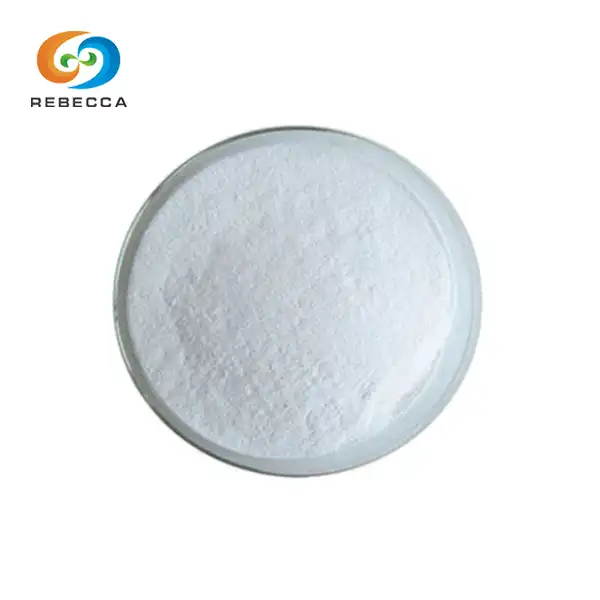
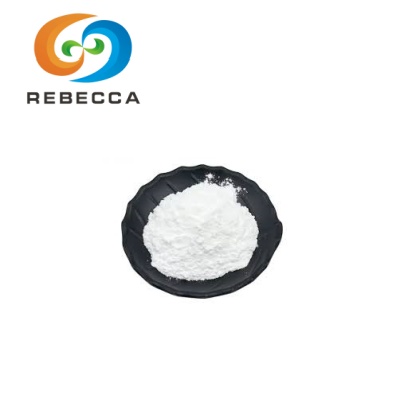
【English name】:L-Ergothioneine
【Chemical Name】:2-mercaptohistidine trimethylbetaine, EGT
【CAS No.】:497-30-3
【Molecular Formula】: C9H15N3O2S
【Specification】: 99%
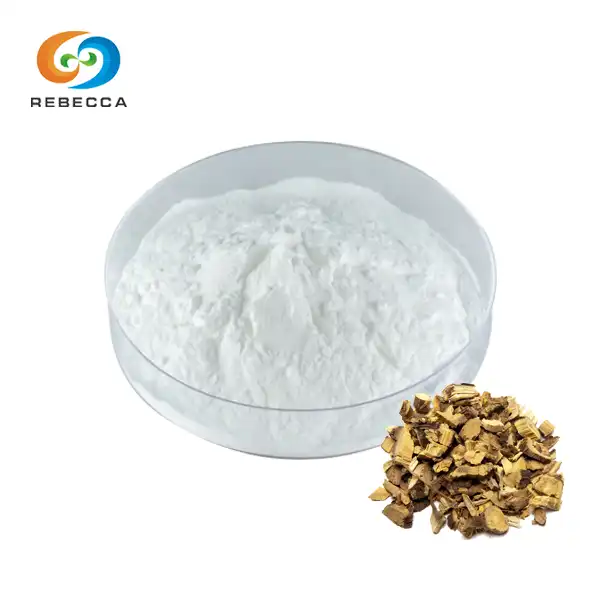
【Appearance】: White Crystalline Powder
【Test Method】: HPLC
【Solubility】:Soluble in Water (up to 10 mg/ml)
【Function】Remove stains, whiten skin, delay aging and prevent various diseases etc.
【Application】Food and health care,Cosmetic,Medicine etc.
What the Regulatory Record Tells Us?
Before delving into particular research, it is essential knowing how major food safety agencies have assessed this substance. Their opinions are considered because they look at the complete toxicology package – subchronic feeding trials, genotoxicity panels and developmental toxicity data – not simply selected articles.
The EFSA Safety Opinion (2016–2017)
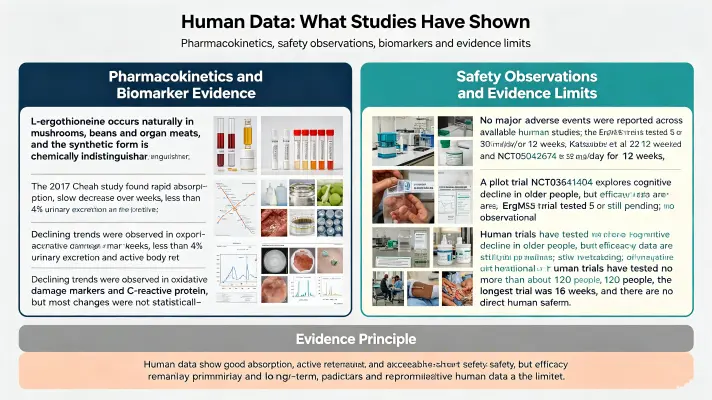
In November 2016, the EFSA Panel on Dietetic Products, Nutrition and Allergies announced its scientific opinion on synthetic L-ergothioneine powder, marketed at the time as Ergoneine®. The panel assessed the production process, composition, stability data and a complete toxicology package comprising two subchronic toxicity tests in rats.
The panel determined a no-observed-adverse-effect limit of 800 mg/kg body weight per day. The estimated margin of safety for adults was 470 and for children over three years of age 216 based on the maximum estimated consumption from all sources including fortified foods, supplements and background diet. The panel found that the new food was safe under the intended conditions of use, which included up to 30 mg per day as a dietary supplement for adults and up to 5 mg per serving in drinks, dairy products, cereal bars and chocolate.
One crucial detail: the 2016 ruling clearly excluded pregnant and breast-feeding women as well as babies and small children since the applicant had not included these categories. A year later this gap was closed. In November 2017, EFSA released a supplemental statement on these populations. The panel also estimated additional margins with the same NOAEL of 800 mg/kg: 284 for babies, 236 for toddlers and 610 for pregnant and nursing women . Again the result was the same: the margins were enough and the substance was safe for these populations under the planned applications.
FDA GRAS: From 5 mg to 150 mg Per Serving
The first GRAS (Generally Recognized as Safe) notice for synthetic L-ergothioneine powder was in 2018 in the US. Blue California filed GRN 734 for usage in drinks, bars and supplements. The FDA issued a “no questions” letter, accepting the safety finding.
There’s something new that makes this especially significant for procurement teams in 2026. Gene III Biotechnology’s FDA GRN 1270 – covering L-ergothioneine at up to 150 mg per serving – obtained FDA’s “no questions” answer in January 2026. That is 30 times the 5 mg per serving amount mentioned in the original EFSA ruling. This higher level of certification allows a great deal more freedom in formulation. A beverage brand that used to just be able to say “contains L-ergothioneine” may now manufacture at dosages
supported by a more rigorous safety review.
Currently, only three producers worldwide have GRAS accreditation for L-ergothioneine powder as of mid-2026. This is a big differentiation when you’re comparing vendors. A GRAS notice implies FDA has studied the safety package and found no reason to challenge the result. It’s not FDA “approval” – the FDA doesn’t approve food ingredients — but it’s a thorough regulatory review.”
What the NOAEL Numbers Actually Mean
Sometimes I hear from customers, “It’s 800 mg/kg safety margin, so what is the problem?” This is the genuine number. However, the NOAEL is not a suggested daily consumption. This is the greatest dosage where no adverse effects were seen in the most sensitive animal investigation. What is important is the margin of safety -- the ratio between the NOAEL and real human exposure.
For a 70 kg adult using the maximum 30 mg/day supplement dosage the margin is around 470. For instance, several popular food additives work with margins below 100. In the EFSA risk assessment system, margins above 200 are typically regarded to be strong by toxicologists. The additional examination for newborns resulted in a margin of 284, which is still beyond the criterion of 200. That is not an accident. EFSA panels are, by design, cautious and use extra uncertainty factors if data are inadequate for vulnerable groups.
Knowing the regulatory data puts a floor under you. The issue then is how clear or muddy the image becomes from investigations in humans.
Human Data: What Studies Have Shown
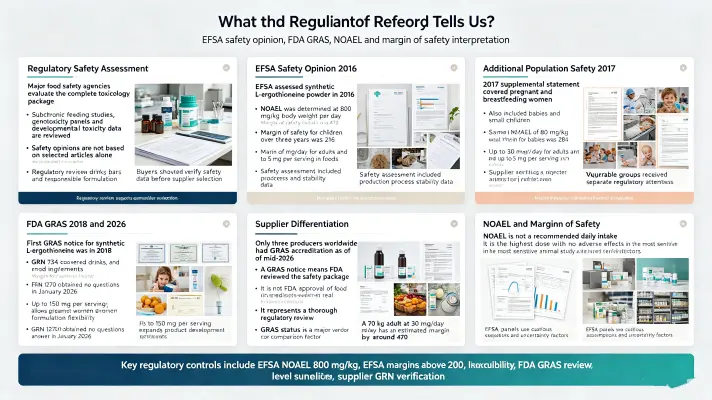
There is a substantial difference between animal toxicology and human experience.” Many compounds get through rat tests unscathed, yet create difficulties in humans. Here L-ergothioneine powder has a plus: it is not a new molecule for the body to encounter. It’s in mushrooms, beans and organ meats in amounts people have been eating for millennia. The synthesized form is chemically indistinguishable. So the safety concern is not whether this chemical is safe but whether the synthetic form at supplemented dosages is safe.
The First Human Pharmacokinetics Study
In 2017, the first trial administering pure synthetic L-ergothioneine to healthy human volunteers was carried out by Cheah and colleagues at the National University of Singapore. This was not a major trial – it was a pharmacokinetics and biomarker investigation to address fundamental issues regarding absorption, metabolism and excretion.
The findings verified what cell biology had predicted. L-ergothioneine powder was promptly absorbed and retained after oral dosing. Levels in the blood increased rapidly and then decreased slowly over weeks. Less than 4 percent of the supplied amount showed in urine, showing the body actively retains this chemical. Whole blood levels coincided with levels of hercynine and S-methyl-ergothioneine, metabolites that were anticipated from animal research.
From a safety point of view two discoveries are of particular relevance. First, no negative effects were noted. " Second, the researchers detected declining trends in many indicators of oxidative damage – allantoin, 8-hydroxy-2'-deoxyguanosine, 8-iso-PGF2α, and protein carbonyls – as well as C-reactive protein, a hallmark of inflammation. The crucial term here is “trends.” Most of these changes were not significant statistically. This is usual for a small biomarker research and does not suggest that the impact is missing. But it also does not prove benefits.
Safety Observations in Clinical Trials
Since 2017, other human studies have added to the safety data, however none have been big enough to discover unusual adverse events. A trial designated as ErgMS (ISRCTN25890011) started supplementing patients with metabolic syndrome with either 5 or 30 mg/day of L-ergothioneine for 12 weeks. The major goal was to investigate the impact on inflammatory markers and metabolic risk factors. Safety endpoints included liver function, renal function and platelet function.
In 2022, Katsube and colleagues reported results of a randomized experiment in 92 healthy people aged 40 to 75 years. They received L-ergothioneine for 12 weeks. The main outcome was sleep quality improvement. No major adverse events were reported in safety monitoring. Another research in 2021 by Natural Immune Systems (NCT05042674) delivered 25 mg/day for one week, measuring oxidative stress markers. Again, no safety issues were identified.
It is also worth mentioning the direction of research into cognitive health. A pilot trial is underway at the National University Hospital in Singapore (NCT03641404) to investigate whether L-ergothioneine powder might slow cognitive decline in older people with moderate cognitive impairment. Efficacy data have still to come, but the simple fact that this experiment is taking place at all suggests that there must have been some first safety evaluation that the researchers and the ethics committee judged acceptable. Earlier, the same institution had published observational data suggesting that low plasma levels of ergothioneine were connected with cognitive decline and neurodegeneration.
What the Data Does NOT Tell Us
“I have to be honest about the limits. L-ergothioneine powder in powder form has been tested in no more than 120 people in human trials. The longest trial was 16 weeks. There have been no trials explicitly investigating safety in pregnancy, breastfeeding or children – the EFSA conclusions cover these categories on the basis of animal evidence and estimations of exposure but there are no direct human data. No trial of long term consequences.
This doesn’t mean the ingredient is hazardous. Many popular dietary substances (e.g., common vitamins and botanicals) have comparable or less human safety evidence. But it does imply that safety claims should be limited to what the research can justify. If a supplier says they are conducting a “large scale, multi-year human safety trial,” ask them for the citation. You won't receive one, there is no such thing.
It is also important to distinguish safety data from effectiveness data. “The safety picture is good and getting better. The efficacy picture: Does this chemical truly prevent illness or delay aging in humans? - is preliminary. The two questions are not the same. Don’t let a supplier cloud them.
You have the safety baseline from a clean regulatory record and acceptable human PK data. The challenge procurement teams are faced with on a Tuesday morning is a different one: how can I ensure the batch I have in front of me is the same batch that was studied?
Conclusion
Synthetic L-ergothioneine powder is a safe, effective and economically viable component for pharmaceutical, nutraceutical, beverage and cosmetic applications. Its applicability in a wide range of product categories is shown by FDA and EFSA regulatory approvals and comprehensive clinical safety data. The synthetic mode of manufacturing is more consistent on a batch-to-batch basis, more cost-effective, and offers a more reliable supply than natural extraction techniques. Procurement managers want suppliers who have high-quality certifications, clear production processes and rapid technical assistance. With the increasing focus on scientifically substantiated ingredients in the functional ingredient market, L-ergothioneine is unique because of its specialized cellular transport system and shown cytoprotective benefits in many application areas.
FAQ
1. Does synthesized L-ergothioneine work as well as the natural form?
Yes, synthetic and natural L-ergothioneine are the same molecule chemically, having the same molecular formula (C9H15N3O2S). Both versions have comparable bioavailability, cellular absorption via OCTN1 transporters and antioxidant action. Clinical investigations do not indicate functional changes in cellular protection or tissue distribution patterns.
2. What side effects should product creators be aware of?
Clinical investigations have shown great tolerance of typical doses (5-25 mg daily for supplements). Mild gastrointestinal symptoms occur in <3% of users, identical to placebo. Serious adverse outcomes have not been seen in human trials executed correctly. Topical cosmetic applications have little possibility for irritation in patch testing.
3. How can procurement managers check the batch and ensure purity?
Request a full Certificate of Analysis (HPLC purity evaluation, heavy metals testing, microbiological screening and residual solvents analysis). Additional security is provided by independent third-party laboratory validation. Reliable providers will have ISO 17025 approved testing partnerships and will provide batch documentation including production records and stability data.
Partner with Rebecca for Premium L-Ergothioneine Powder Supply
Rebecca is the trustworthy L-ergothioneine powder provider of 99% pure synthetic materials with full GMP/ISO certifications. Using the most sophisticated microbial fermentation technology and strict quality control methods, our manufacturing facilities in Shaanxi, China guarantee consistency from batch to batch. We have three specialized lines with an annual manufacturing capacity of over 500 MTS, enabling both research samples and big commercial orders. Our technical staff can advise on bespoke formulations, give help with stability testing and provide all regulatory paperwork including DMF files for pharmaceutical purposes. Whatever the need, cosmetic grade material compliant with ISO 16128 requirements, supplement grade powder with heavy metal testing below EU limits, Rebecca provides customizable MOQ choices from 1 kilogram. If you would like to discuss your unique needs, seek COA paperwork or arrange sample shipments please contact our procurement experts at information@sxrebecca.com. Discover why renowned R&D managers and sourcing experts use Rebecca as their L-ergothioneine powder supplier for dependable supply, affordable price and responsive technical relationship.
References
1. EFSA NDA Panel. 2016. Safety of synthetic L-ergothioneine (Ergoneine®) as a new food in accordance with Regulation (EC) No 258/97. EFSA Journal, 14(11), 4629.
2.EFSA NDA Panel. (2017). EFSA Journal, 15(11), 5060, Statement on the safety of synthetic L-ergothioneine as a new food – additional dietary exposure and safety evaluation for babies and young children, pregnant and nursing women
3. Cheah, I.K., Tang, R.M.Y., Yew, T.S.Z., Lim, K.H.C., & Halliwell, B.. (2017). Administration of pure ergothioneine to healthy human subjects: absorption, metabolism and effects on biomarkers of oxidative damage and inflammation.Antioxidant & Redox Signaling, 26 (5), 193–206.
4.Cheah, I.K. & Halliwell, B. (2021). Recent Developments in ErgothioneineRedox Biol. 42, 101868.
5. Halliwell, B., Cheah, I.K., & Tang, R.M.Y. (2018). Ergothioneine: A diet-derived antioxidant with medicinal promise.FEBS Lett. 592(20), 3357-3366.
6. Food and Drug Administration, U.S. GRAS Notice No. GRN 1270 L-ergothioneine generated by Escherichia coli K-12 MG1655 FDA response date: 1/22/26.