Is It Safe To Take Reishi Extract Every Day?
People frequently want to know whether it's safe to consume Reishi extract every day since they want to be healthy in the long run. Many people desire their immune systems to be stronger, their stress levels to be lower, or their sleep to be better. They think they will need to take a pill or drink a functional drink every day, possibly for months or years. That straightforward issue gets considerably harder for those who own brands and make products.
To be used every day, anything needs more than just good promotion. It needs a clear safety profile, steady quality, and the right way to standardize the active ingredients. Ganoderma lucidum, also known as reishi, has been used in traditional Chinese medicine for a long time. It was widely used as a "daily tonic" to boost energy and health. Modern reishi mushroom extract draws on that heritage, but it also has to fulfill the rules and criteria that scientists and regulators have today.
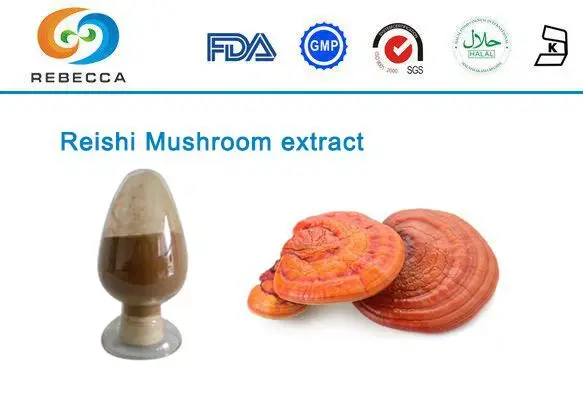
Natural Reishi Mushroom Extract
Product Name: Reishi Mushroom Extract
CAS No.: 173075-45-1
Specification: Ganoderma Triterpenes , 1%&1.6%, UV.
Test Method: UV
Latin Name: Ganoderma Triterpenes
Scientific Evidence, Safety Data, and Regulatory Perspective
To determine the appropriateness of daily consumption, it is essential to examine scientific evidence, regulatory stances, and clinical experience. Reishi has been used for hundreds of years, but regulators and scientists only examine recent facts, not history.
Numerous human trials and observational reports have assessed reishi mushroom extract in many forms, including capsules and powders. Clinical studies usually give people between 1.5 to 9 grams of crude equivalent per day, although extracts may be stronger. Many studies say that reishi is usually well-tolerated for weeks to months at a time. However, a few case studies indicate liver damage, particularly with prolonged usage of powdered reishi products.
Peer-reviewed journal articles say that most bad occurrences are modest, such stomach problems, dry mouth, or skin responses. Serious incidents like liver damage seem to be uncommon, but they have happened, so it's important to be vigilant about dose, quality control, and giving advice to customers. Even if these signals only happen in a tiny percentage of circumstances, you should not dismiss them.
Regulatory bodies and scientific committees have been careful in their decisions. For instance, the European Food Safety Authority (EFSA) has looked into the safety of various mushroom products and asked for further information on certain health claims. In the US, reishi is not an authorized medication, but it is offered as a nutritional supplement. The FDA wants supplement makers to follow current Good Manufacturing Practices (cGMPs) and not make claims on diseases that haven't been established.
Although national regulations differ, a few general principles apply across markets:
· Reishi products should avoid disease treatment claims and focus on support functions, such as general immune health or stress response.
· Manufacturers should have evidence that suggested daily intakes are reasonably safe for the intended population.
· Clear labeling and warnings for vulnerable groups, such as pregnant women or people taking anticoagulant drugs, are strongly recommended.
In this regulatory context, reishi mushroom extract can be used daily, but it must be handled with respect for safety data and legal frameworks. That is why the quality, standardization, and documentation provided by the extract supplier are so important.
Daily Dose Considerations
Research and commercial practice demonstrate a broad variety of doses. Depending on the strength and intended usage, several commercial preparations give you from 200 to 1500 mg of reishi mushroom extract every day. You may get higher dosages in specific formulations, but these are normally only used for short periods of time and with the help of a doctor.
Because the concentrations of extracts vary, a formula with 1% or 1.6% ganoderma triterpenes gives you a more precise amount of important bioactives. Product makers may figure out the exact amount of triterpene, make a daily serving that meets their safety standards, and maintain the amount taken within the levels utilized in research or approved by regulators.
Responsible companies also think about how much exposure builds up over time. For example, a person may take reishi in both a capsule and a mushroom coffee. When multiple goods are layered, clear labeling and uniform specifications can prevent people from accidentally taking too much.
Side Effects, Interactions, and Who Should Be Cautious
In general, reishi mushroom extract is safe for most healthy individuals when used in little amounts for short periods of time. But certain groups need more attention. Case reports and safety assessments say that persons with liver illness, those who use medicines that are bad for the liver, or those with complicated medical problems should only use reishi with the help of a doctor.
Some common side effects, which are usually mild and reversible, include:
· Digestive issues, such as upset stomach or loose stools.
· Dry mouth, nose, or throat.
· Skin rash or itching in sensitive individuals.
· Headache or mild dizziness in rare cases.
Reishi may also influence blood clotting. Several sources advise caution in people taking anticoagulant or antiplatelet medications, and in those preparing for surgery. The exact risk is still being studied, but serious brands often add a warning statement on their labels as a conservative measure.
Pregnant or breastfeeding women, children, and people with autoimmune conditions should consult healthcare professionals before using reishi. This advice aligns with many regulatory guidelines for botanicals and dietary supplements, where long term safety data for these groups are limited.
Why a Standardized, Well Documented Extract Is Essential for Safety?
Safety is not only about the mushroom species. It is also about extraction method, standardization, contaminants, and manufacturing controls. Two products labeled “reishi” can be very different in their content of triterpenes, polysaccharides, and potential impurities. That difference matters when considering daily use.
A reishi mushroom extract standardized to ganoderma triterpenes and tested with a defined method, such as UV spectroscopy, gives product developers a clear starting point. They know the minimum active content and can build dosage around that. This is quite different from using an undefined mushroom powder, where active levels may vary from batch to batch and from supplier to supplier.
From a safety perspective, the supplier’s broader capabilities are also important. A manufacturer that specializes in plant extracts and herbal active ingredient separation understands how extraction solvents, temperature, and concentration steps can affect both efficacy and purity. They also know how to control heavy metals, pesticide residues, and microbial contamination, which are critical for compliance with global standards.
Shaanxi Rebeccia, the company behind Rebecca Bio-Tech, focuses on production, research and development, and sales of plant extracts, as well as functional compound research based on traditional Chinese herbal medicine. Being a high tech export oriented company, it supplies natural herbal extracts to customers in the pharmaceutical, health product, beverage, and cosmetic industries worldwide. Three production lines, more than 100 plant extracts, and an annual capacity exceeding 500 metric tons give a solid basis for continuous supply and scalable projects.
When a buyer hesitates before sending an inquiry, the real question is often this: can this supplier support my brand in building a safe, compliant daily reishi product that will stand up to regulatory review and consumer scrutiny? A partner with experience in plant chemistry, documented quality systems, and export grade compliance offers a much clearer answer than a small, low visibility trader.
In daily practice, that support may include:
· Providing full specifications and Certificates of Analysis for each batch, including triterpene content, test method, and safety parameters.
· Helping formulators select the right strength, such as 1% or 1.6% ganoderma triterpenes, depending on the product concept and target markets.
· Working with customers on labeling language, suggested use, and warnings that align with local regulations and industry guidelines.
· Supporting stability and compatibility studies in complex matrices like beverages, cosmetics, or gummies.
By integrating these elements, brands can offer reishi mushroom extract products that are not only appealing but also aligned with safety expectations for daily use.
Reishi mushroom extract Supplier: Rebecca Bio-Tech
Knowing the history of the reishi mushroom is not enough to decide whether it is safe to add it to your next daily supplement, functional drink, or cosmetic composition. You need a source that knows both the science behind Ganoderma triterpenes and what the rules are in key export countries. Rebecca Bio-Tech gives your team more confidence that they can get from idea to compliance product by using defined specs, thorough testing, and expert technical assistance. Please email us at information@sxrebecca.com if you want to talk about requirements, sample requests, or unique solutions for reishi-based formulations. Our staff will get back to you, provide you thorough information, and work with you to come up with reishi mushroom extract applications that are safe, fulfill regulatory standards, and meet the expanding worldwide need for daily mushroom supplements.
References
· Ahmad, M.F. (2018). Ganoderma lucidum: A reasonable candidate for the modulation of neurodegenerative diseases. Nutrients.
· Paterson, R.R.M. (2006). Ganoderma – A therapeutic fungal biofactory. Phytochemistry.
· Examine.com. Reishi Mushroom (Ganoderma lucidum) – Evidence summary, dosage, and safety.
· WebMD. Reishi Mushroom: Uses, Side Effects, Interactions, and Dosing.
· National Institutes of Health Office of Dietary Supplements – General guidance on botanical dietary supplements and safety.