Siberian Ginseng Root Extract In Energy Drinks
My first encounter with Siberian ginseng root extract was in 2018 when a customer requested me to substitute synthetic caffeine in a ready-to-drink energy shot. The brief was easy enough on paper: equal energy increase, no jitters, clear label. In actuality it required four rounds of formulation to get the solubility and flavour balance perfect. That endeavor taught me something that I still tell every beverage developer: This ingredient works, but only if you know its boundaries.
What makes Eleutherococcus senticosus distinct from the dozens of other botanicals that are being pushed to energy drink brands? Its solution lies in its eleutheroside profile, its regulatory status and its behaviour in a drink matrix. In this essay I take you through what I’ve learned about each of those characteristics, based on actual formulation work and the published research that supports it.
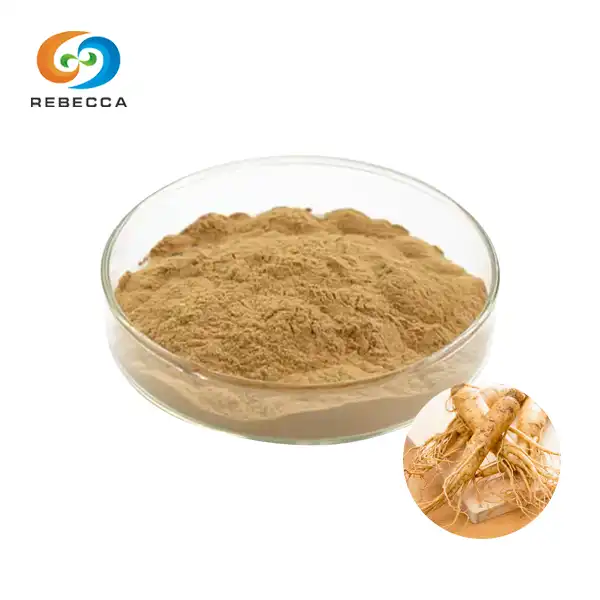
【English name】: Siberian ginseng extract
【Latin name】: Acanthopanax senticosus (Rupr. Maxim.) Harms)
【Active ingredients】: Eleutherosides
【Use Part】: Root and Stem
【Specification】: Eleutherosides Min 0.8%, HPLC
Eleutherosides Min 1.3%, HPLC
Eleutherosides Min 1.5%, HPLC
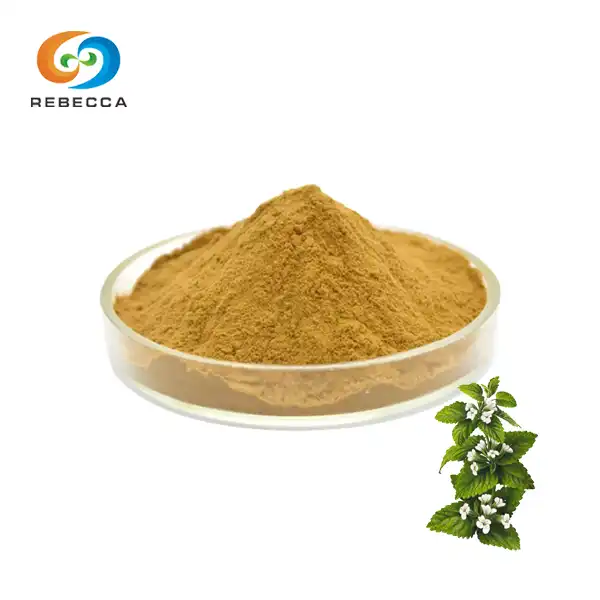
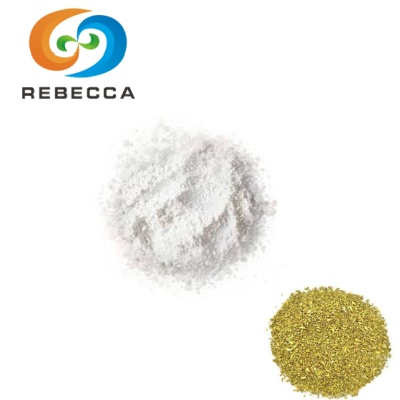
【Appearance】: Brown yellow powder
【Mesh size】: 80 Mesh
【Test Method】: HPLC
What Makes Siberian Ginseng Different from Other Energy Drink Ingredients?
Not Actually Ginseng — And That Matters
Eleutherococcus senticosus is a member of the Araliaceae family, but not a Panax species. It has no ginsenosides in common with Korean or American ginseng. The active markers are eleutherosides, especially eleutheroside B (syringin) and eleutheroside E (syringaresinol diglucoside). Commercial extracts are standardized to 0.8-1.5% total eleutherosides by HPLC according to the technique established by the European Pharmacopoeia Commission (Apers et al., 2005).
This is not only an intellectual distinction. The stronger stimulating impact generated by Panax ginseng causes discomfort to certain customers. Siberian ginseng is a milder, longer-lasting boost. This is a big deal for energy drink makers targeting the 25–45 female market, which is the fastest growing sector in functional drinks. Market research indicates that women in this age group regularly choose “balanced energy” over “intense stimulation.”
Adaptogenic Mechanism: Why It Delivers Energy Without the Crash
Siberian ginseng root extract works via affecting the body’s stress response mechanism, not by directly stimulating the neural system. Cortisol is released by the hypothalamic-pituitary-adrenal axis when a consumer is under metabolic stress from an exercise, a long shift or sleep deprivation. Eleutherosides contribute to a restoration of this reaction and so avoid the fatigue phase of prolonged exposure to stress.
In a thorough study published in Molecules in 2025, the pharmacological properties of the extract were validated, including its impact on stress resistance, mental endurance, and immunological modulation (PMC12195798). One of the most robust human experiments was an 8 week study by Kuo et al. (2010) where recreationally trained guys were given 800 mg/day of standardized extract. The supplemented group exhibited an increase of 23% in endurance time and an increase of 12% in VO₂ peak. These are the kinds of figures that make you want to put an ingredient line on the back of a can.
Where It Fits in the Bigger Energy Drink Picture
The worldwide adaptogenic drinks market size was evaluated at USD 1.6 billion in 2023 and is projected to reach USD 2.7 billion by 2030, rising at a CAGR of 8.1% (Grand View Research, 2024). In particular, the adaptogenic botanicals are anticipated to be the fastest expanding energy ingredient category with a CAGR of 9.84% through 2031 (Mordor Intelligence, 2026).
What is behind this? Three things. First, customers are reading labels. The phrase “adaptogen” has popular awareness today; it communicates natural, useful, and distinct from the Monster/Red Bull paradigm. Second, formulators are discovering that by using botanical mixes they may lower the caffeine amount and yet keep their promise of providing energy. Third, merchants like Whole Foods and Sprouts are carving out premium shelf space dedicated to useful botanicals. Eleutherococcus extract is located at the junction of these developments.
It’s important to understand why a substance works. The true formulation task is how do you get it into a bottle without falling out of solution or tasting like mulch.
How do beverage manufacturers formulate with Siberian ginseng extract?
Extract Specifications That Matter for Production
Siberian ginseng root extract powder is the industry standard in energy drink manufacture. Commercial extract usually is received as a brown-yellow powder, passing 80 mesh, with a bulk density of 0.45-0.65 g/ml. Why are these physical attributes important? Because they directly impact how the powder will distribute in your mixing tank. I have observed clumping occur when operators put the powder too rapidly into cold water. Both the agitation speed and the temperature need to be optimal.
On the chemical side Siberian ginseng root extract is hydrophobic. It does not dissolve in water, but it does disperse rather effectively if you agitate it properly. In clear drinks that indicates you may require an emulsifier or solubilizer. For cloudy or opaque beverages – juice-based energy mixes, protein shakes, meal replacements – the powder disperses with significantly fewer problems. The European Pharmacopoeia 10th edition (2020) defines the minimum requirement for the raw material, requiring that the total amount of eleutheroside B and E be at least 0.08% of the dry weight. Commercial extracts are much higher, often 0.8%–1.5%.
Thermal Stability and Shelf-Life Behavior
One of the reasons Siberian ginseng root extract is used in commercial drinks is its temperature stability. Standard pasteurization (72°C for 15 s) did not appreciably reduce the eleutheroside concentration. Hot-fill processing at 85–90°C is also possible, however if your product will be sitting on heated retail shelves, I advocate expedited stability testing at 40°C/75% RH.
The greater worry is pH. Eleutherosides are stable at pH 4–7, which encompasses most energy beverages, sparkling waters, and functional teas. If your formulation dips below pH 3.5 (common in certain citrus-based energy shots), you have to do a 12-week stability study to confirm eleutheroside is retained. Another aspect is the light sensitivity. The extract may change color from brown-yellow to reddish-brown during UV exposure due to breakdown of compounds similar to curcumin. Amber glass or opaque PET packaging may remedy this problem. If your business insists on transparent bottles, provide a modest overage to account for photodegradation.
Dosing, Flavor, and Consumer Experience
The effective dose is 200-400 mg of the standardized extract per dose. This will give you between 1.6 – 6.0 mg of total eleutherosides depending on what level of concentration you choose. If the amount is less than 200 mg, customers are unlikely to experience the adaptogenic effect. Over 400 mg, the slightly woody, earthy taste characteristic begins to compete with your flavor system.
Speaking of taste – here’s where many a first-time formulator trips. Siberian ginseng root extract has a mellow, root-like flavor that is far less harsh than, instance, Rhodiola rosea or ashwagandha. I find it mixes in nearly imperceptibly in fruit-forward energy drinks (mango, passionfruit, mixed berry) at 300mg per 250ml serve. In milder tastes, like lemon-lime or cucumber, you may require a masking agent or a little citrus flavor enhancement. According to the EMA monograph from 2014 on Eleutherococci radix, the maximum daily consumption for adults is 4 g of dry root equivalent, hence the dose for beverage usage is well within the safety margins that have been defined.
A stable, well-flavored formulation is only half the equation. “The other half is getting consistent extract at a cost that allows you to hit your margin targets – and that takes us into sourcing territory.”

What Procurement Teams Need to Verify Before Sourcing
Supplier Qualification Beyond the Certificate on the Wall
All suppliers are GMP certified (claimed). Your task is to check it. Request the certificate, note the granting organization and cross-reference it with the accrediting body's public database. One supplier has a food safety management system in place encompassing the whole manufacturing chain from incoming raw material to storage of the completed product and is ISO 22000-certified. This is important since many procurement managers do not aware that botanical extracts might be cross-contaminated when handled on common equipment.
You will require three papers before you place a purchase order: (1) a batch-specific Certificate of Analysis indicating the HPLC findings for the amount of eleutheroside B and E;
(2) heavy metal screening findings with limits of Lead <1.0 ppm, Arsenic <1.0 ppm, Cadmium <0.5 ppm and Mercury <0.1 ppm;
(3) microbiological test demonstrating E. absent coli, Salmonella and S. aureus. If a provider cannot offer any of these three, go away.
Real-World Pricing and Lead Times
Current market price for 0.8% eleutheroside extract is around $25–$35/kg for orders of 100 kg+. The 1.5% grade fetches a premium, usually $40–$55/kg, since more processing steps are required to obtain the higher concentration. These are FOB China pricing as of mid-2026 with swings of 10-15% based on the harvest yields from the main agricultural areas of northeastern China and Russia.
Another element to consider while planning your manufacturing schedule is lead times. The first orders normally take 4-6 weeks to be processed – the supplier requires time to do quality verification, export paperwork and freight scheduling. After the partnership is in place, follow up orders might be 2-3 weeks. I would advocate negotiating a yearlong contract with delivery schedules on a quarterly basis rather than ad-hoc ordering. It locks in prices and makes sure you aren’t scrambling when a manufacturing run is planned. The cost premium for DDP shipment is sometimes worth it if your team is new to import logistics, since the supplier handles customs clearance and you have the item delivered to your warehouse door.
Sample Testing: The Step Too Many Buyers Skip
Test in your real formulation at the 100- to 500-gram level before you get to a ton. Solubility behavior, flavor contribution and processing compatibility all differ from supplier to supplier – even when the COA numbers appear the same. Send a fraction for HPLC verification to an independent third-party lab. In 2023, a quality study of commercial Eleutherococcus products showed that certain batches did not contain the minimum 0.08% of eleutheroside required by the European Pharmacopoeia (HAL open science hal-04823307). Supplier claims don’t always match reality.
With Siberian ginseng root extract, less prevalent than with high-value botanicals such as turmeric or saffron, but not zero. The most common problem is replacement with cheaper Panax species or adulteration with maltodextrin fillers. HPLC fingerprint captures both. It is significantly more probable that a supplier that is open about the places where it grows its coffee and has direct contacts with the networks of farmers would be able to supply consistent quality than one that sources via nameless intermediaries.

FAQ
1. Can Siberian ginseng extract be used with caffeine in the same formula?
Yes, and many commercial energy drinks use both. The adaptogen does not negate the stimulating effects of coffee, it works with it, modulating the body’s stress response. A typical mix is 300mg of Siberian ginseng extract and 80mg of caffeine (from green tea or coffeeberry) in each 250ml serving. The botanical component smooths out the energy curve, so customers don’t get the crash after the caffeine.
2. How long does a completed energy drink with this extract last?
For most formulas a feasible starting point is twelve months assuming suitable packing and storage below 25°C. I’ve witnessed 18 months of stability in amber bottles. The limiting element is often not the degradation of eleutheroside, but the stability of color. Commit to a shelf-life claim only after a 12-week accelerated research at 40°C, with eleutheroside content determined by HPLC and sensory assessment at weeks 0, 4, 8 and 12.
3. Is there a difference in regulation when utilizing the extract in the US vs the EU?
Yes. Eleutherococcus senticosus is sold as a dietary supplement ingredient in the US under DSHEA and does not need pre-market FDA clearance for use in drinks positioned as supplements. In the EU, the EMA HMPC issued a traditional-use monograph in 2014 that acknowledged the root for “symptoms of asthenia such as tiredness and weakness”. For food and beverage applications (as opposed to herbal medicinal products), individual EU member state regulations apply, and EFSA has not approved any health claims for eleuthero. Always contact a regulatory expert in your individual market and product class.
4. Cost-per-serving vs. synthetic energy ingredients?
The raw ingredient cost is around $0.009 each can, or less than a penny, at 300 mg a serving (at $30/kg for 0.8% extract). Synthetic caffeine, at 80mg per serving, costs a quarter of that. But the value proposition isn't about the cost of basic ingredients. It’s about the marketing claim. “Adaptogen-powered energy” demands a 15–30% retail price premium over regular energy drinks, comfortably paying for the botanical expense and enhancing profitability. The actual cost question is if your target buyer appreciates the narrative tale enough to pay that price.
5. Can this extract be added to carbonated beverages?
Yes. Yes The extract is suitable for carbonated systems. The important aspect is to make sure that there is full dissolving before carbonation – undissolved particles might function as nucleation sites, and cause excessive foaming during filling. Dissolve extract in a small amount of batch water first, with agitation at 40-50°C, and then mix into main tank, before carbonation.
Partner with Rebecca for Premium Siberian Ginseng Root Extract Supply
Rebecca specializes in providing pharmaceutical-grade Siberian ginseng root extract standardized at 0.8%, 1.3% and 1.5% eleutherosides, fulfilling the stringent criteria of beverage makers throughout the world. We are vertically integrated with cultivation supervision, high-tech HPLC-proven extraction and full quality documentation with FDA and EFSA certification. With three specialized processing lines, our yearly production capacity exceeds 500 metric tons, ensuring stable supply continuity for growing brands as well as major international beverage firms.
Our technical team can give formulation help for solubility optimization, flavor masking tactics, and stability improvement for your unique beverage system. We are a leading v provider and are GMP, ISO 22000 and HACCP certified with batch specific analytical data on heavy metals, pesticides and microbiological factors. For unique extract specs, sample requests, or bulk pricing for your next energy drink invention, contact our procurement experts at information@sxrebecca.com.
References
1. Grand View Research. (2024). Adaptogenic Drinks Market Size, Share & Trends Analysis Report By 2030.
2. Mordor Intelligence. (2026). Energy Ingredients Market Size & Share Analysis – Growth Trends & Forecast (2026-2031)
3. Apers, S., Naessens, T., Van Miert, S., Pieters, L. & Vlietinck, A. (2005). HPLC quality control of Eleutherococcus senticosus roots.Phytochemical Analysis, 16(1), 55–60.
4. Kuo, J., Chen, K.W., Cheng, I.S., Tsai, P.H., Lu, Y.J., & Lee, N.Y. (2018). (2010). Effect of 8-week supplementation with Eleutherococcus senticosus on endurance capacity and metabolism in humans.Chinese Journal of Physiology, 53(2), 105-111.
5. Grad, M., Stolarczyk, M., Wróbel, A. et al. (2025).Eleutherococcus senticosus (Acanthopanax senticosus): the major adaptogen.Molecules 30(8), 1802.
6. European Medicines Agency, Committee on Herbal Medicinal Products (HMPC). (2014). Community herbal monograph on Eleutherococcus senticosus (Maxim.) Maxim. radix.EMA/HMPC/680615/2013.