
Taking Berberine And Alpha Lipoic Acid Together
There is a lot of interest in two amazing ingredients because of the growing interest in natural chemicals that can help the metabolism. Alpha lipoic acid (ALA) and berberine are nutrients that have been studied extensively and are frequently used to help control blood sugar and make insulin work better. Formulators and supplement makers are always looking for strong ingredient pairs, and this one stands out because the ways it works together are so well.
As time goes on, the health supplement business changes, and more and more B2B buyers want raw materials that are backed by scientific study. People want to take them together because it's possible that their different biological effects could work better together, making the effects stronger. Manufacturers can make better products for their customers when they know how these two chemicals work separately and together.
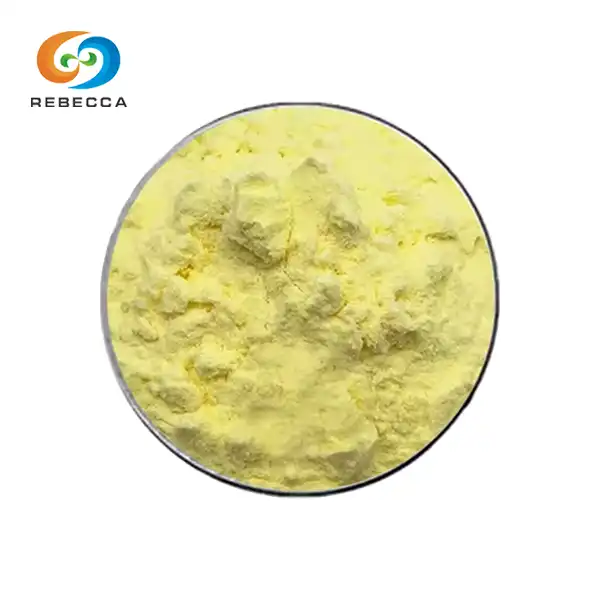
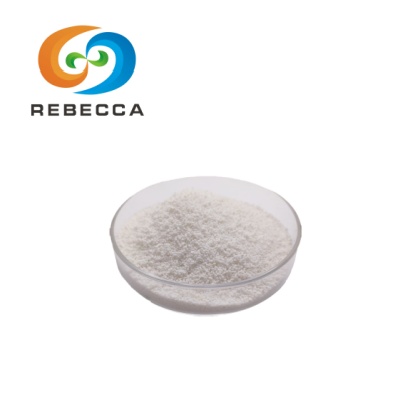
Alpha Lipoic Acid Powder
Product Name:alpha lipoic acid
CAS No.:1077-28-7
Specification:99%
Test Method:HPLC
Appearance:Light yellow to yellow powder
Shelf Life: 2 years<br>
Minimum Order Quantity: 1 kg<br>
Samples: Free samples available<br>
Certifications: GMP, ISO, HACCP, KOSHER, and HALAL.<br>
Payment: Various payment methods accepted.<br>
Advantages: Manufactured in a 100,000-grade cleanroom, our products are additive-free, non-GMO<br>
Inner Package: Double PE Bags; Net 5kg/Bag<br>
Outside Package: Paper Drums, Net 25kg/Drum<br>
Storage:Store in a cool, dry place away from Light and Heat.<br>
Science Behind Berberine and ALA Synergy
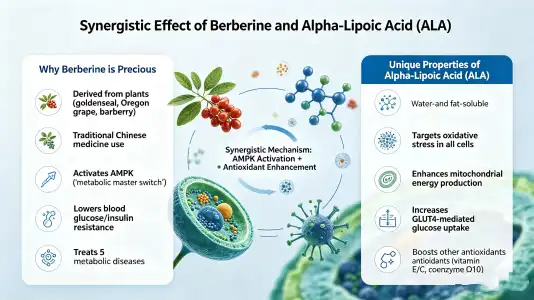
What Makes Berberine a Valuable Ingredient?
The beneficial substance berberine is taken from a number of plants and has been used in Chinese medicine for a long time. Scientists have paid a lot of attention to this yellow chemical in the last few decades. Berberine comes from plants like goldenseal, Oregon grape, and barberry, and it can be used in a lot of different ways.
This chemical works by turning on an enzyme called Adenosine Monophosphate-Activated Protein Kinase (AMPK), which is also known as the "metabolic master switch." This action helps control how cells in the body use energy. When AMPK is turned on, it helps cells take in glucose, which is similar to how exercise works in the body.
Researchers have found a lot of evidence that berberine affects biochemical processes. It makes amounts of fasting blood glucose, post-meal blood glucose, and glycosylated haemoglobin higher while lowering insulin resistance. Berberine is a good ingredient for formulators who are making items to help the metabolism because it has these qualities.
For five metabolic diseases, berberine has been shown to be a good medicine. There are many health areas where it can be used, such as supporting good blood sugar levels, cholesterol metabolism, and heart health. Because it has been shown to have health benefits, supplement companies all over the world use this protein in their products.
The Unique Properties of Alpha Lipoic Acid
Alpha-lipoic acid (ALA) is a vitamin that can help manage chronic diseases that are marked by oxidative stress, such as diabetic neuropathy. It also shows promise in stopping the development of metabolic syndrome because it is an antioxidant. In contrast to many other antioxidants, ALA has a special quality that makes it very useful.
ALA is special because it can dissolve in both water and fat. This means that it can fight reactive stress all over the body. Because it dissolves in two different ways, alpha lipoic acid powder can get to almost all of the cells in the body. A lot of antioxidants only work in settings that are high in water or fat. ALA doesn't follow this rule.
A substance called ALA helps enzymes in the mitochondria do their job of making energy for cells. ALA helps turn foods into energy that cells can use in mitochondria, which are like power plants inside cells. It directly improves the use of glucose by helping glucose transporters (GLUT4) move to the cell membrane. This makes it easier for cells to take in sugar.
Along with its direct antioxidant effect, ALA also helps other antioxidants work better, like vitamin E, vitamin C, and coenzyme Q10. This ability to heal and grow makes the body's antioxidant defence system stronger. Because it works so well, scientists sometimes call ALA the "antioxidant of antioxidants."
The Complementary Mechanisms: How Berberine and ALA Work Together
Different Pathways, Unified Benefits
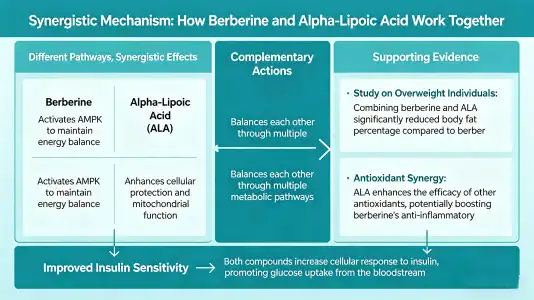
Berberine and alpha-lipoic acid may have synergistic effects when taken together, which means they may work better together than when taken separately. This works together because each chemical works on a different but related body route.
Berberine and ALA work in different ways that balance each other, giving your metabolism extra help in more than one way. While berberine mainly turns on AMPK to keep the balance of energy, ALA boosts the protective power of cells and helps mitochondria work. Berberine mostly works on cellular signalling pathways, such as activating AMPK, to keep the balance of energy and make insulin work better.
All of these things work together to help control glucose, make insulin work better, and keep cells like nerves and blood vessels from getting hurt by high blood sugar. This method has more than one goal, which is why many pill companies mix these two ingredients together.
Evidence Supporting the Combination
A study with overweight people found that taking berberine and ALA together led to a bigger drop in body fat percentage than taking berberine alone. This suggests that the two substances work together to make one effect stronger. Because of these results, product makers want to look into this combo even more.
ALA's antioxidant qualities can make other antioxidants work again, which could make Berberine's anti-inflammatory and protective effects stronger. ALA is "used up" when it fights free radicals, but the body can make more of it. At the same time, ALA makes more antioxidants, which has a chain reaction of beneficial benefits.
It has been shown that both berberine and alpha-lipoic acid make cells more sensitive to insulin. This means that cells can react to insulin and take glucose from the blood. This important biochemical process may get more help from the mixture than from either ingredient alone because they work on it in different ways.
Applications for Alpha Lipoic Acid Powder in Supplement Manufacturing
Formulation Considerations for B2B Buyers
Companies that want to buy high-quality alpha lipoic acid powder need to find dependable sources who know everything there is to know about this ingredient. There are different kinds of ALA supplements on the market around the world. These include film-coated pills (usually 600 mg), soft capsules (300–600 mg), hard capsules (200 mg), powder, and watery liquids.
The powder form gives you the most options for making your own formulas. Product designers can carefully control doses and mix ALA with other ingredients that work well together, such as berberine. Most people take between 300 mg and 600 mg of alpha lipoic acid every day. Manufacturers can meet these dose needs across a range of product forms by getting their hands on pure, high-purity powder.
If nothing else is said, ALA sold as a food additive is a racemic mixture of the S and R isomers. Formulators can make better choices about where to get their raw materials when they understand these technical standards. Manufacturers who care about quality choose providers who give them thorough records of analysis and uniform product specs.
Market Opportunities and Consumer Demand
The world market for food supplements keeps growing because more people are learning about how to stay healthy. A lot of people are interested in alpha-lipoic acid these days. This rising desire opens up a lot of possibilities for companies that can make high-quality goods with this element.
Research shows that it might have something to do with diabetes, weight loss, and other health problems. As more people look for natural ways to improve their metabolic health, the market for goods that combine berberine and ALA grows. Manufacturers who are looking to the future are getting ready to meet this demand with well-formulated goods.
People who care about their health and want complete metabolic support like the mix of berberine and alpha lipoic acid powder. Berberine and alpha-lipoic acid are well-known food products that have been looked into to see if they might be good for your health. Manufacturers can stand out in a crowded market by making goods that take advantage of this synergy.
Quality Considerations When Sourcing Raw Materials
Why Purity and Testing Matter
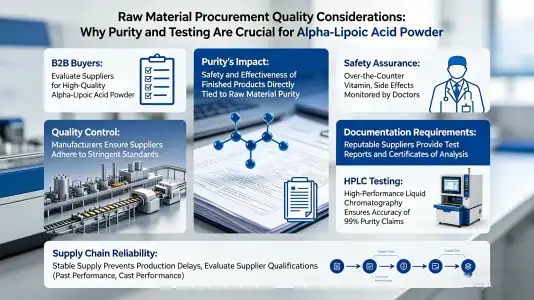
Business-to-business buyers need to carefully evaluate suppliers in order to find high-quality alpha lipoic acid powder. The safety and effectiveness of finished goods are directly related to how pure the raw materials are. Manufacturers need to make sure that their providers follow strict quality control rules during the whole production process.
ALA is a vitamin that you can buy over the counter and is usually safe. If you have any side effects, your doctor can keep an eye on them and treat them. This safety profile relies on using products that were made correctly and don't contain any contaminants. Suppliers with a good reputation give a lot of paperwork, like test reports and certificates of analysis from approved labs.
High-Performance Liquid Chromatography (HPLC) testing methods make sure that quality checks are done correctly. When specs say 99% pure, buyers should expect providers to back that up with scientific data. This paperwork helps producers and makes sure that end users always get the same high-quality products.
Supply Chain Reliability
Consistent supply of raw materials enables manufacturers to maintain production schedules and meet market demand. Establishing relationships with reliable suppliers who maintain adequate inventory prevents costly production delays. B2B buyers should evaluate suppliers based on their track record, production capacity, and commitment to quality.
Modern supplement manufacturing demands transparency throughout the supply chain. Buyers increasingly require detailed information about sourcing, manufacturing processes, and quality assurance protocols. Suppliers who meet these expectations build long-term partnerships with discerning manufacturers.
Alpha Lipoic Acid Powder Supplier: Rebecca Bio-Tech
It is important to find a reliable provider of alpha lipoic acid powder in order to keep product quality high and meet market needs. The main things that Shaanxi Rebecca Bio-Tech does are research and development, production, and sales of plant extracts, herbal active ingredient separation, and functional compound study for traditional Chinese herbal medicine. As a high-tech business that focuses on exports, Rebecca Bio-Tech is committed to offering medicine, health goods, beverage, and skincare companies around the world with high-quality natural plant extracts.
Our alpha lipoic acid meets the highest quality standards:
- Specification: 99%
- Test Method: HPLC
Over 100 plant extracts are made on Rebecca Bio-Tech's three production lines, which can make more than 500 metric tonnes of products every year. This large volume makes sure that producers of all kinds can always get what they need. Whether you need bulk quantities for large-scale production or smaller amounts for product development, our team provides responsive service and competitive pricing.
If you need alpha lipoic acid powder, Rebecca Bio-Tech is the company to work with. When you use quality raw materials, your end goods will be better. Our expert team can help you with preparation and answer any questions you have about how to mix ALA with ingredients that work well together, such as berberine.
Are you ready to talk about the needs of your project? Contact our team today at information@sxrebecca.com to request product specifications, certificates of analysis, or pricing information. Let Rebecca Bio-Tech become your go-to source for high-quality products for health supplements.
FAQs
1. What are the main benefits of combining berberine with alpha lipoic acid?
Among other things, these nutrients have been shown to make insulin work better and lower inflammation. The two work together to improve metabolic health in ways that are complementary. Berberine turns on AMPK pathways, and ALA supports cells' energy production and acts as a powerful antioxidant. Together, they help the metabolism in more ways than either one by itself.
2. What purity level should B2B buyers expect for alpha lipoic acid powder?
Professional-grade alpha lipoic acid powder should be at least 99% pure, which can be shown by HPLC tests. Reliable sellers give out records of analysis that prove the product's quality, identity, and lack of contamination. This high level of purity makes sure that finished vitamin goods always work well.
3. How do manufacturers typically combine these two ingredients in formulations?
Berberine and alpha lipoic acid work together to support good blood sugar levels, insulin function, cholesterol metabolism, and heart health. Most commercial versions use a ratio of 400 mg berberine to 50 to 100 mg ALA. However, some goods have higher ALA amounts (300 to 600 mg) based on the health benefits they are meant to provide.
4. What should buyers consider when sourcing these raw materials?
Some important things to think about are how reliable the provider is, the quality documents (COA, test methods), the purity requirements, the production capacity, and the expert support. Building ties with providers that focus on health supplement ingredients helps manufacturers keep the quality of their products stable and their supply chains running smoothly.
5. Are there any formulation challenges when combining berberine with ALA?
Both of these ingredients need to be kept in the right way to keep them stable. The amount of thyroid hormone in the body may also go down when ALA is present. Formulators should also think about the fact that both vitamins can lower blood sugar on their own, which changes how the products are labelled and how customers are told what to do. These technical issues can be easier to deal with if you work with skilled raw material sources.
References
1. ScienceInsights - "Can I Take Berberine and Alpha Lipoic Acid Together?" (2025)
2. PMC - "Alpha-Lipoic Acid: Biological Mechanisms and Health Benefits" (2024)
3. PMC - "Berberine, a Herbal Metabolite in the Metabolic Syndrome" (2022)
4. WebMD - "Alpha-Lipoic Acid (ALA): Benefits and Side Effects" (2025)
5. Cleveland Clinic - "Berberine: What It Is, Benefits & Side Effects" (2025)
6. PMC - "Efficacy of Berberine in Patients with Type 2 Diabetes"
 EXTRACT_1756803389333.jpg)