What is alpha-lipoic acid used for?
alpha lipoic acid powder is one of the most flexible and biochemically powerful compounds in the contemporary nutraceutical and pharmaceutical environment. This molecule has been nicknamed the “Universal Antioxidant” and has graduated from a specialized metabolic co-factor to a mainstay of high performance formulations. As anti-ageing serums, metabolic health supplements and functional beverages gain traction, the technical nuances of this substance will be critical to commercial success.
At Rebecca, we know that procurement managers and R&D experts want more than a raw material. They need a reliable, high-purity solution with robust testing. Our alpha-lipoic acid powder (CAS No. 1077-28-7) is produced to the highest manufacturing standards in the world and is HPLC verified 99% pure. In this post we tell you why this chemical is so important and how you may make use of its unique properties for your future product line.
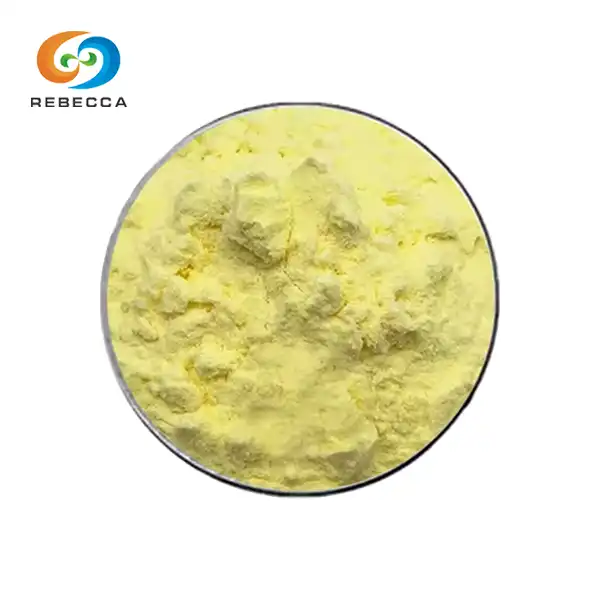
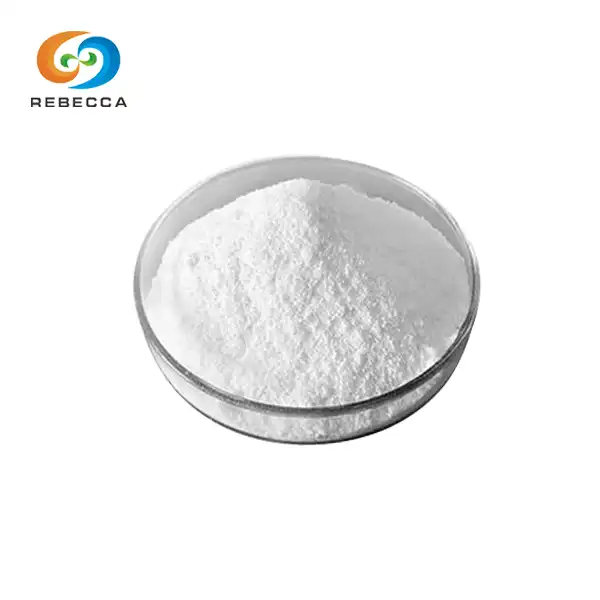
Alpha Lipoic Acid Powder
Product Name:alpha lipoic acid
CAS No.:1077-28-7
Specification:99%
Test Method:HPLC
Appearance:Light yellow to yellow powder
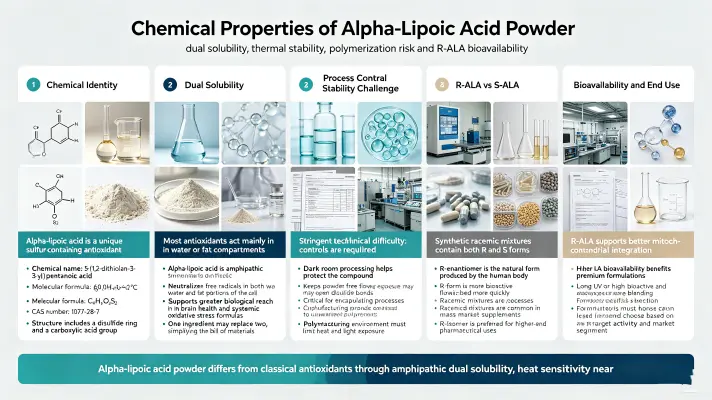
Chemical Properties of Alpha-Lipoic Acid Powder
It is important to know the chemical features that differ this substance from classical antioxidants such as Vitamin C or E before using it in a formulation. Controlling these qualities throughout manufacturing is a major factor in the efficacy of your finished product.
Dual Solubility: The Amphipathic Advantage
Most antioxidants are restricted by their environment to either water-soluble compartments or fat-soluble membranes. High grade alpha-lipoic acid powder breaks this barrier because of its amphipathic structure, therefore neutralizing free radicals in every portion of the human cell. This dual solubility enables formulations targeting brain health or systemic oxidative stress to attain a greater level of biological reach than single-phase chemicals. This implies that for producers, one ingredient may take the place of two, simplifying the bill of materials and boosting product effectiveness.
The Challenge of Thermal Stability and Polymerization
One of the primary technical difficulties with alpha-lipoic acid powder is its heat sensitivity. The compound has a low melting point, generally 60.0°C-62.0°C. However, long exposure to UV light or high temperatures may open the disulfide bonds of the molecule and lead to unwanted polymerization. This produces a stretchable, insoluble material that is not suitable for manufacturing. Stringent temperature controls and dark room processing must be used to keep the powder free flowing during the blending and encapsulating processes.
R-ALA vs. S-ALA: Prioritizing Bioavailability
The B2B marketplace does not provide equal treatment to all variants of this substance. Synthetic racemic mixtures are a combination of both R and S. The R-enantiomer is the form generated naturally by the human body. Alpha lipoic acid powder in the R-form is far more bioactive and is absorbed much more quickly. Racemic mixtures are cheaper for mass market supplements, but the R-isomer is generally desired for higher end pharmaceutical uses for better mitochondrial integration and metabolic effects.
With the chemical basis laid, we can now look at how these distinct qualities find themselves in a variety of industrial applications across the health and beauty industries.
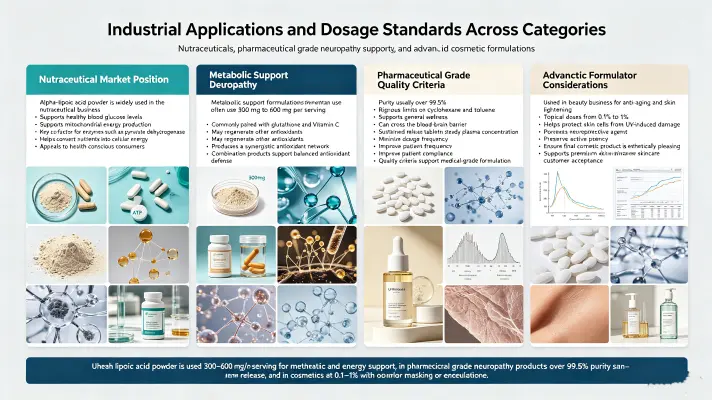
Industrial Applications and Dosage Standards Across Categories
The adaptability of alpha lipoic acid powder means it can anchor goods in three different multi-billion dollar sectors. Each sector needs unique concentrations and delivery forms in an effort to enhance the physiological effect of the substance.
Nutraceuticals for Metabolic and Energy Support
Alpha lipoic acid powder is mostly used in the nutraceutical business due to its many health advantages such as support of healthy blood glucose levels and mitochondrial energy production. It is a key co-factor to enzymes such as pyruvate dehydrogenase , which converts nutrients into cellular energy ( ATP ) . Metabolic support formulations are often given at dosages of 300mg to 600mg per serving. It is often paired with other antioxidants, like glutathione and Vitamin C, since it may regenerate those other antioxidants, producing a synergistic "antioxidant network" that appeals to health-conscious clients.
Pharmaceutical Grade Applications in Neuropathy
Pharmaceutical grade alpha lipoic acid powder has been widely examined for the treatment of peripheral neuropathy, as well as general wellness. It can cross the blood brain barrier and so is a potent neuroprotective agent. For medical grade applications, purity criteria are usually consistently over 99.5% and rigorous limits on residual solvents such as cyclohexane and toluene . The formulators in this area often utilize sustained release tablets to maintain steady plasma concentration so as to minimize the frequency of dosage and improving patient compliance.
Advanced Cosmetic and Topical Formulations
Alpha Lipoic Acid Powder is used in the beauty business for its substantial anti-aging and skin lightening impacts. Applied topically at doses from 0.1% to 1%, it helps protect skin cells from UV-induced damage and decreases the appearance of fine wrinkles. However, the inherent sulfurous odor of the substance has to be considered by formulators. We recommend the use of sophisticated masking agents or specialized encapsulation to guarantee the final cosmetic product is esthetically pleasing to premium skincare customers without sacrificing active potency.
Success in these sectors isn’t just about adding the element to a mix; it’s about formulating for stability and distribution in a planned way.
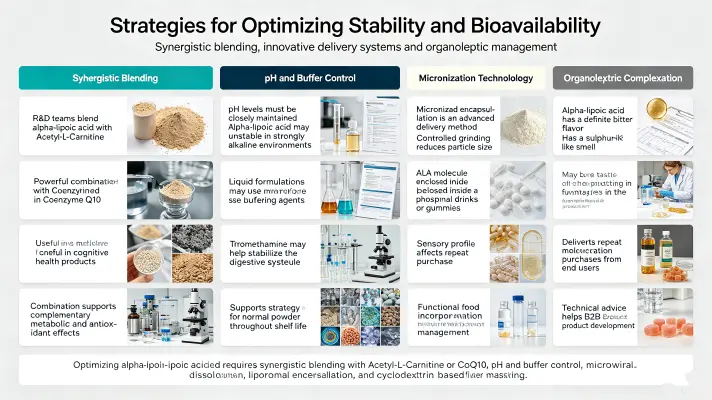
Strategies for Optimizing Stability and Bioavailability
The transformation of raw alpha-lipoic acid powder into a completed consumer product includes intricate interactions between constituents. The difference between a product that performs well and one that breaks down on the shelf is proper stability.
Synergistic Blending and Ingredient Compatibility
R&D teams typically blend alpha-lipoic acid powder with other complementing actives such as Acetyl-L-Carnitine or Coenzyme Q10 to improve its performance. These combinations are very potent in sports nutrition and cognitive health products. But the pH levels have to be closely maintained since the acid might become unstable in a strongly alkaline environment. In liquid formulations buffering agents (e.g. tromethamine) may be added to stabilize the molecule such that the active content is potent for the intended shelf life.
Innovative Delivery Systems: Micronization and Liposomes
To avoid absorption issues with normal powders, several companies are opting for micronized alpha-lipoic acid powder. The makers of the product may greatly improve the surface area by specific grinding to reduce the particle size. This allows the product to dissolve more quickly in the digestive system. Moreover, liposomal encapsulation is the cutting edge of delivery. The method encloses the ALA molecule inside a phospholipid bilayer that shields it from stomach acid and allows it to be absorbed directly into the cells. This is the key selling feature of the premium “high-bioavailability” products.
Managing the Organoleptic Profile in Functional Foods
Incorporating alpha-lipoic acid powder into functional drinks or gummies provides a distinct sensory difficulty. It has a definite, somewhat bitter flavor and a sulphur-like smell that may be off-putting. We provide technical advise on flavor-masking methods, such cyclodextrin complexation, for B2B applications. This approach “captures” the taste molecules in such a way that the health advantages are supplied in a pleasant style that promotes repeat purchases from the end-user.
Achieving these technical requirements means partnering with a supplier that is committed to quality control and regulatory compliance.
Procurement Standards and Global Supply Chain Reliability
For procurement professionals, sourcing alpha-lipoic acid powder is a balance of price, quality, and documentation. A failure in any of these areas can lead to costly production delays or regulatory recalls.
Essential Certifications and Quality Documentation
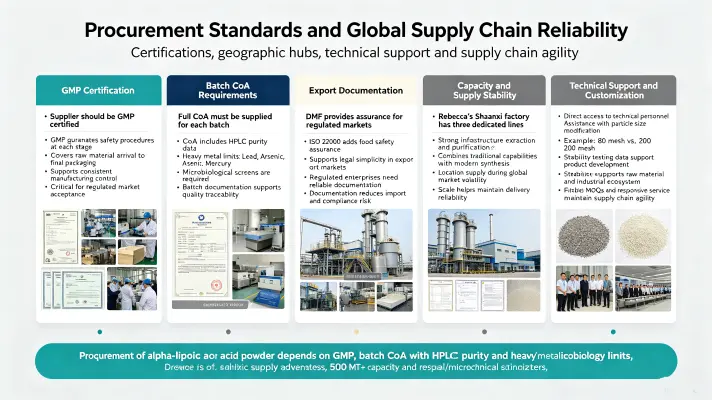
If you are seeking for a supplier of alpha lipoic acid powder, he should be GMP (Good Manufacturing Practice) certified. This guaranties that safety procedures laid forth are followed at each stage of the production process, from the arrival of the raw material to the final packaging. In addition, a full CoA must be supplied for each batch and must contain HPLC purity, heavy metal restrictions (Lead, Arsenic, Mercury) and microbiological screens. A DMF or ISO 22000 certification provides an essential layer of assurance and legal simplicity for enterprises exporting into regulated markets.
Evaluating Geographic Production Hubs
Today, Shaanxi province in China is the world’s nerve center for high-quality botanical and chemical extracts. The alpha-lipoic acid powder in this location is sourced thanks to a robust infrastructure, blending traditional extraction capabilities with contemporary synthetic purification. Rebecca’s Shaanxi factory has three dedicated manufacturing lines with an annual capacity of more than 500 metric tons. This size provides our partners with price consistency and steady supply even at times of severe volatility in the global markets.
The Importance of Technical Support and Customization
A successful B2B collaboration is not only about supplying alpha lipoic acid powder. It provides direct access to technical personnel who can assist with particle size modification (ex. 80 mesh vs. 200 mesh) and stability testing data. If you need specialized packaging for foreign sea freight, or accurate purity grades for sensitive pharmaceutical applications, choosing a vendor with flexible MOQs and a responsive attitude is key to maintaining an agile supply chain.
Conclusion
The worldwide health and wellness industry is increasing the use of alpha-lipoic acid powder as fresh clinical studies continue supporting the systemic advantages of the powder. It is one of the most powerful methods to alleviate oxidative stress, due to its unique dual solubility chemical profile and its essential involvement in mitochondrial activity. The winners will be the producers and brand owners that know how to keep this delicate chemical stable and work with a transparent, quality source. The growing need for high effectiveness, scientifically based treatments, makes the addition of premium ALA to your portfolio a smart choice delivering both clinical efficacy and commercial durability.
FAQ
Q1: What is the shelf life of bulk alpha-lipoic acid powder?
A: When stored in a cool, dry place away from direct light in its original sealed packaging, our powder typically has a shelf life of 24 months. It is essential to keep storage temperatures below 25°C to prevent any risk of polymerization.
Q2: Can your alpha-lipoic acid powder be used in liquid energy shots?
A: Yes, though it requires specific stabilization. Because it is amphipathic, it can be integrated into liquids, but we recommend using a pH-buffered solution or microencapsulated forms to prevent precipitation and mask the natural odor of the ingredient.
Q3: How do you verify the 99% purity of your product?
A: Every batch of our alpha-lipoic acid powder undergoes High-Performance Liquid Chromatography (HPLC) testing. This is the industry gold standard for identifying the exact concentration of the active compound and ensuring that impurities are within pharmaceutical-grade limits.
Q4: Is your ALA powder suitable for vegan and clean-label products?
A: Absolutely. Our synthetic production process does not utilize animal-derived starting materials, making it 100% vegan-friendly. We also ensure that the final powder is free from common allergens, aligning with the requirements of clean-label supplement brands.
Partner with Rebecca for Premium Alpha-Lipoic Acid Supply
Are you looking to elevate your product line with a science-backed, high-purity ingredient? Rebecca is a leading manufacturer of alpha-lipoic acid powder, dedicated to supporting your brand's growth through technical excellence and reliable bulk supply. Our Shaanxi-based facility is fully certified (GMP, ISO, HACCP), ensuring that every kilogram you receive meets the highest international safety standards.
Take the next step in your formulation journey:
Contact our technical team today at information@sxrebecca.com to request a Free Sample or a Full Specification Sheet. Let our experts help you solve your formulation challenges and secure your supply chain for the upcoming quarter.
References
1. Packer, L., Witt, E. H., & Tritschler, H. J. (1995). "Alpha-lipoic acid as a biological antioxidant." Free Radical Biology and Medicine.
2. Shay, K. P., et al. (2009). "Alpha-lipoic acid as a dietary supplement: Molecular mechanisms and therapeutic potential." Biochimica et Biophysica Acta.
3. Ziegler, D., et al. (2006). "Oral treatment with alpha-lipoic acid improves symptomatic diabetic polyneuropathy." Diabetes Care.
4. Gomes, M. B., & Negrato, C. A. (2014). "Alpha-lipoic acid as a pleiotropic compound with potential therapeutic use in diabetes and other chronic diseases." Diabetology & Metabolic Syndrome.
5. Moini, H., Packer, L., & Saris, N. E. (2002). "Antioxidant and prooxidant activities of alpha-lipoic acid and dihydrolipoic acid." Toxicology and Applied Pharmacology.
6. Liu, J. (2008). "The effects and mechanisms of mitochondrial-targeted nutrients in oxidative stress and aging." Annals of the New York Academy of Sciences.