What Is L Ergothioneine?
L ergothioneine is a special amino acid derivative that contains sulphur. Certain bacteria and fungi naturally produce it. It is particularly abundant in mushrooms. This substance has high antioxidant properties. It enters cells in a unique manner. For usage in supplements, skincare, and research, many individuals increasingly seek to l ergothioneine powder. This article describes what it is, how it works, how it differs from alternatives, and its applications.
L Ergothioneine Powder
【English name】:L-Ergothioneine
【Chemical Name】:2-mercaptohistidine trimethylbetaine, EGT
【CAS No.】:497-30-3
【Molecular Formula】: C9H15N3O2S
【Specification】: 99%
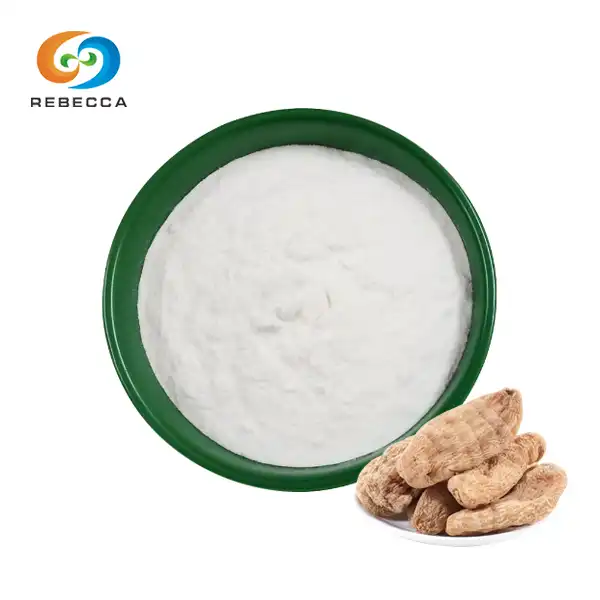
【Appearance】: White Crystalline Powder
【Test Method】: HPLC
【Solubility】:Soluble in Water (up to 10 mg/ml)
【Function】Remove stains, whiten skin, delay aging and prevent various diseases etc.
【Application】Food and health care,Cosmetic,Medicine etc.
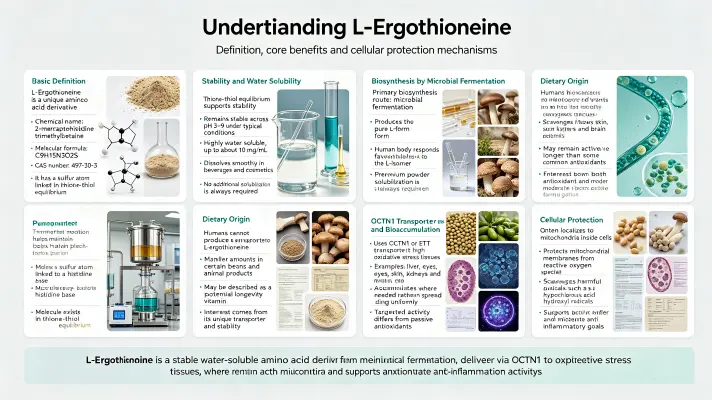
Understanding L-Ergothioneine: Definition and Core Benefits
We must first examine this ingredient's fundamental characteristics and primary advantages in order to comprehend its worth.
The Science Behind This Unique Amino Acid Derivative
2-mercaptohistidine trimethylbetaine is the chemical name for L-ergothioneine. C9H15N3O2S is its molecular formula. 497-30-3 is the CAS number. A sulphur atom is joined to a histidine base in the molecule. It is in a thione-thiol equilibrium. Even at typical human pH levels, which range from around 3 to 9, this equilibrium prevents it from degrading readily.
Because of its structure, it is quite soluble in water—up to around 10 mg per millilitre. When creating beverages or cosmetics items, this feature is useful. It combines smoothly and doesn't need further assistance. The primary method of biosynthesis is microbial fermentation. The pure L-form is created using this technique. The body only responds favourably to the L-isomer. This purity is maintained from batch to batch by using premium l ergothioneine powder from fermentation.
This chemical cannot be produced by humans. It comes from food, mostly from mushrooms. Small quantities are also found in certain beans and animal products that were fed fungus-rich plants. In some debates, scientists refer to it as a potential "longevity vitamin" due to its unique characteristics.
Cellular Protection Mechanisms and Bioaccumulation
This molecule is unique since it has a specific transporter. It is transported into cells by the body via a protein called OCTN1 (also known as ETT). The chemical is aggressively drawn into tissues with high levels of oxidative stress by this transporter. The liver, eyes, skin, kidneys, and certain brain cells are a few examples.
It often travels to the mitochondria inside cells. Reactive oxygen species are a byproduct of these energy manufacturers. The membranes there are shielded by L-ergothioneine. It is very efficient in scavenging dangerous radicals such as hypochlorous acid and hydroxyl radicals. It often remains active longer than many common antioxidants after completing this task. Formulators can provide this protection in exact proportions thanks to high-purity l ergothioneine powder.
The transporter causes the chemical to accumulate where it is most required rather than dispersing uniformly throughout. Antioxidants that just float about are not the same as this tailored activity.
Anti-Aging and Immune Support Properties
L-ergothioneine has been shown to help reduce certain inflammatory signals. It could reduce the overproduction of cytokines in immune cells that have been stimulated. This occurs not just via scavenging free radicals but also with direct impacts on signalling pathways. Both antioxidant and moderate anti-inflammatory objectives are supported by the dual action.
It seems to support barrier function in skin research. It may lower certain collagen-breaking enzymes and increase ceramide levels. People have seen improvements in fine wrinkles and uneven tone over time when used in serums at low concentrations. Additionally, it has potential for promoting the health of mitochondria in ageing cells. Its potential to enter the brain via OCTN1 is examined in certain research, which sparks curiosity in cognitive support formulae. Because of its stability and clean profile, formulators often use L ergothioneine powder for these anti-aging and immunological treatments.
Because of these advantages, the substance is beneficial for a variety of medical conditions. However, additional extensive human studies will aid in verifying the whole spectrum of effects.
It's helpful to evaluate how this molecule compares to other well-known antioxidants now that we know the fundamentals and advantages. That similarity is made evident in the next paragraphs.
Comparing L-Ergothioneine with Other Antioxidants and Supplements
Many antioxidants exist on the market. L-ergothioneine stands out in a few key ways. Looking at stability and how it works with other ingredients shows why interest keeps growing.
Stability Advantages Over Conventional Antioxidants
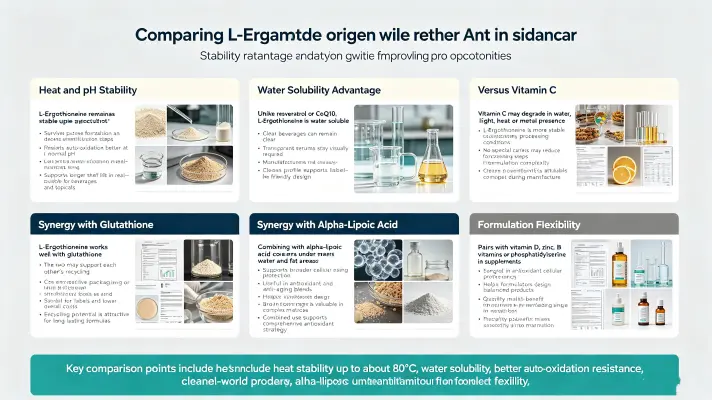
Vitamin C breaks down quickly in water, light, heat, or when metals are present. This creates problems for drink makers who need long shelf life. L-ergothioneine stays stable at temperatures up to about 80°C. It survives pasteurization and some sterilization steps that destroy vitamin C.
It also resists auto-oxidation better at normal pH. Unlike resveratrol or CoQ10, it dissolves in water. Clear beverages stay clear without special carriers or cloudy looks. Manufacturers who use l ergothioneine powder often find they need fewer protective steps. This can lower costs and simplify labels. The longer activity in tissues may also mean less frequent dosing compared with some shorter-lived antioxidants like ascorbic acid.
These stability traits give it an edge in real-world product making.
Synergistic Formulation Opportunities
L-ergothioneine works well with other antioxidants. When paired with glutathione, the two can support each other’s recycling. This may extend overall protection time. Combining it with alpha-lipoic acid can cover both water and fat areas of the cell at once.
In supplement blends, it often sits alongside vitamin D, zinc, B vitamins, or phosphatidylserine. In skincare, it pairs nicely with niacinamide or gentle retinoids. The retinoid irritation may feel milder while overall protection improves. Using quality l ergothioneine powder makes these combinations easier because the powder mixes smoothly into many bases. Product developers like the flexibility this creates for multi-benefit formulas.
These synergies open doors for smarter product design without overloading on any single ingredient.
With a clearer picture of its advantages, we can explore the real-world places where this ingredient appears. The applications section covers the main industries.
Practical Uses and Applications of L-Ergothioneine in Industry
L-ergothioneine moves from lab interest into finished products across several fields. Its stability and targeted action support many uses.
Health Supplement Formulations
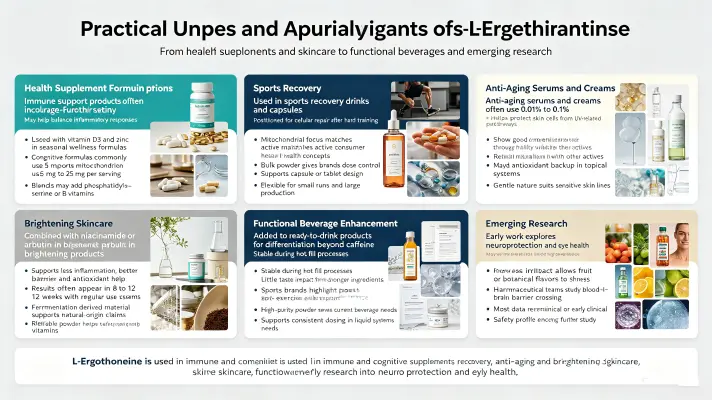
Immune support products often include this compound. It may help balance inflammatory responses without shutting down normal defense. Many seasonal wellness formulas add it next to vitamin D3 and zinc. Cognitive formulas for older adults commonly use 5 mg to 25 mg per serving. These aim to support mitochondrial function in brain tissue. Some blends also add phosphatidylserine or B vitamins for broader brain support.
Sports recovery drinks and capsules position it for cellular repair after hard training. The mitochondrial focus matches what many active people already understand about cellular health. Bulk l ergothioneine powder gives brands full control over dose and capsule or tablet design. This flexibility suits both small runs and large production.
Cosmetic and Skincare Applications
Anti-aging serums and creams use low levels, often 0.01% to 0.1%. At these amounts, it helps protect skin cells from UV-related stress. It shows good compatibility with other actives. Chemists note it can ease some irritation from stronger ingredients while adding antioxidant backup.
Brightening products combine it with niacinamide or arbutin. The mix targets pigment issues from several angles: less inflammation, better barrier, and direct antioxidant help. Results often appear in 8 to 12 weeks with regular use. Its gentle nature suits sensitive-skin lines. Brands seeking natural-origin claims appreciate fermentation-derived material. Reliable l ergothioneine powder supports consistent results in these prestige formulas and helps meet safety testing needs.
Functional Beverage Enhancement and Emerging Research
Ready-to-drink products add the compound for differentiation beyond caffeine. It stays stable during hot-fill processes and has little taste impact. This lets fruit or botanical flavors shine. Sports brands highlight post-exercise cellular support.
On the research side, early work explores neuroprotection and eye health. The compound naturally gathers in retinal tissue, which faces constant light stress. Pharmaceutical teams study blood-brain barrier crossing and tissue patterns. While most data remain preclinical or early clinical, the safety profile encourages further study. High-purity l ergothioneine powder serves both current beverage needs and future research samples.
These varied uses show the ingredient’s range. Before buying or formulating, everyone should understand safety and quality points. The next section covers those practical details.
Safety, Dosage, and Choosing Quality L Ergothioneine Powder
Safety data look favorable, and clear guidelines help users and buyers. Quality choices matter for best results.
Recommended Dosing Guidelines and Safety Profile
Typically, supplement dosages fall between 5 and 30 mg daily. This level can increase blood levels above those found in diets low in mushrooms. Up to 25 mg per day for weeks or months has been used in some trials with good tolerance. Because cells can only absorb so much, topical levels remain low at 0.01% to 0.1%.
There is a large safety margin in toxicology research. In studies, doses many times higher than usual did not result in any significant problems. This molecule is already processed by the body from food, and any extra is eliminated by the kidneys. There aren't any significant drug interactions in the literature right now. However, anyone taking medication ought to consult a physician. Pregnancy and breastfeeding data are still scarce, so caution and medical advice are prudent. When used as recommended, L ergothioneine powder has a solid safety record. Typical adult intakes of about 30 mg per day are supported by both EFSA reviews and FDA GRAS notices for specific forms.
Tips for Purchasing High-Quality L Ergothioneine Powder
Seek out vendors who offer complete Certificates of Analysis. These should contain HPLC data indicating purity, generally 98% or 99%. Ask about heavy metals, microorganisms, and solvents. GMP certification and food-safety standards like ISO 22000 or HACCP increase trust. For pharma work, DMF support supports regulatory paperwork.
Fermentation origin generally trumps basic mushroom extracts for consistency and purity. It prevents farm-to-farm variances. Powder form gives the maximum versatility for capsules, pills, liquids, or creams. Check packaging: foil bags with desiccant keep moisture out. Start with modest sample sizes for testing, then scale. Reliable producers of l ergothioneine powder give stability data and can change pack sizes. Compare a few providers on documentation quality rather than price alone. Good partners also give technical aid for formulation concerns.
Conclusion
L-ergothioneine is a naturally occurring antioxidant amino acid derivative with a unique transporter system. l ergothioneine powder accumulates in tissues that require protection most. Its stability, water solubility, and safety profile make it valuable in supplements, skincare, drinks, and research. It provides targeted administration along with superior heat and pH resistance as compared to traditional antioxidants. Human data is still expanding, particularly in the areas of skin health, cellular defence, and support for healthy ageing. Selecting premium l ergothioneine powder guarantees that the advantages are present in the finished product. This ingredient offers marketers a unique, scientifically supported choice as interest grows.
FAQ
1. What makes L-ergothioneine different from vitamin C?
Vitamin C breaks down fast in water, heat, and light. L-ergothioneine stays stable under those conditions and uses a special transporter (OCTN1) to enter cells that need it most. It also lasts longer inside tissues.
2. Is l ergothioneine powder safe for daily use?
Yes, studies and regulatory reviews support safety at common doses of 5–30 mg per day for adults. It occurs naturally in food. People who are pregnant or on medication should ask a doctor first.
3. What dose is typically used in supplements?
Most products use 5 mg to 25 mg daily. Some trials have tested up to 30 mg. Topical products use much lower percentages.
4. Can it be used in drinks and skincare?
Yes. Its water solubility and heat stability suit clear beverages. Low concentrations work well in serums and creams for antioxidant support.
5. How should I choose a supplier for l ergothioneine powder?
Check for HPLC purity data (98–99%), GMP certification, full Certificates of Analysis, and fermentation origin. Request samples and stability information before large orders.
Partner with Rebecca for Premium L Ergothioneine Powder Solutions
Consider collaborating with a seasoned source if your next project requires a dependable supply. Pharmaceutical-grade ergothioneine powder with 99% purity confirmed by HPLC is supplied by Rebecca. Production adheres to GMP guidelines and has a robust capability for both bulk orders and samples. Support for ISO and HACCP is one of the certifications. Research amounts are the starting point for flexible minimum orders. For various markets, the team offers advise, stability data, and Certificates of Analysis. To obtain samples, talk about specifications, or browse the larger botanical collection at sxrebecca.com, contact information@sxrebecca.com. Start your formulation adventure right now with reliable, superior material.
References
1. Cheah, I.K., & Halliwell, B. (2021). Ergothioneine, recent developments. Redox Biology, 42, 101868.
2. Ames, B.N. (2018). Prolonging healthy aging: Longevity vitamins and proteins. Proceedings of the National Academy of Sciences, 115(43), 10836-10844.
3. Paul, B.D., & Snyder, S.H. (2010). The unusual amino acid L-ergothioneine is a physiologic cytoprotectant. Cell Death & Differentiation, 17(7), 1134-1140.
4. Grigat, S., et al. (2007). Probing the substrate specificity of the ergothioneine transporter with methimazole, hercynine, and organic cations. Biochemical Pharmacology, 74(2), 309-316.
5. Hseu, Y.C., et al. (2020). The antiaging activity of ergothioneine in UVA-irradiated human dermal fibroblasts via the inhibition of the AP-1 pathway and the activation of Nrf2-mediated antioxidant genes. Oxidative Medicine and Cellular Longevity, 2020, 2576823.
6. Borodina, I., et al. (2020). The biology of ergothioneine, an antioxidant nutraceutical. Nutrition Research Reviews / related reviews in Redox Biology and PMC collections.
478(1), 162-167.