What is shilajit extract used for?
The extract of shilajit extract is a natural ingredient that is used in the manufacture of cosmetics, functional meals, and additional nutritional supplements. A significant portion of its value is derived from fulvic acid and trace minerals. However, the deployment of this technology in the actual world is contingent on form, quality standardisation, and safe usage standards. This page provides an explanation of the functions of shilajit extract, as well as its operation and the appropriate manner in which it is used in a variety of business sectors.
In order to get a complete understanding of its applications, we must first investigate what shilajit extract truly is and the reasons for its rise to prominence in the contemporary health and wellness sectors.
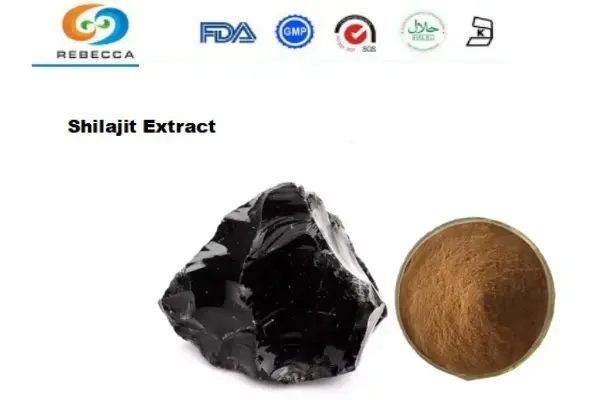
【English name】: Shilajit Extract
【Latin Name】: SHILAJIT Asphaltum (Shilajit)
【CAS No.】: 479-66-3
【Active ingredients】: fulvic acid
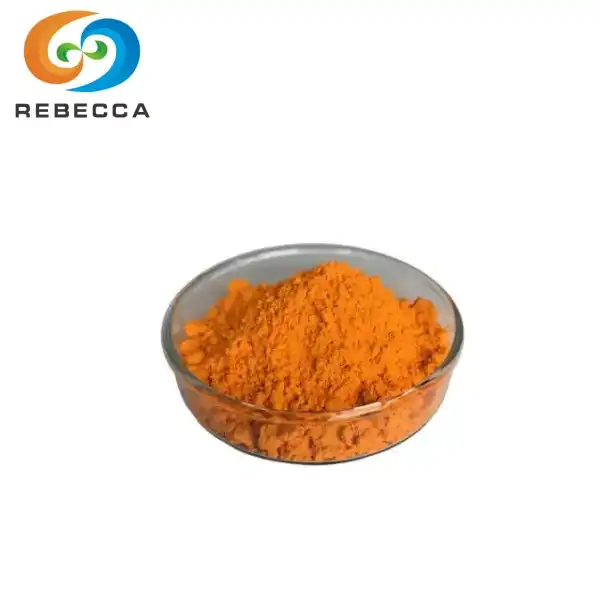
【Specification】: fulvic acid 50%
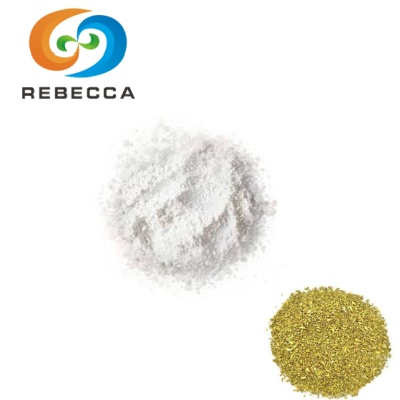
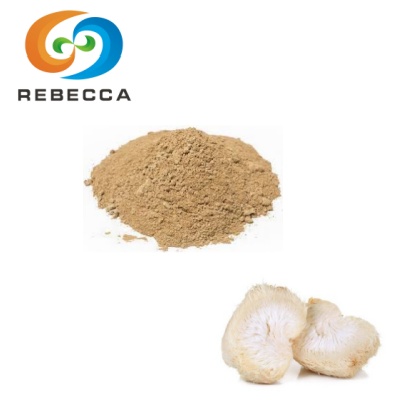
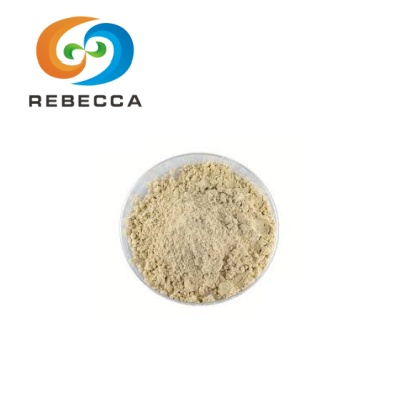
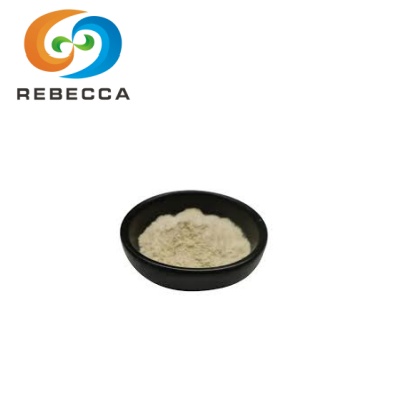
【Appearance】: Yellow brown Fine Powder
【Mesh size】:80 Mesh
【Test Method】: HPLC
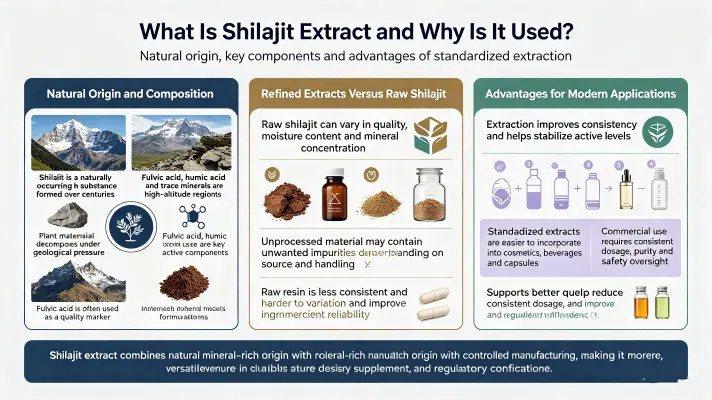
What Shilajit Extract Is and Why It Is Used?
Natural Origin and Composition
The Himalayas and the Altai Mountains are two examples of high mountain locations that are responsible for the presence of shilajit, which is a naturally occurring mineral-rich material. Over the course of many centuries, it is formed by the gradual breakdown of plant matter under the influence of geological pressure.
Fulvic acid, humic compounds, and trace minerals are the primary components that are responsible for the active effects. Fullvic acid is the one that has been investigated the most, and it is often used as a quality indicator in extracts that have been standardised.
Nevertheless, the composition is not consistent when it is in its unprocessed form. It is for this reason that contemporary applications depend on extracts that have been refined and standardised rather than raw resin.
Why Extracts Are Used Instead of Raw Shilajit?
The quality, moisture content, and mineral concentration of raw shilajit may also vary dramatically from one batch to the next. In addition, depending on the origin of the material and the processing technique used, it can include undesirable contaminants.
In order to increase uniformity, extract processing is helpful. In addition to this, it makes it simpler to include into formulations for cosmetics, drinks, and capsules. The standardisation of business applications is a very necessary step. The dose and safety of the medication become more difficult to regulate without it.
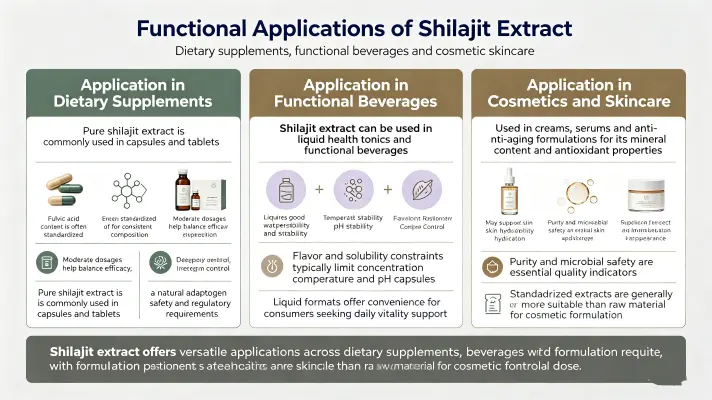
Functional Applications of Shilajit Extract
After understanding what shilajit extract is, the next question is how it is actually used. Its applications are mainly divided into three areas: dietary supplements, functional beverages, and cosmetic products.
Use in Dietary Supplements
In the supplement industry, pure shilajit extract is often utilised in capsule and tablet forms. In order to guarantee uniformity, it is often standardised for the amount of fulvic acid it contains. Generally speaking, the serving sizes that are prevalent in supplement items are modest. In this way, producers are able to strike a compromise between efficacy, safety, and the needs of regulatory agencies.
One of the most common ways that shilajit is advertised as a natural adaptogen is in this category. For the purpose of promoting energy metabolism and overall vigour, it is included into various formulations.
Use in Functional Beverages
In addition, shilajit extract may be used in the production of liquid medications, such as health tonics and functional beverages. On the other hand, applications involving beverages need for special processing. It is necessary for the extract to be water-dispersible and stable under fluctuations in temperature and pH. In comparison to capsules, drinks often contain lesser amounts of the substance because of restrictions related to flavour and solubility.
Use in Cosmetics and Skincare
Because of its high mineral content and natural antioxidant capabilities, pure shilajit extract is often used in cosmetics and skincare products. Creams, serums, and anti-aging formulas all put it to use in their compositions. The objective is to enhance the overall look of the skin while also promoting hydration of the skin. When it comes to cosmetic formulations, regulated purity and microbiological safety are frequently required qualities. Consequently, standardised extracts are more suited than raw materials in this regard.
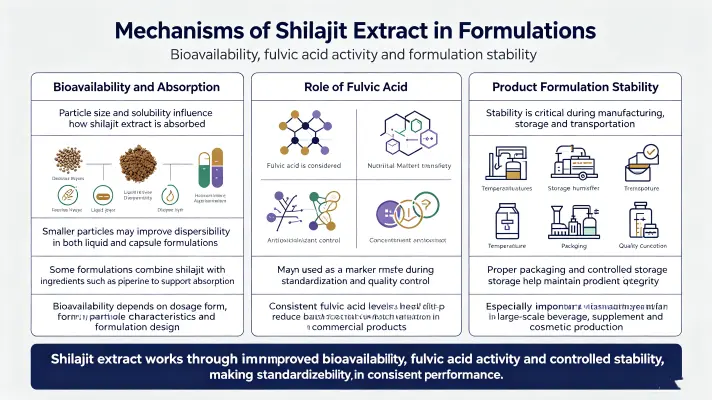
How Does Shilajit Extract Work in Formulations?
Understanding how shilajit extract works helps explain why it is used across different industries. Its effectiveness depends on bioavailability, formulation design, and ingredient synergy.
Bioavailability and Absorption
The degree to which a substance is absorbed by the body is referred to as its bioavailability. Particle size and solubility are two factors that are significant in the case of shilajit extract. When it comes to liquids and capsules, dispersion is often improved by particles with smaller sizes. The efficiency with which active chemicals are supplied may be affected as a result of this.
In some formulations, shilajit is used in conjunction with other components, such as piperine. Despite the fact that the impacts may differ based on the product design, this is done with the intention of improving absorption.
Role of Fulvic Acid
The fulvic acid that is found in shilajit extract is regarded to be an important active component. In the process of standardisation, it is often used as a marker. It has been shown by research that it may help with the transfer of nutrients and antioxidant activity. Nevertheless, the extent of the impact is contingent upon the concentration as well as the formulation environment. Because of this, commercial goods often include fulvic acid percentages into their formulations in order to guarantee uniformity between batches.
Stability in Product Formulations
In applications that are used in the real world, stability is an important factor. Throughout the manufacturing, storage, and transportation processes, the pure shilajit extract must maintain its stability. Quality may be affected by a variety of factors, including temperature, humidity, and exposure to light. Product integrity may be preserved via the use of appropriate packaging and carefully monitored storage conditions. In particular, this is of utmost significance for businesses that produce beverage or supplement items on a big scale.
Conclusion
The primary reason why shilajit extract is used is due to the mineral-rich makeup and functional qualities that it has. Various goods, including cosmetic items, drinks, and dietary supplements, have discovered uses for it. Standardisation, purity, and the quality of the formulation all play a significant role in determining its worth. Without the appropriate processing, it is impossible to ensure that it will be consistent and safe. Within the realm of contemporary product development, the raw form of shilajit extract is no longer used. Extracts that have been purified are preferable instead because they provide stability, safety, and performance that can be predicted.
Shilajit extract continues to be a substance that is extensively utilised in the wellness and cosmetic sectors, despite the fact that the demand for natural components is growing at an increasing rate. However, in the end, its efficacy is contingent upon the use of ethical sourcing techniques and appropriate formulation procedures.
FAQ
What distinguishes high-quality shilajit extract from inferior products?
Premium shilajit extract features HPLC-verified fulvic acid content (typically 50%), heavy metal testing confirming compliance with Prop 65 limits, and NMR fingerprinting excluding gum resin adulterants. Rebecca's rigorous quality control—including microbiological screening and residual solvent analysis—ensures pharmaceutical-grade purity suitable for regulated markets.
How should shilajit extract be stored to maintain potency?
Store powder extract in sealed, moisture-proof containers away from direct sunlight and heat. Optimal conditions include temperatures below 25°C and relative humidity under 60%. Properly stored shilajit maintains potency for 24 months, though moisture absorption can degrade fulvic acid and promote microbial growth.
Can shilajit extract be used in hot beverage formulations?
Yes, shilajit extract demonstrates thermal stability up to 120°C during short processing durations. Beverage manufacturers should conduct application testing to confirm flavor compatibility and solubility in target matrices, particularly when blending with acidic or dairy-based ingredients.
What certifications are essential for international shilajit procurement?
Priority certifications include GMP, ISO22000, HACCP, and region-specific organic credentials (USDA, EU). Kosher and Halal certifications expand market access, while COA documentation confirming heavy metal, pesticide, and microbial compliance ensures customs clearance and regulatory adherence.
Partner with Rebecca for Premium Shilajit Extract Supply
Rebecca stands as your trusted pure shilajit extract manufacturer, combining advanced extraction technologies with stringent quality protocols to deliver consistent, high-potency ingredients. Our Shaanxi production facility operates three dedicated lines with 500+ metric ton annual capacity, supporting both exploratory R&D partnerships and large-scale commercial supply agreements. Every batch undergoes comprehensive HPLC potency verification, ICP-MS heavy metal analysis, and microbiological screening, backed by full COA transparency and regulatory documentation support. Whether you're formulating next-generation nutraceuticals, functional beverages, or premium cosmetics, our technical team provides application guidance, stability testing, and custom specification development tailored to your market requirements. Reach out today via information@sxrebecca.com or visit sxrebecca.com to discuss bulk pricing, request samples, and explore how our certified pure shilajit extract for sale elevates your product portfolio and strengthens competitive positioning.
References
1. Pandit S, Biswas S, Jana U, De RK, Mukhopadhyay SC, Biswas TK. Clinical evaluation of purified Shilajit on testosterone levels in healthy volunteers. Andrologia. 2016;48(5):570-575.
2. Carrasco-Gallardo C, Guzmán L, Maccioni RB. Shilajit: a natural phytocomplex with potential procognitive activity. International Journal of Alzheimer's Disease. 2012;2012:674142.
3. Goel RK, Banerjee RS, Acharya SB. Antiulcerogenic and antiinflammatory studies with shilajit. Journal of Ethnopharmacology. 1990;29(1):95-103.
4. Bhattacharyya S, Pal D, Gupta AK, Ganguly P, Majumder UK, Ghosal S. Beneficial effect of processed shilajit on swimming exercise induced impaired energy status of mice. Pharmacologyonline. 2009;1:817-825.
5. Stohs SJ. Safety and efficacy of shilajit (mumie, moomiyo). Phytotherapy Research. 2014;28(4):475-479.
6. Agarwal SP, Khanna R, Karmarkar R, Anwer MK, Khar RK. Shilajit: a review. Phytotherapy Research. 2007;21(5):401-405.