What is tetrahydrocurcumin?
Curcumin has been studied in the field of nutrition for a long time. However, there is one substance that secretly does better on almost all molecular measures. tetrahydrocurcumin">Tetrahydrocurcumin or THC, is the name of this substance, and over the last ten years, ingredient formulators, makeup scientists, and functional food makers have all paid a lot more attention to it.
Tetrahydrocurcumin
【English name】: Tetrahydrocurcumin
【CAS No.】: 36062-04-1
【Molecular Formula】:C21H24O6
【Active ingredients】: Tetrahydrocurcumin
【Specification】: Tetrahydrocurcumin 98%
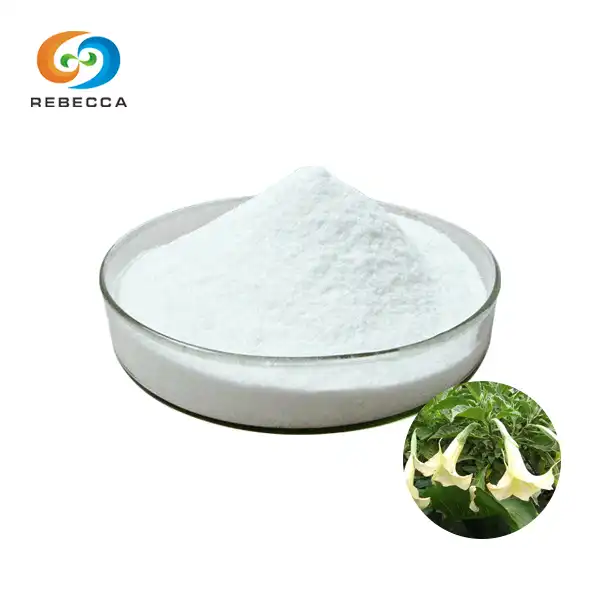
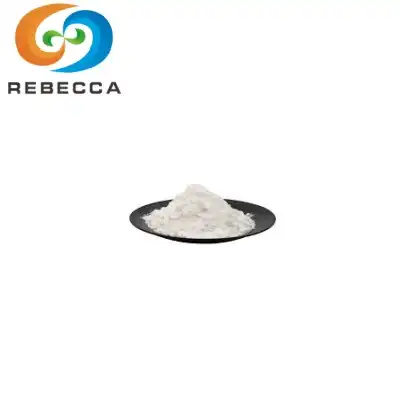
【Appearance】: white powder
Definition of Tetrahydrocurcumin: What Exactly Is It?
Origins: From Turmeric Root to Purified Metabolite
Tetrahydrocurcumin is a naturally occurring form of curcumin that comes from the rhizomes of Curcuma longa, which is the plant that gives food its yellow colour and is used in many South and Southeast Asian dishes. Curcumin, the bright yellow colour that most people think of when they think of turmeric, goes through a chemical process called hydrogenation. Four hydrogen atoms are added across the curcumin molecule's twisted double bonds during this step. Tetrahydrocurcumin is what comes out.
In the business world, THC is made by hydrogenating a curcuminoid extract even more to get a very pure white powder. A usual requirement for business is 98% pure (by HPLC), and Rebecca Bio-Tech exactly meets that level. Tetrahydrocurcumin is a colourless or white powder, in contrast to the bright golden colour of curcumin. This difference in appearance is not just for looks; it's the reason why THC is chosen in formulas where yellow stains would not be acceptable.
Chemical Structure: Why the "Tetra" Matters
The word "tetrahydro" means that four hydrogen atoms have been added to the molecule structure. This makes the carbon–carbon double bonds in curcumin fully saturated. With the CAS number 36062-04-1, tetrahydrocurcumin is made up of the molecules C₂₁H₂₄O₆. In THC, the two open C=C bonds in the middle part of curcumin's heptadienedione chain are completely broken down. There are now two ortho-methoxy phenolic groups and a reactive methylene group left. These are the molecular traits of phenolic chemicals that are highly linked to their antioxidant action.
Curcumin's conjugated double bonds give it its yellow colour, but they also make it chemically unstable when it comes in contact with light, heat, or pH circumstances. Because it doesn't have those double bonds, tetrahydrocurcumin is much more stable and better for long-shelf-life formulas.

How THC Compares to Curcumin at a Glance
Solubility: Curcumin is mostly soluble in fats, while THC is more easily dissolved in water. Stability: THC is much more stable than curcumin and doesn't break down in light or heat.
Bioavailability: When THC is taken by mouth, it is more fully absorbed by the body.
Curcumin is bright yellow, while THC is clear. Potency as an antioxidant: Several studies have found that THC is the most powerful antioxidant of all the naturally occurring curcuminoids.
Curcumin is "Generally Recognised as Safe" (GRAS) by the U.S. Food and Drug Administration. As a straight product with the same core phenolic groups as CBD, THC is safe and is used as an ingredient in many foods, cosmetics, and nutraceuticals around the world.

Biological Properties: Why Tetrahydrocurcumin Matters for Ingredient Formulators
Superior Antioxidant Activity
Free radicals are molecules that are not steady and hurt cells, speed up the ageing process, and cause many other bodily problems. Tetrahydrocurcumin is very good at getting rid of these free radicals. According to studies published in a number of reputable journals, THC works better than curcumin in antioxidant tests and is more effective than common manmade antioxidants used in food and beauty products.
The Nrf2 antioxidant pathway is turned on by THC. This pathway is in charge of controlling how cells defend themselves. One THC molecule starts a chain reaction of defensive effects by increasing the activity of antioxidant enzymes further down the line. Because it makes other things stronger, it is very useful as an element even in small amounts.

Anti-Inflammatory Properties
A lot of the health problems that people take supplements to treat are caused by chronic low-grade inflammation. Tetrahydrocurcumin stops important molecules that cause inflammation, like NF-κB and COX-2. These pathways regulate the body's inflammatory response. THC may help lower chronic inflammation caused by metabolic and lifestyle factors by changing how they work.
For people who buy ingredients for businesses, THC is a very useful active because it can both fight inflammation and free radicals. One ingredient can be used to make more than one claim on the label of a health supplement, vitamin, or dermal beauty product.

Skin Brightening and Anti-Aging Potential
Because THC is colourless, it can be used for more decorative purposes right away. But it's worth a lot more than just looking nice. Tyrosinase is the enzyme that makes melanin, and tetrahydrocurcumin is a strong suppressor of it. When tyrosinase activity goes down, melanin production goes down, too. This makes the skin look brighter.
In a randomised, double-blind, placebo-controlled study with 50 people, researchers discovered that a 0.25% tetrahydrocurcumin cream was more successful at bleaching teeth than a 4% hydroquinone cream, and it was also safer. That score is a standard. Hydroquinone has been the standard for skin whitening for a long time, but THC is much stronger and works better at a much lower concentration.
THC also gets rid of free radicals that are made by UV light, chemicals, and external stresses. Free radicals are what cause photoaging. It also stops fats in external formulas from autoxidating, which makes the product last longer. This dual functional and makeup benefit is a strong business case for people who want to buy beauty ingredients.

Neuroprotective and Cardiovascular Support
New study is pointing to more interesting places. In tests on animals, tetrahydrocurcumin was able to lower oxidative stress markers in brain tissue, stop the buildup of beta-amyloid, and boost cognitive markers by acting as an antioxidant and anti-inflammatory. Even though these results are still preliminary and need to be confirmed in human trials, they show how diverse THC's biological effects are.
In terms of the heart, a study in Hypertension Research found that giving animals THC supplements helped lower signs of high blood pressure and corrected signs of valve stiffness and oxidative stress when they were not getting enough nitric oxide. These early results give people who make health supplements new ideas for how to formulate ingredients for cardiovascular wellness products.

Applications Across Health Supplement, Cosmetic, and Functional Food Sectors
Health Supplement Ingredients
Tetrahydrocurcumin is a basic ingredient that is used to make vitamin pills, everyday health supplements, and goods that help the metabolism. Because THC enters the bloodstream more quickly than curcumin, supplement makers who want to measure absorption are increasingly choosing this form. It is often put into solid dispersion systems or mixed with other polyphenols to make antioxidant mixes that work better together.
To meet label claims and keep quality uniform from lot to lot, B2B buyers in the nutrition industry usually need a high-purity standard of 98% by HPLC. This is how Rebecca Bio-Tech describes the tetrahydrocurcumin they sell.

Cosmetic and Skincare Formulations
The fact that THC is colourless means that it can be used in high-end white and clear cosmetics, while curcumin cannot. Product lines that use this element include serums, whitening creams, anti-aging moisturisers, sun care items, and after-sun lotions. It is suggested that between 0.1 and 1% be used in makeup because it has strong action at a cheap cost-in-use.
The people who make medicines know that THC dissolves completely in ethoxydiglycol and only partly in ethanol and isosorbide. It is best to dissolve it in a liquid first, and then add it to the emulsion base when it is at or below 40°C and has a pH of 5.0 to 6.5. Any skilled beauty chemist should be able to easily follow these dealing guidelines.

Functional Foods and Beverages
The useful food industry is becoming a bigger market for THC. Because curcumin's yellow colouring makes it impossible to use in food because it stains everything it touches, tetrahydrocurcumin is a colourless option that can be used on food labels. It can be added to functional drinks, diet bars, and enriched food systems without changing the way the products look. Along with being easier to mix with water than curcumin, it also makes it easier to make formulations that use curcuminoid ingredients.

Tetrahydrocurcumin Supplier: Rebecca Bio-Tech
The main office of Rebecca Bio-Tech is in Shaanxi, China. It is a high-tech business that focuses on exports. Plant extracts, herbal active ingredient separation, and functional compound study for traditional Chinese herbal medicine are what we do best. We also do research and development on them and sell them. We have three production lines, more than 100 plant extracts, and the ability to make more than 500 metric tonnes of goods every year. We serve people all over the world who work in the medicine, health products, beverage, and cosmetics businesses.
We offer tetrahydrocurcumin as a high-purity raw material ingredient, not as a finished product. It is made for B2B makers who need stable, transparent, and reliable active ingredients.
Rebecca Bio-Tech can provide you with 98% pure tetrahydrocurcumin along with all the paperwork and support you need, whether you are making a new vitamin supplement, a line of cosmetics that whiten teeth or a functional food recipe. We promise to provide natural plant extract ingredients that meet the best standards that markets around the world expect.
To request a sample, a certificate of analysis, pricing, or further technical information, contact our team directly:
Email: information@sxrebecca.com
FAQ
1. Is tetrahydrocurcumin the same as curcumin?
No. Tetrahydrocurcumin is a reduced metabolite of curcumin, formed when four hydrogen atoms are added to the curcumin molecule through hydrogenation. While both compounds originate from turmeric and share related phenolic structures, THC is colorless, more water-soluble, more chemically stable, and generally considered a more potent antioxidant than curcumin.
2. What is the standard purity grade for tetrahydrocurcumin used in supplements and cosmetics?
The most widely used commercial specification is 98% purity as measured by HPLC. This grade provides consistent, reliable active-ingredient content suitable for nutraceutical, health supplement, and cosmetic raw material applications.
3. Why is tetrahydrocurcumin preferred over curcumin in cosmetic formulations?
Curcumin's bright yellow color makes it unsuitable for most cosmetic products because it would visibly stain skin and formulations. Tetrahydrocurcumin appears as a white powder with no yellow color, making it compatible with serums, brightening creams, and toners. It also demonstrates superior stability under the light and heat conditions typical of cosmetic manufacturing and storage.
4. What applications can tetrahydrocurcumin be used in?
As a raw ingredient, tetrahydrocurcumin is used in health supplement capsules and tablets, anti-aging skincare formulations, skin brightening and whitening cosmetics, sun care products, functional food and beverage applications, and pharmaceutical intermediate research. It is not a finished product; it is an active ingredient supplied to manufacturers for incorporation into their formulations.
5. Is tetrahydrocurcumin considered safe for use?
The parent compound curcumin holds GRAS (Generally Recognized as Safe) status from the U.S. Food and Drug Administration. As a primary metabolite of curcumin, THC shares a closely related structure and has been evaluated in topical safety studies with no reported irritant or sensitization effects at standard usage concentrations. Ingredient buyers should review individual application requirements and applicable regulatory frameworks in their target markets.
References
1. Tesseract Medical Research. (2025). Tetrahydrocurcumin Benefits: How Do They Differ From Curcumin?
2. ScienceDirect. (2023). Tetrahydrocurcumin as a stable and highly active curcumin derivative: A review of synthesis, bioconversion, detection and application.
3. National Center for Biotechnology Information (NCBI/PMC). (2023). Positive Tetrahydrocurcumin-Associated Brain-Related Metabolomic Implications. PMC10179939.
4. National Center for Biotechnology Information (NCBI/PMC). (2025). The Role of Tetrahydrocurcumin in Tumor and Neurodegenerative Diseases Through Anti-Inflammatory Effects. PMC12027286.
5. Hilaris Publisher. Skin Lightening Effect of Tetrahydrocurcumin.
6. Designs for Health. (2018). Tetrahydrocurcumin: The Ultimate Metabolite of the Curcuminoids.
_1730079799361.webp)