What is valerian root extract?
The pharmaceutical, nutraceutical, and wellness industries are some of the most prominent worldwide B2B purchasers of valerian root extract powder, The need for standardised botanical ingredients that combine the best of traditional herbalism with pharmaceutical grade consistency is growing among OEM customers, purchasing managers, and distributors. In order to make well-informed sourcing choices, it is essential to understand the source, bioactive profile, quality standards, and uses of this extract. In order to guarantee product quality and supply chain dependability in competitive international markets, this thorough guide provides a technical definition of valerian root extract, explores its scientifically supported advantages, compares it with market alternatives, and offers practical procurement recommendations.
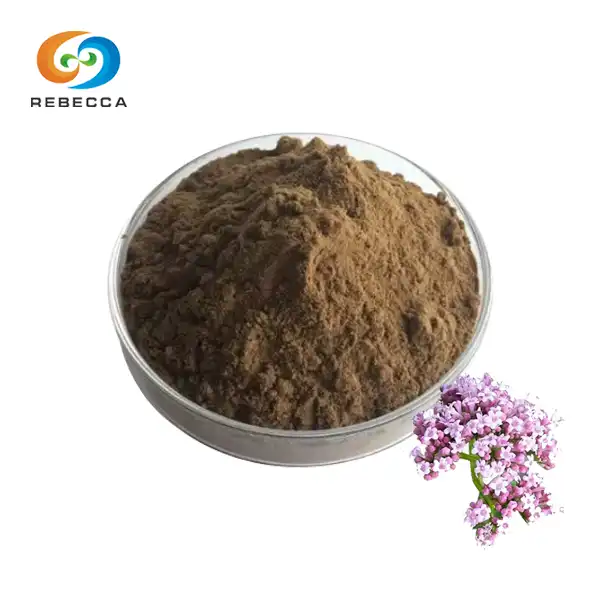
Product Name: Valerian Root Extract
Part:Root
CAS NO.:109-52-4
Specification: 0.4%-0.8% valeric acid,5:1,10:1,20:1
Appearance: Brownish Yellow Powder
Botanical Name:Valeriana Officinalis Linn.
Shelf Life: 2 years
Minimum Order Quantity: 1 kg
Samples: Free samples available
Certifications: GMP, ISO, HACCP, KOSHER, and HALAL.
Payment: Various payment methods accepted.
Advantages: Manufactured in a 100,000-grade cleanroom, our products are additive-free, non-GMO
Inner Package: Double PE Bags; Net 5kg/Bag
What Is Valerian Root Extract?
The rhizomes and roots of the perennial flowering plant Valeriana officinalis Linn., which is native to Asia and Europe, are the sources of the concentrated botanical component known as valerian root extract. The hydro-alcoholic extraction techniques separate and concentrate the bioactive ingredients in this standardised extract, unlike the raw ground root material that has low volumetric potency and high batch-to-batch variability. Additional specifications are available as 5:1, 10:1, and 20:1 concentration ratios, and the resultant brownish-yellow powder (CAS NO.: 109-52-4) usually has standardised quantities of valerenic acids ranging from 0.4% to 0.8%.
Extraction Process and Standardization
To make this extract as effective as possible in reducing anxiety and sedation, it is extracted using high-tech methods that concentrate the valerenic acids (such as valerenic acid, acetoxyvalerenic acid, and hydroxyvalerenic acid). Supercritical CO₂ extraction and ultrasonic-assisted extraction are two examples of modern techniques that reduce the microbial burden typical of root crops and eliminate soil-borne diseases without compromising the integrity of volatile chemicals. By removing the wide diversity in raw herb sources and guaranteeing consistent medicinal benefits, this standardisation tackles crucial pain points in the supply chain.
Key Active Components
To ensure batch consistency, valerenic acids are usually quantified using HPLC analysis, as they are the core bioactive constituents. The effectiveness of the extract is determined by these sesquiterpene components and isovaleric acid. Product consistency across production batches is an absolute must for pharmaceutical research and development firms and health supplement brands, and standardised bioactive markers give the quality standards that procurement professionals need to evaluate suppliers.

Benefits and Applications of Valerian Root Extract
Clinical studies have shown that valerian root extract has several medicinal uses, making it a potentially useful component in many different types of products. The main advantages of the extract mostly revolve on encouraging regular, peaceful sleep and, on occasion, relieving stress and anxiety via natural means. Because of these benefits, which have been shown by science, it is a desirable substance for those who are looking for natural alternatives to synthetic chemicals.
Primary Therapeutic Benefits
There are worries about reliance with certain prescription sleep aids, but research shows that valerian root extract may assist promote healthy sleep cycles instead. This extract is great for stress management formulas because of its sedative effects; it works even better when coupled with other botanicals that help reduce tension, such chamomile, passion flower, or hops. Because it allows for individualised formulas that are adapted to certain target demographics and regional regulatory constraints, this adaptability is highly valued by product managers and procurement directors.
Industry Applications Across Sectors
Various B2B sectors, each with its own unique set of technological needs, find uses for the extract. Pharmaceutical R&D firms include it into clinical-grade formulations that need documentation supporting GMP and DMF standards. It is used by health supplement companies in sleep aid pills, stress relievers, and multi-ingredient soothing mixtures, where it is crucial to comply with FDA and EFSA regulations and ensure batch uniformity. The use of water-soluble grades in relaxation shots and midnight tea blends is becoming more common in functional beverage production. These grades must be able to withstand high temperatures during pasteurisation and be compatible with settings with low pH. Its anti-inflammatory characteristics are used by cosmetic and skincare businesses in topical formulations made specifically for sensitive skin.
Special Considerations for Formulation
The strong earthy odour that is due to the isovaleric acid concentration is a defining organoleptic feature of the extract that innovation managers and formulators must account for. To overcome this obstacle, modern processing techniques use micro-encapsulation or targeted filtering to make the ingredient easier to work with during the blending and encapsulation procedures. The significance of suppliers providing thorough technical data sheets is highlighted by the fact that product recommendations must meticulously address safety concerns such possible medication interactions and usage during pregnancy.

How Does Valerian Root Extract Work?
Procurement experts assessing the effectiveness of ingredients and the possibility of new formulations must have a firm grasp of the mechanism of action. The GABAergic system is the main inhibitory neurotransmitter network in the body, and it is via its regulation that valerian root extract mostly exerts its sedative effects.
GABAergic System Modulation
By binding to GABA-A receptors in the brain, valerenic acids boost inhibitory neurotransmission, which in turn helps people relax and have a good night's rest. This mechanism is what sets valerian apart from other natural relaxants and gives it its own set of benefits depending on the formulation. Research and development managers in the pharmaceutical industry are interested in natural compounds with well-characterized processes, and the extract's bioactive constituents may have this quality. One of these properties is that it may block the enzyme that breaks down GABA, which might extend its calming effects.
Bioavailability Across Dosage Forms
Both bioavailability and the user experience are greatly affected by the distribution type chosen. Preventing capping or friability difficulties during tablet compression is crucial for extracts used in capsule or tablet forms, which allow for precision dosage and easy manufacture on high-speed automated encapsulation equipment. The quick absorption of tincture preparations comes with the drawbacks of high alcohol concentration and flavour masking. Functional drinks, soft chews, or bespoke mix products may all benefit from powder forms because of the great formulation flexibility they provide. Different formats call for different production concerns, which in turn affect logistics in the supply chain and customer needs.
Clinical Evidence Summary
Standardised extracts containing 0.4%-0.8% valerenic acids showed meaningful advantages in many placebo-controlled trials that studied valerian's effects on anxiety levels and sleep quality. Although people react differently, meta-analyses indicate a modest efficacy for enhancing the latency and quality of sleep. Sourcing choices that are evidence-based and in line with target market expectations are supported by this collection of clinical research, which gives procurement teams crucial insights into product performance and market acceptability.

Conclusion
The pharmaceutical, nutraceutical, beverage, and cosmetic industries may all benefit from using valerian root extract since it is a flexible ingredient with a solid scientific foundation. Experts in procurement would do well to familiarise themselves with its standardised bioactive profile, action mechanism via GABAergic modulation, and where it stands in comparison to other natural constituents. A thorough review of suppliers is necessary for strategic sourcing, with an emphasis on their certification portfolios, testing capacities, manufacturing size, and knowledge of regulatory compliance. The quality and placement of the final product are directly affected by the difference between pharmaceutical-grade and commodity-grade extracts, which is determined by microbiological testing, batch consistency, and valerenic acid standardisation. Establishing long-term relationships with manufacturers that demonstrate technical ability, scalable production capacity, and a commitment to continual development in line with increasing international standards is key to successful procurement partnerships, as is balancing cost effectiveness with quality assurance.
Choose Rebecca Valerian Root Extract
Pharmaceutical research and development firms, health supplement brands, and foreign distributors have high standards, and Rebecca is an expert at producing standardised valerian root extract to match those demands. Reliable supply for bulk procurement requirements is ensured by our manufacturing plant in Shaanxi, China, which runs three specialised extraction lines with an annual capacity surpassing 500 metric tonnes. In order to ensure that our products are in complete conformity with regulations across the world, we keep all of our certifications up-to-date, including GMP, ISO 22000, and HACCP.
Depending on your application needs, our scientific team can tailor formulations to meet criteria ranging from a standardisation of 0.4% to 0.8% valerenic acid to concentrated 20:1 ratios, while also adjusting particle size, solubility profiles, and packaging designs. In addition to providing pharmaceutical-grade material for clinical formulations and batch-specific testing results, we also provide water-soluble grades for functional drinks. Our constant quality is supported by stability data. Transparent communication and flexible Incoterms facilitate international procurement for our experienced valerian root extract supplier throughout North America, Europe, and Asia-Pacific markets.
Contact our procurement specialists at information@sxrebecca.com to discuss your valerian root extract requirements, request technical specifications, and receive competitive pricing for bulk orders.
FAQ
What makes high-quality valerian root extract different from standard grades?
Premium valerian root extract distinguishes itself through precise standardization of valerenic acids (typically 0.4%-0.8% verified by HPLC), rigorous heavy metal testing below pharmaceutical limits, and documented batch-to-batch consistency. High-quality suppliers provide comprehensive COAs, stability data, and microbial testing results. The extraction process matters significantly—advanced techniques preserve volatile compounds while eliminating contaminants common in inferior grades.
Can valerian root extract be used during pregnancy or with other medications?
Pregnant individuals should avoid valerian root extract due to insufficient safety data during gestation. Potential interactions exist with sedative medications, anesthetics, and certain antidepressants due to its GABAergic effects. Procurement teams developing consumer products must include appropriate warning labels and consult regulatory guidelines for specific markets. Professional formulations should reference clinical contraindication databases and provide clear usage guidance.
What dosage specifications work best for stress relief applications?
Clinical studies typically employ 300mg-600mg of standardized extract (0.4%-0.8% valerenic acids) taken 30-120 minutes before bedtime for sleep support. Stress relief applications may utilize lower doses (200mg-400mg) during daytime hours. Formulation considerations include synergistic combinations with complementary botanicals, delivery format bioavailability, and target demographic preferences. Product developers should reference published clinical protocols when establishing dosing recommendations for finished products.
References
1. Bent, S., Padula, A., Moore, D., Patterson, M., & Mehling, W. (2006). Valerian for sleep: a systematic review and meta-analysis. American Journal of Medicine, 119(12), 1005-1012.
2. Fernández, S., Wasowski, C., Paladini, A. C., & Marder, M. (2004). Sedative and sleep-enhancing properties of linarin, a flavonoid-isolated from Valeriana officinalis. Pharmacology Biochemistry and Behavior, 77(2), 399-404.
3. Hadley, S., & Petry, J. J. (2003). Valerian. American Family Physician, 67(8), 1755-1758.
4. European Medicines Agency. (2016). Assessment report on Valeriana officinalis L., radix and Valeriana officinalis L., aetheroleum. Committee on Herbal Medicinal Products.
5. Muller, S. F., & Klement, S. (2006). A combination of valerian and lemon balm is effective in the treatment of restlessness and dyssomnia in children. Phytomedicine, 13(6), 383-387.
6. Wheatley, D. (2005). Medicinal plants for insomnia: a review of their pharmacology, efficacy and tolerability. Journal of Psychopharmacology, 19(4), 414-421.
_1730079799361.webp)