What Is Water Soluble Ginger Extract?
For more than 2,000 years, ginger has been sold in spice shops and pharmacies. But the change from cooking root to precision ingredient is fairly new, and it all comes on how well we can remove the ingredients water soluble ginger extract is not the same thing as fresh ginger, dried ginger powder, or essential oils. There is something more detailed, constant, and useful for business than any of those forms.
The term "water soluble" is not used in marketing. This shows a chemical trait that can be measured. The information describes how the extract works in water-based formulations like drinks, pill fills, emulsions, and water-based makeup bases. This behaviour directly affects where this ingredient fits in a recipe, how well it works, and why buying teams in many different industries are looking for it.
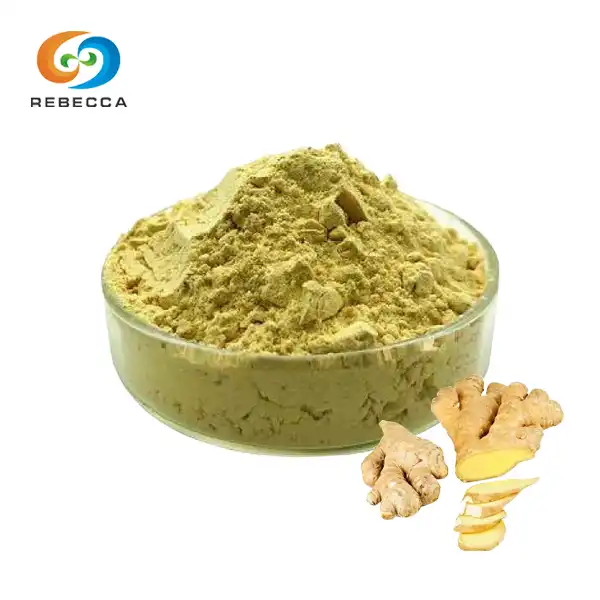
Ginger Extract Powder
English name: Ginger extract.
Latin Name: Zingiber officinale
CAS No.: 23513-14-6
Molecular forula:C17H26O4
Molecular Weight:294.39
Active ingredients: gingerols
Specification: 5% 10:1
Use Part : Root
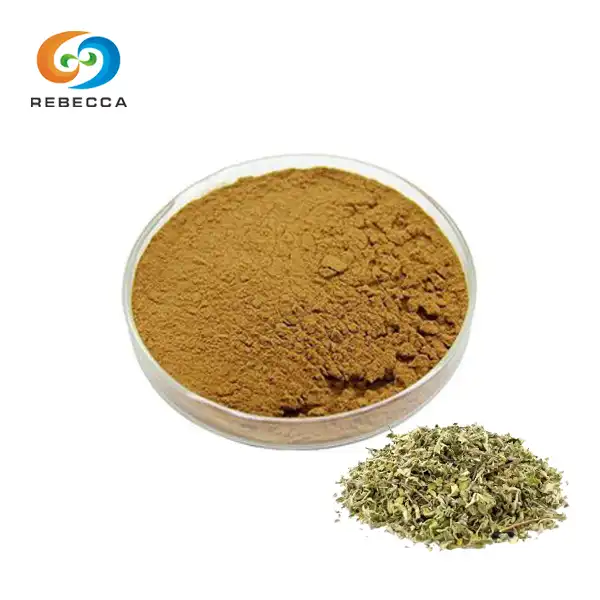
Appearance: Yellow brown powder
Mesh size:80 Mesh
Test Method: HPLC
Water Soluble Ginger Extract: Botanical Source and Core Identity
Botanical Source: Zingiber officinale
For plants, ginger is called Zingiber officinale Roscoe. It is in the genus Zingiber and the family Zingiberaceae. The herb grows back every year, and its thick, tuberous root is often used as medicine or as a spice to add flavour to food and drinks. The main ingredient used to make ginger extract is the rhizome, which is also known as the root.
One of the most popular food sauces in the world is Zingiber officinale. Ginger is made up of hundreds of different molecules and metabolites, which have been found through chemical and metabolic studies. Gingerols and shogaols, especially [6]-gingerol and [6]-shogaol, are the beneficial compounds that have been studied the most. Controlled extraction and standardisation are very important for industrial use because of how complicated the chemicals are.
The parts of the rhizome change depending on where it grows, when it is harvested, how it is dried, and the breed. At least 115 different parts of fresh and dried ginger have been named using scientific methods. Different amounts of ginger are what standardised ginger extract is meant to fix. Manufacturers can offer consistent strength where raw ginger can't by focusing certain bioactive parts and checking their concentration through HPLC.

What Makes It "Water Soluble"?
The phrase "water soluble ginger extract" refers to a concentrated plant ingredient that comes from the ginger root and can be fully mixed with water. ginger extract powder is a dried, concentrated extract of the ginger root Zingiber officinale. It is usually standardised to gingerols to make sure it always has the same amount of strength.
The partition coefficient between n-octanol and water (logPo/w) is 3.13, which means that 6-gingerol dissolves in water and binds to fats best. It can work in watery formulation settings because it has a certain partition coefficient that is adjusted between hydrophilicity and lipophilicity. It doesn't just dissolve in oil or just not dissolve in oil. Its water dispersibility is at its highest when the right harvest and preparation methods are used.
For formulation scientists, this trait is very important and can't be stressed enough. If an ingredient dissolves easily in water, it can be added to drinks, toners, water-phase emulsions, and oral supplement liquids without the need for emulsifiers, solubilizers, or extra steps of processing. That ease cuts down on both the complexity of the marking and the cost of making it.

Chemical Composition: Gingerol, Shogaol, and the Full Bioactive Profile
Gingerols: The Primary Active Fraction
6-gingerol, or gingerol, is the most bioactive antioxidant found in the root of Zingiber officinale, which is also known as ginger. This phytochemical is made up of the building blocks C₁₇H₂₆O₄. Its molecular weight is 294.391 g/mol, and it can dissolve in water.
The phenolic phytochemical substance gingerol ([6]-gingerol) is found in fresh ginger and turns on heat sensors on the tongue. It is usually found in the ginger root as a strong yellow oil, but it can also form a solid that doesn't melt easily. This dual physical form—oil in nature and crystals in extract—shows why the way the product is made is so important to how well it dissolves.
The oleoresin, or sticky resin, from ginger's rhizomes has many beneficial ingredients, including [6]-gingerol, which is the main fragrant ingredient and is thought to have many amazing effects on the body and on drugs. This oleoresin fraction is carefully separated and made dispersible, along with water soluble ginger extract, so that the extract can dissolve in water without losing its bioactive core.
The main phenolic chemicals in ginger are paradols, shogaols, and gingerols. Polyphenols like 6-gingerol, 8-gingerol, and 10-gingerol are the main ones found in fresh ginger. Ginger also has gingerols, which are made up of [8]-gingerol, [10]-gingerol, and [12]-gingerol. The bioactive fraction is mostly made up of the 6-gingerol homolog, but 8- and 10-gingerol also make up part of the full-spectrum activity profile.
Shogaols, Paradols, and Zingerone: Supporting Compounds
Ginger juice has more of an effect than just gingerol. Gingerols can be changed into shogaols by heating them or storing them for a long time. Shogaols can be changed into paradols by adding hydrogen. This change is directly affected by the processing conditions during extraction. This is why temperature control is such an important quality factor.
The chemical gingerol breaks down quickly into shogaol when the temperature rises above 60°C. Shogaol is a phytochemical that is naturally found in ginger. It is the dried form of gingerol. If you dry or lightly heat ginger, gingerol goes through a dehydration process that makes shogaols, which smell about twice as strong as gingerol. This is the reason why dried ginger smells stronger than fresh ginger. For formulators, this chemistry means that the temperature of the extraction has a direct effect on the flavour and nutritional balance of the finished product.
Its biological actions are mainly caused by different chemicals, including gingerols, shogaols, and zingerone, among others. This creates a new way for it to be used as a superfood in foods. When gingerol is cooked, it turns into gingerone, which gives the smell a softer, sweeter quality. Formulation scientists like it better than raw oleoresin because it is found in extracts that have been gently treated.
The Full Chemical Landscape
Ginger, or Zingiber officinale Roscoe, is a popular spice that is used by many people. It has a lot of different chemicals in it, like terpenes, phenolic substances, carbohydrates, lipids, organic acids, and raw fibres. The root has beneficial substances like flavonoids, terpenoids, and phenolic acids that are not in the gingerol family.
The water extracts had flavonoids (kaempferide), flavonoids (quercetin-3-O-rhamnoside), simple phenols (ellagic acid), and diarylheptanoids ([6]-shogaol) in them. These chemicals that can be extracted with water are exactly what a good water-soluble ginger extract is made of—the polar, water-compatible part of the rhizome's whole bioactive set.

How Water Soluble Ginger Extract Is Produced and Standardized?
From Rhizome to Dry Powder: The Production Pathway
The Zingiber officinale root has to be found and prepared before it can be used to make water-soluble ginger extract. Dried and ground root makes up ginger powder. It might work, but how well it works depends more on the type of crop, when it was harvested, and how it was dried. Controlled extraction, reduction, and chemical proof get rid of that variation in standardised extract production.
To make ginger extract powder, specific parts are extracted (often using water/ethanol systems), concentrated, and then dried into a powder. This usually results in more strength per gram and better batch consistency. In the case of a water-soluble extract, the focused fractions focus on the polar phenolic chemicals, mostly gingerols and shogaols, that naturally bind to water.
A simple soaking process has been used for a long time to get gingerol out of dried or raw ginger powder. Modern industrial output, on the other hand, uses more advanced methods. Common ways of extracting things, like heat reflux, distillation, percolation, maceration, and Soxhlet extraction, need a lot of time, energy, and organic liquid. Because of these problems, people are turning to better alternatives.
Extraction Methods: Aqueous and Hydrous Alcohol Systems
Being able to dissolve in water is not a random trait. Producers do it by carefully choosing the solvents they use and planning the processes they use. The benefits of using water for geothermal extraction are that it is easy to get, cheap, widely available, very pure, safe, and simple to handle. Because of these process benefits, production costs are cheaper and the finished ingredient profiles are better.
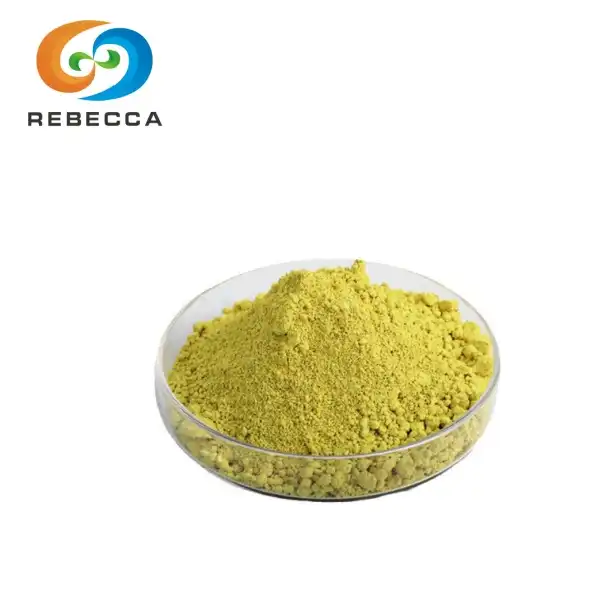
Aqueous or hydrous alcohol extraction and drying are the usual ways to make water-soluble ginger extract. Using this method, Rebecca Bio-Tech's Ginger Extract (Gingerol 1%) is made into a light yellow powder that is 100% pure and has been shown to dissolve in water. This makes an element that doesn't get cloudy or leave behind any waste in both hot and cold water systems.
Controlling the temperature is the most important part of the process. Gingerol is sensitive to heat and loses some of its potency when it comes into contact with hot surfaces. The chemical gingerol breaks down quickly into shogaol when the temperature rises above 60°C. Keeping temperatures below this level while drying protects the gingerol part, which is the main chemical that the Gingerol 1% standard is meant to give.
The Standardization Step: Why HPLC Verification Matters
Standardised ingredients are not just those that are extracted. The step of scientific testing, which is usually done with High Performance Liquid Chromatography (HPLC), is what makes a specification-grade raw material different from a commodity extract.
When compared to cooking ginger or general dried powder, extraction and standardisation make the mg-per-serving more consistent and less variable. If a claim is based on gingerols, the best way to back it up is to include marker tests (often HPLC) along with the extract ratio. This idea is the basis for buying ingredients for supplements and healthy foods.
Ginger root is used to make this pure plant ingredient, which is then dried into a free-flowing powder. It often has lab-verified marks (gingerols/shogaols). The lab confirmation—the COA showing that Gingerol was present in 1% of each batch—is what gives formulators further down the line the confidence to make consistent product formulations and back up claims on the label to regulatory agencies.
1.Selection of Rhizomes: Fresh or dried Zingiber officinale rhizomes are found and their quality is judged by where they come from and how old they are.
2.Getting ready: Rhizomes are cleaned, cut into slices, and made ready for extraction. The amount of moisture and gingerol present at the start are checked.
3.Aqueous Extraction: The polar bioactive fraction, mostly gingerols, shogaols, and flavonoid compounds, are extracted with water or a hydrous alcohol solvent.
4.Filtration and Concentration: The extract solution is filtered to get rid of anything that won't dissolve, and then it is concentrated at a controlled temperature to keep the gingerol's purity.
Low-Temperature Drying: The pure extract is dried below 60°C using either spray drying or drum drying. This keeps the gingerol from breaking down due to heat.
6.Milling and sieving: The dried material is ground into a fine, light yellow powder that flows easily so that it can be mixed evenly.
7.HPLC Analysis and Quality Control: The Gingerol 1% standard is checked against each run using HPLC. A Certificate of Analysis (COA) verifies the product's name, quality, and effectiveness.
8.Packaging: Put into a roller bag or an aluminium foil bag while keeping the wetness level under control. Stored somewhere cool and dry to keep the shelf stability.

Water Soluble Ginger Extract Supplier: Rebecca Bio-Tech
It is one thing to know what water-soluble ginger extract is, but it is quite another to find it regularly and in the right amount. It's clear what it means. For the source problem to be solved, global formulation teams need a factory partner with the right infrastructure, scientific testing, and export experience.
Our Water Soluble Ginger Extract is standardised to 1% Gingerol and has been checked by HPLC. It can be bought by businesses as a fully documented raw material element.
Rebecca Bio-Tech has the technical information, competitive bulk prices, and reliable supply chain performance that your operations need, whether you are making a functional beverage, expanding a line of digestive health supplements, creating a clean-label food ingredient, or looking for a cosmetic botanical active. Our expert team is ready to help you with your recipe by giving you examples and full proof of compliance.
Send your inquiry today: information@sxrebecca.com
FAQ
1. What exactly is water soluble ginger extract?
Ginger extract powder is a concentrated, dried extract of Zingiber officinale ginger rhizome, commonly standardized to gingerols for consistent potency. The "water soluble" designation specifically refers to its ability to disperse fully in aqueous systems — beverages, water-phase emulsions, capsule fills, and oral solutions — without requiring emulsifiers. It is a B2B raw material ingredient, not a finished consumer product.
2. What is the difference between water soluble ginger extract and ginger powder?
Extraction and standardization reduce variability and improve mg-per-serving consistency compared to raw dried ginger powder. Ginger powder is simply dried, milled rhizome with variable bioactive concentration depending on origin and season. Water soluble ginger extract is an isolated, concentrated, HPLC-verified active fraction — standardized at Gingerol 1% — that delivers reproducible potency and clean aqueous solubility that raw powder cannot achieve.
3. What is the active compound in water soluble ginger extract?
Gingerol, or 6-gingerol, is the most pharmacologically active polyphenol from the rhizome of Zingiber officinale. This phytochemical has the molecular formula C₁₇H₂₆O₄ and a molecular weight of 294.391 g/mol and is soluble in water. Rebecca Bio-Tech's ginger extract is standardized to Gingerol 1%, HPLC-verified, ensuring consistent bioactive delivery across every batch.
4. Why does temperature matter during water soluble ginger extract production?
Gingerol is sensitive to heat and undergoes reduction when exposed to high temperatures. Gingerol is heat labile, and temperatures above 60°C induce its degradation rapidly into shogaol. Maintaining low temperatures during extraction and drying preserves the gingerol fraction that the Gingerol 1% specification requires. This is why low-temperature aqueous extraction and controlled spray drying are preferred in high-quality production.
5. What biological properties does water soluble ginger extract demonstrate?
Accumulated investigations have demonstrated that ginger possesses multiple biological activities, including antioxidant, anti-inflammatory, antimicrobial, neuroprotective, cardiovascular protective, antiobesity, antidiabetic, antinausea, and antiemetic activities. These findings come from peer-reviewed preclinical and clinical research. Water soluble ginger extract is a health supplement ingredient; these properties do not constitute medicinal claims.
References
1. Mao, Q.-Q., et al. (2019). "Bioactive Compounds and Bioactivities of Ginger (Zingiber officinale Roscoe)." Foods, 8(6), 185.
2. Bode, A.M., & Dong, Z. (2011). "The Amazing and Mighty Ginger." Herbal Medicine: Biomolecular and Clinical Aspects, 2nd ed. NCBI NBK92775.
3. Gingerol — ScienceDirect Topics.
4. Gingerol — Wikipedia.
5. Abubakar, A.R., et al. (2024). "Gingerol: Extraction Methods, Health Implications, Bioavailability and Signaling Pathways." Sustainable Food Technology (RSC Publishing).
6. Ramirez-Hernandez, A., et al. (2021). "Benefits of Ginger and Its Constituent 6-Shogaol in Inhibiting Inflammatory Processes." PMC PMC8232759.