What is WS 23 cooling agent used for?
ws 23 cooling agent is a synthetic multipurpose molecule providing powerful cooling effects across a wide range of sectors, without the typical minty smell of menthol. This high purity ingredient, technically known as 2-Isopropyl-N,2,3-trimethylbutyramide (CAS No.: 51115-67-4) has become a staple in e-liquid formulations, functional drinks, oral care products and cosmetic applications. typical menthol stimulates cold receptors in a more typical way, whereas WS-23 acts on cold receptors differently, generating smooth, long-lasting coolness that is flavour neutral. WS-23 is perfect for formulations that need clean sensory profiles and do not want to interfere with current flavour designs.
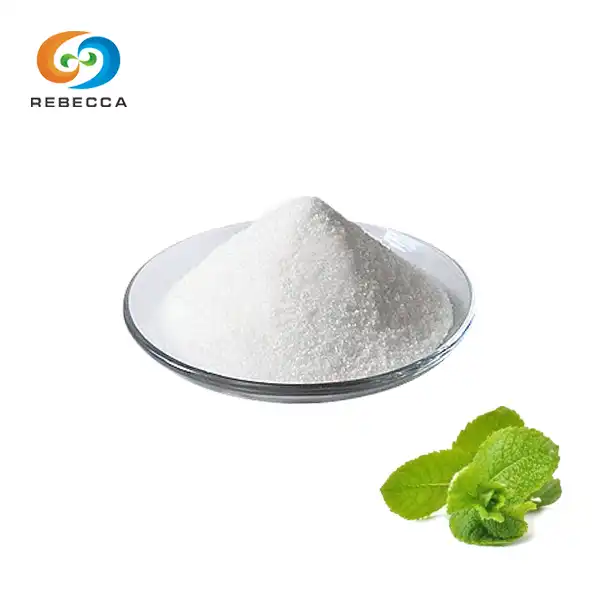
【English name】: WS-23 Cooling Agent
【CAS No.】: 51115-67-4
【Molecular Formula】: C10H21NO
【Active ingredients】: 99%
【Specification】: WS-23, WS-3, WS-5, WS-12.
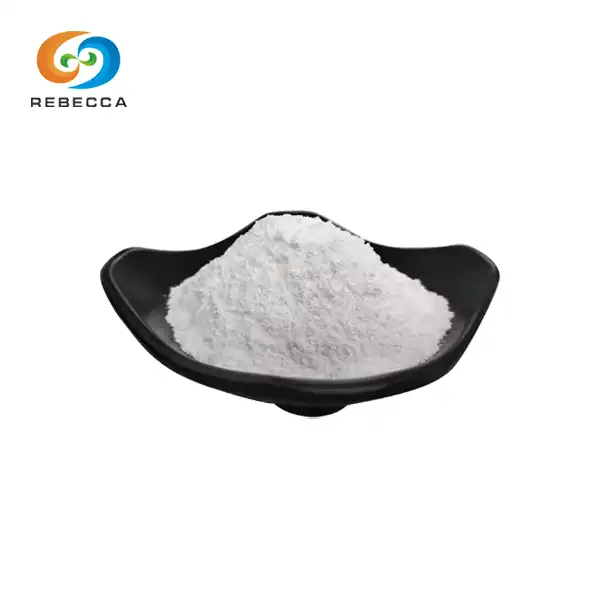
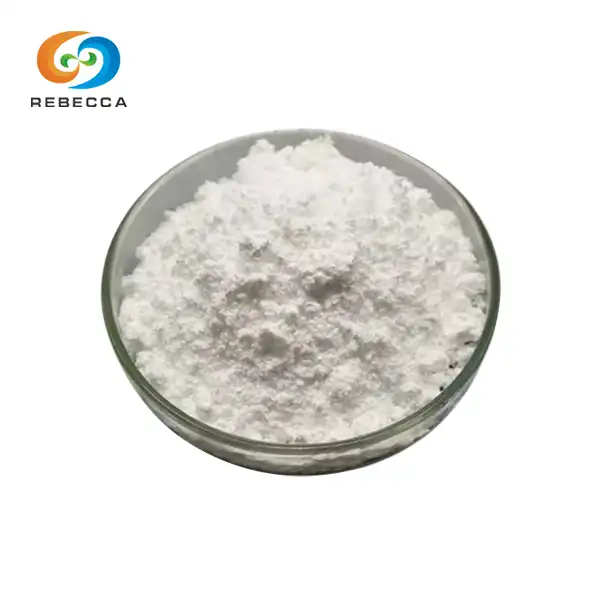
【Appearance】: White Crystalline Powder
【Test Method】: HPLC
【Certification】:MSDS、CE、ISO、COA
Key Uses and Applications of WS-23 Cooling Agent
WS-23 with sensory benefits and reliable chemical qualities has increasingly penetrated various consumer product areas. From the mainstream vaping business, it has been extensively expanded to food, beverage, daily cosmetics and other tracks, exhibiting significant application adaptability in varied formulation circumstances.
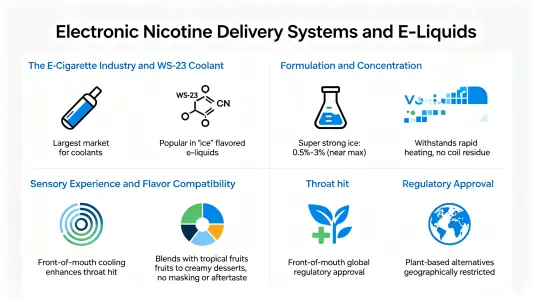
Electronic Nicotine Delivery Systems and E-Liquids
The vaping industry is one of the greatest markets for cooling chemicals, with WS 23 cooling agent being the popular option for “ice” flavour varieties. That it can endure fast heating cycles when atomised, without degradation or residue left on the coils, has great operational benefits. Concentrations vary from 0.5% to 3% depending on the strength required with “super ice” formulas pushing towards the top limits.
They enjoy that the formula works with a variety of flavour profiles, from tropical fruits to creamy sweets, without obscuring base notes or leaving an artificial aftertaste. This front of mouth cold feeling boosts the sense of throat hit, an important sensory factor for consumer happiness. Manufacturers marketing to worldwide markets gain from regulatory approval of WS-23 compared to certain botanical alternatives experiencing regional constraints.
Food and Beverage Manufacturing
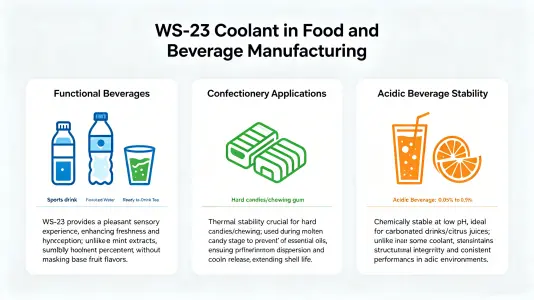
WS 23 cooling agent may provide pleasant sensory experiences in the creation of functional beverages while preserving the fundamental flavour identity. Sports beverages, enhanced waters and ready-to-drink teas use this ingredient to give cooling effects that signal freshness and hydration. Unlike peppermint extracts that may dominate the subtleties of fruit notes, WS-23 works invisibly to enhance perceived refreshing without dominating the flavour profile.
The thermal stability of the chemical has been shown to be crucial in confectionary applications as in hard candies and chewing gums. The use of WS-23 at the phases of molten candy addresses the volatilisation difficulties (“flash-off”) of essential oils. This guarantees even cooling dispersion in the product matrix and constant sensory delivery for long shelf life. The usual doses are between 0.05% and 0.5% depending on the kind of substance and the strength you want.
Beverage formulators working in acidic conditions – carbonated beverages and citrus juices – also appreciate WS 23 cooling agent WS-23’s chemical stability at low pH. Unlike certain cooling agents which may degrade in acidic circumstances via hydrolysis, WS-23 remains structurally sound and provides consistent performance throughout the product development and commercialisation process.
Cosmetic and Personal Care Formulations
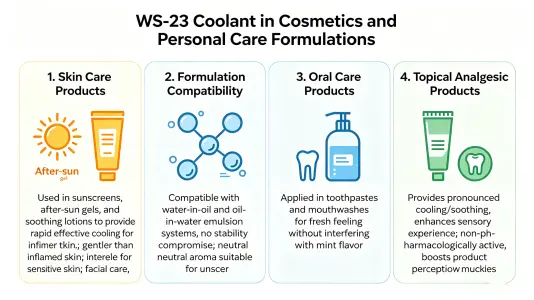
Skincare companies use WS 23 cooling agent in sunscreen, after sun gels, and soothing lotions to provide consumers a quick cooling effect when applied. The cooling sensation conveys effectiveness yet providing real relief to inflamed skin, especially appreciated in sun care categories. WS-23 is milder than menthol and does not cause eye discomfort, making it ideal for use in face treatments for sensitive skin.
Compatibility with complex emulsion systems enables it to be seamlessly integrated into oil-in-water and water-in-oil structures without destabilising formulations. Its neutral aroma makes it ideal for fragrance free formulas or subtle floral blends that would be overpowered by menthol. WS 23 cooling agent is appropriate for oral care applications as it may provide an impression of freshness in toothpastes and mouthwashes without affecting the mint flavour system of the formulation.
WS-23 is used in topical analgesic products to provide more felt cooling relief in line with customer expectations of instant sensory response. While this substance does not provide any medicinal activity, the sensory contribution it provides enhances the sense of product performance, a useful characteristic in competitive personal care industries.
Comparing WS-23 with Other Cooling Agents: Making the Right Choice
After clarifying the full-range application scenarios of WS-23, in order to help formulators accurately select raw materials, it is necessary to conduct targeted comparative analysis between WS-23 and mainstream cooling agents on the market in order to distinguish performance differences and match differentiated product development demands.
WS-23 Versus Traditional Menthol
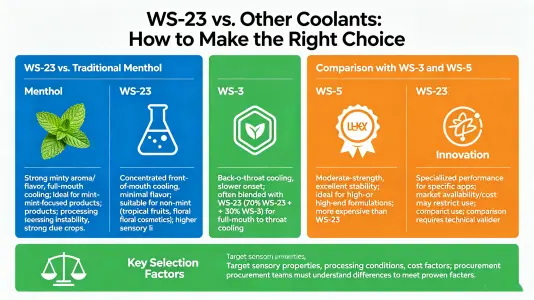
While menthol is the traditional standard for cooling, WS 23 cooling agent has benefits over menthol in certain situations. Menthol Full mouth cooling with strong mint scent and flavour suitable when mint character supports product identification. However, its instability during processing and significant sensory signature restrict applications that need neutral profiles.
WS-23 gives focused anterior cooling with little flavour contribution. This allows use in non-mint categories such as tropical fruits or floral cosmetics. Higher thermal stability decreases processing losses for high-temperature manufacture. Prices, of course, are dependent to the market, and agricultural menthol may be influenced by crop circumstances, whereas synthetic cooling agents like WS-23 are typically more stable price-wise.
Comparison with WS-3 and WS-5 Alternatives
WS 23 cooling agent WS-3 has a cooling effect in the neck region and the effect is slower than the immediate anterior effect of WS-23. Many formulators mix these agents — usually 70% WS-23 and 30% WS-3 — to obtain full mouth-to-throat cooling characteristics. The combined approach enables the customisation of sensory experiences to the particular location of the product.
WS-5 is a good medium intense cooling agent with a stability that is second to none, yet overall it is more expensive than WS-23. It is ideal for high end formulations where the budget allows. The selection of these compounds are based on target sensory profile, processing conditions and cost considerations. Procurement teams need to understand these differences to ensure the choice of ingredients supports product development goals and margin needs.
Newer variations like WS-23F provide specialised performance features for specific applications , although market availability and cost may restrict access for certain users . Evaluation of these choices against standard WS-23 demands explicit description of performance criteria and commitment to engage in technical validation.
Procurement Guide for WS-23 Cooling Agent
Mastering the product performance and competitive advantages is the fundamental link of standardised procurement screening, so as to guarantee the steady product quality and seamless mass production. Based on the key quality indicators and the thorough strength evaluation of suppliers, we can develop a scientific raw material procurement scheme.
Quality Specifications and Testing Requirements
Stringent quality verification is a must for professional procurement, and it’s not only about certificates of analysis. Gas Chromatography (GC) testing to establish purity of 99.5% is required since lower grade ingredients will include precursor impurities that provide harsh off-notes that impact formulation quality. For consumable applications, heavy metal analysis should show lead concentration <3ppm and arsenic <2ppm to fulfil USP/FCC regulations.
According to the ICH Q3C criteria for residual solvent testing, no toluene or hexane residues were found from the synthetic procedures. If present, these organic solvents raise safety and regulatory compliance risks. Another quality check is melting point analysis, which is in the range of 60-64°C, suggesting the crystals are intact and not contaminated by moisture or adulteration.
The triangle testing of sensory assessment may be used to confirm the practical performance. A 10% solution in propylene glycol is assessed by panel for clean cooling, no burning sensations or chemical off-notes. This kind of subjective assessment is a useful addition to analytical data and gives assurance that material will function as predicted in end-use applications.
Rebecca produces Cooling Agent WS-23 in a cleanroom environment of 100,000 grade, leaving an additive-free, non-GMO product of pharmaceutical quality. Each batch is fully tested and comes with MSDS and COA paperwork. The white crystalline powder is supplied in double PE bags in 25kg drums, suitably labelled for storage in a cold, dry place, away from light and heat.
Supplier Evaluation and Partnership Considerations
Price structures are not enough to choose dependable vendors. Manufacturing capabilities, including production line size and cleanroom class are closely related to batch uniformity and contamination risk. Suppliers with GMP certified facilities show a commitment to the quality systems required in regulated sectors.
Geographic variables impact logistical complexity and lead times for WS 23 cooling agent. Production hubs in Shaanxi have the ability to reduce vulnerabilities in the supply chain because of their closeness to the sources of raw materials and to existing export infrastructure. Suppliers have different minimum order quantities (MOQs), however we may be flexible and provide 1kg samples for technical review before you place a big order.
Professional suppliers differ from commodity dealers in the terms of payment, shipping alternatives (FOB, CIF, DDP) and the provision of support paperwork, such as regulatory dossiers and registration help. Suppliers giving DMF assistance and extensive compliance documents are especially valued by buyers producing items for regulated markets, since this helps speed up clearance processes.
Rebecca has 3 professional manufacturing lines with an annual capacity of more than 500 MTS, which is suitable for large orders while ensuring quality consistency in batches. The firm offers free samples for full technical review, and numerous payment ways to support cross-border purchases. Technical support teams are providing formulation help and application testing, which is a shift away from transactional connections to real partnerships.

Conclusion
For sectors where neutral-profile cooling effect is critical, WS 23 cooling agent has become an essential component. The unique mix of powerful sensory impact, thermal stability and flavour neutrality solves formulation difficulties that standard menthol can't properly handle. The knowledge of the technical qualities of the compound, how it is used and the procurement issues helps R&D managers and sourcing specialists to make educated choices that optimise the product performance.
As demand for creative sensory experiences in functional drinks, vape goods and cosmetics increase, high grade cooling agents will continue to find new markets. Success in these highly competitive areas depends on acquiring dependable materials that conform to demanding quality demands and regulatory needs. Working with experienced vendors who can provide technical assistance, consistent batch quality and complete documentation minimises development risk and accelerates time-to-market.
Why Partner with Rebecca for Your WS 23 Cooling Agent Supply Needs?
Rebecca stands as a trusted WS 23 cooling agent supplier committed to delivering pharmaceutical-grade materials supporting your formulation success. Our Shaanxi production facility operates under GMP and ISO22000 certifications, equipped with advanced purification technology ensuring ≥99% purity verified through rigorous GC testing. We understand that R&D managers and procurement heads require more than commodity ingredients—you need reliable partners offering technical expertise, regulatory support, and supply chain stability.
Our team provides customization services tailored to your specific purity requirements, packaging preferences, and delivery schedules. Whether you're developing a breakthrough functional beverage or scaling a successful cosmetic line, we offer free samples enabling thorough evaluation before commitment. contact us at information@sxrebecca.com to discuss your cooling agent requirements, request technical specifications, or arrange sample shipments. Visit sxrebecca.com to explore our complete ingredient portfolio and discover how our end-to-end quality systems support your product innovation goals.
FAQ
Is WS-23 safe for food and beverage applications?
WS-23 holds GRAS status in the United States and approval as a flavoring substance in European markets when used at appropriate concentrations. Comprehensive toxicological studies demonstrate low acute toxicity, supporting its safety profile for consumable applications. Manufacturers must verify concentration limits specific to their jurisdictions and product categories, ensuring compliance with local regulations. Proper quality testing—including heavy metal analysis and residual solvent verification—confirms material suitability for food-grade use.
How does WS-23 differ from menthol in vaping products?
Menthol delivers full-mouth cooling with characteristic mint flavor and aroma, while WS-23 provides targeted front-of-mouth sensation without flavor contribution. This neutrality allows WS-23 to enhance fruit, dessert, and tobacco flavor profiles without introducing mint notes. Additionally, WS-23 demonstrates superior thermal stability during atomization, reducing coil deposits and maintaining consistent performance across device operating temperatures. Many formulators combine both ingredients, leveraging menthol's familiar character with WS-23's clean cooling for comprehensive sensory profiles.
What concentration ranges work best for different applications?
Typical dosing varies by product category: functional beverages and food products generally use 0.05%-0.5%, oral care applications range 0.1%-0.3%, cosmetic formulations employ 0.1%-0.5%, and e-liquids span 0.5%-3% depending on desired intensity. These guidelines provide starting points, though optimal concentrations require testing within specific formulation matrices. Consumer panels help identify the sweet spot balancing cooling efficacy with comfort, as excessive concentrations may trigger discomfort despite technical feasibility.
References
1. Smith, J.A., & Thompson, R.L. (2021). Synthetic Cooling Agents in Modern Food Technology: Applications and Sensory Mechanisms. Journal of Food Science and Technology, 58(4), 1423-1437.
2. Chen, W., Martinez, D., & Kumar, S. (2020). Comparative Analysis of TRPM8 Agonists in Consumer Product Formulations. International Journal of Cosmetic Science, 42(3), 267-282.
3. Anderson, M.P. (2019). Thermal Stability and Processing Considerations for Non-Menthol Cooling Compounds in Confectionery Manufacturing. Food Engineering Review, 11(2), 89-104.
4. Roberts, K.E., & Williams, B.T. (2022). Regulatory Status and Safety Assessment of Synthetic Cooling Agents in Global Markets. Regulatory Toxicology and Pharmacology, 127, 105-118.
5. Liu, H., Zhang, Y., & Park, J.H. (2021). Sensory Perception Differences Among Cooling Agent Variants: Consumer Preference Studies. Flavour and Fragrance Journal, 36(5), 512-526.
6. Davidson, P.R., & Mitchell, S.C. (2020). Quality Control Parameters for Synthetic Cooling Agents in Pharmaceutical and Nutraceutical Applications. Journal of Pharmaceutical Sciences, 109(8), 2456-2468.