Berberine HCL VS Berberine
Two labels that you have probably seen are "Berberine" and "Berberine HCL." These are used to find plant ingredients for the vitamin, health product, or functional food industries. Because berberine is a natural chemical and Berberine HCl is a processed salt form that is meant to dissolve and absorb easier, they are not the same. That difference sounds pretty clear. Still, it has effects on how well formulations work, how long they last, how accurately they are dosed, and finally, how happy the end user is.
The market for Berberine Hydrochloride is growing very quickly. It was worth USD 320 million in 2024 and is expected to reach USD 592 million by 2032, growing at a compound annual growth rate of 6.8%. It is necessary for business-to-business buyers in this quickly growing market to know the real-world differences between raw berberine and berberine powder bulk. You can make better buying choices after reading this piece, which goes into great depth about the biological, pharmaceutical, and business differences.
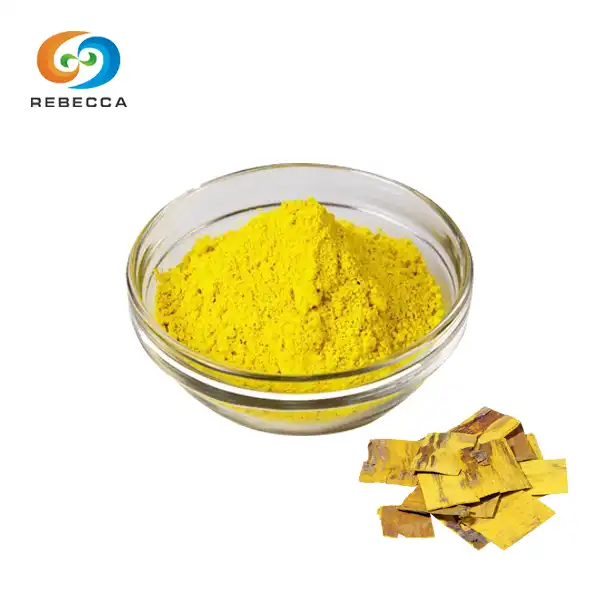
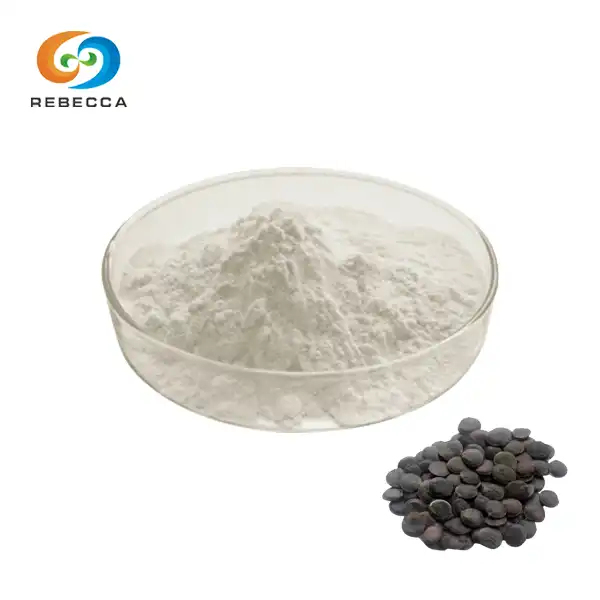
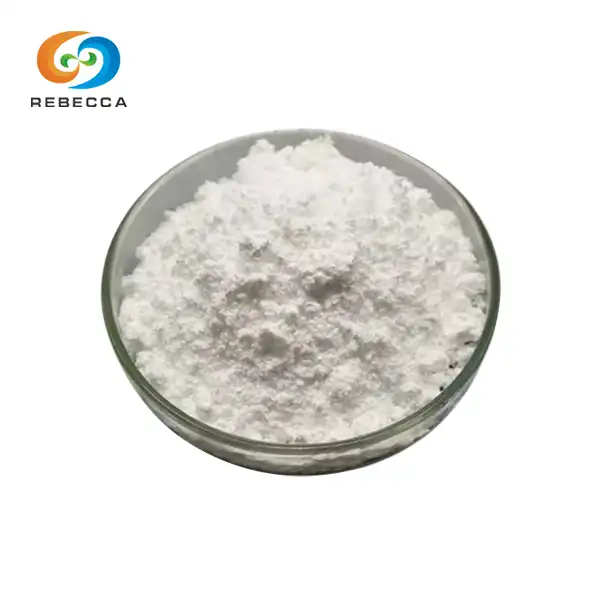
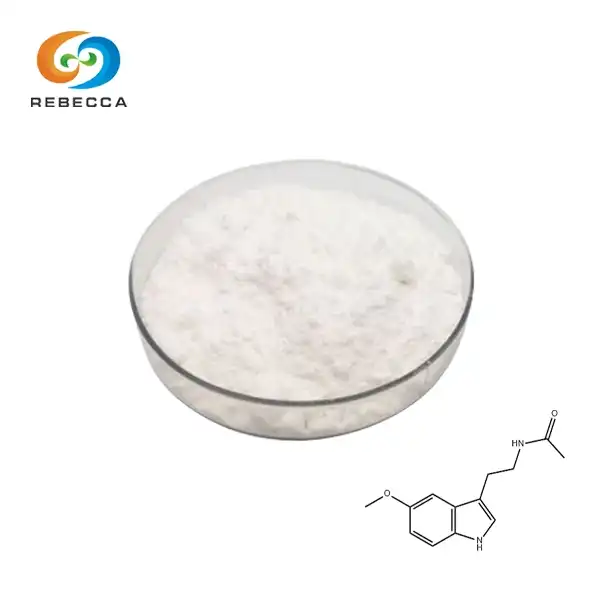
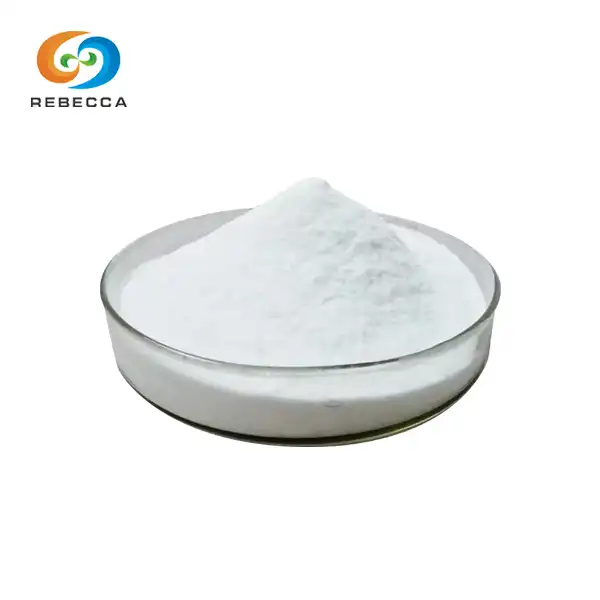
Berberine HCL Powder
【English name】: Berberine HCL
【Latin Name】: Cortex Phellodendri Chinensis.
【CAS No.】: 633-65-8
【Molecular Formula】: C20H18ClNO4
【Active ingredients】: Berberine,phellodendrine,magnoflorine, jatrorrhizine,palmatine etc.
【Specification】: 97%
【Use Part】 : Bark
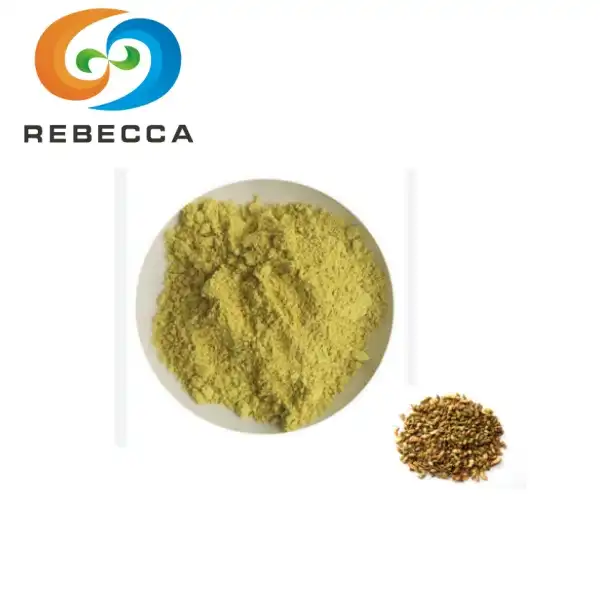
【Appearance】: Yellow crystalline powder
【Mesh size】:80 Mesh
【Test Method】: HPLC,Titration Test
Chemical Identity and Bioavailability
What Exactly Is Berberine?
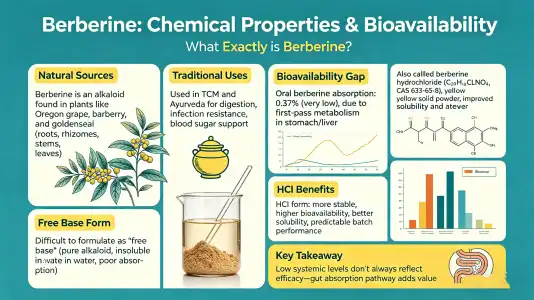
Berberine is an alkaloid that is naturally found in plants like Oregon grape, barberry, and goldenseal. The roots, rhizomes, stems, and leaves of these plants are generally where you can find this quaternary ammonium salt, which is part of the benzylisoquinoline alkaloid family. It has been easy to spot for hundreds of years thanks to its bright yellow colour. It has been used for hundreds of years in Chinese and Ayurvedic medicine to help with digestion, fight infections, and keep blood sugar levels steady.
Berberine is very hard to formulate in its "free base" form, which has not been changed in any way. When berberine powder is used, it means the pure alkaloid form of the chemical without the hydrochloride (HCl) part. Berberine doesn't dissolve as well in water when it's not in the form of an HCl salt. This can change how well it works and how quickly it is absorbed. This limitation needs to be looked at by people who buy ingredients and put performance data first.
What Makes Berberine HCL Different?
Because berberine is a hydrochloride salt, it is also known as berberine HCl. This type is made by mixing berberine with hydrochloric acid to make it easier for the body to dissolve and swallow. The new formula is C20H18ClNO4, and its CAS number is 633-65-8. It looks like a yellow solid powder, which is similar to raw berberine but behaves very differently at the molecular level.
Adding hydrochloric acid to berberine doesn't change its qualities much, but it does make it easier for the body to take and use. This is how you should think about it: the active ingredient is still berberine, but the HCl "shell" makes it much more effective at reaching target tissues. Water doesn't mix well with plain berberine, which makes it harder for the body to take in. But Berberine HCl is easy to break, which means that more of it can get into the bloodstream and reach the cells it's meant to reach.
The Bioavailability Gap: What the Research Tells Us
The most important factor in this comparison is bioavailability, which is the amount of a substance that actually gets into the body's blood. Berberine has better medicinal effects, but its benefits are limited in clinic because it is not well absorbed or bioavailable when taken by mouth. Research from the past has shown that 0.37% of berberine that is taken by mouth is actually absorbed physiologically. It's amazing how low that number is.
One problem with taking berberine by mouth is that it is not very bioavailable (less than 1%) in both animal and human models. This is mostly because the stomach and liver remove a lot of it on the first pass. This was supported by a pharmacokinetic study reported in PMC that looked at human subjects. Ten healthy people were given 500 mg of berberine by mouth, and the Cmax was very low, at 0.07 nM.
How does berberine hcl powder stack up? Berberine HCl is a hydrochloride salt that makes it more stable and bioavailable. All types of oral berberine have a low total systemic bioavailability. However, the HCl salt dissolves more consistently in the digestive track. Most of the time, berberine powder bulk is more steady than berberine alone. This means that vitamins and medicines can last longer. The hydrochloride form may raise the amount of berberine in the blood, which would make it work better. For people who make health products for daily use, this uniformity means that batch performance can be predicted and end-user results can be trusted.
New study is interesting because it shows that low systemic levels don't always tell the whole story. Even though berberine is not very bioavailable throughout the body, it can still help the metabolism because some of its effects are controlled by the gut or because very low plasma amounts can be biologically active. This route in the gut gives berberine even more value as an ingredient in health supplements.
Mechanisms of Action: How Berberine and Berberine HCL Support Metabolic Health
AMPK Activation — The "Metabolic Master Switch"
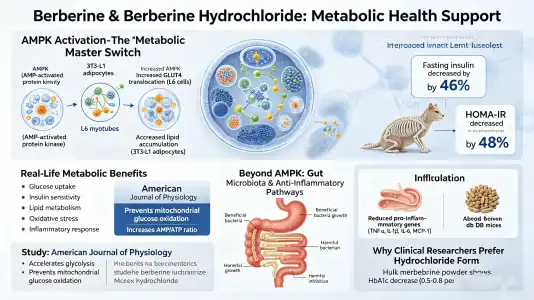
AMPK, which stands for AMP-activated protein kinase, is the most studied process of berberine at the cellular level. AMPK is the main control protein that berberine and metformin work through. It was amazing what experts at Seoul National University and the Garvan Institute of Medical Research found when they looked at berberine in insulin-resistant cell lines. When 3T3-L1 adipocytes and L6 myotubes were treated with berberine, AMPK activity went up, GLUT4 translocation went up in L6 cells, and lipid buildup went down in 3T3-L1 adipocytes.
How does activating AMPK help the metabolism in real life? When Berberine HCl activates AMPK, it has a good effect on glucose uptake, insulin sensitivity, lipid metabolism, oxidative stress, and the body's reaction to inflammation. For companies that make health supplements, these are the exact kinds of claims that today's health-conscious customers will believe.
Another study in the American Journal of Physiology gave us more information about how mechanisms work. Berberine improves glucose metabolism by speeding up glycolysis, which is linked to stopping mitochondria from oxidising glucose. The stimulation of AMPK by berberine is probably caused by mitochondrial suppression, which raises the AMP/ATP ratio. It's important to note that tests on animals showed that berberine improved insulin sensitivity in overweight rats after five weeks of treatment. It was found that the rats had 46% less fasting insulin and 48% less HOMA-IR.
Beyond AMPK: Gut Microbiota and Anti-Inflammatory Pathways
Berberine doesn't just work by turning on AMPK; it also works in other ways. Through its first mode of action in the stomach, Berberine changes the gut flora, encouraging good bacteria and stopping possibly dangerous ones. This action in the gut helps explain why berberine can help the metabolism even when it's not absorbed well by the body as a whole.
As for inflammation, Berberine HCl has been shown to help with a number of metabolic problems, including type 2 diabetes, obesity, and high cholesterol. It does this by activating AMPK. Researchers from the same study found that berberine stops inflammatory reactions by turning on AMPK in macrophages. Proinflammatory genes like TNF-α, IL-1β, IL-6, and MCP-1 were greatly lowered in the fat tissue of obese db/db mice that were treated with berberine.
These multi-pathway processes open up a lot of recipe options for people who buy ingredients. Berberine hcl powder can be a main ingredient in supplements that support gut health, metabolic wellness, and the inflammatory response—three of the supplement markets that are growing the fastest right now.
Why Clinical Researchers Prefer the HCL Form
Most research on berberine's health benefits, like dropping blood sugar and raising cholesterol levels, has been done with Berberine HCl. Berberine powder bulk is used in most products and studies because it is easy for the body to use. When you make with berberine hcl powder, your product claims can directly come from the largest amount of written evidence. This gives B2B buyers a huge edge.
People who took berberine powder in bulk saw their HbA1c levels drop by about 0.5 to 0.8 percentage points in research studies. Berberine hydrochloride is what is usually used. This is the form that is used in almost all clinical studies on metabolic health, blood sugar, and cholesterol. This level of detail in the data is very important for brands that want legal trust and label claims that can be backed up.
Practical Sourcing Considerations: Stability, Dosage, and Market Demand
Stability and Shelf Life
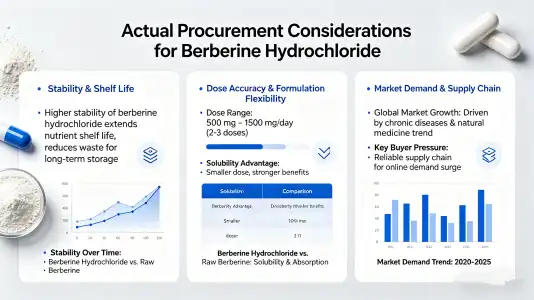
The cost of your supply chain is directly affected by how stable your ingredients are. Berberine HCl is more steady, which helps nutrients last longer and keep their strength over time. Over time, berberine may become less solid and more likely to break down. For companies that store raw materials for weeks or months before starting production, this stable benefit cuts down on waste and makes sure that each batch is the same.
Berberine HCL comes in the form of a solid powder, which is also easier to handle. It mixes evenly into capsule fills, pill granulations, and powder-based formulas with particles that are 80 mesh in size. Raw berberine extracts, on the other hand, can have very different particle sizes and amounts of water, which makes it harder to get the right doses when making them.
Dosage Precision and Formulation Flexibility
When it comes to berberine powder bulk, dose suggestions should be based on its role as a well-studied plant alkaloid that is mainly used to support heart health, digestive health, and glucose control. Manufacturers of food supplements usually include 500 mg to 1,500 mg per day, which is usually split into two or three doses. These dose ranges are the same as those used in the clinical studies that produced the most convincing evidence of the ingredient's effectiveness.
Due to the presence of hydrochloride, berberine HCl has better stability and absorption. Usually thought to be more soluble, which means that smaller amounts may have stronger benefits. In contrast, the fact that raw berberine is less soluble could mean that it is not absorbed as well. To get the same benefits, users may need to take bigger amounts or use certain forms. When buyers of ingredients figure out the cost-per-effective-dose, berberine hcl powder often offers better value, even though it costs a little more per unit.
A Rapidly Expanding Global Market
It has never been more important for businesses to get high-quality berberine powder in bulk. The market is growing because more people around the world are getting chronic lifestyle diseases and more people are switching to natural medicines that are backed by proof. The move toward eco-friendly and clean-label goods is in line with where berberine comes from naturally.
The rising interest in berberine as a "natural GLP-1 agonist" on social media has caused a huge demand, especially among younger people. Supplement brands that can quickly bring berberine-based goods to market and have a solid source of raw materials and quality standards will be able to get a big piece of this growth.
Online shopping sites are a key part of making all marketing methods more accessible by making it easy for customers to get different formulas. This trend of consumers who only buy things online puts even more pressure on ingredient buyers to find reliable, approved supply lines that can handle spikes in demand.
Berberine HCL Powder Supplier: Rebecca Bio-Tech
For serious formulators, the choice between berberine and berberine HCL is no longer a question. The data clearly shows that berberine hcl powder is the better chemical choice. It is more stable, more soluble, more clinically proven, and more likely to work as expected in the end product. Where you get it is the real question.
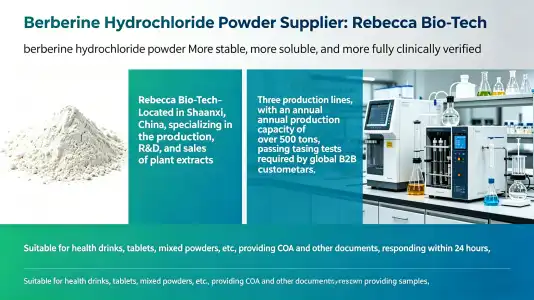
Rebecca Bio-Tech is a company in Shaanxi that makes, researches, and sells plant extracts, separates herbs active ingredients, and studies the functional compounds used in traditional Chinese herbal medicine. As a high-tech business that focuses on exports, Rebecca Bio-Tech is committed to giving customers around the world in the medicinal, health product, beverage, and cosmetics industries high-quality natural plant extracts. We can meet global B2B demand reliably, regularly, and competitively thanks to our three production lines, more than 100 types of plant extract, and yearly production capacity of more than 500 metric tonnes.
We test every batch of berberine hcl powder we make very carefully with HPLC and titration. Our 97% standard guarantees that buyers will get a very pure ingredient that can be used in high-end supplement formulas. Our berberine HCL works perfectly with your production process whether you are making healthy drinks, pills, tablets, or powder mixes.
We know that specs aren't the only thing that goes into buying choices. That's why Rebecca Bio-Tech provides thorough paperwork, like Certificates of Analysis (COA) and scientific data sheets, along with helpful, quick customer service. Our team helps you figure out how to meet legal standards in different markets, suggest the best dose ranges, and fix formulation problems before they cause production delays.
Are you ready to get a steady supply of berberine powder in bulk for your next line of products? Email our team at information@sxrebecca.com right now. We answer all questions within 24 hours with full cost information, wait times, and sample available, so you can quickly move from buying to production.
FAQs
1. Is Berberine HCL the same as regular Berberine?
Not exactly. Berberine is the raw alkaloid found in plants, while Berberine HCl is created by attaching hydrochloric acid to the molecule. This chemical tweak does not change berberine's function but makes it easier to handle in supplements. The active compound remains the same, but the delivery form is optimized for better dissolution and absorption.
2. What is the typical dosage range for Berberine HCL in supplement formulations?
In dietary supplement formulations, manufacturers typically include 500 mg to 1,500 mg per day, often divided into two or three servings. This range mirrors the dosing protocols used in the majority of published clinical studies on berberine hydrochloride.
3. Does Berberine HCL have a longer shelf life than raw Berberine?
Yes. Berberine HCl is generally more stable than berberine alone, which can result in a longer shelf life for supplements and medications. For B2B buyers managing warehouse inventory, this stability reduces the risk of potency degradation before production.
4. What plant sources does Berberine come from?
Berberine is a naturally occurring alkaloid found in several plants, including Goldenseal, Barberry, and Oregon Grape. Rebecca Bio-Tech sources its Berberine HCL primarily from Cortex Phellodendri Chinensis (Huangbai bark), a well-documented traditional source rich in berberine along with complementary alkaloids such as phellodendrine, magnoflorine, jatrorrhizine, and palmatine.
5. Is the global Berberine market growing?
Absolutely. The market is projected to expand from USD 348 million in 2025 to USD 592 million by 2032, advancing at a compound annual growth rate of 6.8%. This growth is driven by rising consumer demand for plant-based metabolic health ingredients and increasing clinical validation of berberine's benefits.
References
1. Omre.co. "Berberine HCl vs Berberine: What's the Difference and Which Is Better?"
2. Dr. Linda Nykin, ND. "Berberine vs. Berberine HCl: Understanding the Differences and Benefits."
3. Maxmedchem. "Berberine HCl vs Berberine."
4. Feng, R., et al. (2021). "Berberine: A Review of its Pharmacokinetics Properties and Therapeutic Potentials in Diverse Vascular Diseases."
5. Kerr, R., et al. (2022). "Absorption Kinetics of Berberine and Dihydroberberine and Their Impact on Glycemia: A Randomized, Controlled, Crossover Pilot Trial." PMC.
6. Lee, Y.S., et al. (2006). "Berberine, a Natural Plant Product, Activates AMP-Activated Protein Kinase With Beneficial Metabolic Effects in Diabetic and Insulin-Resistant States." Diabetes, 55(8), 2256–2264.