DL-6 8-Thioctic Acid VS R Alpha-Lipoic-Acid
Two of the most prevalent types of alpha lipoic acid utilised in the pharmaceutical, supplement and cosmetic sectors are dl-6 8-thioctic acid and R-alpha lipoic acid . Despite the identical molecular formula, the stereochemical arrangement results in large changes in biological activity, absorption efficiency and commercial use strategy.
Formulators and procurement experts can’t afford to ignore these variances. It directly influences product effectiveness, cost structure, regulatory compliance and ultimate market placement.
The issue is broken down into three main categories in this article: structural differences, biological performance. Each segment builds on the preceding to enable producers to make educated choices.
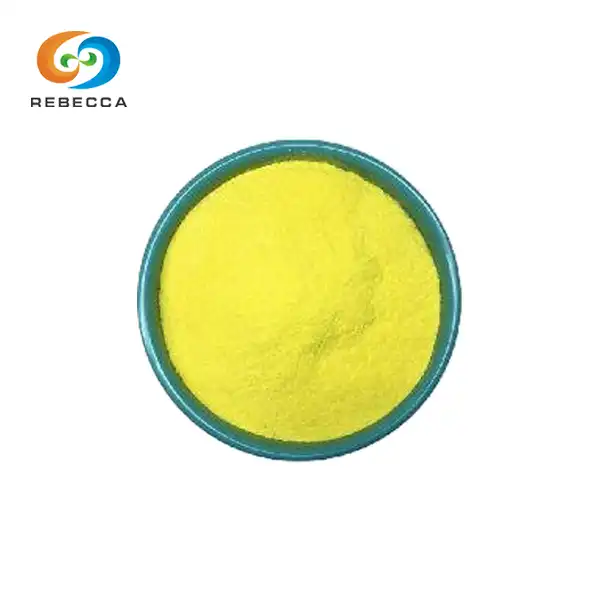
DL-6 8-Thioctic Acid
【English name】: Lipoic acid powder
【Latin Name】: 1,2-Dithiolane-3-pentanoic acid;
【CAS No.】: 1077-28-7
【Molecular Formula】:C8H14O2S2
【Specification】: Lipoic acid99%
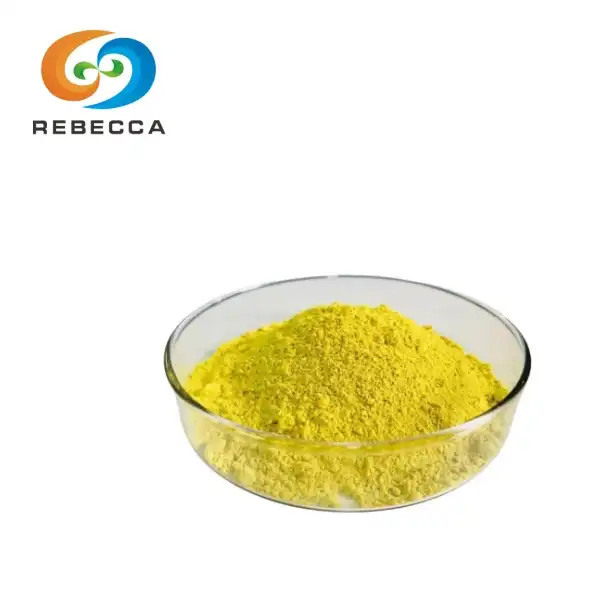
【Appearance】: Light yellow powder
【Mesh size】:80 Mesh
【Test Method】: HPLC
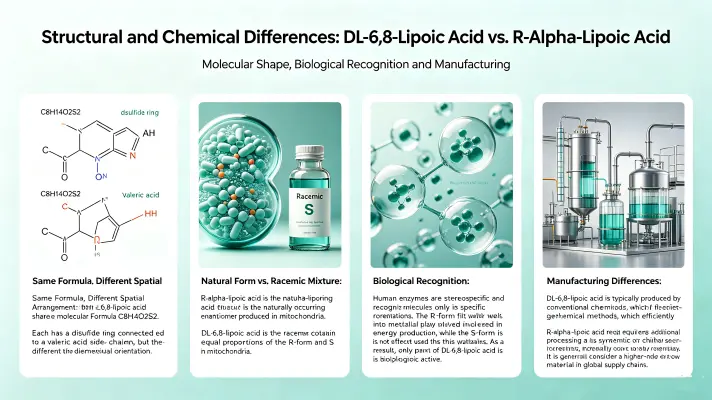
Structural and Chemical Differences Between DL-6,8-Thioctic Acid and R-Alpha Lipoic Acid
To understand functional differences, we must first examine molecular structure. This foundation explains why two chemically similar compounds behave differently in biological systems.
Same Molecular Formula, Different Spatial Configuration
DL-6,8-thioctic acid and R-alpha lipoic acid are two compounds with the identical chemical formula, C8H14O2S2. They also have the same basic structure: a dithiolane ring connected to a valeric acid chain. But the arrangement of them in space is different. R-alpha lipoic acid is the naturally occurring enantiomer that is produced in the mitochondria. DL-6,8-Thioctic acid is a racemic combination of the R- and S-enantiomers in equal proportions. This structural variation is the basis for the way biological systems recognise and use the molecule.
Biological Recognition of Enantiomers
Enzymes in humans are stereospecific. They are made to recognise just certain molecule orientations. The R-form fits well into metabolic pathways involved in energy generation. The S-form is not adequately used in these routes. It would thus seem that just a fraction of DL-6,8-thioctic acid is biologically active. This is the first big factor on why performance is different between the two kinds.
Industrial Production Differences
DL-6,8-thioctic acid is manufactured using normal chemical methods. Both enantiomers are automatically generated , hence it is efficient and cost effective to produce .
R-alpha lipoic acid has to be further processed. Manufacturers have to rely on asymmetric synthesis or chiral separation methods. This adds complexity, costs and quality control to the manufacturing .
That is why R-alpha lipoic acid is usually sold as a premium raw material in the worldwide supply chains.Having identified the structural variances, the next logical step is to test how these changes influence biological performance and absorption.
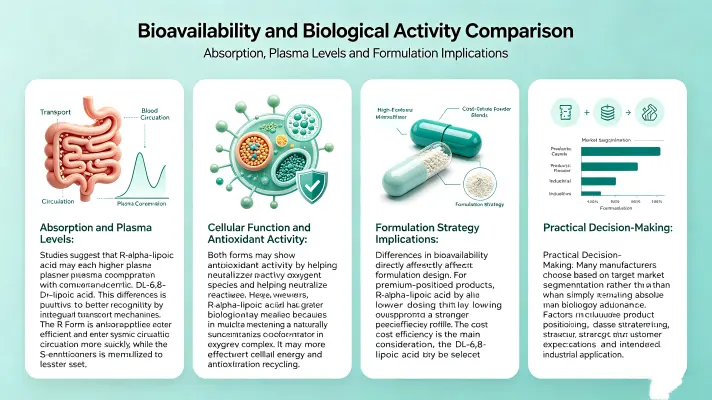
Bioavailability and Biological Activity Comparison
Bioavailability is one of the most important factors in ingredient selection. It determines how much of an active compound actually enters circulation and becomes biologically usable.
Absorption and Plasma Concentration
Studies have shown that R-alpha lipoic acid reaches greater plasma concentrations than racemic DL-6,8-thioctic acid. This is primarily owing to the better identification by intestinal transport mechanisms.
R-form molecules are absorbed more effectively and reach the systemic circulation more quickly. The S-enantiomer, in contrast, undergoes less metabolism. This implies that equal doses may not necessarily have equal physiological effects.
Cellular Function and Antioxidant Activity
Antioxidant activity was seen in both forms. They scavenge reactive oxygen species and help maintain redox homeostasis in cells. However, R-alpha lipoic acid is more biologically relevant in mitochondrial metabolism. This is because it is the naturally occurring co-factor in enzyme complexes. In reality, this might translate into more effective recycling of cellular energy and antioxidants.
Implications for Formulation Strategy
The bioavailability difference translates directly to formulation design. R-alpha lipoic acid provides for lower dose with increased perceived effectiveness for premium positioning products. If the aim is cost efficiency, then DL-6,8-thioctic acid is a possibility.
Many firms determine their target market segmentation, not absolute biological superiority. The practical issue is a natural consequence of understanding biological performance: how should each shape be used in actual industrial applications?
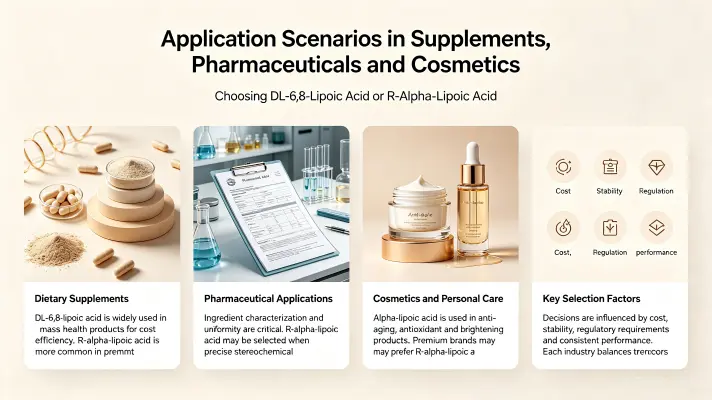
Application Scenarios Across Supplements, Pharmaceuticals, and Cosmetics
Different industries evaluate alpha lipoic acid based on different priorities. These include cost, stability, regulatory requirements, and performance consistency.
Dietary Supplement Formulations
In the case of dietary supplements, the deciding considerations are cost and placement. DL-6,8-thioctic acid is extensively used to general wellness goods for its cheaper raw material cost. It is a reliable, cheap source of alpha lipoic acid for use in mass market goods.
R-alpha lipoic acid is usually found in the premium supplements. Often these goods are marketed with promises of greater absorption and scientific distinction. Some formulations minimise dose by employing R-form to compensate for cost disparities.
Pharmaceutical and Clinical Applications
Identity and uniformity of ingredients are critical in pharmaceuticals development. If a precise stereochemical description is desired, R-alpha lipoic acid is usually selected. This makes documentation and quality validation procedures easier. However, regulatory standards differ depending on geography and product type. Manufacturers need to adapt the selection of ingredients to local compliance regimes and therapeutic aims.
Cosmetic and Personal Care Products
Cosmetic compositions need stability and sensory performance. Alpha lipoic acid is utilised in anti-aging, antioxidant and skin lightening cosmetics.
Both types may be employed depending on the formulation design. R-alpha lipoic acid is often chosen by luxury skincare manufacturers looking to distinguish themselves. But for the industrial manufacture of cosmetics, DL-6,8-thioctic acid might be more cost-effective.
Application selection is vital but procurement choices are based on supplier dependability and quality assurance processes.
Conclusion
DL-6,8-thioctic acid and R-alpha lipoic acid have a molecular basis, but vary considerably in their stereochemistry, bioavailability and commercial placement. DL-6,8-thioctic acid is the acid of choice for cost sensitive and high volume applications. In high-end formulations where biological efficiency and product distinction are paramount, R-alpha lipoic acid is the chosen choice. The best decision will rely upon the formulation aims, the target market and the regulatory restrictions. The best approach for producers is to consider scientific performance and supply chain aspects combined, rather than chemistry alone.
FAQ
What makes R-alpha lipoic acid more expensive than the racemic form?
Pure R-alpha lipoic acid requires additional manufacturing steps to separate or selectively synthesize the biologically active enantiomer. Standard chemical synthesis produces equal amounts of R and S forms, creating the less expensive racemic mixture. Isolating pure R-form demands chiral separation technologies or asymmetric synthesis techniques that increase production complexity and costs. However, the enhanced bioavailability often justifies the premium for applications where efficacy drives product value.
How can I verify I'm receiving genuine R-alpha lipoic acid rather than racemic mixture?
Demand certificates of analysis employing chiral HPLC methods that separately quantify R and S enantiomers. Standard HPLC testing may only confirm total lipoic acid content without distinguishing stereochemical composition. Reputable suppliers provide detailed analytical data demonstrating enantiomeric purity percentages. Rebecca's quality control protocols include stereochemical verification as standard practice, ensuring specification accuracy for all lipoic acid shipments.
Which form works better for dietary supplement formulations?
This depends on your product positioning and target consumer. Premium supplements emphasizing maximum bioavailability and clinical research backing typically specify pure R-alpha lipoic acid. Value-oriented products targeting broader markets may find racemic mixtures adequate, adjusting dosing to account for reduced effective concentration. Consider your claims substantiation strategy and competitive positioning when making this specification decision.
Partner with Rebecca for Premium Lipoic Acid Ingredients
Rebecca stands ready to support your lipoic acid sourcing needs with pharmaceutical-grade materials, comprehensive regulatory documentation, and technical expertise spanning multiple industries. As an established dl-6 8-thioctic acid manufacturer, we maintain rigorous quality standards across our 500+ metric ton annual production capacity, ensuring batch consistency that meets GMP, ISO22000, and HACCP certifications.
Our product portfolio includes both racemic and pure R-form options at 99% purity, tested via HPLC and supplied as light yellow powder in convenient 80 mesh particle size. Whether you require high-purity active ingredients for pharmaceutical R&D, functional extracts for supplement brands, water-soluble forms for beverage applications, or cosmetic-grade materials with complete safety documentation, our flexible customization capabilities deliver precisely what your formulation demands.
Beyond ingredient supply, Rebecca offers formulation guidance, stability testing support, and regulatory assistance that accelerates your product development timeline. Our Shaanxi production base combines advanced extraction technologies with responsive customer service, creating partnership value that extends well beyond commodity transactions.
Contact our procurement specialists at information@sxrebecca.com to request product samples, detailed technical datasheets, and pricing for bulk orders. Visit sxrebecca.com to explore our complete ingredient catalog and discover how our R&D capabilities, quality systems, and global market experience can strengthen your supply chain and enhance your finished products.
References
1. Shay, K.P., Moreau, R.F., Smith, E.J., Smith, A.R., & Hagen, T.M. (2009). Alpha-lipoic acid as a dietary supplement: Molecular mechanisms and therapeutic potential. Biochimica et Biophysica Acta, 1790(10), 1149-1160.
2. Carlson, D.A., Smith, A.R., Fischer, S.J., Young, K.L., & Packer, L. (2007). The plasma pharmacokinetics of R-(+)-lipoic acid administered as sodium R-(+)-lipoate to healthy human subjects. Alternative Medicine Review, 12(4), 343-351.
3. Teichert, J., Kern, J., Tritschler, H.J., Ulrich, H., & Preiss, R. (1998). Investigations on the pharmacokinetics of alpha-lipoic acid in healthy volunteers. International Journal of Clinical Pharmacology and Therapeutics, 36(12), 625-628.
4. Ghibu, S., Craciun, C.E., Rusu, R., Morgovan, C., & Mogosan, C. (2019). Impact of alpha-lipoic acid chronic discontinuous treatment on oxidative stress in cardiomyocytes. Acta Physiologica Hungarica, 106(1), 55-66.
5. Packer, L., Witt, E.H., & Tritschler, H.J. (1995). Alpha-lipoic acid as a biological antioxidant. Free Radical Biology and Medicine, 19(2), 227-250.
6. Hermann, R., Mungo, J., Cnota, P.J., & Ziegler, D. (2014). Enantiomer-selective pharmacokinetics, oral bioavailability, and sex effects of various alpha-lipoic acid dosage forms. Clinical Pharmacology in Drug Development, 3(5), 374-383.