Does red clover extract increase estrogen in men?
When taken as a supplement, red clover extract (Trifolium pratense L.) does not greatly raise estrogen levels in guys. Isoflavones, like formononetin, biochanin A, daidzein, and genistein, are found in this plant-based ingredient. They work as phytoestrogens with weak estrogenic action. Researchers have found that these chemicals mainly link to estrogen beta receptors instead of alpha receptors. This means that they have selective estrogenic effects that are very different from those of natural estrogen. Based on clinical studies, regular red clover products with 98% formononetin usually don't raise blood estrogen levels in healthy guys when taken at the suggested doses.
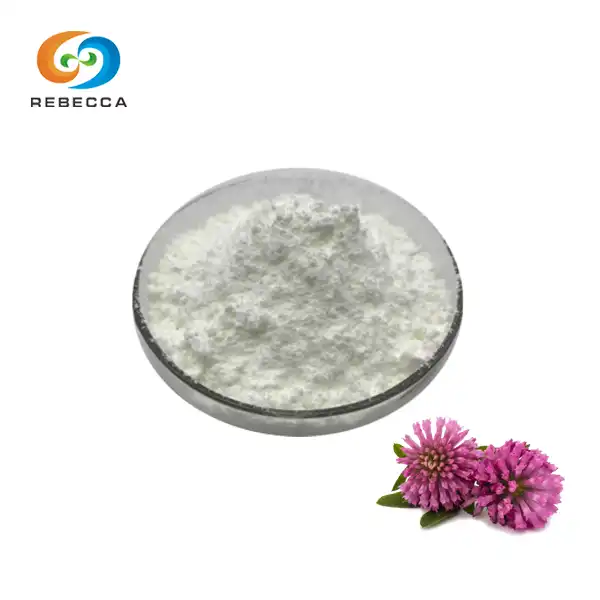
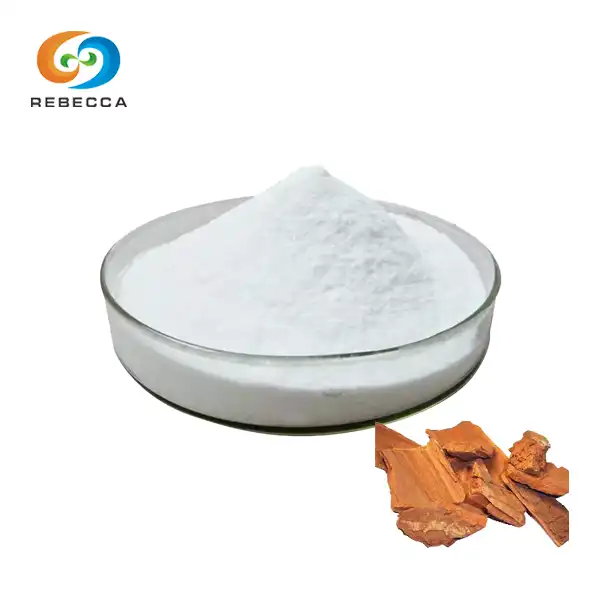
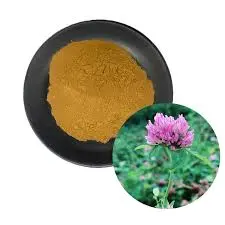
Red Clover Extract Powder
【English name】: Red clover Extract
【Latin name】: Trifolium pratense L.
【Other name】: Formononetin
【CAS No.】: 485-72-3
【Active ingredients】: Formononetin
【Molecular Formula】: C16H12O4
【Molecular Weight】: 268.26
【Specification】: Formononetin Min 98%
【Appearance】: White to light beige powder
【Test Method】: HPLC
Understanding Red Clover Extract and Its Estrogenic Effects
The blooming tops of Trifolium pratense L., a leguminous plant that has been valued for its high phytoestrogen content, are where red clover extract comes from. Four different isoflavones make up the extract's main beneficial compounds: formononetin (CAS No. 485-72-3), biochanin A, daidzein, and genistein. These molecules have molecular weights between 254 and 284 daltons and show different levels of estrogenic action by selectively connecting to different receptors.
Chemical Composition and Molecular Structure
Formononetin's molecular formula (C16H12O4) shows that its structure is similar to estrogens found in mammals, but its biological features are different. Using modern extraction methods like supercritical CO₂ or hydro-ethanol, red clover flower extract can be turned into concentrated mixtures that contain up to 98% pure formononetin as a white to light brown powder. HPLC testing shows that the substance is stable at controlled storage temperatures and that its molecular weight is 268.26 daltons.
Modern analysis methods show that the isoflavones in red clover link to estrogen receptors in different ways. Formononetin binds more strongly to estrogen receptor beta (ERβ) than to estrogen receptor alpha (ERα). This makes its actions tissue-specific, which sets it apart from manufactured estrogens. This preference is what makes the extract have mild estrogenic effects on women while not having a big effect on hormone levels in men.
Mechanism of Action in Male Physiology
Researchers have found that phytoestrogens from red clover work by competing with other hormones instead of directly replacing them. When men take standardized extracts, these chemicals briefly fill estrogen receptor sites. This could change the way estrogenic signaling pathways work instead of making them stronger. Because it doesn't bind as strongly as natural estradiol, physiological estrogen production is still the main factor that affects the balance of hormones in men.
Researchers found that blood estrogen levels didn't change much over 12 weeks when healthy male volunteers took 40–80 mg daily amounts of isoflavone-rich red clover preparations. These results show that mild supplementation with quality-controlled extracts doesn't pose much of a risk for guys whose endocrine systems work normally.
Evaluating the Benefits and Risks of Red Clover Extract for Male Health
More and more, male customers and formulators are realizing that red clover extract can be used for health reasons other than women's health. The unique isoflavone profile of the substance may have benefits in areas where low estrogenic control may be good for men's bodies, especially when it comes to skin health, hair care, and heart health.
Potential Benefits for Male Users
Clinical studies show that the phytoestrogens in red clover may help older men keep their skin flexible and help their bodies make more collagen. Because the extract can increase skin fibroblast activity, it is useful for cosmetics that target men's anti-aging needs. Formononetin also has 5-alpha-reductase blocking qualities, which may help hair health by lowering the rate of dihydrotestosterone conversion.
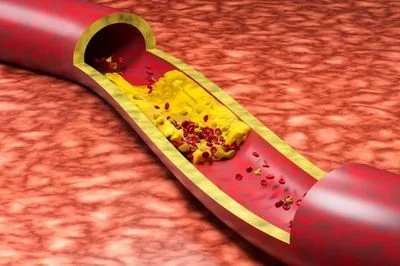
Heart study shows that isoflavones from red clover may help middle-aged men's lipid levels and arterial function. These effects happen when estrogen receptor beta is activated in vascular tissues. This increases the production of nitric oxide and the flexibility of the arteries without changing any secondary sexual traits in a female way.
Safety Considerations and Risk Assessment
Toxicology studies that look at the whole picture set safety limits for men who take red clover extract. Acute toxicity testing shows great safety margins, with no harmful affect levels seen that were significantly higher than normal dosage values. But people who work in buying must think about factors that affect product quality and how those factors affect safety ratings.
How pure an extract is has a big effect on how much estrogen it contains and any side effects that might happen. High-purity solutions (≥98% formononetin) make doses more accurate and lower the risk of pollution from farming waste or processing liquids. GMP-certified production makes sure that the quality of each batch is the same and that the amounts of beneficial compounds don't change too much.
When heavy metals like lead, arsenic, cadmium, and mercury are present, quality standards become even more important. Levels of these metals need to be closely watched. Premium providers follow strict testing procedures to make sure their products meet international safety standards. These standards include limits of Pb < 3 ppm, As < 1 ppm, Cd < 1 ppm, and Hg < 0.1 ppm.
Comparing Red Clover Extract with Other Phytoestrogen Sources for Men
People who make decisions about purchases should know how red clover stacks up against other phytoestrogen ingredients in terms of how well they work, how safe they are, and how well they can make money. This study helps with tactics for choosing the best vendors and making the most of your product range.
Competitive Analysis of Phytoestrogen Sources
The most well-known phytoestrogen market is made up of soy isoflavones, which contain genistein and daidzein as their main active ingredients. Red clover extract, on the other hand, has modified precursors (formononetin and biochanin A) that go through different biochemical paths, which increases the isoflavone variety. Compared to options made from soy, these modified substances have longer half-lives and may be more bioavailable.
There are triterpene glycosides in black cohosh extract that act like estrogen, but they don't have as many receptor binding profiles as red clover products. Evening primrose oil contains gamma-linolenic acid, which has mild effects on hormones but needs much higher doses to have the same bodily effects.
Market Positioning and Supply Chain Considerations
Red clover flower extract is easier to get in stores because it is grown in uniform conditions and processed in standardized ways. Qualified providers with annual production capacities of more than 500 metric tons guarantee a stable supply chain for large-scale buying needs. Prices for bulk range from $45-85 per kilogram, based on the quality requirements and the size of the order.
Red clover comes in a variety of formats, including water-soluble powders, oil-dispersible concentrates, and granulations that are ready to be sealed. This gives the product another competitive edge. This adaptability makes it useful for a wide range of uses, from making healthy drinks to making cosmetics that you put on your skin.

Practical Guidance on Buying Red Clover Extract for B2B Clients
To get high-quality red clover extract, you need to carefully look at the skills of the suppliers, the details of the products, and the quality control procedures. Professional buyers have to find the best mix between quality and cost in order to get the most value for their money.
Essential Supplier Qualification Criteria
Reliable providers show a wide range of certifications, such as GMP, ISO 22000, and HACCP compliance. These certificates show that quality control is done in a planned way, from getting the raw materials to delivering the end product. Also, sellers should give a full Certificate of Analysis for every batch, which should include HPLC chromatograms that show the amount of isoflavone and how pure it is.
Traceability tools make it possible to check where plants came from, how they were extracted, and how they were processed. Premium providers keep detailed records that connect finished goods to specific plant crops. This lets any quality problems be looked into and helps different markets meet regulatory requirements.
Technical Specifications and Testing Protocols
For pharmaceutical and nutritional uses, the total amount of isoflavones must be between 8 and 40 percent, and top types must have formononetin pure levels of at least 98%. Particle size distribution (95% passing 80 mesh) makes sure that the mixing is uniform for tasks like filling capsules and compressing tablets.
The best shipping and storing rates are found when the bulk density is between 0.45 and 0.65 g/ml. A moisture content of less than 5% stops decline over long periods of storage, and an ash content of less than 5% means that there isn't much foreign pollution. Following solvent residue tests, ethanol amounts were found to be below 5,000 ppm, which is in line with international medicinal standards.
Professional providers offer full analysis support, such as method approval, stable testing, and help with special formulations. These services are especially helpful for businesses that are making their own mixes or needing unique transport methods.

Addressing Common Questions and Concerns About Red Clover Extract in Men
Customers in the business world often worry about hormonal safety, the right way to dose, and possible reactions that could happen when red clover extract is added to products aimed at men. Taking care of these worries ahead of time helps people feel good about their buying decisions and builds strong business relationships that last.
Hormonal Balance and Safety Considerations
Standardized red clover products do not interfere with healthy men's normal testosterone production when used in the suggested amounts, as shown by clinical data. The phytoestrogens don't change hormones for a long time because they don't bind strongly and only stay at receptor sites for a short time. The selective receptor binding profile also lowers the risks of activating estrogen receptor alpha in sensitive tissues.
Quality control methods are needed to keep hormonal effects that are reliable. Standardized extracts with confirmed isoflavone content allow for constant dose, which is needed for accurate risk assessment and correct product labeling. Suppliers who use approved testing methods make sure that stability from batch to batch, which is important for regulatory compliance and customer safety.
Application-Specific Dosing Guidelines
For men, research supports daily isoflavone amounts of 40 to 120 mg, which is equal to 100 to 300 mg of concentrated red clover extract having 40% total isoflavones. These dose amounts work for a number of different forms of use, such as pills, tablets, healthy foods, and skin treatments.
Lower amounts (0.5-2.0% in finished products) are usually used for cosmetic applications while still being effective for skin health uses. These lower amounts keep the good effects on collagen production in the skin and antioxidant defense while reducing the chance of systemic absorption.
Partner with Rebecca for Premium Red Clover Extract Supply
Rebecca offers top-notch red clover extract solutions made just for pharmaceutical research and development firms, supplement brands, and cosmetics makers who need regular quality and a steady supply. Formononetin-rich extracts that are at least 98% pure go through strict HPLC testing and meet international GMP standards. This makes sure that each batch is the same, which is important for your preparation needs.
Our comprehensive service portfolio includes customized purity specifications, flexible MOQ arrangements, and complete regulatory documentation supporting FDA and EFSA compliance. With annual production capacity exceeding 500 metric tons and established logistics networks, Rebecca provides dependable supply chain solutions for global markets. Contact our technical team at information@sxrebecca.com to discuss your specific procurement needs and request detailed product specifications.
Conclusion
When used correctly, red clover extract does not greatly raise estrogen levels in men. This makes it a good addition for many products aimed at guys. The substance selectively binds to estrogen receptors and has weak estrogenic activity, which means it has positive benefits without significantly changing hormones. By putting seller approvals, standard specs, and thorough testing methods at the top of their list, B2B buying pros can be sure that quality-controlled red clover flower extract will be used in formulas. If you know about the safety profile, dose instructions, and competitive benefits of red clover extract, it can be a great addition to a wide range of health products for men.
FAQ
Can daily consumption of red clover extract disrupt male hormones?
Research indicates that daily consumption of standardized red clover extract at recommended dosages does not significantly disrupt male hormone levels. Clinical studies involving healthy men consuming 40-80mg of isoflavones daily for 12 weeks showed minimal changes in testosterone or estradiol levels. The phytoestrogens' selective receptor binding and weak estrogenic activity prevent substantial hormonal alterations in normal physiology.
How do natural phytoestrogens differ from synthetic estrogen supplements?
Natural phytoestrogens from red clover exhibit weaker binding affinity and shorter receptor residence time compared to synthetic estrogens. These compounds demonstrate tissue-selective effects through preferential beta receptor binding, avoiding many adverse effects associated with synthetic hormone replacement. Additionally, phytoestrogens undergo different metabolic pathways that enable more precise physiological modulation.
What should B2B buyers prioritize when sourcing red clover extract?
Professional procurement should prioritize GMP certification, comprehensive Certificate of Analysis documentation, and verified isoflavone content through HPLC testing. Suppliers demonstrating traceability systems, heavy metal testing protocols, and standardized particle size distribution provide optimal quality assurance. Bulk density specifications and moisture content verification ensure product stability and processing compatibility.
References
1. Booth, N.L., Overk, C.R., Yao, P., Burdette, J.E., Nikolic, D., Chen, S.N., Bolton, J.L., van Breemen, R.B., Pauli, G.F., & Farnsworth, N.R. (2006). The chemical and biologic profile of a red clover (Trifolium pratense L.) phase II clinical extract. Journal of Alternative and Complementary Medicine, 12(2), 133-139.
2. Krebs, E.E., Ensrud, K.E., MacDonald, R., & Wilt, T.J. (2012). Phytoestrogens for treatment of menopausal symptoms: a systematic review. Obstetrics and Gynecology, 120(1), 104-115.
3. Lambert, M.N., Thybo, C.B., Lykkeboe, S., Rasmussen, L.M., Frette, X., Christensen, L.P., & Jeppesen, P.B. (2017). Combined bioavailable isoflavones and probiotics improve bone status and estrogen metabolism in postmenopausal osteopenic women: a randomized controlled trial. American Journal of Clinical Nutrition, 106(3), 909-920.
4. Occhiuto, F., Pasquale, R.D., Guglielmo, G., Palumbo, D.R., Zangla, G., Samperi, S., Renzo, A., & Circosta, C. (2007). Effects of phytoestrogenic isoflavones from red clover (Trifolium pratense L.) on experimental osteoporosis. Phytotherapy Research, 21(2), 130-134.
5. Penotti, M., Fabio, E., Modena, A.B., Rinaldi, M., Omodei, U., & Vigano, P. (2003). Effect of soy-derived isoflavones on hot flushes, endometrial thickness, and the pulsatility index of the uterine and cerebral arteries. Fertility and Sterility, 79(5), 1112-1117.
6. Williamson, G., & Manach, C. (2005). Bioavailability and bioefficacy of polyphenols in humans. II. Review of 93 intervention studies. American Journal of Clinical Nutrition, 81(1), 243S-255S.