Honey Extract For Skin Whitening
The multifunctional bioactive profile of honey extract has attracted increased interest in cosmetic formulation research for the potential to promote a more even-looking skin tone. It’s commonly mentioned in the “skin whitening” niche, but from what we now understand from science, honey extract alone does not bleach the skin. Instead, it is more accurately described as an adjunct cosmetic ingredient that may help improve the look of uneven pigmentation via antioxidant and skin-conditioning processes when used regularly in well-formulated products.
To comprehend its practical importance in skincare and B2B applications, it should be investigated for its bioactive makeup, the biological processes involved in skin tone appearance, and how it is incorporated into contemporary formulation systems.
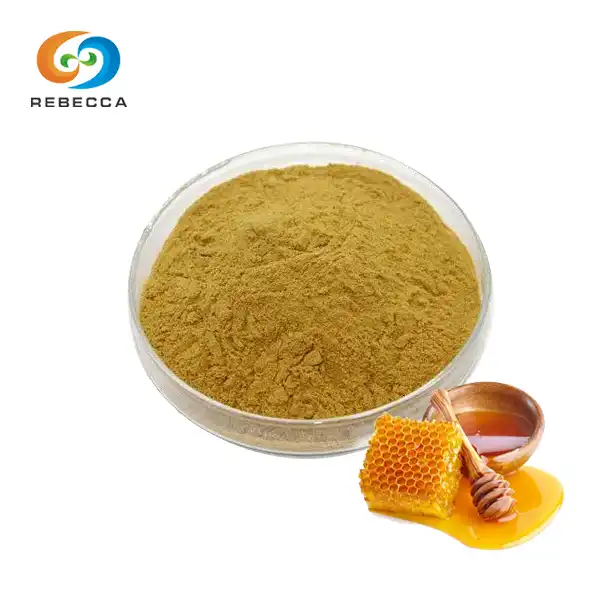
Honey Powder
Specification: Honey Powder 65%
Test Method: HPLC
Latin Name: raw honey powder
Shelf Life: 2 years
Minimum Order Quantity: 1 kg
Samples: Free samples available
Certifications: GMP, ISO, HACCP, KOSHER, and HALAL.
Payment: Various payment methods accepted.
Advantages: Manufactured in a 100,000-grade cleanroom, our products are additive-free, non-GMO
Inner Package: Double PE Bags; Net 5kg/Bag
Outside Package: Paper Drums, Net 25kg/Drum
Storage:Store in a cool, dry place away from Light and Heat.
Bioactive Composition and Functional Role in Skincare
Honey extract is a complex natural substance with many types of bioactive chemicals. Its cosmetic benefit is more related with antioxidant protection, calming effects and support of general skin barrier function than with substantial depigmenting activities.
Key bioactive constituents and formulation relevance
Standard honey extract usually comprises flavonoids, phenolic acids, organic acids and naturally occurring enzymatic components. These substances, in combination, are contributing to the functional performance of it in topical applications, notably in formulations for skin comfort and reduction of oxidative stress.
“Consistency of active compounds is important for the industry. This is critical for stable product performance in large-scale cosmetic manufacturing. High-quality producers usually use chromatographic procedures (e.g. HPLC profiling) to make sure the composition stays standard across batches.
In skincare systems, honey extract is generally used as a multifunctional supporting ingredient. Its main observed roles include:
· Supporting skin hydration and moisture retention
· Helping reduce oxidative stress caused by environmental exposure
· Providing mild soothing and anti-inflammatory support
These properties create a favorable skin environment, which may indirectly contribute to a more balanced complexion over time when combined with other actives in a complete formulation system.

Mechanisms Related to Skin Tone Appearance Support
In “skin whitening” applications, the reference to honey extract in the context of skin whitening is mostly associated with its putative impact on oxidative stress and enzymatic pathways involved in melanin synthesis . But the existing scientific data should be treated with due care, as most of the results come from preclinical or in vitro investigations.
Tyrosinase activity and melanin regulation pathways
Tyrosinase is a key enzyme involved in the production of pigmentation by controlling melanin synthesis in the skin. Some in vitro investigations have shown that phenolic compounds in honey-derived extracts may have some weak inhibitory effects on tyrosinase activity. However, the potency of this impact varies widely depending on extraction techniques, concentration and chemical profile.
At present, the evidence base can be summarized as follows:
· Most data comes from in vitro enzyme inhibition studies
· Human clinical evidence specifically targeting pigmentation reduction is limited
· Observed effects are generally mild and gradual rather than rapid or intensive
Therefore, honey extract should be considered a supportive cosmetic ingredient within broader pigmentation-care formulations rather than a standalone depigmenting active.
Antioxidant protection and skin appearance improvement
Antioxidant activity is one of the most well-supported properties of honey extract. Flavonoids and phenolic acids combat free radicals created from UV exposure, pollution and other environmental stresses that may cause an uneven skin look over time.
This antioxidant mechanism may support:
· Reduction of oxidative stress in skin cells
· Support for normal skin renewal cycles
· Improvement in overall skin clarity appearance
In carefully designed skin care systems these actions may help to enhance the uniformity of skin tone with continued use, particularly in conjunction with UV protection and other active substances.

Formulation Strategy and Ingredient Integration
Honey extract efficacy in cosmetic and nutraceutical research is largely reliant on formulation design, concentration and interaction with other active ingredients. It is often employed in water based systems owing to compatibility and solubility.
Recommended usage levels across product formats
The inclusion rate of honey extract varies depending on product type and intended function. Typical formulation ranges include:
· Leave-on serums: 3–5%
· Daily moisturizers: 1–3%
· Rinse-off formulations: 0.5–2%
These ranges are commonly used to balance efficacy expectations, formulation stability, sensory performance, and cost efficiency in commercial product development.
Synergistic combinations with other cosmetic actives
Honey extract is usually formulated with additional functional substances to improve the overall skin appearance advantages. It is often used in multi-mechanism formulas that aim to promote hydration, barrier function, and oxidative balance.
Common synergistic ingredients include:
· Niacinamide: supports skin barrier function and uneven tone appearance
· Hyaluronic acid: improves hydration and skin plumpness
· Botanical antioxidants: enhance overall oxidative defense systems
The hallmark of current cosmetic formulation tactics is a multi-ingredient strategy, where complimentary biological pathways, rather than single ingredient reliance, are used to create apparent benefits.

Quality Sourcing, Standardization, and Industrial Applications
In B2B applications, the performance and dependability of honey extract largely depends on sourcing quality, standardisation procedures and regulatory compliance. The composition of raw materials might vary and have an important influence on the formulation stability and the performance of the finished product.
Quality control and regulatory compliance standards
Most reputable suppliers will have full quality assurance processes in place to guarantee consistency and safety. This may involve contaminant screening, microbiological testing and active compound verification.
· Heavy metal testing (lead, cadmium, mercury)
· Pesticide residue analysis
· Microbial contamination control
· HPLC-based active compound profiling
· GMP and ISO-certified manufacturing systems
Such systems are essential for ensuring reproducibility and regulatory readiness in international markets.
Industrial applications and supply chain considerations
Honey extract has been extensively employed in several sectors such as cosmetic skin care, functional drinks, nutraceuticals and medicinal researches. It’s versatile enough to work across topical and ingestible product categories.
The major procurement assessment criteria are manufacturing capacity, quality of paperwork and batch to batch consistency. Generally, companies with scalable infrastructure and robust technical support skills are more likely to become your long-term B2B partners.

Conclusion
Honey extract is a multi-purpose natural substance that is largely known for its antioxidant, calming and skin-conditioning effects. Early studies hint to possible roles in pigmentation pathways, however the current science shows it is a supporting cosmetic element rather than a direct skin-lightener.
The real benefit of the contemporary formulation methods is its compatibility with various active ingredients, favourable safety profile and a broad variety of applications in cosmetics and nutraceuticals. For B2B stakeholders, sourcing quality and standardised manufacturing remain the most important elements affecting real-world performance and product dependability.
FAQ
How likely are allergic reactions to honey extract in skincare formulations?
Allergic reactions to properly processed honey extract remain uncommon, affecting primarily individuals with documented bee product sensitivities. Clinical patch testing shows tolerance rates exceeding 95% among general populations. Manufacturers should conduct standard safety assessments and include appropriate product labeling.
What timeline should consumers expect for visible skin brightening results?
Noticeable improvements typically emerge after 6-8 weeks of consistent twice-daily application, with optimal results developing over 12 weeks. This timeline reflects natural skin turnover cycles and gradual melanin reduction through sustained tyrosinase inhibition.
What ethical considerations apply to honey sourcing for commercial applications?
Sustainable beekeeping practices, fair trade certifications, and organic production methods address ethical concerns. Responsible suppliers provide traceability documentation ensuring environmental stewardship and equitable compensation for beekeepers, supporting brand sustainability commitments increasingly important to conscious consumers.
Partner With Rebecca for Premium Honey Extract Solutions
Rebecca specializes in manufacturing high-purity honey extract powder meeting rigorous B2B standards required by pharmaceutical R&D companies, health supplement brands, and cosmetic manufacturers worldwide. Our Shaanxi production facility operates under GMP and ISO22000 certifications, ensuring batch consistency and regulatory compliance across global markets. With annual production capacity exceeding 500 metric tons and advanced HPLC testing methodology, we guarantee standardized honey powder at 65% concentration with comprehensive documentation supporting FDA and EFSA requirements. Whether you need flexible MOQ options, customized formulations, or technical support for product development, our procurement specialists deliver tailored solutions optimizing your supply chain efficiency. Contact our team at information@sxrebecca.com to request samples, detailed pricing, and discover why leading honey extract suppliers trust Rebecca for reliable ingredient sourcing supporting their innovation goals.
References
1. Burlando, B., & Cornara, L. (2013). Honey in dermatology and skin care: A review. Journal of Cosmetic Dermatology, 12(4), 306-313.
2. Wahdan, H. A. (2015). Causes of the antimicrobial activity of honey. Infection, 26(2), 26-31.
3. Eteraf-Oskouei, T., & Najafi, M. (2013). Traditional and modern uses of natural honey in human diseases: A review. Iranian Journal of Basic Medical Sciences, 16(6), 731-742.
4. Molan, P. C. (2016). The evidence supporting the use of honey as a wound dressing. International Journal of Lower Extremity Wounds, 5(1), 40-54.
5. Al-Waili, N. S. (2011). Topical honey application versus acyclovir for the treatment of recurrent herpes simplex lesions. Medical Science Monitor, 10(8), 94-98.
6. Alvarez-Suarez, J. M., Giampieri, F., & Battino, M. (2013). Honey as a source of dietary antioxidants: Structures, bioavailability and evidence of protective effects against chronic diseases. Current Medicinal Chemistry, 20(5), 621-638.