How to Verify China Alpha Ketoglutaric Acid Suppliers?
Many people around the world find it smart to buy alpha-ketoglutarate powder from China. China makes most of the active chemicals used in pharmaceuticals and nutraceuticals. But there are a lot of suppliers, and not all of them do what they say they will.
Alpha-ketoglutarate (α-KG), which is also called 2-oxoglutaric acid, is an important part of how cells use energy. It is an important part of the Krebs cycle and the process of making amino acids. Demand from B2B buyers around the world is rising quickly. This is because it is used in many health supplement recipes, such as sports nutrition and functional food ingredients.
This guide talks about the three most important things to look for in an alpha-ketoglutarate powder supplier: legal records, quality standards, and the ability to produce. Go over all three before making a decision about which source to work with.
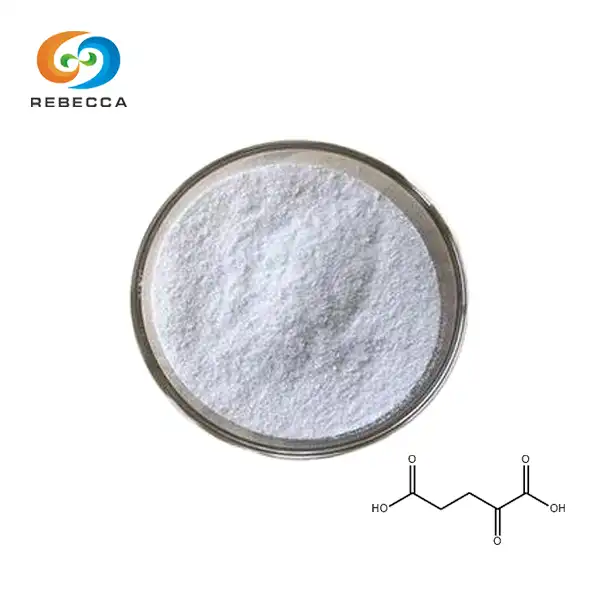
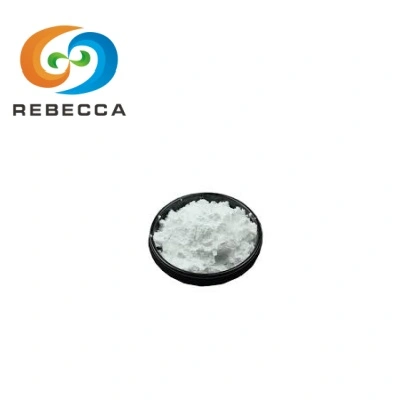
Alpha-Ketoglutarate Powder
【English name】: Alpha-Ketoglutarate
【CAS No.】: 328-50-7
【Molecular Formula】: C5H6O5
【Active ingredients】: Alpha-Ketoglutarate
【Specification】: Alpha-Ketoglutarate 98%
【Appearance】: White powder
Checking Legal Credentials and Business Registration
Start With the Business License
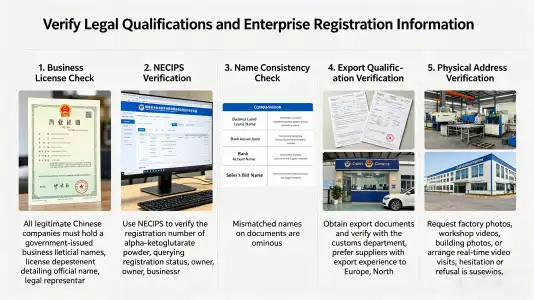
A business licence from the government is required for every legal company in China. This paper is what proves that the company is legitimate. The official name, legal agent, listed location, business scope, and date the company was founded are all written down in one place.
Do not just read the copy that a seller gives you. Use China's National Enterprise Credit Information Publicity System (NECIPS) to double-check the registration number of alpha-ketoglutarate powder. This is a free database from the government that lets you check if a business is registered, who owns it, what it does, and if it's on any court or ban records. If the name on the licence doesn't match the name on the bank account or bills from the seller, that's a very bad sign.
Confirm Their Export Qualifications
Not every Chinese business can ship immediately. Some companies that sell alpha-ketoglutaric acid buy it from a plant, repackage it, and then sell it again. That plan might not be a problem all the time, but you should know what you're up against. Get copies of the export papers and check them with the customs office that handles that country.
Suppliers who have sent goods to Europe, North America, or Japan in the past are likely to know more about foreign rules and regulations. That knowledge is important when you're looking for an ingredient for a health product that needs to pass the import checks in your own country.
Verify the Physical Address
Without a real address that can be checked, a skilled website doesn't mean much. More and more, scammers are using fake offices and stock photos to make their businesses look real. Get pictures of the factory, movies of the work floor, and pictures of the building. It's even better to set up a live video tour. These days, many reputable makers do this as standard. That's a big red flag if the provider hesitates or refuses.
Evaluating Quality Standards and Certifications
Which Certifications Actually Matter?
When business-to-business buyers buy alpha-ketoglutarate powder as an ingredient in a health product, certain certifications really matter. This is what you should look for and why it's important.
ISO 9001 makes sure that the seller has a quality control system that is written down and followed. It doesn't promise the product, but it does show that the company uses regular ways to make and check their products. GMP (Good Manufacturing Practice) approval is very important for nutritional ingredients because it shows that you have control over the risks of contamination, where you get your raw materials, and how you can track each batch.
Kosher and Halal licenses can help your goods sell in more places if your market needs them. For buyers in Europe, it's a good idea to ask about REACH compliance. Some sellers are also HACCP certified, which is very helpful when using ingredients that are safe for food.
Request a Certificate of Analysis (COA) and Third-Party Testing
A Certificate of Analysis (COA) shows how pure, how it looks, and what the specifications were for a certain production batch. A real COA for alpha-ketoglutarate powder should prove its purity (usually ≥98%), its look as a white crystalline powder, and important chemical properties like the amount of heavy metals present and how much is lost when dried.
Do not depend on the supplier's own COA alone. Ask for samples to be tested by a third-party lab that has been approved by the company. Companies like Eurofins, SGS, or Intertek work all over the world and offer ingredient quality analysis. The chance of getting material that doesn't meet specifications is much greater than the cost of a single test result. A sample that was accepted (sometimes called a "golden sample") should be used as a standard for quality for all future orders.
Assessing Production Capacity and Reliability
Understand Whether You Are Buying From a Factory or a Trader
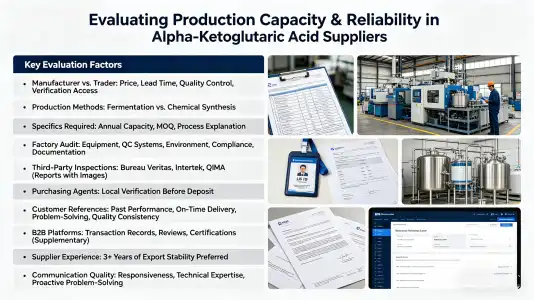
Everything is affected by this difference, including prices, wait times, quality control, and your ability to check. A direct maker runs its own assembly line. A business that trades doesn't. Either can be a good partner, but honesty must be a must. Find pictures of the factory floor, a list of the machines, and information about the workers. A real business will usually be happy to have that look around without any problems.
The process of making alpha-ketoglutaric acid includes either fermentation or chemical change. A real maker shouldn't give you general answers when you ask about their production method, annual capacity, or minimum order amounts. They should be able to give you specific answers. If a provider can't clearly explain how they make something, that in itself tells you something.
Conduct a Factory Audit — or Hire Someone Who Can
An audit of the plant itself is still the most accurate way to check. Standard checks in the industry are usually done by independent inspection companies and cost between $250 and $400 USD. The audit looks at the actual production equipment, quality control systems, working conditions, environmental compliance, and the accuracy of the documents.
Third-party quality control companies, such as Bureau Veritas, Intertek, and QIMA, can do the check for you if you can't go to China. They give written notes with lots of details and pictures. Some sellers also work with local buying agents in China. These agents check what the suppliers say in person before a deposit is made.
Check Customer References and Track Record
The past of a provider shows how good their claims are. Ask for references from past clients, preferably customers in the same market or industry. Talk to those references directly and find out how often deliveries are made on time, how quickly problems are fixed, and how consistent the work is across batches. B2B platforms like Alibaba also show the past of transactions, buyer reviews, and verification status. However, these should only be used in addition to direct due diligence and not instead of it.
Pay attention to how long the business has been doing business abroad. Most of the time, suppliers who have been exporting for three years or more are much more stable than those who are new to the export market. Putting money into proof at this point saves both your customers further down the line and the image of your brand.
Evaluate Communication Quality and Responsiveness
Suppliers you can trust connect regularly. Check to see how quickly a possible partner answers your first message. Check to see if their expert team can answer specific questions about the alpha-ketoglutarate ingredient, like how it dissolves, how long it lasts, how to store it, or how to test it. When asked about technical issues, vague answers are often a sign that the person doing the trade doesn't know much about the producing process.
Suppliers who are open and honest also talk about problems before they happen. When you first start working with a seller, see how they handle a made-up delay or quality issue. The way they answered shows the kind of conversation you can expect in a long-term relationship.
Alpha-Ketoglutarate Powder Supplier: Rebecca Bio-Tech
Rebecca Bio-Tech (Shaanxi Rebecca Bio-Tech Co., Ltd.) is a high-tech company in Shaanxi, China that focuses on exports. Making, researching, and selling plant extracts, herbal active ingredient separation, and functional chemicals used in traditional Chinese herbal medicine are what the company does best.
Rebecca Bio-Tech serves B2B buyers around the world in the pharmaceutical, health goods, beverage, and beauty ingredient industries. It has three specialised production lines, a production capacity of more than 500 metric tonnes per year, and a collection of more than 100 plant-derived extracts. All of the items are natural plant extracts, not finished goods for sale.
Rebecca Bio-Tech's alpha-ketoglutarate powder is available at 98% purity and meets the specification requirements that serious global buyers expect:
|
English Name |
Alpha-Ketoglutarate |
|
CAS No. |
328-50-7 |
|
Molecular Formula |
C₅H₆O₅ |
|
Active Ingredient |
Alpha-Ketoglutarate |
|
Specification |
Alpha-Ketoglutarate 98% |
|
Appearance |
White Powder |
Ready to verify us? We welcome factory inquiries, COA requests, and sample orders. Contact our team directly — our technical staff will respond to your specifications promptly.
Send an Inquiry:
FAQ
1. What is alpha-ketoglutarate powder, and why is it used in health supplement formulations?
Alpha-ketoglutarate (α-KG), CAS 328-50-7, is a naturally occurring organic acid and a key intermediate in the Krebs cycle. It plays a central role in amino acid synthesis and cellular energy metabolism. As a health supplement ingredient, it is widely incorporated into sports nutrition products and functional food formulations. Manufacturers value it for its purity profile and its role in supporting energy pathways in the body.
2. What documents should I always request from a Chinese alpha-ketoglutaric acid supplier?
At minimum, request the following: (1) a copy of the business license, verifiable via NECIPS; (2) relevant certifications such as ISO 9001, GMP, Kosher, or Halal; (3) a batch-specific Certificate of Analysis (COA); (4) export license documentation; and (5) third-party test reports from accredited laboratories. Authentic suppliers provide these documents without hesitation.
3. How can I confirm that a supplier's quality certifications are genuine?
Do not rely solely on the document copy. Cross-check the certificate number directly on the issuing body's official website. SGS, TÜV Rheinland, and Intertek all maintain online portals for certificate verification. Confirm that the certified entity's legal name matches the supplier you are contracting with, and check that the certificate has not expired.
4. Is it safe to source alpha-ketoglutarate powder from a trading company rather than a direct manufacturer?
It depends on the level of transparency the trading company maintains. Some trading companies work with certified, audited manufacturers and can provide full traceability documentation. However, direct manufacturers typically offer more competitive pricing, faster issue resolution, and greater quality control visibility. Whichever route you choose, third-party product testing and a pre-shipment inspection are strongly recommended.
5. What purity level should alpha-ketoglutarate powder have for use in health supplement ingredients?
For health supplement ingredient applications, a purity specification of ≥98% is standard in the industry, confirmed by HPLC analysis. The product should appear as a white crystalline powder with a melting point between 115°C and 118°C. Verify these parameters against both the supplier's COA and your own third-party laboratory test results before approving a supplier for regular orders.
References
1. Supplyia. (2025). How to Verify Chinese Supplier's Legitimacy? — 7 Methods.
2. Minden International Sourcing. (2026). How to Verify a Chinese Supplier: Complete Checklist for Importers.
3. Lansil Global. (2025). How to Verify a China Manufacturer's License and Quality Standards.
4. Zignify. (2026). How Do You Verify Chinese Suppliers?
5. Alibaba B2B Sourcing. (2025). How to Find and Evaluate Certified Product Suppliers in China.
6. Pro QC International. (2025). Verify Suppliers in China — Complete Guide to Safe Trade Practices.