Is ws-23 safe?
The most important question that formulators and product makers in the food, drink, cosmetics, and mouth care businesses are all asking is: Is WS-23 safe? In recent years, there has been a huge increase in the desire for cooling effects in consumer goods. Menthol used to be the most popular flavour in this area, but its strong smell and taste often went against delicate product profiles. Here comes cooling agent WS-23, a man-made chemical that cools without adding any flavour and doesn't have the usual minty bite. Still, safety is still the most important thing for any careful buyer of raw materials.
The safety profile of WS-23 is looked at from different points of view in this paper. We are going to talk about its basic qualities, legal status, scientific study, and directions for practical use. This knowledge will help you make an informed buying choice whether you make candy, drinks, skin care products, or mouth care products.
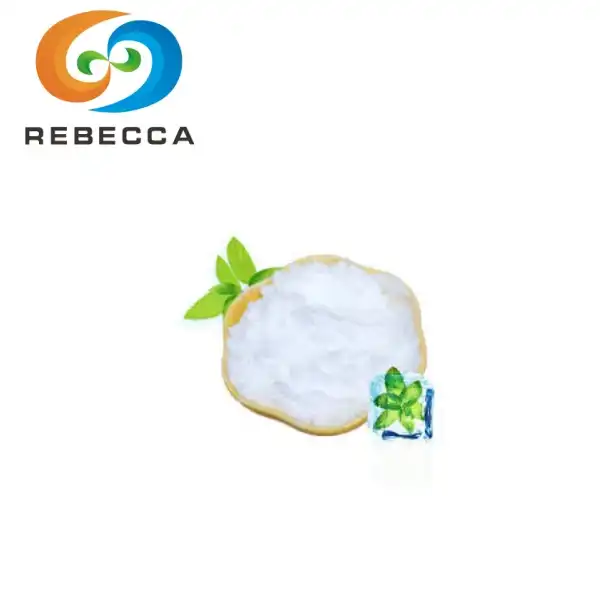
Cooling Agent Ws 23
English name: Cooling Agent WS-23
CAS No.: 51115-67-4
Molecular Formula: C10H21NO
Active ingredients: 2-Isopropyl-N,2,3-trimethylbutyramide
Specification: 99%
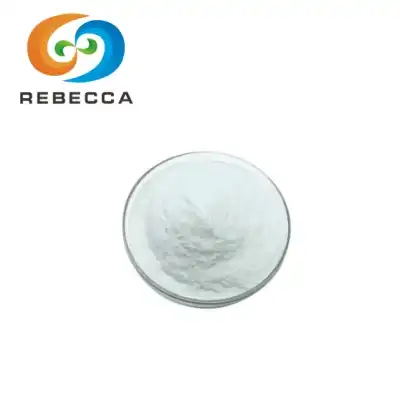
Appearance: White Crystalline Powder
Test Method: GC
Certification:MSDS、COA
Minimum Order Quantity: 1 kg
Samples: Free samples available
Payment: Various payment methods accepted.
Advantages: Manufactured in a 100,000-grade cleanroom, our products are additive-free, non-GMO
Inner Package: Double PE Bags; Net 25kg/Drum
Storage:Store in a cool, dry place away from Light and Heat.
What Is Cooling Agent WS-23 and How Does It Work?
Chemical Identity and Physical Properties
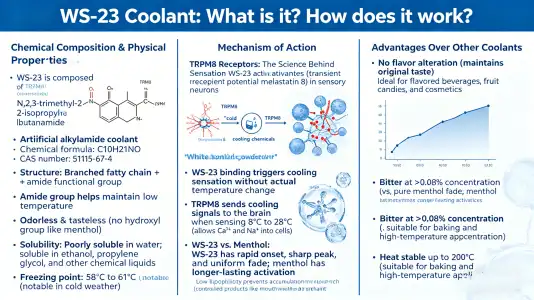
WS-23 is made up of the chemicals N,2,3-Trimethyl-2-isopropylbutanamide. An alkyl amide is the name of the man-made cooling agent. It is made up of the chemicals C10H21NO and has the CAS number 51115-67-4. It is made up of an aliphatic chain that branches out and an amide functional group that helps it stay cool. The hydroxyl group in menthol gives it a sweet smell. WS-23, on the other hand, doesn't smell or taste very good. One thing makes it different from other coolants.
In cold weather, WS-23 freezes at between 58°C and 61°C. It is a white, solid powder. It's not easy to dissolve in water, but it's simple to dissolve in ethanol, propylene glycol, and other chemical liquids. These things are very important for people who buy food. Chemicals can mix well with different product bases, like those that are based on water, oil, or alcohol. This is called their solubility.
The TRPM8 Receptor: Science Behind the Sensation
How does the ws 23 cooling agent actually work to cool things down? The answer lies in the genetics of receptors. WS-23 powder works by turning on certain receptors in our sense neurones, mainly the TRPM8 channels (Transient Receptor Potential Melastatin 8). People also call these channels "cold receptors" because they react to cold temperatures and chemicals that make you feel cold. There is no real change in temperature when WS-23 molecules connect to these receptors. Instead, they set off a chain of events that make us feel cool.
As soon as the TRPM8 receptor senses temperatures between 8°C and 28°C, it sends cooling signals to the brain by letting calcium and sodium ions in. While menthol links directly to TRPM8 and keeps it active for longer, WS-23 works in a different way to cause a cooling effect that starts quickly, peaks quickly, and then fades more evenly. This difference is important for product designers who need to know what the physical results will be. WS-23 cools you down more evenly than menthol does, which makes its effect more focused on specific touch points. Its lower lipophilicity keeps it from building up in lipid-rich tissues, which gives it a controlled cooling effect, especially in mucous uses like mouthwashes and drinks.
Key Advantages Over Menthol and Other Coolants
People who make products often wonder why they should use WS-23 instead of menthol or other man-made options. A number of benefits stand out. When you compare WS-23 to other cooling agents like WS-3, WS-5, or peppermint, it has some unique benefits. One of the best things about WS-23 is that it doesn't change the taste of the product, so the original taste stays the same. Just because of that, it is an essential ingredient in flavoured drinks, fruit-based sweets, and delicate cosmetics.
When compared to menthol, which becomes bitter above 0.08%, WS-23 stays clean at these levels. WS-23 can also handle heat up to 200°C without losing its cooling properties, making it a good choice for baking and other high-temperature tasks. This stability at high temperatures is very helpful for companies that make baked goods, candy that has been cooked, or powders that are sprayed to dry.
Regulatory Status and Safety Evidence for WS-23
GRAS Status and Global Approvals
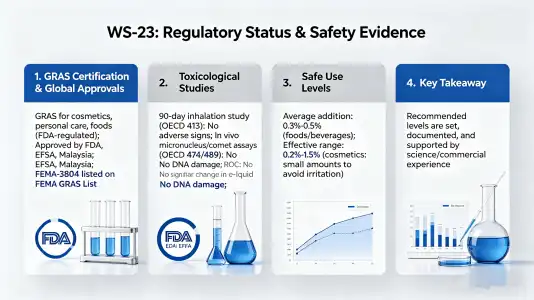
Buyers' trust in a food item is directly related to how well it is regulated. Then, do reputable groups agree that WS-23 is safe? WS-23 is usually thought to be safe (GRAS) for use in makeup, personal care items, and food. The GRAS label, which is controlled by the U.S. Food and Drug Administration (FDA), means that trained scientists have looked at all the data and decided that a drug is safe to use as directed.
Regulation groups like the FDA in the US and the EFSA in Europe have said that WS-23 is safe to use and that it can be eaten. Aside from these two main markets, WS-23 can also be used in food in a lot of other places, like the US, the EU, and Malaysia. This broad acceptance by regulators is what makes global trade possible. When buyers get WS 23 cooling agent as a raw material, they can ship it to more than one country with more trust, as long as the right paperwork goes with each package.
Another group that is important is the Flavour and Extract Manufacturers Association (FEMA). The acyclic carboxamide WS-23 that Wilkinson Sword found has a cooling effect on living things and is known as FEMA-3804. An independent group of experts reviewed chemical and exposure statistics specific to the drug, as shown by a FEMA-GRAS listing.
Toxicological Studies and Research Findings
One part of safety is getting approval from the government. Another type is peer-reviewed study. What do tests done in the lab tell us about WS-23?
Using OECD Test Guideline 413 as a guide, a 90-day breath toxicity study was done on Sprague Dawley rats to test WS-23. At the amounts that were looked at, WS-3 and WS-23 did not show any bad clinical signs. Furthermore, both substances did not damage DNA even after multiple doses, as shown by the in vivo micronucleus (OECD 474) and the Comet test (OECD 489).
A very important safety measure is non-genotoxicity. This means that the chemical did not harm the DNA of the animals that were studied. This is a very important result for any ingredient that is going to be used in food or cosmetics.Concerning reactive oxygen species (ROS), a problem that is often linked to man-made chemicals, a peer-reviewed study published in PMC discovered that adding the cooling agent WS-23 or WS-3 to e-liquid base solution, with or without nicotine, did not significantly change the levels of acellular ROS in aerosolised e-liquids or cellular ROS levels in treated BEAS-2B cells. Even though this study only looked at aerosolised exposure and not food-grade direct consumption, it still gives us useful information about cell-level safety.
It's important to note that some study has looked into worries about inhaling, especially high-concentration exposure from e-cigarettes.
Synthetic cooling agents WS-3 and WS-23 have been added to throwaway e-cigarettes and e-cigarette refills in amounts that could be harmful. But these worries depend on the amount and the method of administration. When WS-23 is used in food and cosmetics, it is at much lower levels and is eaten or put on the skin instead of being breathed at high amounts. The ratios and routes of exposure are also very different.
Safe Usage Levels and Dosage Guidelines
The right dose makes sure that you are safe and that your senses work at their best. With an average of 0.3% to 0.5% added, WS-23 is one of the most popular cooling agents in high-intensity cooling sweets, mouthwashes, and drinks. These amounts give the product an obvious, nice cooling effect without overpowering its main flavour.
Most people think that the cooling agent WS-23 is safe to eat as long as it is used in the suggested amounts. It is not known to have any negative effects on human health. For people who buy ingredients for businesses, this advice directly affects the growth of new products. A useful structure is one that starts at 0.2% and goes up to 1.5%, based on the application. When used in makeup, WS-23 is usually in small amounts so that it doesn't irritate the skin. What's the main point? The amounts of use that are suggested are set, well-documented, and backed up by both science research and business experience.
Applications of Cooling Agent WS-23 Across Industries
Food and Beverage Formulations
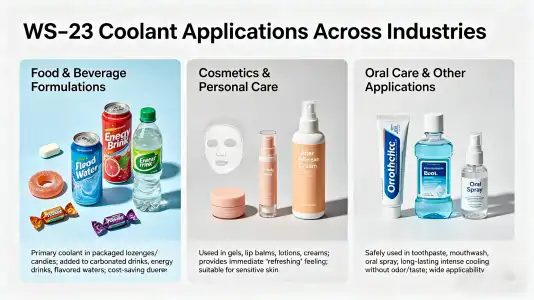
One of the biggest markets for WS-23 is the food and drink industry. WS-23 is often used as a cooling agent in the food business to improve the taste and smell of foods and drinks. It cools the tongue without changing the smell or taste of the food, which makes it a popular choice to menthol and other common cooling agents.
WS-23 is now the main cooling agent in most widely available packed lozenges and ring-shaped sweets. Beverage formulators add WS-23 to fizzy drinks, energy drinks, and flavoured waters to make them feel cool and delicious. As a result of its high cooling efficiency, WS-23 only needs a small amount to have the desired effect. This saves makers money. Less raw material per batch of output means lower usage rates, which has a direct effect on your cost per unit.
Cosmetics and Personal Care Products
WS-23 is also used as a cooling agent in cosmetics to give the skin a feeling of being refreshed and energised. It is in a lot of different beauty and personal care items, like gels, balms, lotions, and creams. Think about face masks, lip balms, body mists, and products that cool the skin after being in the sun. The chemical gives people the instant "fresh" feeling they associate with high-quality skin care.
New cooling agents, like WS-23, are made with molecular design that directly handles the itching issue that older chemicals have. When used for a long time, menthol can sometimes make your skin feel burning or become more sensitive. These newer agents, on the other hand, only work with cooling receptors. Because they are selective, they only turn on the TRPM8 channels that are needed and don't have a big effect on other sense pathways that could cause irritation reactions. When it comes to makeup ingredients, WS-23 is clearly better than other menthol-based choices for people who want to make goods for sensitive skin.
Oral Care and Beyond
When used at the suggested amounts, WS-23 is safe to use in toothpaste and other mouth care items. Many mouthwash companies like this ingredient because it can give you a strong cooling feeling that lasts for a long time without having any taste or smell. Mouthwash and mouth spray makers also use WS-23 because it has a clean taste profile.
The material can be used in many different ways. WS-23 works with many different types of formulas, such as those that are water-based, oil-based, or alcohol-based. This wide range of flexibility makes R&D work easier. Formulation experts can add WS-23 to current product lines without having to do a lot of restructuring. This cuts down on the time and money needed for development.
China Cooling Agent WS-23 Supplier: Rebecca Bio-Tech
When you buy Cooling Agent WS-23, the quality of the product you end up with depends on how good your provider is. Shaanxi Rebecca Bio-Tech Co., Ltd. is Rebecca Bio-Tech's main business. They make, study, and sell plant products and herbal active ingredient separation. Rebecca Bio-Tech is a high-tech business that focuses on exporting. They are committed to giving people around the world in the health goods, drinks, cosmetics, and related industries high-quality natural and manufactured materials. The company can meet the needs of buyers all over the world because it has three production lines, more than 100 different product types, and a production capacity of more than 500 metric tonnes per year.
Our Cooling Agent WS-23 is manufactured in a 100,000-grade cleanroom — additive-free and non-GMO. Every batch is rigorously tested to ensure consistency and purity. Here are the specifications you can rely on:
|
English Name |
Cooling Agent WS-23 |
|
CAS No. |
51115-67-4 |
|
Molecular Formula |
C10H21NO |
|
Active Ingredient |
2-Isopropyl-N,2,3-trimethylbutyramide |
|
Specification |
99% |
|
Appearance |
White Crystalline Powder |
|
Test Method |
GC |
|
Certification |
MSDS, COA |
|
Minimum Order Quantity |
1 kg |
|
Samples |
Free samples available |
|
Payment |
Various payment methods accepted |
|
Inner Package |
Double PE Bags; Net 25 kg/Drum |
|
Storage |
Store in a cool, dry place away from light and heat |
Rebecca Bio-Tech is ready to help you whether you are making a new line of cool drinks, changing the way a skin care product works, or making more mouth care products. You can try the item before you decide to buy a lot of it by getting free samples. A minimum order number of 1 kg keeps your original investment low and gives you a lot of freedom in how you make your products.
Ready to take the next step? Reach out to our team today. Send your inquiry directly to information@sxrebecca.com and tell us about your project requirements. We will respond with a tailored solution — complete with COA documentation, competitive pricing, and flexible shipping options — within 24 hours.
FAQ
1. Is WS-23 the same as menthol?
No. WS-23, unlike other cooling agents, is not derived from menthol, but like its counterparts, it has no odour or flavour and just provides a cooling effect. Menthol produces a strong minty taste and aroma. WS-23 delivers a cooling sensation without altering your product's flavor or scent profile. This makes it ideal for applications where flavor neutrality matters.
2. What industries can use WS-23 as a raw ingredient?
WS-23 is a synthetic food-grade cooling agent known for its intense cooling sensation. It provides a similar cooling effect to menthol, but without the associated minty or herbal flavor. This makes it a versatile choice widely used in the food, beverage, and cosmetic industries. It is also used in oral care products such as toothpaste and mouthwash, as well as personal care items like shampoos and body lotions.
3. What is the recommended usage level for WS-23?
In high-intensity cooling candies, mouthwashes, and beverages, typical addition levels are 0.3%–0.5%. In cosmetics, lower concentrations are generally used. For specific formulations, it is best to start at a low percentage and adjust based on sensory testing.
4. Does WS-23 have GRAS status?
Yes. WS-23 is generally recognised as safe (GRAS) for use in food, cosmetics, and personal care products. This designation, supported by FEMA and recognized by the FDA, confirms the compound's safety under intended use conditions.
5. Is WS-23 stable at high temperatures?
WS-23 has good heat resistance up to 200°C without reducing the cooling effect and is suitable for use in baking and other high-temperature processes. WS-23 exhibits excellent stability, making it ideal for formulations requiring consistent and prolonged cooling effects.
References
1. Foreverest Resources Ltd. "Cooling Agents WS-23."
2. EurekAlert / American Thoracic Society (2022). "Potentially dangerous synthetic cooling agents are used at high levels in E-cigarettes."
3. PMC / National Library of Medicine (2022). "E-cigarette synthetic cooling agent WS-23 and nicotine aerosols differentially modulate airway epithelial cell responses."
4. PMC / National Library of Medicine (2022). "The role of synthetic coolants, WS-3 and WS-23, in modulating E-cigarette-induced reactive oxygen species (ROS) in lung epithelial cells."
5. CORESTA. "Evaluation of synthetic cooling agents WS-3 and WS-23 in 90-day inhalation toxicity studies in Sprague Dawley rats."
6. Biology Insights (2025). "WS-23: Composition, Cooling Action, and Health Aspects."