Is chlorophyll powder the same as liquid?
Many buyers confuse these two forms. They see green pigment and assume identical products. This mistake costs money and affects results. chlorophyll powder and liquid share a source. They differ fundamentally in composition, stability, and application. This article clarifies these distinctions. You will make informed decisions for your business or personal use.
Rebecca Bio-Tech manufactures powder forms. We supply global pharmaceutical and nutraceutical markets. Our experience spans three production lines. We process over 100 plant extracts. This expertise informs every answer below. Let us examine the science behind these differences.
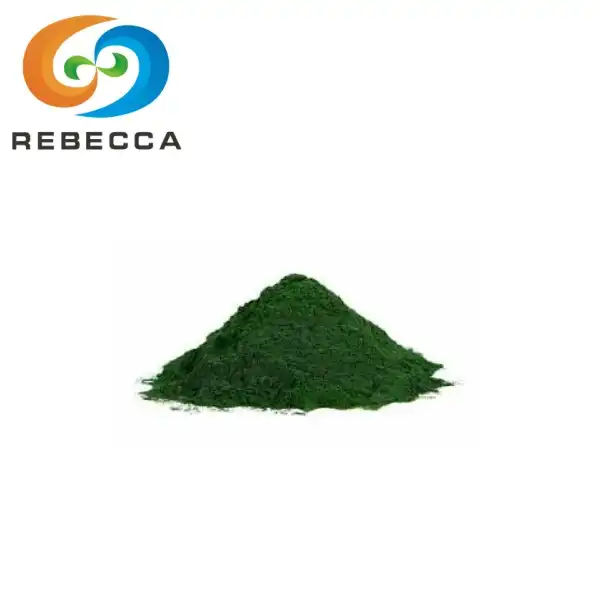
Chlorophyll Powder Bulk
【English name】: Chlorophyll Powder
【Latin Name】: chlorophyll;
【CAS No.】: 1406-65-1
【Molecular Formula】:C54H69MgN4O5R+2
【Active ingredients】:
【Specification】: 10%-99%
【Appearance】: Dark Green Powder
【Mesh size】:80 Mesh
【Test Method】: UV/HPLC
Chemical Composition and Stability: Why They Are Not Interchangeable?
Chlorophyll from plants is naturally oil-soluble and chemically weak. When it comes into contact with light, heat, or oxygen, its porphyrin ring structure breaks down quickly, causing it to lose its color and biological activity. Because of this, producers don't often utilize unaltered chlorophyll in supplements for sale. Instead, they change it chemically via saponification, which replaces the core magnesium ion with copper. This change produces chlorophyllin, which is far more resistant to stress from the environment. Chlorophyllin may dissolve in water, which makes it simpler to put into drinks, pills, and capsules. Because of these benefits in terms of stability and formulation, most items sold as "chlorophyll" supplements really include chlorophyllin instead of natural chlorophyll, even though people frequently think the two are the same.
Chlorophyllin powder is the concentrated, functional component that has very little moisture left behind after it is dried. Powders made for industrial use usually have purity levels close to 99%, which makes dosing accurate and repeatable. Liquid chlorophyll products, on the other hand, are made by mixing this powder with water plus preservatives, sweeteners, or flavoring agents to make them last longer and taste better. The active chlorophyllin level in most commercial liquid formulations is only approximately 1–2%. The rest of the volume is made up of the carrier solution. This significant dilution has a direct effect on how accurate the dose is, how well it works in transportation, and how much it costs to use. Because equal quantities of powder and liquid do not supply the same quantity of active substance, consumers and formulators must take the concentration disparity into mind.
One of the main distinctions between chlorophyllin powder and liquid forms is how stable they are. Chlorophyllin powder may keep its chemical structure and bright dark green color for up to 24 months if it is securely stored and kept away from moisture and oxygen. Liquid chlorophyll products, on the other hand, usually only last for 6 to 12 months. Once the container is opened, air exposure speeds up oxidation, which usually makes the solution become brown and lose its efficacy over time. To make things more stable, producers often add chemical stabilizers like sodium benzoate or humectants like glycerin. These additions change the final product profile, which affects flavor, labeling, and whether or not it is good for particular uses.
Chlorophyllin powder is different from liquid chlorophyllin because it can handle different pH levels. The powdered form is stable over a wide pH range of around 3 to 9, which means it works well in acidic drinks, neutral supplements, and even moderately alkaline formulas. Liquid chlorophyll products, on the other hand, are less stable at pH levels below 4, which might cause precipitation or color loss. This restriction is mostly because of the extra solvents and stabilizers that don't work well together when the pH is low. So, formulators need to be cautious when they change formulas when they use liquid forms. Rebecca Bio-Tech's chlorophyllin powder works the same way at all pH levels, as shown by UV and HPLC tests. Our certificates of analysis list CAS No. 1406-65-1 and show the molecular makeup that goes with it.
Practical Applications: How Usage Differs Between Forms?
From the point of view of the user, liquid chlorophyll solutions are generally preferred since they are easy to use right away. Users may just squeeze a few drops into a glass of water or juice without having to weigh or measure them. This is great for busy people who don't have time to do that. To make these beverages taste better, manufacturers often add mint, citrus, or herbal tastes to hide the inherent bitterness of chlorophyllin. This simplicity of use greatly helps retail sales, especially in the health and leisure segments. On the other hand, powder forms need more input from the user. To make sure that the product spreads evenly, customers need to measure the right quantity and mix it well. Some people find clumping to be annoying or time-consuming if they don't stir enough or utilize the right method.
Chlorophyllin powder is far more useful in real life, even if it takes more work to use. When baking and preparing food, color and function must be exact. One teaspoon of powder may evenly tint up to one kilogram of flour, making green pasta, bread, or candy that looks good. If you used a liquid form, you would need a lot more of it, which may change the recipe's hydration balance and texture a lot. Cosmetic formulation has similar problems. To make sure that each batch of face masks or cleansers is the same, pigment control must be very precise. Formulators can change the concentrations of powders in very small amounts of 0.1%, but this is hard to do with liquids since they naturally dilute.

Chlorophyllin powder is usually the best choice for beverage makers on a large scale since it is easier to work with and costs less. Bulk purchasers may get the powder in 25-kilogram barrels, which cuts down on storage space and shipping expenses. The dry form works well in big mixing tanks and dissolves consistently during regulated processing processes. Quality control is also easier since producers can test and approve a single uniform batch. On the other hand, shipping liquid chlorophyll would need massive amounts, typically by the truckload, which would dramatically raise shipping and handling costs. Rebecca Bio-Tech helps these bulk consumers by producing more than 500 metric tons of products per year. Our three specialized manufacturing lines make sure that we always have enough products and that they are always of high quality.
Powder versions are certainly more accurate when it comes to getting the right dose. Using a calibrated milligram scale, producers and researchers can measure accurate levels of chlorophyllin. This is important for clinical trials and scientific investigations that need to get the same results every time. Even slight changes might make data less reliable. Droppers, which are not very accurate, are used in liquid items. The size of the drops may change according on the temperature, viscosity, and how the user handles them, which makes them always different. Because they aren't very accurate, liquids aren't as good for situations where rigorous dose management is needed. Because of this, supplement makers that want to back particular health claims generally employ powder forms. This is because powders make it easy to keep track of and prove the precise amounts utilized in each formulation.
Cost Analysis and Storage Logistics for Commercial Buyers
A closer look at price per serving highlights clear economic differences between powder and liquid forms. Pure chlorophyllin powder typically costs around USD 0.08 per standardized 100 mg dose, while an equivalent dose delivered through liquid products ranges from USD 0.25 to 0.40. This price gap is largely driven by non-active costs, including bottle packaging, shipping large volumes of water, added preservatives, and secondary labeling. For commercial buyers, these extras translate into unnecessary overhead. Purchasing in bulk further amplifies the advantage of powder formats. A single 25-kilogram drum can reduce unit costs by as much as 70% compared with small packaged liquids. Such margin improvements are especially attractive to contract manufacturers operating under tight cost-control requirements.
Storage logistics represent another critical distinction for commercial operations. Chlorophyllin powder requires only cool, dry conditions and remains stable when stored in sealed containers. A single drum occupies limited warehouse space and can be stacked efficiently, allowing high-density storage and simplified handling. Liquid chlorophyll products, however, impose far stricter requirements. They often need climate-controlled environments, as temperature fluctuations can accelerate degradation and color loss. Bottled liquids also consume significantly more space and are more vulnerable to breakage during internal handling or transit. These risks increase insurance premiums and raise the likelihood of losses. Managing liquid inventories therefore becomes more complex, demanding additional monitoring, specialized storage infrastructure, and higher operational costs that many buyers seek to avoid.
Shelf life has a direct impact on inventory planning and cash flow. With a stability window of up to 24 months, chlorophyllin powder allows buyers to place larger, less frequent orders. This flexibility supports long-term demand forecasting and strengthens negotiating power with suppliers, often resulting in more favorable pricing terms. In contrast, liquid chlorophyll products typically have much shorter shelf lives, forcing purchasers to order smaller quantities more frequently. These repeated orders increase administrative workload and raise per-unit costs. Shorter expiration timelines also heighten the risk of stockouts or write-offs due to expired inventory. For supply chain managers focused on predictability and efficiency, powder formats provide a more reliable foundation for production scheduling and long-term inventory optimization.
Transportation economics overwhelmingly favor powder formats. Shipping water adds weight and volume without adding functional value, making liquid products significantly more expensive to transport. In practical terms, one kilogram of chlorophyllin powder can be diluted to produce approximately 50 liters of finished liquid, illustrating the dramatic difference in concentration. This efficiency sharply reduces freight costs, especially for international shipments, while also lowering the associated carbon footprint. For companies pursuing sustainability targets, reduced transportation emissions are an important advantage. Rebecca Bio-Tech’s export business benefits directly from this model, enabling efficient shipments to more than 50 countries worldwide. Our dedicated logistics team continually optimizes packaging and routing to ensure cost-effective, reliable global delivery.

Chlorophyll Powder Supplier: Rebecca Bio-Tech
The question is settled. Chlorophyll powder and liquid are not the same. Powder delivers purity. It offers stability. It reduces costs. Liquid provides convenience. It sacrifices concentration. Your choice depends on application needs.
Rebecca Bio-Tech specializes in chlorophyll powder production. Our facility in Shaanxi operates three advanced production lines. We produce over 100 plant extracts. Annual capacity exceeds 500 metric tons. This scale ensures supply security. We control quality from raw material to finished powder.
Our chlorophyll powder specifications meet diverse industry needs. English name: Chlorophyll Powder. Latin Name: chlorophyll. CAS No.: 1406-65-1. Molecular Formula: C54H69MgN4O5R+2. Specifications range from 10% to 99% purity. Appearance is consistently Dark Green Powder. Mesh size of 80 ensures smooth dissolution. Test Method: UV/HPLC guarantees accuracy. These details appear in every certificate of analysis.
Ready to source premium chlorophyll powder? Email information@sxrebecca.com today. Request specifications and pricing. Ask for samples. Experience the Rebecca Bio-Tech difference. Your products deserve ingredients that perform consistently. We provide them. Our team responds within 24 hours. Let us support your next formulation project.
FAQ
Q1: Can I directly substitute chlorophyll powder for liquid in recipes?
Yes, with proper conversion. One teaspoon of powder equals 16 ounces of standard liquid concentrate. Dissolve the powder first. Use warm, not hot, water. Stir vigorously. Cool before adding to final recipes. Adjust for concentration differences. Always test small batches first. This prevents costly mistakes.
Q2: Which form offers better absorption?
Absorption rates are similar. Both forms deliver chlorophyllin. The gut absorbs it moderately. Bioavailability ranges from 30-40%. Food intake enhances uptake. Fat-containing meals help slightly. Powder's purity eliminates absorption interference. Liquid's additives may slow uptake. The difference is minimal. Choose based on convenience needs.
Q3: How do I convert liquid chlorophyll measurements to powder?
Standard conversion: 1 teaspoon powder = 100 servings of liquid. Each liquid serving is typically 1 mL. Check your liquid's concentration. Some brands use 2% solutions. Others use 1%. Read the label. Calculate total chlorophyllin content. Match this with powder purity. Rebecca Bio-Tech provides conversion charts. Contact our technical team for assistance.
References
1. Ferruzzi, M. G., et al. (2009). Digestive stability and absorption of chlorophyllin. Journal of Agricultural and Food Chemistry, 57(12), 5384-5390.
2. United States Food and Drug Administration. (2023). Code of Federal Regulations Title 21, Section 73.125 - Sodium copper chlorophyllin. Retrieved from www.fda.gov
3. European Food Safety Authority. (2010). Re-evaluation of chlorophylls (E 140) as food additives. EFSA Journal, 8(3), 1539.
4. Grusak, M. A. (2020). Plant sources of chlorophyll for commercial extraction. Journal of the Science of Food and Agriculture, 100(7), 2891-2897.
5. International Journal of Cosmetic Science. (2021). Stability of chlorophyllin in topical formulations. 43(2), 178-186.
6. Global Market Insights. (2023). Chlorophyll Market Size Report. Industry Analysis.
7. National Institutes of Health. (2022). Dietary Supplement Label Database. Chlorophyllin content analysis.