
Is ectoin an active ingredient?
ectoine is a functional active ingredient which is widely used in skin-care, personal-care and certain ocular-care products. It is mostly about hydration, skin-barrier maintenance and protection against environmental stress. The legal definition of ectoin as a “active ingredient” relies on the product category, the claims on the label and the legislation of the target market.
In this article you will learn about the function of ectoin, how to evaluate the existing information, which goods may contain ectoin and what customers should look for when buying ectoin.
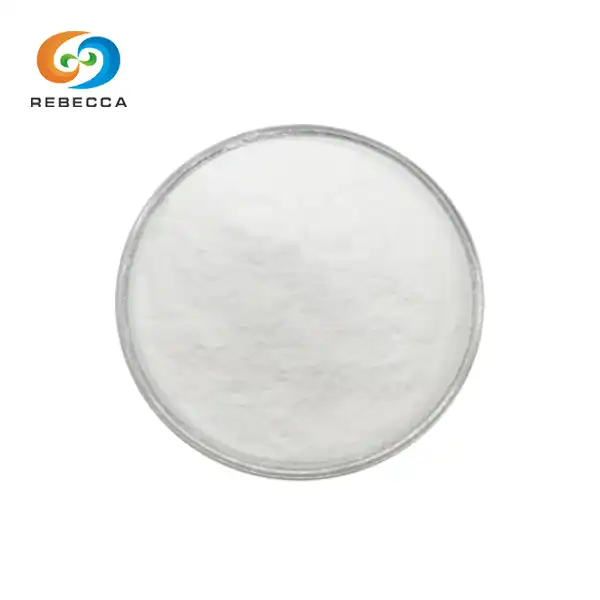
Ectoine
【English name】:Ectoin
【Nicknames】:Tetrahydropyrimidine, Tetrahydromethylpyrimidine Carboxylic Acid
【CAS No.】:96702-03-3
【Molecular Formula】: C6H10O2N2
【Specification】: 99%
【Appearance】: White to Off-white Powder
【Test Method】: HPLC
What Makes Ectoin an Active Ingredient?
Ectoin powder and its natural function
Ectoin powder comprises the molecule ectoine. Ectoine is a tiny, cyclic amino acid derivative that is formed by some bacteria living in extreme conditions with high salt concentrations and temperatures or other stress factors. These bacteria employ ectoine as a suitable solute It allows them to keep the cells stable without interfering too much with regular metabolic activities.
Ectoin powder is appreciated in cosmetic compositions as its water-binding characteristics may contribute to a protective layer of moisture surrounding proteins, cell membranes and other biological structures. This process offers the scientific rationale for the use of ectoine in products for dry, sensitive or environmentally affected skin.
This is a biological function, not a therapeutic promise. A raw ingredient may have a helpful mechanism in laboratory tests, but the ultimate benefit is dependent on the concentration, formula, packaging, application area and storage circumstances.
Cosmetic active versus drug active ingredient
Ectoin powder may be legitimately regarded as a functional cosmetic active when it is utilized to promote the hydration, comfort or look of the skin. We define “active” as a substance purposely introduced to create a discernible technical or esthetic effect.
The regulatory definition of “active ingredient” varies in several markets. The active ingredient in a drug product is typically a chemical which is designed to have a pharmacological , immunological or metabolic impact . A cosmetic ingredient that protects the skin barrier should not be immediately considered a medication active, therapeutic ingredient or therapy for a disease. The claims of the product also influence the ultimate categorization. FDA labeling regulations separate medication active ingredients from cosmetic compounds . European cosmetic claims need to be substantiated by adequate and verifiable evidence .
Therefore a more accurate definition would be: “Ectoine is a functional active used in cosmetic and personal-care formulations.” This describes its function without implying that all ectoine products are a medication.
What does the evidence show?
Research using ectoin powder and ectoine containing formulations has investigated hydration, skin-barrier function, photo-stress and inflammatory skin disorders. Some research use cell models, other investigations test a whole cream on human participants. Such forms of evidence should be individually explained.
Therefore, a randomized vehicle-controlled in-vivo research was conducted with 104 healthy female volunteers to test a formulation with 2% ectoine. They measured skin moisture, surface structure and flexibility. The results demonstrated cosmetic advantages for the tested formulation, but should not be seen as evidence that other ectoine-containing products would provide the same outcomes.
A randomized comparator-controlled study of an ectoine-containing cream was also performed in 65 people with mild-to-moderate atopic dermatitis. The research demonstrated that the tested cream was well tolerated and similarly effective as the reference product. This is valuable data for a particular formulation, but does not suggest that ectoine alone can replace the medical therapy of atopic dermatitis.
So the most powerful statement is neither “ectoine cures inflammation” or “ectoine prevents skin damage.” A more precise statement is that ectoine has been researched for its capacity to maintain hydration and assist skin in dealing with certain environmental or barrier-related stresses.
With this difference in mind, the next concern is how ectoine powder is employed in completed goods and what advantages may be presented properly.
How Does Ectoine Compare With Other Active Ingredients?
Ectoin powder versus hyaluronic acid
Ectoin powder and hyaluronic acid are both included in treatments for dry skin. Hyaluronic acid is known for its water-binding and film-forming characteristics. Ectoine is likewise connected with hydration but is more generally positioned. It is often utilized to help maintain integrity of biological structures under environmental stress.
These substances are not necessarily in competition. A solution might be positioned using hyaluronic acid for instant moisturization and ectoine powder for longer-term barrier maintenance. The real outcome varies on molecular weight, concentration, vehicle, pH and presence of additional substances.
Ectoin powder versus glycerin
Glycerin is a humectant, meaning it draws in water and has been utilized in plenty of cheap skin care products. The marketing stance for ectoin powder is often varied. It is not so typically provided as a fundamental humectant, but rather as a cell-protective or environmental-stress-supporting component.
Glycerin is used for its cost efficiency, familiarity in formulation and good moisturization. Ectoine is used when a brand wishes to establish a sensitive-skin, urban-protection or barrier-care strategy. You may use the two components in conjunction.
Ectoin powder versus peptides and antioxidants
Peptides are a wide group of ingredients. Different peptides may be employed for different cosmetic goals such as the appearance of stiffness or wrinkles. Ectoin powder doesn’t function in quite the same manner. The main emphasis is hydration support and preservation of cell structures rather than direct stimulation of a certain visible skin parameter.
Antioxidants such as the basic vitamins C and E are utilized to help neutralize or reduce oxidative damage. Ectoine should not be routinely classified as a direct scavenger of free radicals like these antioxidants. A more conservative view is that ectoine stabilizes cell structures and aids the skin response to environmental stress.
Ectoin powder and niacinamide
Niacinamide has a number of cosmetic applications including barrier support, uneven appearing skin tone and the appearance of pores. Ectoin powder is positioned differently but narrower. It is particularly well-suited for formulae designed for hydration, comfort and protection against dry or stressful situations.
Niacinamide and ectoine might work together. However, brands should not suggest that their combination immediately translates into a therapeutic treatment outcome. Such a combination claim must be backed by testing on the completed product.
These findings suggest that ectoine should not be offered as a universal alternative for other actives. The value is in the unique role it may play in a carefully crafted recipe.
In Which Products Is Ectoine Used as an Active Ingredient?
Ectoin powder in moisturizers and barrier-care products
Ectoin powder is a well-known ingredient in moisturizers, face creams, lotions and sensitive skin treatments. Products may be created for dry skin, sensitive skin or skin subjected to low humidity and air conditioning.
An appropriate claim may be “helps support skin hydration and comfort.” Claims like “repairs damaged skin,” “treats dermatitis” or “prevents cellular aging” need better product-specific data and might run into regulatory complications in particular regions.
Ectoin powder in anti-aging and after-sun products
Some firms add ectoin powder to anti-aging serums and after-sun treatments because hydration and barrier support may help improve the look of dry, rough or stressed skin. "anti-aging" use sparingly. It is safer to speak about observable results like better moisturisation, smoother-looking skin or decreased appearance of dryness.
Ectoine is not a sunscreen and should not be marketed as a substitute for a tested UV filter. Its protective effect against UVA-induced cellular stress has been studied, including an early research utilizing a UVA stress model, although the presence of ectoine does not determine the sun protection factor of a product.
Ectoin powder in eye drops and nasal sprays
Ectoine is included in several eye-care products as a preservative-free eye drop or other mix to help with ocular surface comfort. Research has investigated ectoine for irritation, inflammation and symptoms associated with dry eye. The data relates to the tested eye-drop formulation and not necessarily to every ectoine powder or ectoine-containing product.
Raw ectoin powder for cosmetic formulation may not be presumed to be appropriate for ocular usage. Products for the eye need extra controls such as acceptable microbiological quality, compatibility with the formulation, packaging and safety assessment. If you have chronic eye discomfort, visual problems, damage or extreme dryness, you should seek medical attention, not use a cosmetic product.
Nasal sprays containing ectoine have also been investigated in allergic rhinitis and rhinoconjunctivitis. A meta-analysis provided data of ectoine nasal spray and eye drops, but the products and research designs still have to be evaluated separately before making a general effectiveness statement.
Ectoin powder and environmental-stress claims
Products with ectoin powder are sometimes sold for pollution exposure, low humidity, weather fluctuations and urban lifestyles . These are good ideas on how to formulate, but each has to be backed up with relevant claims. And a laboratory finding on protein stabilization is no proof that a completed cream prevents particle debris from sticking to human skin.
The blue-light part of the original should be either eliminated or explicitly stated as an emerging field of study. Today, it would be an exaggeration to say that ectoine protects customers against all the adverse effects of the blue light produced by screens.
The best language for completed goods is generally “helps skin cope with environmental stress” or “supports hydration in dry conditions.” These are more accurate than “offers total protection” or “stops DNA damage.”
Where to Buy Ectoin Powder?
What buyers should check before purchasing ectoin powder
When buying ectoin powder for product development, customers should insist on more than a given purity %. The supplier should be able to produce a current certificate of analysis, a safety data sheet and a technical data sheet. The documentation must include the substance, assay technique, batch number, production date, retest or expiration information and suggested storage conditions.
Buyers may additionally require information concerning microbiological restrictions, residual solvents, heavy metals, moisture, particle properties and packaging, depending on the intended use. Cosmetic-grade status may not be adequate if the substance is to be used in eye-care or pharmaceutical research.
Rebecca Bio-Tech Factory ectoin powder supply
Bio-Tech Factory of Rebecca sells ectoine powder that they say is 99% pure. Buyers should refer to the current specification and demand the required batch specific documents prior to ordering. The term “99% purity” should be associated with a specific analytical procedure, not a generic quality claim.
The substance might be explored for formulation development of cosmetic and personal-care. The formulator and regulatory team needs to determine whether it is suitable for a certain product. It should not be implied by a raw material supplier that the constituent is necessarily licensed for pharmaceutical, ophthalmic or therapeutic use.
Conclusion
Ectoin powder is a functional cosmetic active ingredient intended to improve hydration, skin comfort and the protection of biological structures from specific environmental stresses. The research available are promising, but they do not warrant the use of ectoine as a sunscreen, universal antioxidant or as a replacement for medical therapy.
The best product descriptions differentiate between lab data, human data and finished-product performance. They also point out that the regulatory definition of “active ingredient” varies by product category and target market. For the customer, quality documentation and application specific testing are as crucial as the declared purity of the raw material.
FAQ
1. Is ectoine an active ingredient?
Yes, in a cosmetic formulation, ectoine may be described as a functional active ingredient. It is commonly used for hydration, barrier-support and environmental-stress positioning. Whether it is legally called an “active ingredient” depends on local regulations and the claims made for the finished product.
2. Is ectoin powder the same as hyaluronic acid?
No. Both ingredients may support skin hydration, but they have different chemical properties and formulation roles. Hyaluronic acid is primarily known for water binding and film formation. Ectoin powder is generally positioned around hydration support and protection of biological structures under environmental stress.
3. Can ectoine replace sunscreen?
No. Ectoine is not a UV filter and should not replace a broad-spectrum sunscreen tested according to the relevant market standard. It may be included in a sun-care formula as a supporting ingredient, but the final product’s UV protection must come from approved UV filters and appropriate testing.
4. Can ectoin powder be used directly in eye drops?
Not automatically. Cosmetic-grade ectoin powder should not be used in an ophthalmic product without formulation development, quality testing, safety assessment and regulatory review. Eye drops require stricter controls than ordinary skincare products.
5. Is 99% purity enough when buying ectoin powder?
No. Purity is important, but it is only one purchasing criterion. Buyers should also check the analytical method, batch-specific certificate of analysis, microbiological quality, residual solvents, heavy metals, moisture, storage conditions and intended grade of the material.
6. Is ectoine suitable for sensitive skin?
Ectoine-containing products are often formulated for dry or sensitive skin, and clinical studies have reported good tolerability for certain tested formulations. Nevertheless, tolerance depends on the entire formula. Consumers should patch-test new products and follow the product instructions.
Samples and quotations
For a sample, quotation or technical discussion about ectoin powder, contact Rebecca Bio-Tech Factory at information@sxrebecca.com.
To receive a more useful response, include the intended application, estimated order quantity, destination market, desired packaging and required documents. Buyers may also ask for the current certificate of analysis, safety data sheet, technical data sheet, sample availability, lead time and shipping conditions.
References
1. Buenger, J., & Driller, H. “Ectoin: An Effective Natural Substance to Prevent UVA-Induced Premature Photoaging.” Skin Pharmacology and Physiology, 2004, 17(5): 232–237.
2. Heinrich, U., Garbe, B., & Tronnier, H. “In Vivo Assessment of Ectoin: A Randomized, Vehicle-Controlled Clinical Trial.” Skin Pharmacology and Physiology, 2007, 20(4): 211–218.
3. Marini, A., Reinelt, K., Krutmann, J., & Bilstein, A. “Ectoine-Containing Cream in the Treatment of Mild to Moderate Atopic Dermatitis: A Randomised, Comparator-Controlled, Intra-Individual Double-Blind, Multi-Center Trial.” Skin Pharmacology and Physiology, 2014, 27(2): 57–65.
4. Botta, C., Di Giorgio, C., Sabatier, A. S., & De Méo, M. “Genotoxicity of Visible Light (400–800 nm) and Photoprotection Assessment of Ectoin, L-Ergothioneine and Mannitol and Four Sunscreens.” Journal of Photochemistry and Photobiology B: Biology, 2008, 91(1): 24–34.
acology and Physiology, 27(2), 57-65.