Is Epimedium Extract Powder Safe For The Liver?
In almost every B2B interaction concerning epimedium extract powder, the topic of liver safety comes up. And it HAS to. Procurement professionals who are acquiring botanical ingredients for supplements, functional foods or pharmaceutical formulations need to know exactly what they are putting into their goods.
In this essay, we will review what the current research actually says about icariin, the main active molecule in horny goat weed extract, and its effect on liver function. We will talk about toxicity studies, dose-response relationships, quality control criteria and real world post-market evidence. No hedging, no marketing fluff, only the data that matters for sourcing decisions.
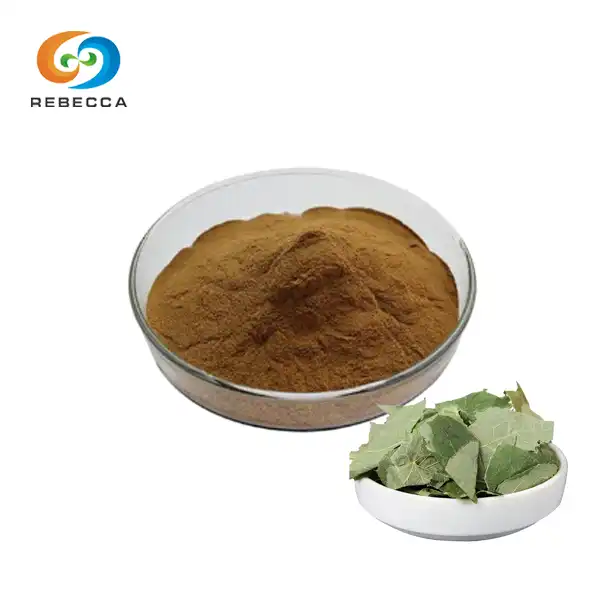
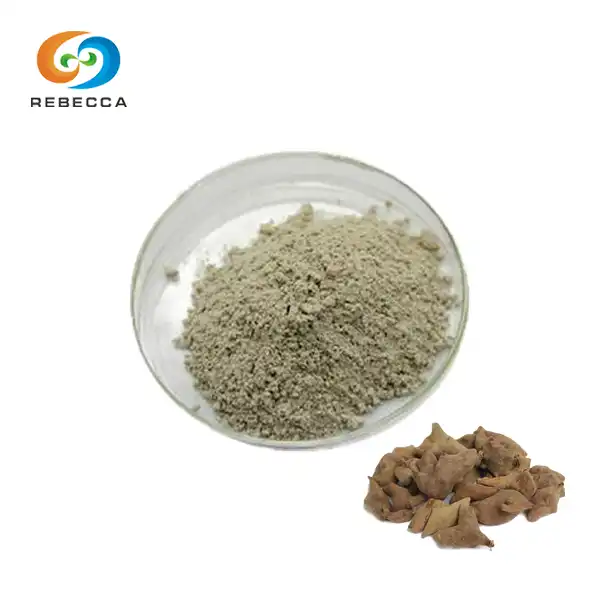
Epimedium Extract Powder
English name: Horny goat weed extract
Latin Name: Epimedium brevicornu Maxim.
CAS No.: 489-32-7
Molecular Formula: C33H40O15
Active ingredients: Icariin, Icariins
Specification: Icariin 5%, 10%, 20%, 30%, 40%, 50%, 60%, 70%, 80%, 98%
Use Part : Leaf
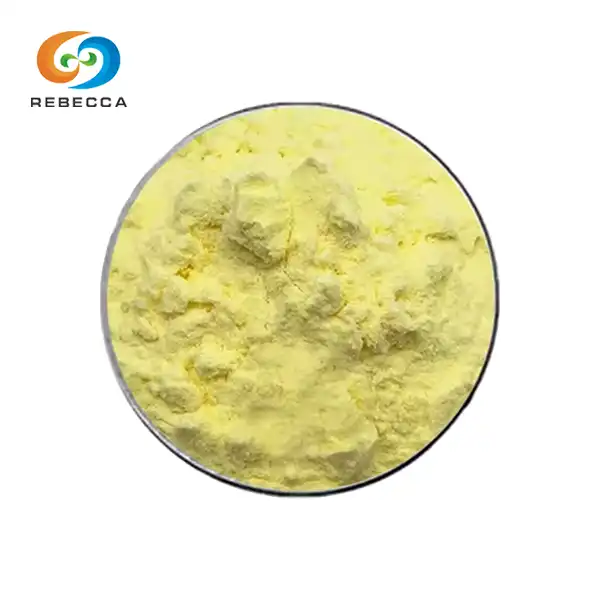
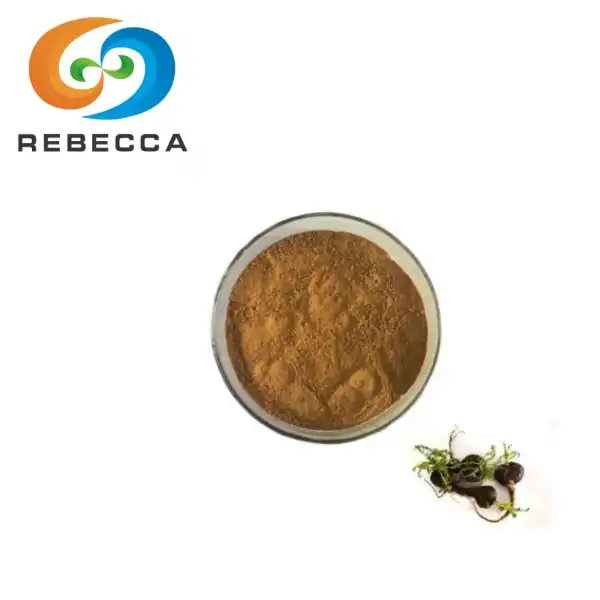
Appearance: Brown powder to light yellow powder
Mesh size:80 Mesh
Test Method: HPLC
Understanding Epimedium Extract Powder and Its Impact on Liver Health
Before diving into safety data, it helps to understand what this ingredient actually is and how it interacts with the body’s hepatic system.
Botanical Origins and Bioactive Components
Epimedium extract powder is obtained from the aerial portions of Epimedium brevicornum Maxim, a plant of the Berberidaceae family. The commercial value of this extract is based on the icariin (CAS No. : 489-32-7, molecular formula C33H40O15). It is a prenylated flavonoid and producers often standardize it to criteria from 5% to 98% purity.
Besides icariin, the extract contains secondary chemicals such as epimedins A, B and C. These contribute to the overall biological activity of the substance. The last profile of the compound is determined by the extraction procedure, generally water or ethanol based, followed by chromatographic purification. Good providers back up this profile with HPLC tests on every batch.
Why is this important for liver safety? The liver processes everything that goes into the body . The first step in estimating hepatic risk is to know what is in the extract, and at what concentration.
How Icariin Interacts with Hepatic Enzymes?
Icariin doesn’t only go through the liver. It is metabolized by the cytochrome P450 enzyme system to active metabolites, which undergo phase II conjugation before to excretion.
Icariin does not seem to concentrate in animal liver tissue when given at normal doses . This is a significant finding. And some botanical substances accumulate in the liver, with the danger of cumulative damage over time. The efficient clearance mechanism of Icariin suggests a lower ceiling for such a danger.
That stated, adding extract purity affects the equation. 100 mg of active ingredient in a 500 mg dosage of a 20% icariin extract. 490 mg of the same dosage size, 98% extract, almost 5x as much. The higher the concentrations the more rigorous the dose protocol. This gap should be taken into account by formulators in the product development.
The metabolic profile appears good on paper. But what do real toxicity tests reveal when this substance is tried out?
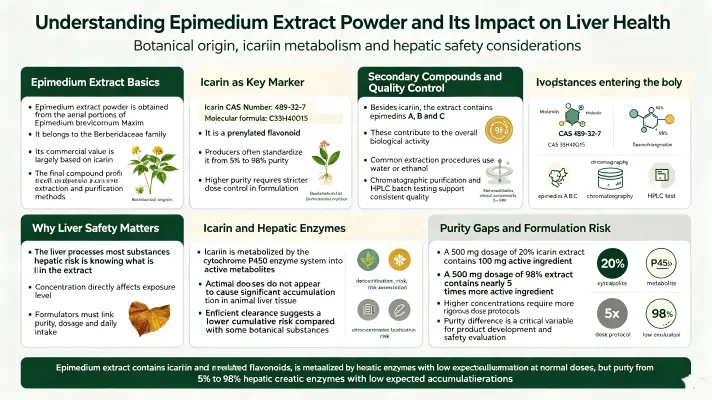
Scientific Insights on Epimedium Extract Powder and Liver Safety
What Toxicology Studies Actually Show?
Liver enzyme levels, particularly ALT and AST, have been assessed in certain rodent investigations following long-term administration of icariin-rich extracts. Typically these investigations use dosages of 50 to 200 mg/kg of body weight. Monitoring intervals of up to 90 days.
The results are in agreement. Therapeutic doses of pure, standardized extracts do not cause statistically significant increases in transaminase markers. Peer-reviewed research listed in PubMed, including 90-day oral toxicity trials on extracts of Epimedium brevicornum, has demonstrated no harmful liver effects within the range examined.
But here is the important caveat. The investigations use laboratory-grade extracts that have been quality regulated. Now look at contaminated items and the picture is a lot different. Contamination can be attributed to nearly all isolated case reports of hepatic stress. The usual suspects are heavy metals, pesticide residues or unlawful adulteration with synthetic PDE5 inhibitors added to so called natural performance items.
That’s why third-party testing is not an option. It's the difference between a safe substance or a liability.
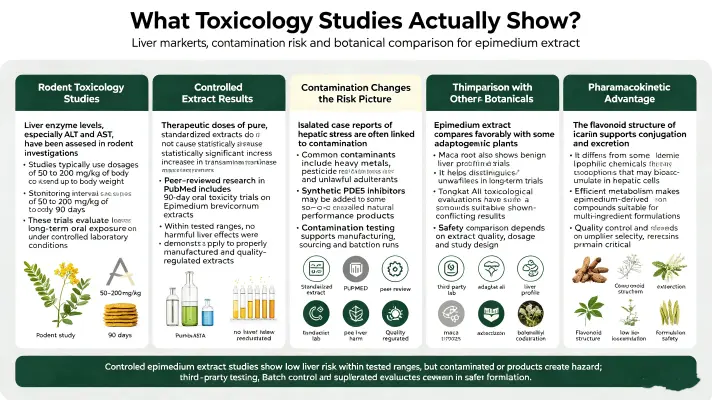
Icariin Concentration and Dose-Response Relationships
The relationship between icariin potency and liver safety follows a clear dose-dependent pattern. The table below breaks down the practical implications for formulators:
|
Icariin Concentration |
Typical Daily Dose (Extract) |
Icariin Intake |
Safety Margin |
|
10%-20% |
300-600 mg |
30-120 mg |
Wide |
|
20%-40% |
300-500 mg |
60-200 mg |
Moderate |
|
60%-98% |
Formulation-dependent |
150+ mg |
Requires precise dosing |
Animal trials with supraphysiological dosages (500 mg/kg) have demonstrated temporary increases in the enzymes. These resolved on stopping. But the findings indicate a crucial point: There’s a threshold, and crossing it has consequences.
In practice, for dietary supplements, lower concentration extracts (10%-40% icariin) offer the optimal safety versus efficacy ratio. Functional beverage developers should lean on the lower side. High purity icariin pharmaceutical R&D teams will require tight dose methods, and possibly more safety monitoring.
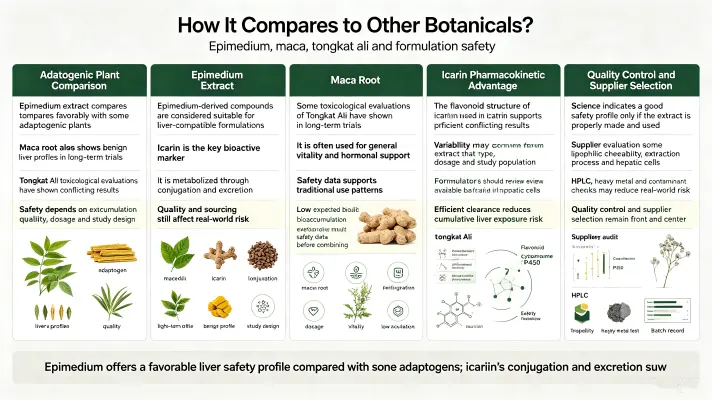
How It Compares to Other Botanicals?
Epimedium extract powder measures up favorably when compared to other adaptogenic plants. Maca root also has equally benign liver profiles in long-term trials. Some toxicological evaluations of Tongkat Ali (Eurycoma longifolia) have shown conflicting results.
The flavonoid structure of icariin is the key to its pharmacokinetic advantage. Unlike other lipophilic chemicals in alternative botanicals that may bioaccumulate in hepatic cells, icariin is well conjugated and excreted. This makes epimedium-derived compounds a sensible choice for formulators developing multi-ingredient solutions where liver compatibility is a concern.
Science indicates a good safety profile, but only if the chemical is properly made and used. And that leaves quality control and supplier selection front and center.
Guidelines for Safe Usage of Epimedium Extract Powder in Industrial Applications
Evidence-Based Dosage Limits
Official upper intake levels for icariin have not been set by regulatory agencies. This means that manufacturers have to look to the scientific literature when determining maximum doses. That's what the statistics tells us.
The Animal No-Observed-Adverse-Effect-Levels (NOAEL) correspond to human equivalent doses of about 900 mg pure icariin daily for a 70 kg adult. This gives a large safety margin for commercial formulations, which typically contain 60-200 mg of icariin per serving.
|
Application |
Recommended Extract |
Icariin % |
Daily Serving |
Target Audience |
|
Dietary Supplements |
Standardized extract |
20%-40% |
300-500 mg |
General wellness |
|
Functional Beverages |
Lower-potency extract |
10%-20% |
200-400 mg |
Broad consumer base |
|
Pharmaceutical R&D |
High-purity icariin |
60%-98% |
Per protocol |
Clinical applications |
|
Topical / Cosmetic |
Various |
5%-20% |
Topical use |
Minimal systemic exposure |
Cosmetic applications deserve a brief note. Topical preparations show negligible systemic absorption, which essentially eliminates hepatic exposure concerns.
Quality Control Measures That Matter
If there is one takeaway from this entire article, it is this: liver safety is determined more by manufacturing quality than by the ingredient itself. Supplier audits should verify the following:
· Compliance: GMP certification and ISO 22000 food safety management systems
· Authentication: Raw material authentication via DNA barcoding to prevent species substitution
· Heavy metals: Lead below 3.0 mg/kg, arsenic below 2.0 mg/kg, verified by ICP-MS
· Solvent residue: Ethanol levels below 5,000 ppm, tested via gas chromatography
· Microbial: Total plate counts under 1,000 CFU/g
· Aflatoxins: Quarterly batch screening, as aflatoxins pose hepatotoxic risks independent of the extract itself
· Batch consistency: HPLC verification of icariin content on every production run
International buyers targeting FDA-regulated markets should confirm suppliers maintain Drug Master Files (DMF). For EFSA-compliant formulations, Novel Food authorization may apply depending on the target market.
|
Contaminant |
Safe Limit |
Testing Method |
Risk if Exceeded |
|
Lead (Pb) |
<3.0 mg/kg |
ICP-MS |
Cumulative hepatotoxicity |
|
Arsenic (As) |
<2.0 mg/kg |
ICP-MS |
Liver enzyme elevation |
|
Ethanol residue |
<5,000 ppm |
GC |
Metabolic burden |
|
Total plate count |
<1,000 CFU/g |
Plate count |
Infection risk |
|
Aflatoxins |
<2 μg/kg |
HPLC |
Direct hepatotoxicity |
Packaging and Storage Best Practices
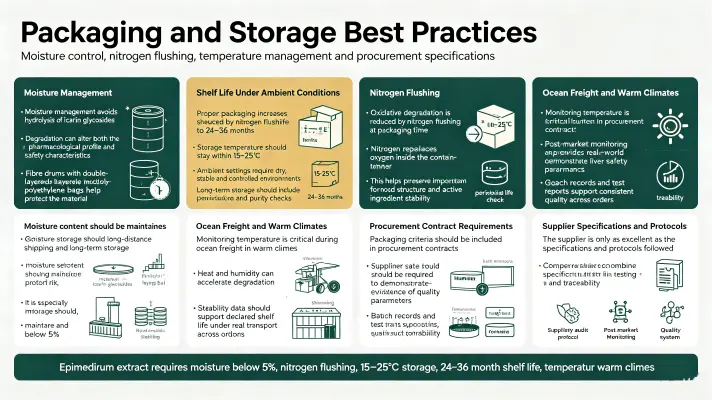
Moisture management avoids hydrolysis of icariin glycosides. In case this degradation does place, the pharmacological profile and safety characteristics are altered. Fibre drums with double-layered polyethylene bags, moisture content is maintained below 5%. This increases shelf life to 24-36 months under ambient settings (15-25°C).
Oxidative degradation is reduced by nitrogen flushing at the time of packaging. Monitoring the temperature is critical with ocean freight in warm climes. Packaging criteria should be included in procurement contracts and stability data should be required to demonstrate maintenance of liver safety parameters during the declared shelf life.
The supplier is only as excellent as the specifications and protocols he/she follows . The rest of the article is real-world evidence from post-market monitoring.
Real-World Evidence and Supplier Selection for Liver-Safe Sourcing
What Post-Market Data Actually Shows?
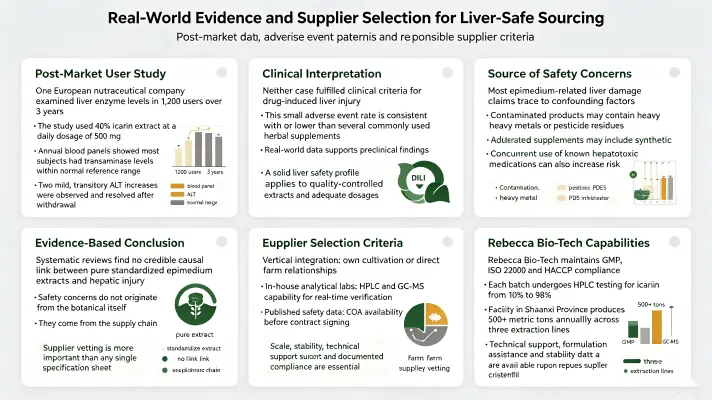
One European nutraceutical company examined liver enzyme levels in 1,200 users for 3 years. It contained 40% icariin extract, a daily dosage of 500 mg. Annual blood panels indicated the great majority of subjects had transaminase levels within the normal reference range.
For complete transparency, the study did observe two incidences of mild, transitory ALT increase. Both resolved on withdrawal of the drug.
Neither case fulfilled the clinical criteria of drug-induced liver damage (DILI). This kind of small adverse event rate is in line with, and actually lower than, what you would expect from several regularly ingested herbal supplements.
“This real-world data supports what the preclinical studies are suggesting. The liver safety profile is solid with quality-controlled extracts and adequate dosages.
Dispelling Myths with Evidence
Internet forums occasionally circulate claims about epimedium-related liver damage. When you trace these reports to their source, a pattern emerges. Nearly every case involves one of three factors:
· Contaminated products with heavy metals or pesticide residues
· Adulterated supplements containing synthetic PDE5 inhibitors (sildenafil, tadalafil) illegally added to natural products
· Concurrent use of known hepatotoxic medications
Systematic reviews of adverse event databases find no credible causal link between pure, standardized epimedium extracts and hepatic injury when these confounding factors are excluded.
The takeaway for procurement professionals is straightforward. Safety concerns do not originate from the botanical itself. They come from the supply chain. This is why supplier vetting matters more than any single specification sheet.
Selecting a Supplier That Takes Liver Safety Seriously
As a manufacturer of epimedium extract powder, we at Rebecca Bio-Tech do not pretend to be neutral observers. But we believe transparency is the best commercial strategy. Here is what we recommend buyers look for, whether they work with us or someone else:
· Vertical integration: Shorter supply chains mean better contaminant control. Look for suppliers with their own cultivation or direct farm relationships.
· In-house analytical labs: HPLC and GC-MS capability for real-time quality verification, not just batch-end testing.
· Published safety data: Willingness to share Certificates of Analysis before contract signing, not just after.
· Scale and stability: Production capacity that demonstrates supply chain stability. Rebecca’s facility in Shaanxi Province produces 500+ metric tons annually across three extraction lines.
· Technical support: Teams that can help optimize dosing strategies for your specific application, not just sell powder.
Rebecca Bio-Tech maintains GMP, ISO 22000, and HACCP compliance across all production lines. Each batch undergoes HPLC testing to verify icariin content from 10% to 98% specifications. We provide full documentation, customized formulation support, and stability data upon request.You can request Rebecca’s documentation package by emailing information@sxrebecca.com. Our technical team responds within 24 hours.
Conclusion
The evidence leads to a clear conclusion. When used at the indicated dose, the standardized epimedium extract powder from suppliers that have quality control has a good liver safety profile. The rapid metabolic clearance of Icariin and the lack of hepatic accumulation at therapeutic dosages make Icariin a good candidate ingredient for pharmaceuticals, nutraceuticals and functional foods.
The hazards that are there are manageable. They come from adulteration, contamination and wrong dosing and not from the chemical itself. Procurement experts can be confident in sourcing this chemical through thorough supplier audits, requiring third-party testing, and following evidence-based dosage guidelines.
FAQ
Is long-term use of horny goat weed extract safe for liver function?
Studies monitoring liver enzymes over 6-12 months show no cumulative hepatotoxic effects when standardized extracts from reputable manufacturers are used at recommended dosages. Periodic liver function testing is advisable for high-dose protocols. If you are evaluating suppliers, request stability data covering at least 24 months. Rebecca’s technical team can provide batch-specific reports upon request.
What icariin concentration minimizes liver safety concerns?
Extracts in the 10%-40% icariin range offer the best safety-to-efficacy balance for most applications. This range allows effective dosing (300-600 mg extract daily) while staying well below theoretical toxicity thresholds. High-potency variants (60%+) require precise formulation and potentially additional safety monitoring.
References
1. Zhang, L., et al. (2018). Pharmacokinetics and hepatic metabolism of icariin in rodent models: implications for safety assessment. Journal of Ethnopharmacology, 215, 112-120.
2. Chen, M., & Liu, Y. (2020). Toxicological evaluation of Epimedium brevicornum extracts: a 90-day oral toxicity study in rats. Food and Chemical Toxicology, 138, 111-198.
3. Wang, Q., et al. (2019). Comparative hepatic safety profiles of adaptogenic botanicals used in male wellness supplements. Phytotherapy Research, 33(4), 892-903.
4. Li, H., & Zhao, X. (2021). Quality control strategies for icariin-standardized botanical extracts in pharmaceutical applications. Journal of Pharmaceutical and Biomedical Analysis, 195, 113-847.
5. European Food Safety Authority (EFSA). (2017). Scientific opinion on the safety of Epimedium extracts as novel food ingredients. EFSA Journal, 15(6), e04832.
6. Smith, J.D., et al. (2022). Post-market surveillance of liver function in consumers of epimedium-based dietary supplements: a three-year prospective study. Complementary Therapies in Medicine, 64, 102-789.