Is laminaria powder good for human health?
Those who work in healthy foods and nutraceuticals are very interested in laminaria powder. This sea element is interesting because it is not a single thing but a complicated web of medicinal chemicals that are all linked to each other. This study looks at the main health benefits of laminaria powder using proven food science and peer-reviewed research.
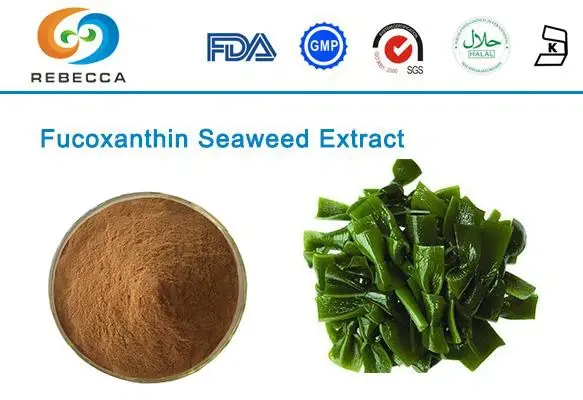
Laminaria Powder
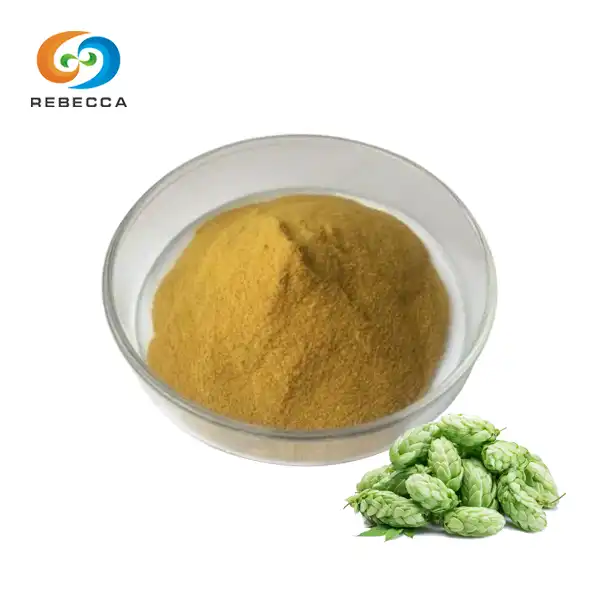
Product Name:Fucoxanthin, Seaweed Extract , fucoxanthin powder. Laminaria Powder, Fucoxanthin 10%
CAS No.: 9072-19-9
Specification: Fucoxanthin10%.UV.
Test Method: UV
Latin Name: Laminaria Japonica L.
Shelf Life: 2 years Minimum Order
Quantity: 1 kg Samples: Free samples available
Certifications: GMP, ISO, HACCP, KOSHER, and HALAL.
Payment: Various payment methods accepted.
Advantages: Manufactured in a 100,000-grade cleanroom, our products are additive-free, non-GMO
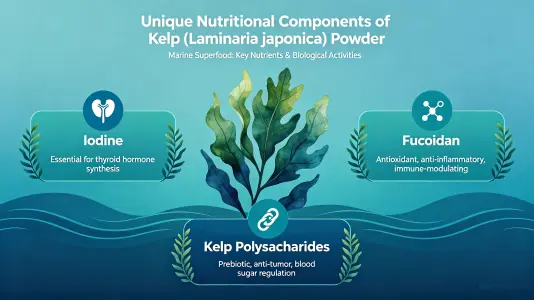
Nutritional Profile of Laminaria Powder: What Makes It Distinctive?
For Laminaria japonica to grow, the ocean water near China, Japan, and Korea should be cold and full of minerals. As it grows, it gathers many chemicals that plants that grow on land can't make. Iodine, fucoidan, laminarin, alginate fibre, and the colour fucoxanthin are the most important ones from a scientific and business point of view. Each one does a different job in the body. Laminaria powder is one of the healthiest foods you can get from a single source.
Iodine: The Thyroid's Essential Mineral
Iodine is probably the most easily recognisable part of substances that come from laminaria. Thyroxine (T4) and triiodothyronine (T3) are hormones that affect metabolism, energy production, and brain activity. The thyroid gland needs iodine to make these hormones. The World Health Organization says that two billion people around the world don't get enough iodine. This means that natural, soluble iodine sources are very important for supplement makers who want to improve thyroid and metabolic health.
Iodine is given to the body in a form that it can easily receive through laminaria powder. In contrast to chemical iodine salts that are added to foods to make them healthier, the iodine in laminaria is naturally bound inside a complicated structure. Iodine supplements usually contain one to two grams per day, which is enough to keep the thyroid healthy. Laminaria powder is a good raw material for supplement lines that focus on thyroid health, energy, and metabolism because of this.
Fucoidan and Laminarin: Marine Polysaccharides With Broad Bioactivity
Laminaria japonica has two main types of polysaccharides: fucoidan and laminarin. Both of them have a lot of study time behind them. Frontiers in Immunology (2022) published a study that found fucoidan from Laminaria japonica greatly improved the spleen and thymus indices, sped up cell growth, and made living things make more immune-related chemicals. The findings show that fucoidan helps keep the immune system healthy. This is something that supplement companies that work with immunity are becoming more interested in.
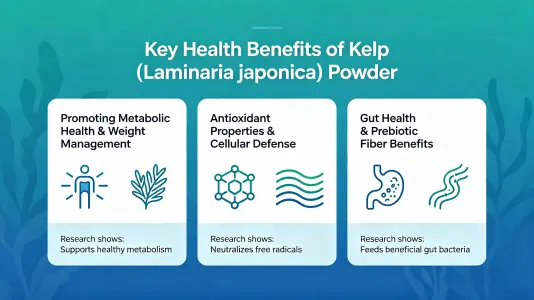
Key Health Benefits of Laminaria Powder: What the Research Shows
Supporting Metabolic Health and Weight Management
Fucoxanthin is the carotenoid pigment that gives brown kelp its unique colour. It is very interesting to people who study metabolic health. Researchers in the lab say that fucoxanthin may help the body burn fat by changing how thermogenin (UCP1) is made in white adipose tissue. This means that fucoxanthin might help move fat that has been stored so that it burns energy instead of being stored. Eight weeks of taking Laminaria japonica powder was the subject of a random, double-blind study in Nutrients. In a way that was statistically significant, the men in the exercise group had less body fat than the men in the control group.
Along with fucoxanthin, alginate fibre in laminaria powder makes it take longer for the body to break down carbs. So, after a meal, blood sugar doesn't rise too high. This is important for recipes that aim to improve glycaemic health. A study in Food Chemistry says that dietary alginates can stop some lipases in the gut from working. This means that the body absorbs less fat. Laminaria powder is a good addition to any formulation stack for companies that make metabolic or weight management ingredient systems because it works in two ways: the thermogenic carotenoid and the fiber-based fat regulation.
Antioxidant Properties and Cellular Defense
Many health issues last for a long time and are caused by oxidative stress. L. powder takes care of this in a number of different ways. A study that came out in 2022 in the journal Antioxidants found that fucoxanthin can protect human skin cells from about half of the damage that UV has caused. This action is made even stronger by fucoidan and laminarin, which fight free radicals and irritation. Laminaria japonica fucoidan has "notable biological activities," including "anti-inflammatory, antioxidant, antimicrobial, antiviral, and cardiovascular protective effects," according to a study published in ScienceDirect in 2025.
Laminaria powder has polyphenols and colours that help cells fight off damage. They help keep membranes that are affected by outside forces in good shape. People who make health products that slow down ageing and keep you healthy are looking for ingredients that help cells stay antioxidant more and more. Laminaria powder can be used in such valuable mixes since it has a lot of chemicals that protect.
Gut Health and Prebiotic Fiber Benefits
Gut health is one of the nutrient areas that is growing the most quickly around the world. Laminaria powder really helps in two main ways in this area. The alginate in it, which is made up of soluble fibres that gel, helps the gut move and keeps stools regular by adding more water and bulk to the stomach. Second, fucoidan and laminarin feed only good bugs in the gut. Fucoidan from Laminaria japonica was studied and found to boost the number of Lactobacillaceae in the gut microbiome while stopping the growth of bacteria that aren't as good for you.
Bioactive Compounds in Laminaria Powder — At a Glance
· Iodine — Supports thyroid hormone synthesis; promotes healthy metabolism and energy regulation
· Fucoidan — Sulfated polysaccharide with immune-modulating, antioxidant, and prebiotic activity
· Laminarin (β-glucan) — Gut-nourishing, antioxidant, and mildly anticoagulant polysaccharide
· Fucoxanthin — Carotenoid antioxidant; supports fat metabolism and cellular defense
· Alginates — Soluble fiber; modulates fat and carbohydrate absorption; aids natural detoxification
· Minerals — Calcium, magnesium, potassium, and iron for cardiovascular and neuromuscular support
The prebiotic effect of polysaccharides produced from laminaria is not small. A healthy gut bacteria is linked to better mood control, a stronger immune system, and less inflammation throughout the body. People who are buying ingredients for probiotic-prebiotic mixture products (called "synbiotics") should think about laminaria powder as a marine prebiotic fibre source that adds extra biological value. This is because, unlike pure inulin or FOS, which don't have any immune-modulating or antioxidant qualities, laminaria powder does.
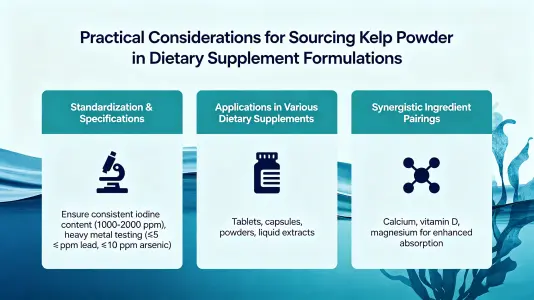
Laminaria Powder in Supplement Formulation: Practical Considerations for Ingredient Buyers
Standardization and Specification
There is a wide range in the medicinal strength of laminaria powder depending on the species, crop area, processing method, and extraction method. Standardised extracts and raw dried kelp powder are not the same thing. More and more, high-tech supplement companies ask for standardised extracts, which are materials that have been tried and proven to contain specific amounts of key actives like fucoxanthin or fucoidan. This difference is very important for how well a product works and what it says on the package. Buyers should ask for reports of analysis, specification sheets, and test method documents from sellers to make sure the material meets the requirements.
Applications Across Supplement Categories
Laminaria powder and its extracts, such as materials that are standardised for fucoxanthin, can be used in a number of different supplement forms. Hard-shell pills, softgels, stick packs, healthy drinks, and tablets are some of these. The ingredient works with many different excipients and doesn't need any special processing conditions. For formulators working on thyroid health, weight control, immunity, and gut health, laminaria-derived ingredients offer real multi-benefit positioning that helps make premium products.
Synergistic Ingredient Pairings
Materials that come from laminaria naturally work with other actives that come from plants and the sea. To give you an example, fucoxanthin dissolves in fat and works better when mixed with lipid carriers. A spontaneous prebiotic-probiotic system is formed when probiotics are added. Putting together iodine-rich laminaria extract with selenium, which is another mineral that is important for the thyroid, is similar to how thyroid hormones are broken down, where they work together as co-factors. Combining actives that work well together can make the product story and customer value offer much stronger.
Laminaria Powder Supplier: Rebecca Bio-Tech
Shaanxi Rebecca Bio-Tech Co., Ltd. is a high-tech company that focuses on exports. They make, research, create, and sell plant preparations, separate herbs active ingredients, and study useful compounds in traditional Chinese herbal medicine. With more than 100 plant extracts and three specialised production lines, the company can make more than 500 metric tonnes of goods every year for customers in the medicine, health products, beverage, and cosmetics businesses.
Rebecca Bio-Tech has the technical know-how and production capacity to give you consistently standardised laminaria powder that meets your needs, whether you are making a thyroid support capsule, a weight management blend, an immune health product, or a marine antioxidant skin care ingredient.
To get a product information, a proof of analysis, or prices for large sales, contact the Rebecca Bio-Tech team directly:
FAQ
What is laminaria powder, and how is it made?
The dried and ground Laminaria powder comes from Laminaria japonica, a type of big brown seaweed that is mostly grown in the coastal seas of East Asia. After being picked, the seaweed is rinsed to get rid of salt and other impurities on the surface. It is then dried at low temperatures to keep nutrients that are damaged by heat and then ground into a fine powder. Standardised extracts go through extra steps of separation and concentration to make sure they have the right amount of active ingredients like fucoxanthin or fucoidan. The ingredient that is made still has the beneficial carbohydrates, iodine, and carotenoids that make laminaria a valuable ingredient in the health supplement supply chain.
Is laminaria powder the same as kelp powder?
The terms overlap but are not identical. "Kelp" is a general term for big brown seaweeds, and Laminaria japonica is one of the most important kinds for business. In the business of supplement ingredients, "laminaria powder" usually only refers to material that comes from Laminaria japonica or a closely similar species in the same group. This is important because the biological content of different types of seaweed is very different. For example, the amounts of iodine, fucoidan, and fucoxanthin can be very different. Buyers should check the specification documents to make sure they have the correct botanical source.
What is the difference between laminaria powder and fucoxanthin extract?
Iodine, sugars, fibre, and fucoxanthin are just some of the bioactives that can be found in laminaria powder, which is made from the whole plant. Fucoxanthin extract is a standardised, concentrated form of the carotene fucoxanthin that is made to a certain level of strength, usually 1%, 5%, or 10% by UV test. When formulators want to make products with broad-spectrum nutritional benefits, they choose whole powder. When they want to make products with specific metabolic or antioxidant claims and exact dosing, they choose standardised fucoxanthin extract. Rebecca Bio-Tech sells both the standardised extract (Fucoxanthin 10%) and the whole laminaria powder, so customers can choose the one that works best for their formulas.
What supplement categories can use laminaria-derived ingredients?
Materials that come from laminaria can be used in a lot of different types of health supplements. Support for the thyroid and metabolism, weight loss, immune health, gut and digestive health, anti-aging and vitamin formulas, and heart health items are some examples. The ingredient can be found in nutritional drinks, softgels, capsules, and tablets. It is also used in cosmeceutical chemical systems that protect the face from free radicals. People who buy ingredients in bulk from the pharmaceutical, health product, beverage, and cosmetics industries often get materials that come from laminaria to put in finished products.
Where can I source bulk laminaria powder or standardized fucoxanthin extract?
Rebecca Bio-Tech (Shaanxi Rebecca Bio-Tech Co., Ltd.) is a dedicated supplier of laminaria-derived ingredients, including standardized Fucoxanthin 10% (UV) and laminaria powder from Laminaria japonica. The company operates three production lines with an annual capacity exceeding 500 metric tons across a portfolio of over 100 plant extracts. To request product specifications, pricing, or a sample, contact the team directly at information@sxrebecca.com.
References
1. Tang, Y., et al. (2022). Effects of Fucoidan Isolated From Laminaria japonica on Immune Response and Gut Microbiota in Cyclophosphamide-Treated Mice. Frontiers in Immunology, 13, 916618.
2. Hwang, P.A., et al. (2019). Dietary Supplementation with Low-Molecular-Weight Fucoidan Enhances Innate and Adaptive Immune Responses. Marine Drugs, 17(3), 175
3. Inoue, N., et al. (2021). Effects of Daily Kelp (Laminaria japonica) Intake on Body Composition and Serum Lipid Levels. Nutrients, 13, PMC8307228.
4. Rioux, L.-E., & Turgeon, S.L. (2022). Biological Properties and Health-Promoting Functions of Laminarin: A Comprehensive Review. Nutrients, PMC97808
5. Liu, X., et al. (2025). Exploring the Potential of Fucoidan from Laminaria japonica: Biological Activities and Benefits for Human Health. International Journal of Biological Macromolecules.
6. Chen, Y., et al. (2025). Antioxidant and Anticancer Properties of Fucoidan Isolated from Saccharina japonica. Scientific Reports.