Red Clover Extract In Shampoo
Today’s customers are seeking root-cause hair care solutions—not just surface-level quick cures. They are checking labels on ingredients thoroughly. They seek for natural, plant-derived actives that really deliver. So cosmetic chemists are moving away from hard-core synthetic ingredients. Instead, they’re resorting to potent plant substances. At Rebecca, a renowned botanical extraction manufacturer, we’ve seen a significant increase in B2B demand for certain plant actives. One of the ingredients that has gained attention in current hair care products is an extract obtained from Trifolium pratense L.
red clover extract powder has been shown to help with common scalp and hair problems. It gives true chemistry-based marketing promises to brand owners. Whether you’re creating a novel anti-thinning shampoo or a regular scalp-balancing wash, you need to know how this chemical works. You also need to know how to make it and where to acquire it securely. This guide will explain it everything for you.But before we get into the nitty-gritty of the procurement, let’s take a look at why cosmetic chemists are especially selecting this plant extract over other conventional constituents in their new product pipelines.
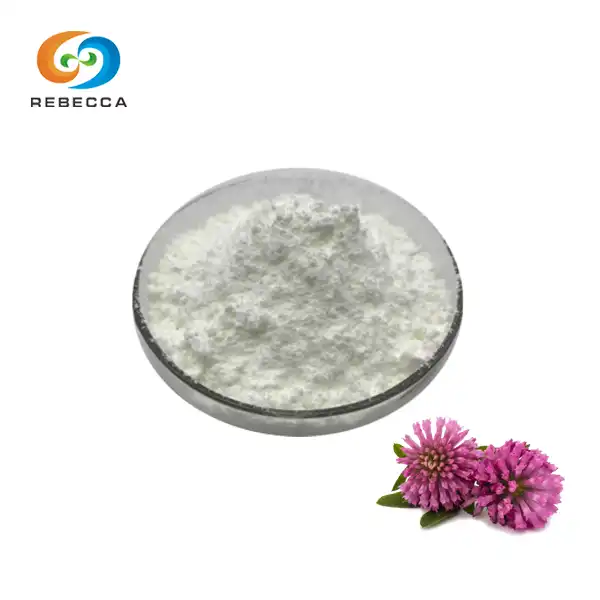
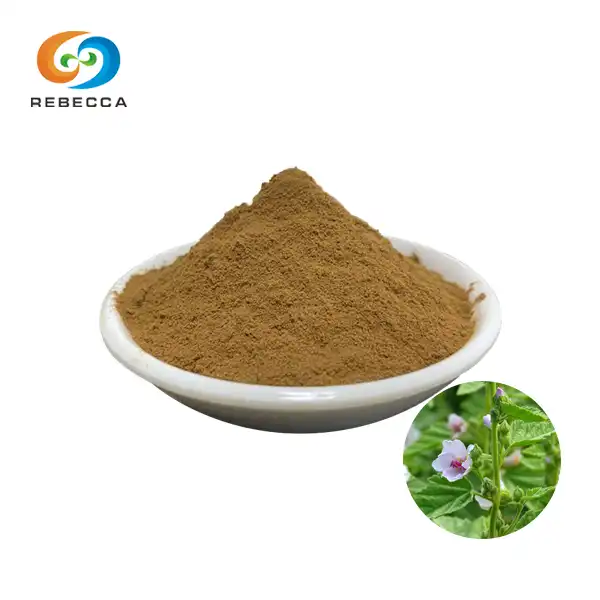
Red Clover Extract Powder
【English name】: Red clover Extract
【Latin name】: Trifolium pratense L.
【Other name】: Formononetin
【CAS No.】: 485-72-3
【Active ingredients】: Formononetin
【Molecular Formula】: C16H12O4
【Molecular Weight】: 268.26
【Specification】: Formononetin Min 98%
【Appearance】: White to light beige powder
【Test Method】: HPLC
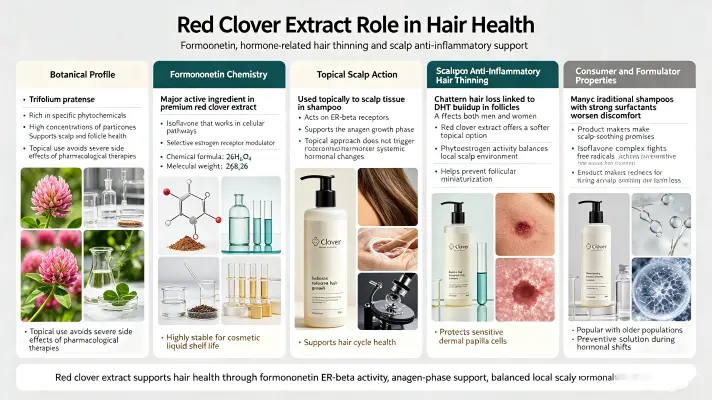
Red Clover Extract Role in Hair Health
Trifolium pratense botanical profile. It has a wealth of certain phytochemicals. It does wonders for scalp & follicle health immediately. What makes it work are the high concentrations of particular isoflavones. These substances naturally interact with the human scalp. They do not have the severe side-effects that come with pharmacological therapies.
The Bioactive Chemistry Behind Hair Benefits
Formononetin is the major active ingredient in premium red clover extract. This isoflavone works in a variety of cellular pathways. It is a selective estrogen receptor modulator. It is used topically to the scalp tissue in the form of a shampoo and acts on ER-beta receptors. This function helps the anagen (growth) phase of the hair cycle in particular. The topical approach doesn’t trigger hormonal changes as the systemic pills do. Chemical formula of Formononetin C 16 H 12 O 4 The molecular weight is 268.26. It signifies the chemical is highly stable. It is suitable for long term shelf stability of cosmetic liquids.
Targeting Hormone-Related Hair Thinning
Pattern hair loss is commonly linked to the buildup of Dihydrotestosterone (DHT) inside scalp follicles. This problem affects both men and women. Regular medicinal DHT inhibitors tend to have adverse effects that are not desirable. Formulators are looking at red clover extract as a softer option for topical usage. The phytoestrogen activity of the extract helps to balance the local environment of the scalp. It prevents follicular miniaturization of hair bulbs. This shampoo with this plant extract is frequently patronized by older populations. It offers a preventive hair health solution for individuals experiencing hormonal shifts.
Anti-Inflammatory Properties for Scalp Comfort
Chronic scalp irritation interferes with natural hair growth. It causes redness, itching and worse hair loss. Many traditional shampoos with strong surfactants make this discomfort worse. The addition of red clover extract to your recipe helps to reduce this irritation. The isoflavone complex fights free radicals in the scalp micro-environment. It protects sensitive dermal papilla cells from oxidative damage. Product makers utilize this substance to make "scalp-soothing" promises. It considerably enhances the experience of customers with sensitive skin.
Knowing the biological advantages is only the first step. “The real challenge for B2B buyers and chemists is to ensure the raw material works well on the production floor. Now let’s see how it performs in the lab.
Formulation Considerations Across Extract Forms
Your raw material’s physical shape affects your whole production process. It impacts dispersion, product color and ultimate stability. If you choose the incorrect specification, you might spoil a big batch of shampoo. Therefore it is important for cosmetic chemists to choose the proper physical grade.
Physical Specifications for Shampoo Bases
High-quality red clover extract for cosmetic use usually comes as a fine powder. At Rebecca, our 98% formononetin extract is specifically tailored for cosmetic formulations. It has a white to light beige color. This light color prevents unwanted tinting in clear or white shampoo bases. The moisture content is strictly kept below 5.0%. This prevents clumping in your warehouse. The particle size is controlled at 80-100 mesh. This ensures smooth dispersion in water-based systems. We outline these critical formulation parameters in the reference table below.
|
Specification Item |
Standard Parameter (Cosmetic Grade) |
Benefit for Shampoo Formulation |
|
Appearance |
White to light beige fine powder |
Does not alter the final color of the shampoo base. |
|
Active Content |
≥ 98.0% Formononetin (HPLC) |
Allows for low inclusion rates (0.5% - 2.0%) saving formulation space. |
|
Particle Size |
100% pass 80-100 mesh |
Ensures rapid and uniform dispersion without gritty textures. |
|
Loss on Drying |
≤ 5.0% |
Maintains raw material stability and extends shelf life. |
|
Bulk Density |
0.45 - 0.65 g/ml |
Facilitates accurate volumetric measuring during mass production. |
Solubility and Synergistic Blends
Easy to incorporate our standardized red clover extract. This may be added during the cool-down phase of the shampoo manufacture. It is stable below a temperature of 45°C. It also works well with other common hair care actives. Formulators commonly blend it with caffeine to enhance microcirculation on the scalp. It may also be used with Saw Palmetto for an even stronger anti-thinning effect. It is totally compatible with sulfate free surfactant systems . Does not interfere with the viscosity of regular carbomer or gum based thickeners. This makes the chemist’s work a lot simpler.
The next challenge, once your lab has authorized the recipe, is to establish a dependable and cheap supply chain. Natural substances demand a strict quality control.
Procurement Insights: Sourcing Quality Botanical Extracts
It’s not only about checking pricing to get ingredients successfully. It demands attention to quality certifications and supply chain transparency. B2B buyers need to examine different aspects of suppliers. This sets the stage for long-term product success and prevents expensive regulatory rejections.
Analytical Testing and Batch Consistency
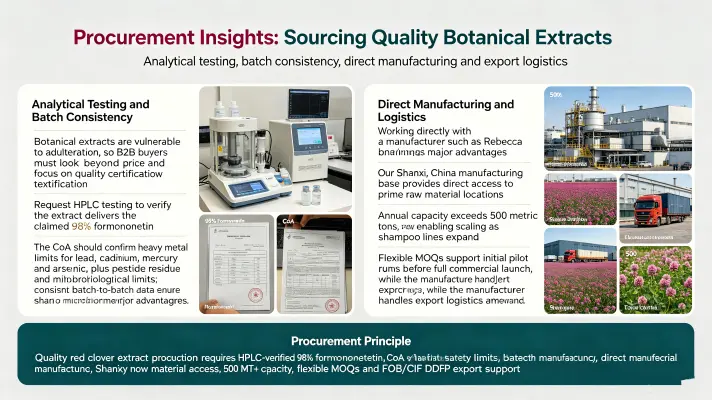
Adulteration is rampant in the botanical extracts sector. Low cost providers tend to utilize poor grade biomass. They cannot isolate the real active ingredients. You should request High-Performance Liquid Chromatography (HPLC) testing. HPLC testing verifies that your red clover extract indeed delivers the claimed 98% formononetin. Your supplier’s Certificate of Analysis (COA) should also show rigorous safety restrictions. This includes heavy metal screening for lead, cadmium, mercury and arsenic. It also must have pesticide residue and microbiological limits testing. Consistent batch-to-batch analytical data means your shampoo will function the same every time.
Direct Manufacturer Advantages
Trading firms are well suited to save money for source teams. The benefits of working directly with a manufacturer like Rebecca are huge. We have our manufacturing base in Shaanxi, China. This allows us to have direct access to prime raw material locations. Our yearly manufacturing capacity is over 500 metric tons. This means we can scale as your shampoo line expands. Buy direct for a cheaper price on your red clover extract. We also have flexible MOQs (Minimum Order Quantities). This flexibility is useful for your first pilot runs before full commercial launch We take care of all the export logistics and may provide FOB, CIF or DDP terms to reduce your landing expenses.
“Now that the formulation and procurement strategies are in place, how can brands position these products for the future?” Knowing the changes in the market can help you get the most return on your investment.
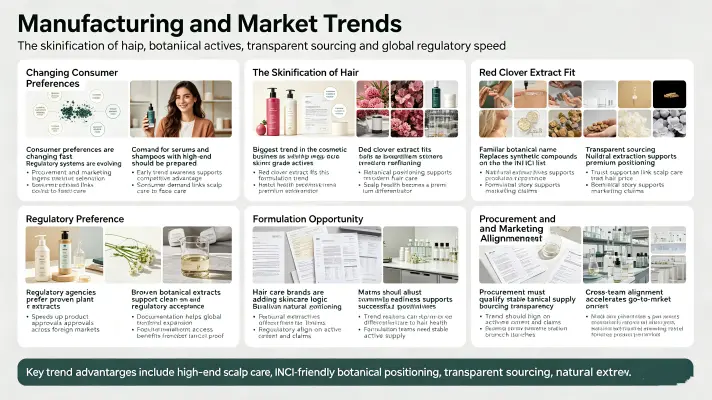
Manufacturing and Market Trends
Changing fast are consumer preferences. Regulatory systems are evolving. And to be ahead of the game, a corporation will need to reconsider how it picks ingredients in the hair care sector. Be ready for these trends and prepare your procurement and marketing teams to be winners.
The “skinification of hair” is the hugest trend in the cosmetic business nowadays. Consumers increasingly care after their scalps as much as their faces. They want serums and shampoos filled with high-end skin-care grade actives. This trend is ideally suited to the formulation with red clover extract. It has a familiar botanical name. It replaces synthetic compounds on the INCI list. Brands that demonstrate transparent sourcing and natural extraction command high customer confidence. This trust is the basis of a high retail price. Regulatory agencies also prefer proven plant extracts. This speeds up product approvals across foreign markets.
Conclusion
Red clover extract is no longer a specialty ingredient. This is a clinically validated, high performance active for professional hair care products. It gives targeted hormone-modulating, antioxidant and anti-inflammatory effects to the scalp. Product efficacy is assured by sourcing a standardized 98% formononetin extract for B2B procurement managers and formulation scientists. It’s easier to produce and conforms to the clean beauty concept. With a trusted source manufacturer like Rebecca, you’ll have supply chain security, formulation flexibility and a competitive advantage in the saturated personal care industry.
FAQ
Q1: What is the recommended inclusion rate for shampoo bases?
A: For general daily wellness shampoos, an inclusion rate of 0.5% to 1.0% is sufficient. For targeted anti-thinning or intensive scalp treatments, formulators usually use 1.0% to 2.0% of the active powder. Always conduct stability testing in your specific base.
Q2: Will the powder extract change the color of my clear shampoo?
A: Our 98% standardized formononetin is a white to light beige powder. When used at standard formulation percentages (under 2%), it remains completely transparent in aqueous solutions. It will not cause dark tinting like crude liquid plant extracts.
Q3: Is this ingredient safe for daily topical use?
A: Yes. Topical application of this botanical active has an excellent safety profile. It acts locally on the scalp's ER-beta receptors. It does not enter the systemic bloodstream at levels that would cause internal hormonal disruption. Standard dermatological patch tests show very low irritation potential.
Partner with Rebecca for Source Factory Direct Supply
Rebecca specializes in manufacturing high-purity botanical extracts. We meet the strict specifications of global cosmetic brands. Our Shaanxi production facility operates under GMP-certified conditions. We eliminate the middlemen to bring you direct factory pricing.
Ready to upgrade your formulation? Contact our technical sales team to request your COA, MSDS, and a free evaluation sample.
Email: information@sxrebecca.com
References
1. Loing, E., et al. (2013). "A new botanical blend containing Trifolium pratense for the reduction of hair loss and stimulation of hair growth." Journal of Cosmetic Science, 64(1), 45-52.
2. Thorup, A. C., et al. (2020). "Phytoestrogens and their role in hair growth promotion and prevention of hair loss: A dermatological review." Journal of Cosmetic Dermatology, 19(8), 1891-1899.
3. Widyarini, S., et al. (2001). "Isoflavones from red clover (Trifolium pratense) protect against UV-induced skin and scalp inflammation." Photochemistry and Photobiology, 74(3), 465-470.
4. Panina, Y., et al. (2019). "Isoflavones in dermatology: Topical applications for skin and hair aging." International Journal of Molecular Sciences, 20(9), 2314.
5. Circosta, C., et al. (2006). "Biological and analytical characterization of Trifolium pratense extracts for cosmetic and topical applications." Phytotherapy Research, 20(8), 712-716.
6. Guntupalli, M., et al. (2018). "Role of topical phytoestrogens in the modulation of scalp microcirculation and follicular health." Dermatologic Therapy, 31(6), e12734